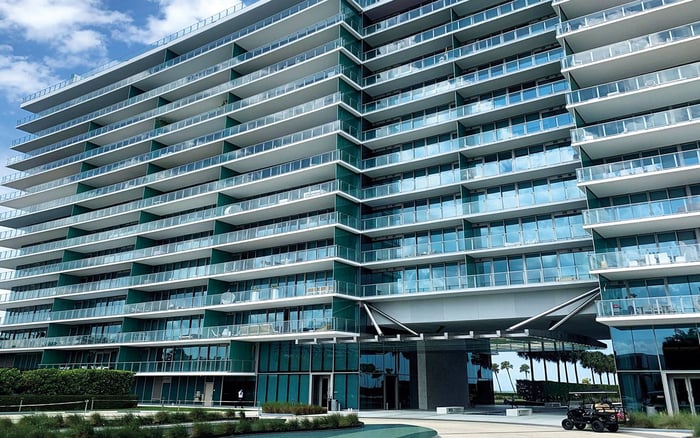
A discreet buyer’s guide to choosing between Fisher Island and Key Biscayne when boating access, privacy, convenience, and lower-maintenance living matter more than owning and operating a full waterfront estate.

For buyers who want boating access without the constant choreography of a full waterfront estate, the comparison between Fisher Island and Key Biscayne is less about status than operating style. Both names carry deep resonance in South Florida luxury circles. Both appeal to buyers who want water, discretion, and an address that feels separate from the mainland pace. Yet the daily experience can be markedly different.
The core question is practical: do you want a highly controlled private-island rhythm, or an island-village lifestyle with more everyday flexibility? The answer often reveals itself in how a household moves. Some buyers want the residence to function like a private club suite, with lock-and-leave simplicity and a narrow circle of familiar neighbors. Others want to live near schools, parks, restaurants, and daily conveniences while still keeping the water close.
The practical filters are simple: privacy, boating logistics, view quality, ownership structure, and daily convenience. The art is determining which priorities are essential and which are simply attractive.
Fisher Island suits buyers who place privacy at the center of the purchase. The appeal is not merely the water, but the separation. For many high-net-worth households, that separation has value because it reduces friction. Arrivals feel more controlled. Social exposure is more limited. The residential environment can feel curated, which appeals to owners who already have busy public lives elsewhere.
For boating buyers, the most compelling version of this lifestyle is not necessarily a large single-family estate. It is a residence that provides access to the marine experience while transferring much of the physical burden to building, association, or club-level systems. The owner is not managing gardeners, roof work, seawall issues, and a full exterior maintenance calendar in the same way an estate owner might. That is the central distinction.
Fisher Island is especially persuasive for second-home owners and international buyers who want a South Florida base that can be enjoyed intensely, then left behind with confidence. The right residence can feel like a private suite within a protected social ecosystem. For households with staff, advisors, captains, or security protocols, the controlled setting may simplify the routine.
The tradeoff is equally clear. Privacy can require more planning. Spontaneous errands, frequent mainland appointments, or a household that wants constant access to a broader neighborhood fabric may find the rhythm too contained. For some, that containment is the point. For others, it becomes the limitation.
Key Biscayne tends to appeal to buyers who want island character without feeling fully removed from daily life. The mood is residential, outdoors-oriented, and family-friendly in the broadest sense. It can suit households that want boating access and water proximity while still valuing a more conventional rhythm of living.
For buyers stepping down from an estate, Key Biscayne can provide a softer transition. The island setting remains central, yet the lifestyle can feel more open and familiar. A buyer can pursue a condominium or lower-maintenance residence while preserving a sense of neighborhood continuity. That matters for families, long-stay owners, and buyers who want South Florida to feel like home rather than a seasonal retreat.
The important point is not to assume that Key Biscayne automatically solves maintenance concerns. A single-family home can still bring the same ownership demands the buyer may be trying to escape. For this topic, the stronger fit is often a residence where exterior care, amenities, security, and common-area obligations are handled through an organized structure. In that format, the owner can preserve access to the island lifestyle while reducing the estate-management burden.
Key Biscayne may also suit buyers who expect frequent visitors, children’s activities, regular dining, and a more casual relationship with the surrounding community. It is a different kind of privacy: less about isolation, more about neighborhood discretion.
The phrase “boating access” can mean several things, and buyers should define it early. Some want immediate dockage. Others want proximity to a marina, yacht club, or preferred captain-managed arrangement. Some need paddleboards and day boats, while others are planning around larger vessels, crew, provisioning, and guest circulation.
A lower-maintenance purchase does not eliminate due diligence. It changes the questions. Instead of asking only about waterfront footage, buyers should ask how the marine component is governed. Is dockage deeded, assigned, leased, or waitlisted? Are there vessel-size restrictions? How is access handled for guests, crew, deliveries, and service providers? What are the rules around lifts, tenders, storage, fueling, and after-hours movement?
These questions matter more than the romance of a postcard view. A spectacular residence with inconvenient marine logistics may frustrate a serious boater. Conversely, a slightly less dramatic view with smooth access, thoughtful rules, and reliable service may deliver a better ownership experience.
The best buyers separate three priorities: the view from the residence, the path to the boat, and the management of the asset. If all three align, the property can feel effortless. If one is weak, the compromise will be felt every weekend.
Estate maintenance is not just landscaping. It is staffing, vendor coordination, storm preparation, insurance administration, exterior repairs, pool and dock care, security systems, generators, and the constant small decisions that come with a large property. Many buyers are not downsizing financially. They are downsizing operational complexity.
That is why condominium and club-adjacent living can be so appealing. The buyer may still want generous interiors, terraces, service elevators, storage, parking, and a guest-friendly floor plan. What they do not want is the burden of running a private compound. In South Florida, that distinction has become one of the most important luxury conversations.
Fisher Island generally speaks to buyers who want the residential environment to feel like an extension of private hospitality. Key Biscayne speaks to buyers who want a lighter ownership structure, but still want community and daily usability. Neither is universally better. Each answers a different version of the same desire: keep the water, lose the constant management.
Choose Fisher Island if your top priorities are privacy, controlled access, lock-and-leave confidence, and an environment that feels highly curated. It is well suited to buyers who spend part of the year in South Florida, travel often, entertain selectively, and prefer a residence that can remain quiet when they are away.
Choose Key Biscayne if your household wants boating access alongside a more active daily-life pattern. It is often the more intuitive fit for buyers who expect longer stays, family routines, neighborhood familiarity, and easier casual movement. It can also suit buyers who want to remain close to the water while avoiding the formality of a fully private-island setting.
For both markets, the best purchase is not necessarily the largest residence. It is the residence that removes friction. That might mean the right dock arrangement, the right building operations, the right arrival sequence, or the right mix of privacy and convenience. In ultra-prime South Florida, ease is a luxury equal to view.
Is Fisher Island better than Key Biscayne for boaters? It depends on the kind of boating access required and how much privacy the buyer wants around arrivals, service, and guests.
Is Key Biscayne more practical for full-time living? It may be more intuitive for buyers who want an island lifestyle with a stronger daily-life rhythm and neighborhood feel.
Can buyers get boating access without owning a waterfront estate? Yes, but they should verify the exact dockage, marina, access, and usage rules before treating boating as a given.
What should a buyer ask about a boat slip? Ask whether it is deeded, assigned, leased, waitlisted, transferable, and subject to vessel-size or usage restrictions.
Does a water view guarantee convenient boating? No. A beautiful view and practical marine access are separate issues and should be evaluated independently.
Which option is better for a second home? Fisher Island may suit buyers who prioritize privacy and lock-and-leave simplicity, while Key Biscayne may suit longer stays.
Is a gated community always lower maintenance than an estate? Not always. The ownership structure, association responsibilities, and property type determine the real maintenance burden.
Should buyers prioritize a marina over private dockage? The better choice depends on vessel size, service expectations, crew needs, storage, and how often the boat will be used.
Can a condo replace the feeling of an estate? It can for buyers who value scale, service, views, and privacy more than private grounds and full exterior control.
What is the simplest way to decide between the two? Choose the island that best matches your household’s movement, privacy needs, boating routine, and appetite for oversight.
For a discreet conversation and a curated building-by-building shortlist, connect with MILLION.
If branded residences are on your mind — as a home or as an allocation — we would be glad to share what we are seeing, privately.
Begin a quiet conversation