In South Florida’s top tier, feng shui is no longer treated as a decorative afterthought. It is increasingly understood as a decision framework that intersects with light, flow, privacy, and wellness, and it can influence liquidity when a property needs to appeal to a global buyer pool. This editorial looks at why feng shui keeps showing up in the region’s most coveted addresses, what sophisticated buyers actually screen for, and how to evaluate a home without turning it into a theme.
Luxury in South Florida has always been international. Over the last decade, that global reality became impossible to ignore as major developers and brokerage networks actively courted overseas capital, including Asian buyers, and local design dialogue widened to match the buyer pool. In that context, feng shui has shifted from a niche preference to a practical layer of market literacy.
National business coverage has described feng shui as a real estate factor that can influence how homes are planned, positioned, and ultimately sold, particularly at the high end where buyers have abundant alternatives and objections become expensive. Trade reporting focused on Chinese demand has been even more pointed: surveys cited by industry media found that a large majority of Chinese buyers said feng shui would matter in future purchases, and many indicated they would pay a premium for a home perceived as having good feng shui. Other reported findings suggested that feng shui familiarity can influence which agents buyers choose to work with, and that feng shui improvements are commonly believed to support resale value.
For South Florida, the takeaway is not that every buyer is taking compass readings. It is that a meaningful slice of the global luxury audience evaluates “feel” with a vocabulary that includes energy, balance, and auspiciousness, alongside the more familiar language of views, privacy, and finish quality. The most sophisticated way to respond is to treat feng shui as friction reduction: anything that quiets doubt in the first five minutes of a tour can shorten decision cycles and help protect pricing.
A persistent misconception is that feng shui is interchangeable with styling signals like a red front door or a bamboo plant. In luxury transactions, it is more often discussed in bigger, more consequential terms: site orientation, the sequence from arrival to entry, bedroom placement, and how circulation feels as you move through the home.
Those priorities overlap with what many affluent buyers already want, regardless of background:
This overlap is exactly why feng shui has become easier for developers, architects, and interior teams to incorporate without turning it into a headline. When luxury marketing emphasizes serenity, natural materials, wellness, and intuitive flow, it is often describing outcomes that feng shui-minded clients also seek.
Florida Realtors has also highlighted how wellness design is spreading into more homes. That broader consumer shift, toward environments that support calm, sleep quality, and day-to-day health, naturally reinforces the same design fundamentals that feng shui clients tend to prioritize.
In certain segments of the South Florida market, feng shui operates as a quiet filter long before a showing is booked. Industry coverage has connected feng shui’s increased visibility in U.S. real estate to high-net-worth foreign buyers, including Asian buyers, who may screen properties for feng shui-friendly conditions.
In practical terms, that can affect:
The premium question matters because luxury is partly about optionality. A home that reads as well-composed to both Western and Eastern sensibilities can be easier to place when conditions tighten. A home that triggers a feng shui red flag can be harder to defend at a record-per-square-foot moment, even when workmanship and finishes are exceptional.
This dynamic is most visible in globally recognized submarkets like Miami Beach and Brickell, where the audience is diverse and buyers often think in terms of an international resale horizon.
South Florida has produced tangible case studies where feng shui was not treated as an abstract talking point. In Delray Beach’s ultra-luxury enclave Stone Creek Ranch, the Palazzo di Lago estate was marketed with exterior spaces designed in collaboration with a feng shui expert. That positioning matters because it frames feng shui as part of an estate’s value narrative rather than a personal quirk.
In Miami, broader media coverage has described developers weaving feng shui-aligned decisions into projects to appeal to global luxury buyers, with the consistent theme that small adjustments can have outsized impact on buyer comfort.
At the same time, the local service layer has matured. South Florida has feng shui practitioners and firms that explicitly offer real-estate-focused consulting, from site review to presale recommendations. That depth reduces friction: when a buyer can bring in a specialist quickly and get guidance that translates preferences into actionable choices, deals are less likely to stall on “intangibles.”
The most effective way to think about feng shui in a luxury context is to focus on repeatable patterns that correlate with buyer confidence. Many of these patterns are simply good design. Feng shui gives them a decision rationale and, for certain buyers, a language to articulate why a home feels right or wrong.
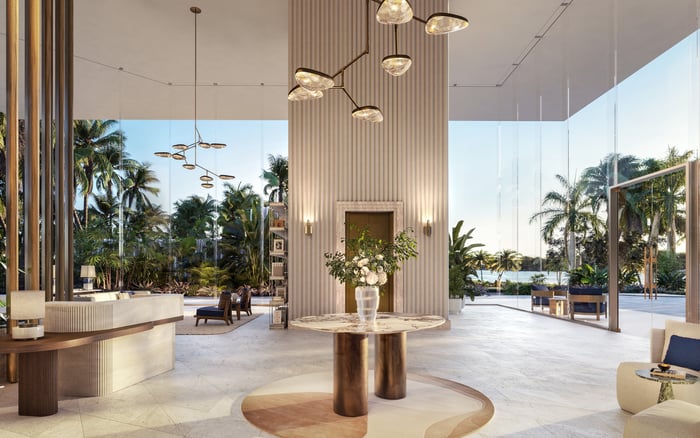
A refined entry sequence is not only about a large door or an impressive vestibule. Buyers tend to respond to containment, clarity, and a calm moment of transition. If the first view reads as disorderly, if the door opens immediately into a hard corner, or if the entry spills straight into the main living area with no sense of progression, the home can feel unsettled from the start.
Long, narrow corridors that accelerate movement, awkward pinch points, and doorways that face each other can read as restless. Even outside feng shui conversations, these are the same issues that make a residence feel less gracious for entertaining. They can also create subtle stress points in daily life: sightlines feel busy, movement feels rushed, and rooms that should read as composed can feel transitional.
Kitchens recur in feng shui discussions because the kitchen is both functional and symbolic. In practical luxury terms, buyers often want a kitchen that feels powerful and stable, not hidden away, cut off from the social core, or positioned in a way that reads as exposed. The best kitchens feel anchored: they connect naturally to dining and living areas, support hosting, and still allow a sense of control.
Luxury buyers pay for sleep quality and for the feeling of retreat. A primary suite that feels buffered from elevators, traffic noise, and heavy circulation tends to sell itself. Feng shui-minded buyers may also care about bed placement and a sense of “command” over the room, which often maps to universally appealing cues: a strong headboard wall, a settled furniture plan, and sightlines that feel calm rather than reactive.
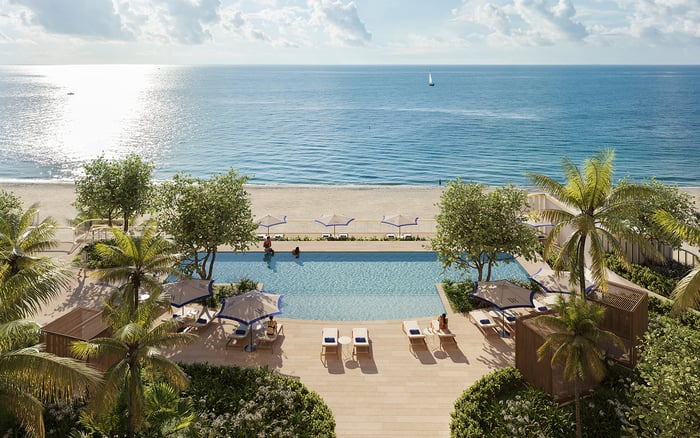
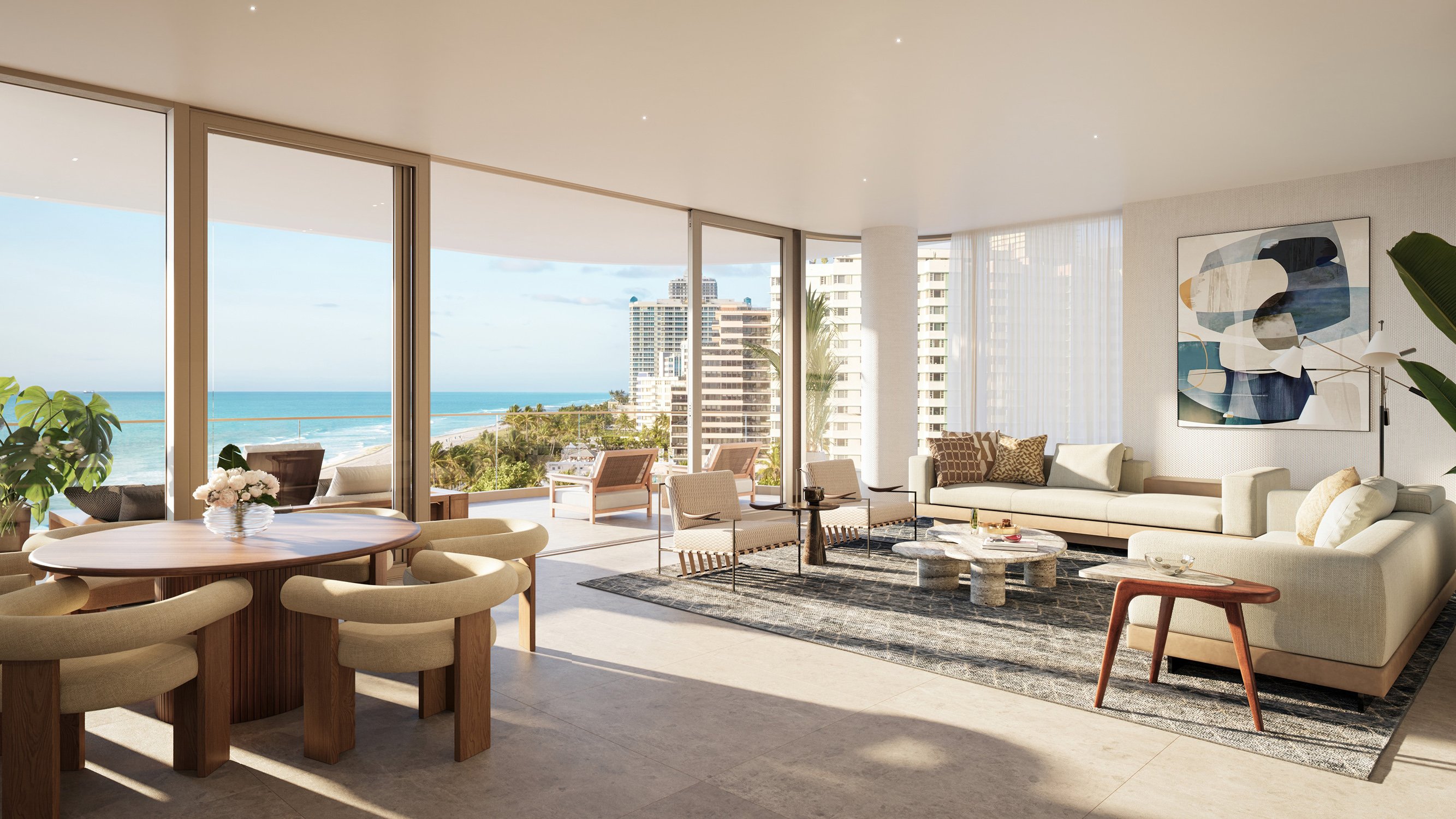
South Florida’s relationship with water is a defining luxury asset. Oceanfront and Intracoastal settings can support a calming narrative when the residence frames the view intentionally and balances openness with privacy. When water is presented as a composed backdrop, the home reads as restorative. When exposure feels uncontrolled, the same view can introduce tension rather than serenity.
New development is where these ideas are often easiest to execute because orientation, core placement, and amenity circulation can be decided before they become constraints. In the most competitive tier, developers are effectively selling a feeling: how arrival works, how quiet the corridors feel, how natural light is managed, and how private the residence feels once the door closes.
In Miami Beach, boutique oceanfront buildings frequently sell the idea of quiet, controlled exposure to the shoreline. A project like The Perigon Miami Beach is marketed as a limited collection of oceanfront residences, and that scarcity-driven positioning pairs naturally with buyer expectations around privacy, view corridors, and a calmer residential rhythm.
Also on Miami Beach, 57 Ocean Miami Beach speaks to the modern appetite for a residence that feels composed and restorative. Even when marketing does not explicitly mention feng shui, buyers commonly interpret strong indoor-outdoor transitions, generous natural light, and thoughtful circulation as “good energy,” and they price that feeling in.
In Brickell, branded towers compete on lifestyle programming and wellness-forward amenity concepts. For feng shui-minded buyers, the discussion becomes less about symbolism and more about everyday experience: elevator arrival, lobby acoustics, corridor light quality, and whether the home reads as a refuge from the city. Within that lens, St. Regis® Residences Brickell sits in the conversation as a landmark luxury offering where wellness and hospitality DNA are part of the pitch.
North of Miami, along Hillsboro Beach, the appeal is often a quieter shoreline, greater privacy, and a resort cadence. Rosewood Residences Hillsboro Beach is positioned around branded living, seclusion, and a calm coastal lifestyle, themes that map cleanly to feng shui’s emphasis on serenity and balance.
The takeaway is not that a building is “feng shui certified.” It is that the most compelling luxury projects increasingly deliver what feng shui-sensitive buyers already seek: controlled light, clear transitions, and interiors that feel restorative rather than stimulating.
Many buyers want to respect feng shui without turning the search into a complicated ritual. The most pragmatic approach is to run a parallel checklist during showings, focusing on conditions that consistently influence comfort, perception, and confidence.
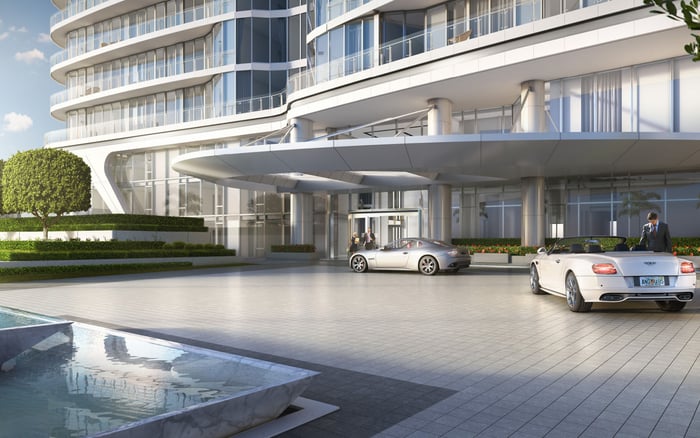
Arrival and parking: Does arriving feel smooth and private, or tense and congested?
Front door experience: Is there a calm moment before entering, or do you step immediately into the living room with no buffer?
Living area geometry: Are primary seating areas stable and protected, or do they feel exposed to heavy circulation?
Bedroom calm: Is the primary suite insulated from noise sources and traffic paths?
Light and glare: Great light sells, but uncontrolled glare can create constant agitation. Note how the home feels at different times of day.
Kitchen power: Does the kitchen feel central and confident, or compromised by awkward placement?
Bathrooms and plumbing lines: Some feng shui buyers react to bathrooms placed in ways that feel too prominent. Even for non-believers, it can affect perception.
Outdoor space: Water views and landscape should feel intentional. The best terraces and pools read as composed and inviting, not exposed.
If feng shui is important to you or to your end buyer, consider engaging a qualified practitioner early. South Florida’s consulting market includes professionals who specifically advise on buying and selling decisions, which can help translate preferences into targeted design and staging moves.
The most compelling luxury homes do not look “treated.” They look inevitable, as if every decision belongs to the architecture. When feng shui concerns arise, the best solutions tend to be subtle and spatial rather than decorative.
These interventions overlap with high-level interior design logic, which is why they can support resale even for buyers who never mention feng shui. The goal is not to impose a theme. It is to remove points of visual or spatial tension so the residence reads as calm, coherent, and easy to inhabit.
In luxury, value is not only what a property is. It is also how many qualified buyers can imagine themselves living there with minimal resistance. Trade reporting has suggested that some buyer groups may pay more for good feng shui and may avoid properties that feel unfavorable. That dynamic can matter in South Florida, where the exit strategy often includes international demand.
If you are choosing between two comparable homes, the one with fewer “interpretive objections” can be the safer long-term hold. In practice, that usually looks like:
These are not esoteric preferences. They are the building blocks of a home that photographs well, tours well, and lives well. And in a market where first impressions travel instantly through global networks, reducing friction is a form of pricing protection.
Is feng shui actually affecting prices in luxury real estate? Industry reporting has tied feng shui to buyer willingness to pay more in certain segments, particularly among Chinese buyers. In South Florida, it can function as a premium driver when it expands the buyer pool and reduces objections.
Do South Florida developers design for feng shui on purpose? Public coverage has described Miami-area developers incorporating feng shui-aligned decisions to appeal to global luxury buyers. Often it shows up indirectly through choices that prioritize serenity, flow, and balanced light.
What are the biggest feng shui deal-breakers for buyers? Common concerns include an awkward entry, restless circulation, a primary suite that feels exposed, and layouts that lack a sense of stability. The specifics vary by practitioner and buyer.
Can I improve feng shui without compromising a modern interior? Yes. The most effective changes are discreet and architectural: adjust lighting, refine furniture placement for better sightlines, and use millwork or screens to soften harsh alignments.
Is feng shui only relevant to Asian buyers? No. While demand is often associated with Chinese and broader Asian buyer preferences, many feng shui outcomes overlap with wellness design and universally appealing principles like calm, privacy, and intuitive flow.
For discreet guidance on South Florida luxury homes that live as beautifully as they photograph, connect with MILLION Luxury.
If branded residences are on your mind — as a home or as an allocation — we would be glad to share what we are seeing, privately.
Begin a quiet conversation