Palm Beach County’s luxury conversation is increasingly less about acreage and more about orchestration. For many high-net-worth owners, the most valuable amenity is not an extra room, but the ability to arrive, live beautifully, and depart without coordinating a small army of vendors. Staffed lobbies, managed security, and building-led maintenance have repositioned the luxury condo as an operational upgrade, not a lifestyle compromise. As wealth migration continues to shape South Florida, and as governance and building standards draw sharper scrutiny, buyers are leaning into a more service-forward model of ownership. From West Palm Beach’s Flagler Drive momentum to Boca Raton’s amenity-rich new construction, the lock-and-leave thesis is becoming one of the region’s most durable luxury narratives.
“Lock-and-leave” is often treated like marketing shorthand. In Palm Beach County, it reads more like an operating decision: how to protect time, reduce friction, and limit exposure while still living at a high level. A large single-family estate can be exceptional, but it also carries an operating model that never fully goes quiet. Security layers, landscaping and irrigation, storm preparation, vendor scheduling, access control, repairs, and the constant question of who is watching the house when you are not are all part of the package.
In staffed, professionally managed luxury condo buildings, much of that workload moves into a predictable framework. The building coordinates day-to-day oversight, managed security, and vendor logistics in a way that feels closer to private hospitality than traditional homeownership. The appeal is not a minimalist lifestyle. It is the ability to delegate without losing control.
For global families, multi-residence owners, and principals who move between South Florida and other hubs, this structure creates a different relationship with the property. Arrival becomes simple. Departure is not a project. The home is maintained to a consistent standard without constant personal coordination.
That is also why lock-and-leave resonates beyond the classic seasonal buyer. It speaks to owners still actively working, families balancing multiple cities and school calendars, and anyone who wants Palm Beach County as a high-touch base without turning it into a full-time management assignment. In this market, convenience is not casual. It is strategic.
The lock-and-leave thesis is reinforced by the broader tone of the condo market. In a snapshot reported for November 2025, Palm Beach County condo sales were up 20.7% year over year to 705 units, with a reported median condo price of $320,000, up 3.2% year over year. Cash transactions were reported at 56.5% of condo deals.
For the luxury segment, the cash-heavy profile matters less as a headline and more as a behavioral signal. It suggests a buyer base that values optionality and speed. Many purchases are not narrowly defined as “primary” or “second” residences. They can function as a primary residence, a seasonal residence, or a strategically located third place between New York, London, and the Hamptons. In that context, optionality is not a vague benefit. It is a form of luxury, and condos make that calibration easier.
At the same time, the post-Surfside era has raised the bar on governance, reserves, inspections, and long-term capital planning. That scrutiny is now part of the buyer’s baseline due diligence, and it has changed the questions serious clients ask before they commit.
In Miami-Dade reporting for November 2025, older condos (30+ years) were reported to sell faster than newer ones (66 days vs. 81 days), suggesting that when standards are clear, buyers will transact across vintages. The takeaway for Palm Beach County is straightforward: scrutiny does not have to suppress demand. It can function as a filter that rewards well-run buildings with clear reserves, transparent communication, and disciplined planning.
In a market that has become more sophisticated, “easy ownership” is no longer just about a doorman and a pool. It is about risk management, predictability, and the confidence that the building’s systems support the lifestyle being sold.
In ultra-premium real estate, size still matters. But service increasingly defines day-to-day quality. The modern luxury condo proposition is built around three forms of “invisible architecture” that buyers feel long after the staging and first impression.
Staffing and security: a staffed arrival, controlled access, and a building that can coordinate vendors without giving away privacy.
Maintenance neutrality: fewer surprises in the physical plant of the home because core systems, exterior envelopes, and common areas are managed at the building level.
Lifestyle infrastructure: amenity programs designed not as perks, but as substitutes for the burdens of private ownership.
This is why today’s best projects often market the operational experience as much as the interiors. The promise is that the residence functions reliably in the background, so the owner does not have to.
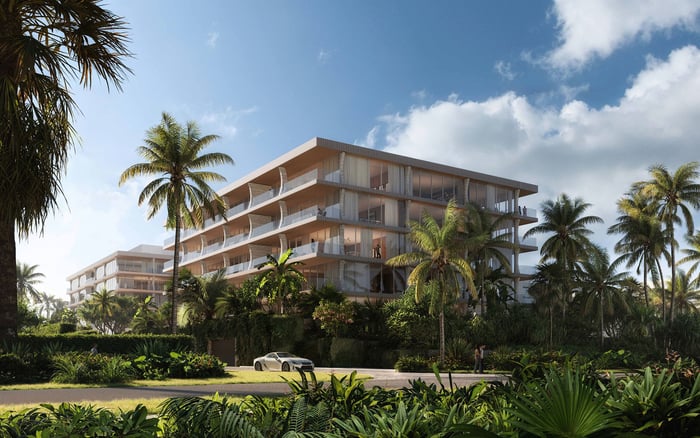
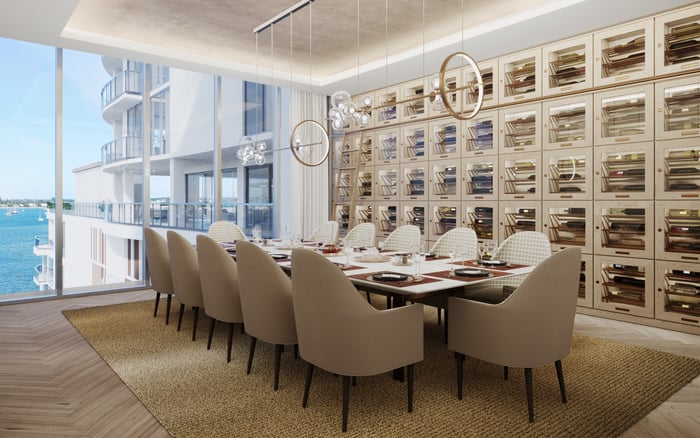
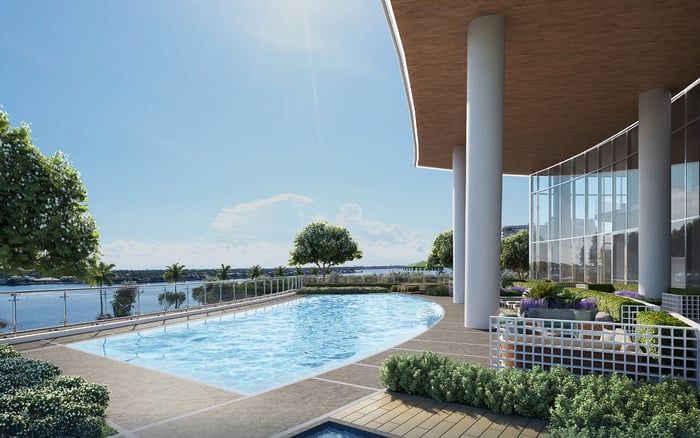
Boutique luxury projects have leaned especially hard into this shift. Alba Palm Beach, for example, is marketed as a boutique building with 55 residences on the Intracoastal, with pricing guidance reported from the $3 million range into the upper $7 million range. The building has also promoted a substantial amenity program, including a published claim of 25,500 square feet of amenities. The point is not spectacle for its own sake. It is positioning the building as a complete operating platform for how residents live, host, and travel.
For many buyers, service is now treated the way ocean views used to be treated: not an extra, but a prerequisite. In South Florida, where many owners split time across multiple residences, the question is not simply “Is it beautiful?” The question is “Will it run beautifully when I am not here?”
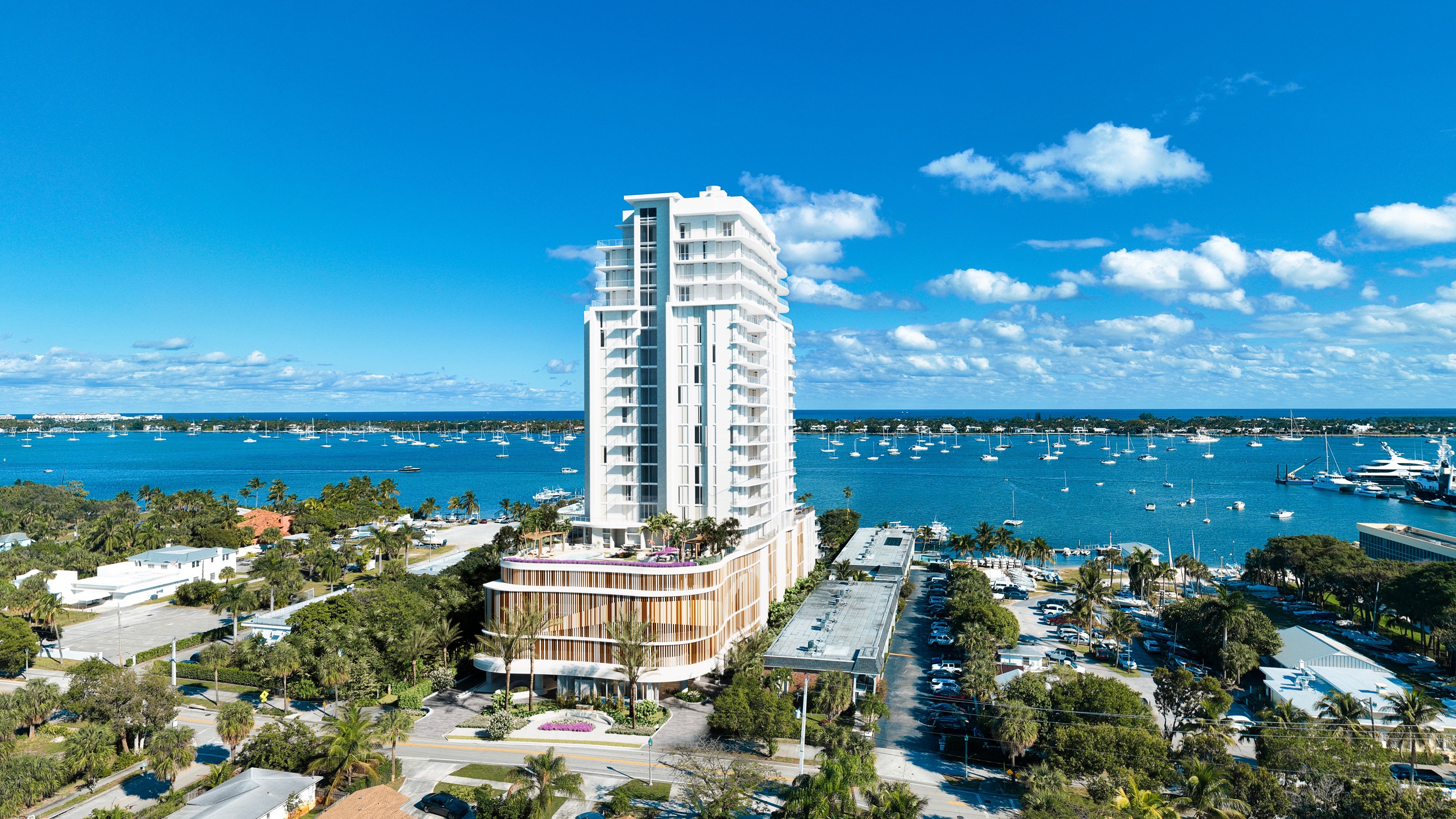
Palm Beach Island remains a gravitational center, but the map of acceptable luxury has widened. West Palm Beach, in particular, is being covered as a consolidating hub for new ultra-luxury condo development, with Flagler Drive emerging as a waterfront spine for high-design, high-service inventory.
That shift matters because it changes the downsizing equation. Buyers are no longer choosing between “Palm Beach Island or nothing.” They are comparing walkability, marina access, proximity to business districts, and the ability to stay in motion while still living on the water. For some, West Palm Beach delivers the right blend of energy and practicality, paired with a newer generation of buildings designed around full-service living.
In this context, a building’s location is less about a single address and more about a daily rhythm. How quickly can you step into a car or onto a boat? How easily can guests arrive without turning privacy into a negotiation? Does the residence support discretion without feeling isolated?
For buyers who want Flagler Drive positioning, newer options such as Shorecrest Flagler Drive West Palm Beach have helped define the corridor’s current narrative: modern waterfront living paired with an ownership model designed to be managed, not managed by you.
The most compelling Palm Beach County condo story is not a single tower. It is the way multiple product types, branded, boutique, and legacy full-service, now satisfy the same buyer intent: arrive to a home that feels complete, and leave knowing it will remain that way.
In West Palm Beach, Mr. C Residences West Palm Beach has been marketed as a mixed-use tower concept tied to the Mr. C and Cipriani brand ecosystem, with a hotel component and a service-forward positioning. Publicly circulated marketing has described pricing roughly from about $1.4 million to $5.7 million, with an early 2027 delivery timeline. Whether a buyer is acquiring a full-time residence or a seasonal base, the appeal is consistent: predictable experience, consistent staffing, and a building designed around hospitality logic.
A parallel branded thesis is visible in The Ritz-Carlton Residences® West Palm Beach, marketed as an ultra-luxury branded residential offering with published pricing guidance from about $2.2 million to $5 million and a projected delivery timeframe around 2028. Branded residences are often misunderstood as “paying for a name.” In practice, the premium is frequently tied to systems: service standards, operational continuity, and the expectation that the building is run with the same discipline that protects the brand.
Further south, Boca Raton’s best-in-class condo demand has increasingly aligned with the same maintenance-light preference. Alina Residences Boca Raton is promoted across major condo platforms as a significant luxury entrant, reinforcing a buyer preference for newer construction, contemporary amenities, and a lower perceived maintenance uncertainty relative to older inventory. For many buyers, Boca is not a compromise between city and island. It is its own polished ecosystem, especially for those prioritizing walkability, dining, and a quieter luxury cadence.
And for those drawn to boutique waterfront intimacy in West Palm Beach, Alba West Palm Beach has become part of the conversation precisely because it leans into scarcity and a strong amenity pitch rather than sheer scale.
Across these examples, the common denominator is operational clarity. The building is expected to carry the weight: staffing depth, maintenance planning, controlled access, and a consistent owner experience.
It is easy to frame lock-and-leave as a new-development phenomenon. It is not. Palm Beach has long had service-rich residential buildings that function almost like private clubs, and those legacy assets provide important context for why today’s buyers are so receptive to the model.
Breakers Row, for example, is profiled as a legacy trophy condo enclave adjacent to The Breakers, with published materials describing 86 oceanfront residences and resort-adjacent access as defining attributes. The idea is not new. It is an older thesis executed at a very high level: effortless proximity, established prestige, and an environment where owners can live seasonally without losing continuity.
Similarly, the Palm Beach Biltmore is widely cited as a historic, full-service residential building, reinforcing that staffing, management, and lock-and-leave ease have been part of Palm Beach living for decades. What has changed is the breadth of product now delivering that promise, from historic icons to newly delivered amenity platforms.
Even within Palm Beach’s ultra-scarce inventory, Via Flagler Residences have been described as an ultra-limited option at 221 Royal Poinciana Way, positioned for walkability and privacy in a small-format setting. For certain buyers, that combination is the entire point: discreet scale paired with prime placement, supported by a full-service framework.
The deeper lesson is that the lock-and-leave preference is not a trend layered onto the market. It is a long-running pattern that has expanded, refined, and become more explicit as owners have become more mobile and expectations have grown more exacting.
A persistent misconception is that choosing a condo means downsizing your life. In today’s South Florida market, many of the most expensive and most publicly discussed residences are condominiums, and they are purchased precisely because they can deliver estate-level living without estate-level operational drag.
In Miami-Dade, a penthouse at Seaway at the Surf Club in Surfside reportedly closed for $86 million, described as a county condo price record. South Florida Business Journal has also compiled coverage of the most expensive South Florida condos in 2025, underlining that trophy buyers continue to treat top-tier condos as legitimate apex assets.
Closer to home, a widely covered West Palm Beach example involves The Bristol penthouse history tied to Sydell Miller (Matrix Essentials), with reporting describing purchase aggregation of $42.56 million in 2020 and a later asking price of $78.9 million. Whatever one thinks of the ultimate pricing, the framing is instructive: ultra-luxury condos can function as estate-scale homes with staff-driven ease.
This reframes the lock-and-leave decision. It is not necessarily a step down in lifestyle. For many principals, it is a step up in usability. Space is still available at the top of the condo market, but it is paired with staffing, oversight, and a building designed to protect an owner’s calendar.
Luxury condos can reduce friction, but only when the building is well chosen. Before you prioritize finishes and views, evaluate the mechanics that protect your time and preserve the experience you are buying.
First, governance and capital planning. Post-2021, boards, reserves, and long-term repair plans are no longer background noise. Ask how the building communicates upcoming projects and how it budgets for them. Clarity and cadence matter. A well-managed building does not surprise owners late in the process.
Second, operational culture. The most successful lock-and-leave buildings behave like calm enterprises. They have clear processes for deliveries, vendor access, guest arrival, and after-hours issues. A well-run building should feel quietly consistent, with rules that support residents rather than interfere with them.
Third, staffing depth. A single concierge is not the same as a building with layered staffing and an institutional memory of how residents actually live. Depth becomes important when you travel frequently, host regularly, or expect the building to solve problems without escalation.
Fourth, privacy architecture. This is less about cameras and more about circulation: elevator access, arrival sequences, and how the building prevents resident life from becoming lobby life. Privacy is often designed, not declared.
Finally, assess whether the building’s service model matches your habits. Some buyers want hotel-adjacent energy; others want boutique quiet. Neither is better. The right fit is the one that disappears into your life and feels effortless.
Two macro forces are keeping Palm Beach County’s lock-and-leave narrative durable.
One is wealth migration. The region’s demand has been shaped by relocations and lifestyle shifts tied to finance and hedge-fund-linked moves, and with that comes a preference for simplified, high-service living arrangements. Buyers arriving from major global markets often bring expectations around security, staffing, and consistency, and they tend to reward buildings that deliver those standards.
The other is intergenerational capital flow. Realtor.com coverage, citing luxury report analysis, has reported an estimated $124 trillion expected to transfer by 2048, with roughly $25 trillion tied to real estate. Turnkey residences with institutional service models can align neatly with heirs and principals who want quality without operational sprawl. The more mobile the household, the more valuable the “always ready” home becomes.
Add to that the reality of price discovery even at the top of the single-family market. Reporting highlighted a Palm Beach estate at 1460 N Lake Way selling for $72 million after an earlier $95 million asking price, a reminder that even trophy estates can face recalibration. For some owners, the condo alternative reads less like compromise and more like a blend of liquidity and lifestyle, with a simpler operational footprint.
In South Florida’s next chapter, the strongest luxury narratives will not be built only on square footage. They will be built on orchestration: buildings that run reliably, protect privacy, and make ownership feel as composed as the residences themselves.
Is a lock-and-leave condo only for part-time residents? No. Many full-time owners value the same benefit: a home that stays perfectly managed without constant coordination.
Are branded residences worth it in Palm Beach County? They can be, when the brand corresponds to real service standards, operational consistency, and a building culture built around hospitality.
Should I avoid older condo buildings after recent regulatory changes? Not automatically. Market reporting has shown buyers can transact confidently in older buildings when governance, reserves, and building standards are clear.
What areas are most associated with the trend right now? West Palm Beach, particularly the Flagler Drive waterfront, has been widely discussed as a growing hub, while Boca Raton continues to attract buyers who want modern amenities and ease.
To privately evaluate which buildings best match your lock-and-leave priorities, connect with MILLION Luxury.
If branded residences are on your mind — as a home or as an allocation — we would be glad to share what we are seeing, privately.
Begin a quiet conversation