Branded residences have moved from niche hotel-adjacent offerings into a defining category of South Florida ultra-luxury. Buyers pay more not only for a logo, but for a service system, a predictable standard of finish, and a low-friction ownership model that suits multi-home, frequent-travel lives. In a market where international demand remains influential and inventory has normalized, brand trust, wellness programming, and tech-forward operations are increasingly central to value.
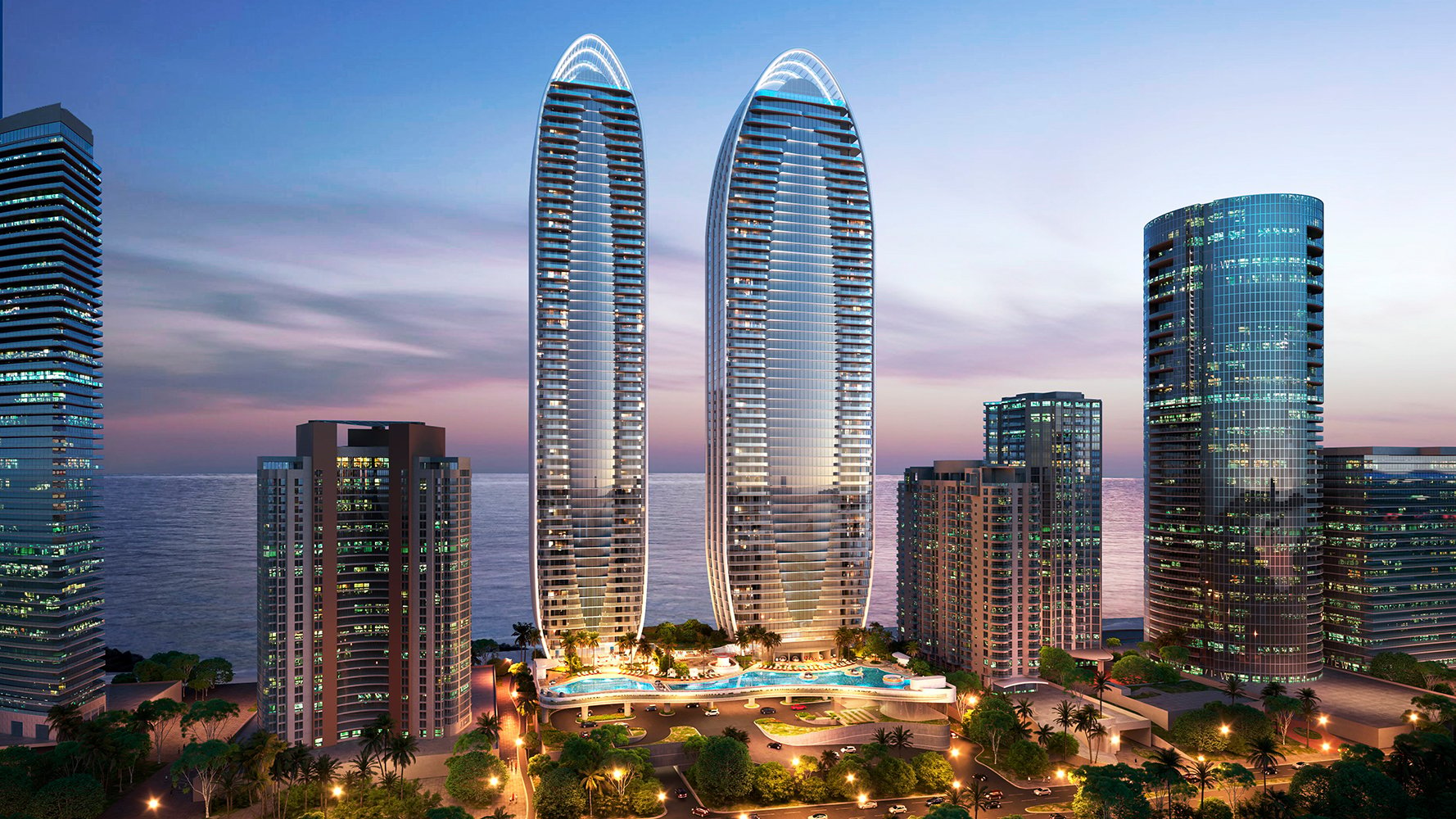
Branded residences, as a formal real estate category, took shape in the 1980s, when top-tier hospitality groups began extending their service model from hotel suites into private ownership. The proposition was simple and enduring: combine the permanence of a deeded home with the operational sophistication of a five-star property. For South Florida buyers who live globally, that blend has shifted from appealing to essential.
Today, the branded ecosystem is no longer limited to hotel operators. It spans hundreds of brands across hospitality, design, fashion, and automotive, reflecting a broader shift in luxury spending: buyers increasingly choose curated systems over one-off statements. In residential terms, that system is staffing, maintenance, concierge capability, and a consistent standard of delivery that doesn’t depend on the owner being present.
That’s why branded residences have become a defining storyline across Brickell, Miami Beach, and the oceanfront corridor north through Broward. The logo at the porte cochère is rarely the point. The operating platform behind it is.
Branded residences typically command a premium versus comparable non-branded luxury homes, often cited in the 20 to 35 percent range. In South Florida-where top-tier options are plentiful-that spread can feel counterintuitive until you separate physical real estate from operational experience.
The premium is commonly a bundle of three things:
First, service continuity. A branded building is positioned around an established service culture, with defined standards for staffing, response times, and guest handling. Even when the operator isn’t a hotel company, the intent is the same: deliver a predictable, professional experience that doesn’t hinge on a single property manager.
Second, reduced ownership friction. “Lock-and-leave” isn’t a slogan so much as a requirement for multi-home owners. The ability to depart for weeks, return without surprise maintenance issues, and host with minimal coordination is the functional luxury that keeps branded residences in demand.
Third, perceived risk reduction. Ultra-prime buyers aren’t only acquiring finishes and views. They’re buying confidence that the building will run well, present well, and maintain its standard as tastes and technologies evolve.
South Florida remains a uniquely international second-home market. Global buyers have represented a large share of new-construction condo purchases in the region, with Latin America frequently shaping absorption, design preferences, and service expectations.
That buyer mix helps explain why branded residences resonate here. International owners often need a home that performs as an elegant private base when they arrive, and as a quietly managed asset when they’re away. Professional management, standardized service delivery, and secure operations translate directly into convenience. For many, it also streamlines decision-making: brand affiliation becomes a fast filter in a market where buyers may not have time to evaluate every building’s operational quality.
In Brickell, for example, towers compete not just on elevation and bay views, but on whether ownership can feel hotel-smooth without becoming hotel-busy. Developments such as St. Regis® Residences Brickell underscore how the neighborhood’s ultra-luxury story has become inseparable from hospitality-caliber positioning.
Branded residences have entered a more sophisticated era. Amenities alone no longer define the category, because virtually every luxury building offers a pool, a fitness room, and a club lounge. The next phase is programming, systems, and measurable performance.
Wellness has become a central value proposition, with some branded concepts positioning longevity, spa culture, and mindfulness as daily infrastructure rather than occasional indulgence. South Florida has been an eager stage for this shift, especially among buyers who want a home that supports an optimized routine as naturally as it supports entertaining.
A clear example of wellness-forward residential positioning locally is The Well Coconut Grove, where the narrative is less about a single amenity and more about a lifestyle architecture that carries into how residents live day to day.
Sustainability is also shifting from broad promise to defined features. In Miami, one widely publicized example is The Residences at 1428 Brickell, which markets a facade-integrated photovoltaic window system, including 500 photovoltaic windows expected to generate about 170 MWh annually. Whether sustainability is a personal priority or a future-proofing strategy, buyers increasingly view performance-oriented building features as part of long-term desirability.
Technology is the third pillar. Some branded residences now market AI-enabled personalization and concierge concepts, while others emphasize high-security and smart-building approaches. The tech story isn’t simply convenience. It’s also privacy, access control, and the ability to tailor service with minimal friction-particularly valuable in high-profile ownership.
South Florida’s luxury condo market hasn’t remained in permanent seller-control. Recent conditions have reflected more buyer leverage than earlier boom years, including elevated inventory and longer marketing timelines in the luxury segment. In that environment, branding can matter-but it isn’t a substitute for fundamentals.
Brand strength can support:
Brand strength cannot overcome:
For buyers, the practical takeaway is to treat branding as a risk reducer, not a guarantee. The strongest acquisitions pair brand alignment with enduring characteristics: light, proportion, privacy, and a building positioned to stay relevant.
Paying a premium isn’t inherently a problem. Paying a premium without defining what you’re receiving is.
Consider these buyer-oriented lenses:
Operational clarity. Who actually delivers services day to day, and what’s included versus à la carte? Branded residences are often structured with a hospitality operator providing property management and services, either in a standalone residential tower or within a mixed-use hotel-plus-residences project. Understanding the structure helps you anticipate consistency.
Service that matches your usage. If you host frequently, staffing and guest handling will matter. If you travel constantly, preventive maintenance and lock-and-leave execution will matter more.
Wellness and programming depth. Decide whether you want a traditional amenity suite or a wellness-led lifestyle. The difference shows up in daily satisfaction.
Technology and privacy. Look beyond “smart home” buzzwords and focus on security posture, access control, and resident privacy.
Location-specific intent. Miami Beach buyers often prioritize privacy, beachfront access, and cultural proximity, while Brickell buyers often prioritize speed, services, and ease of departure.
Along Miami Beach, branded positioning has become a signature of new ultra-prime offerings, with buyers often comparing the lived experience as much as the view. For those drawn to oceanfront minimalism with high design expectations, The Perigon Miami Beach sits naturally within the conversation around how top-of-market residences are being framed.
The direction of travel is clear. Branded residences are increasingly positioned as lifestyle assets-defined by service delivery, programming, and brand trust that reduces friction for owners. Expect three themes to intensify locally.
First, sharper lifestyle segmentation. Not every buyer wants the same kind of “luxury.” Some want wellness-forward quiet. Others want social energy. Brand platforms will become more explicit about whom they serve.
Second, more measurable performance. Energy, air quality, water systems, and building resilience will be marketed with greater specificity. The most sophisticated buyers will ask for substance rather than slogans.
Third, elevated operational transparency. Owners will increasingly evaluate not just the developer vision, but the long-term operating plan-because service is only luxury when it’s consistently delivered.
For buyers considering the corridor north of Miami, branded offerings are extending beyond Miami Beach and Brickell into Broward, broadening the map without diluting the core proposition. Fort-lauderdale and the adjacent shoreline are poised to remain part of this expansion as luxury buyers seek oceanfront living with full-service convenience.
What is a branded residence? A branded residence is a private home tied to a luxury brand’s standards, typically with curated services and professional management.
Do branded residences really sell for more? They often do, with premiums commonly cited around 20 to 35 percent versus comparable non-branded luxury homes.
What does “lock-and-leave” mean in practice? It refers to low-hassle ownership where staff and management handle maintenance and readiness while you travel.
Are branded residences always connected to a hotel? Not always. Some are standalone residential buildings, while others are part of mixed-use hotel-plus-residences projects.
Is the brand mainly about prestige? Prestige plays a role, but many buyers value operational consistency, service culture, and reduced ownership friction more.
How important is wellness programming in this category now? Increasingly important, as many projects position wellness as a core lifestyle pillar rather than a simple amenity.
Do international buyers influence South Florida’s branded market? Yes. International demand is significant in new construction, and branded living can simplify ownership for global lifestyles.
Will sustainability features affect value? They can, especially when features are concrete and performance-oriented, supporting long-term desirability and future-proofing.
Does a strong brand guarantee a good investment? No. Brand can reduce perceived risk, but fundamentals like location, floor plan, and building operations still drive outcomes.
What should I ask before buying into a branded building? Ask what services are included, who operates them, and how the building maintains standards over time.
For a tailored shortlist and next-step guidance, connect with MILLION Luxury.
If branded residences are on your mind — as a home or as an allocation — we would be glad to share what we are seeing, privately.
Begin a quiet conversation