A buyer-focused editorial on how Brickell can satisfy clients who want urban access without surrendering privacy, poise, and a more measured daily rhythm.
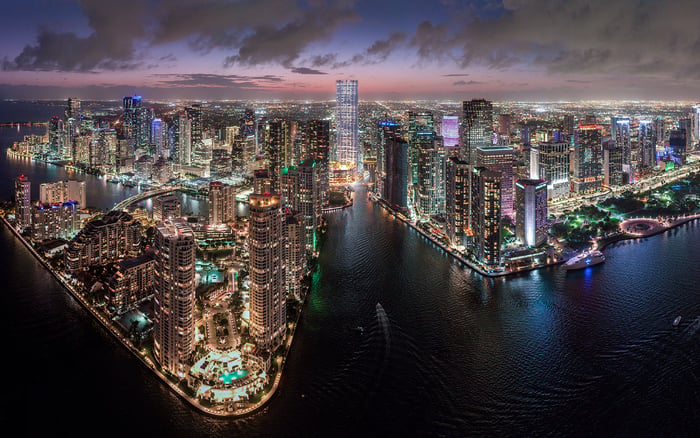
Brickell has long been defined by velocity: business lunches, tower lobbies, rooftop evenings, valet movement, and the constant choreography of people who want the city close at hand. Yet the most compelling shift among luxury buyers is not a retreat from Brickell. It is a more exacting search within it, led by clients who want the address, the skyline, and the convenience without feeling consumed by the pace outside their door.
For this buyer, quiet is not the absence of city life. It is control. It is the ability to step into the energy when desired, then return to a residence that feels composed, private, and highly edited. The appeal is not suburban silence. It is urban calm, with fewer daily compromises and a more deliberate relationship to the neighborhood.
That distinction matters. Many buyers who once looked beyond the urban core for peace are now reconsidering what a well-chosen Brickell residence can provide: a sense of retreat suspended above the city, a more efficient daily routine, and a home base that does not require surrendering access to Miami’s restaurants, waterfront, offices, and cultural life.
In the luxury market, quiet is rarely just about sound. It includes the arrival experience, elevator privacy, exposure to traffic corridors, the quality of shared spaces, the way a terrace receives the view, and how a floor plan separates entertaining from rest. A buyer may accept the pulse of Brickell at street level, but expect a different atmosphere the moment the residential experience begins.
That is why the strongest Brickell searches start with lifestyle sequencing. How does the resident enter after dinner? Is the primary suite buffered from social areas? Does the terrace feel usable, or simply decorative? Are amenities positioned as social theaters, or as genuine extensions of home? These questions can matter as much as finishes, branding, or view lines.
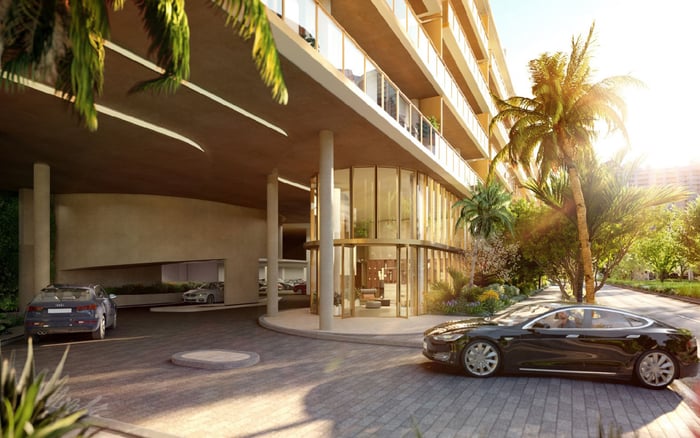
Projects such as 2200 Brickell speak to this buyer because they remain inside the Brickell conversation while offering a more residential interpretation of the neighborhood. The point is not to avoid the district’s momentum, but to choose a building and setting that modulate it.
The quieter Brickell buyer is often deeply urban, but not performative about it. This client may entertain selectively, travel often, work from home part of the week, and place unusual value on the first and last ten minutes of the day. The building must feel seamless, but not theatrical. Service should be attentive, yet discreet. Amenities should be meaningful, not merely extensive.
For this audience, Brickell remains compelling because it reduces friction. A second-home owner can arrive and immediately rejoin the city. A relocating executive can maintain proximity without committing to a car-first routine. A downsizer can trade estate maintenance for lock-and-leave ease while preserving a sense of sophistication.
The rise of residences with stronger hospitality cues has expanded this vocabulary. Cipriani Residences Brickell, for example, is part of a broader market preference for service-driven living, where the daily experience is designed to feel managed, consistent, and polished. For buyers seeking calm, the luxury is not only what the home contains. It is what the building quietly handles for them.
Brickell is not one uniform experience. A residence at one edge of the neighborhood can feel materially different from another, even when both are marketed under the same address identity. The difference may come from street pattern, setback, view orientation, neighboring uses, or the relationship between lobby, parking, and pedestrian movement.
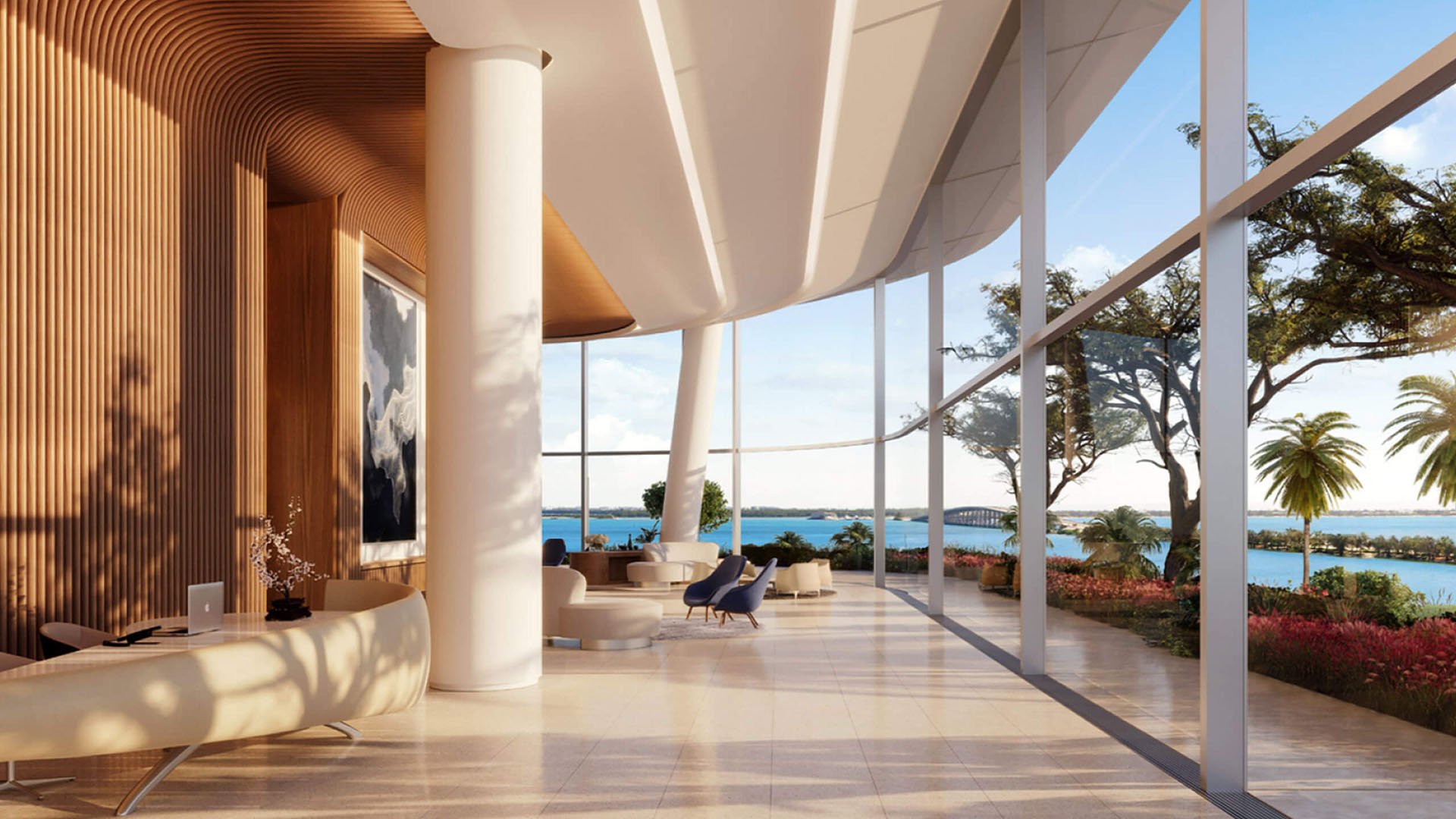
This is where an experienced buyer becomes less captivated by the skyline itself and more attentive to how the skyline is lived. A west-facing city view may feel dramatic at night. A water-oriented exposure may feel more restorative. A lower floor may connect the owner to the neighborhood, while a higher floor may create psychological distance from it. None is inherently superior. The question is which version of Brickell best supports the buyer’s desired pace.
The most refined searches also consider how a building will feel at different times: weekday mornings, Friday evenings, stormy afternoons, and high-season weekends. A residence that appears serene during a quiet showing can read differently during peak movement. Buyers who prize calm should test the full rhythm before deciding.
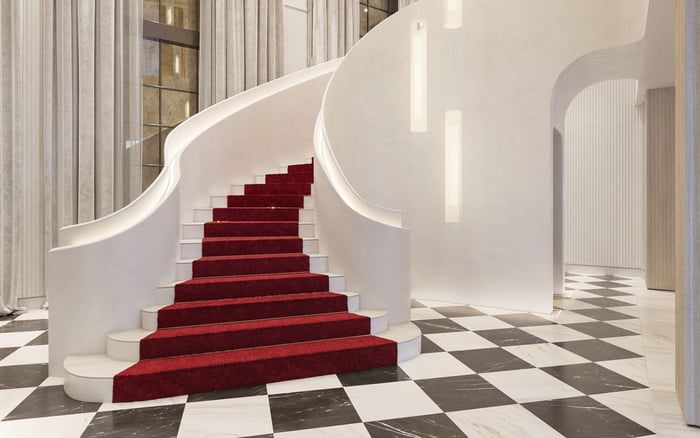
The most persuasive quiet-luxury residences in Brickell are not necessarily the most understated. They are the ones where design creates composure. Ceiling height, proportion, material restraint, acoustic separation, and natural light can all help a home feel calmer. So can thoughtful circulation, where guests, service, work, and sleep are not forced into the same visual field.
This is one reason branded and design-forward residential projects continue to hold attention. St. Regis® Residences Brickell signals a preference for tradition, service, and formal polish, while The Residences at 1428 Brickell speaks to buyers who want a distinctly contemporary presence within the skyline. In both cases, the buyer is not merely shopping square footage. They are selecting an atmosphere.
That atmosphere must be tested beyond renderings. Quiet design is experienced in thresholds: the transition from street to lobby, lobby to elevator, elevator to residence, residence to terrace. A home can be visually impressive and still feel exposed. Conversely, a more restrained residence can feel deeply luxurious if it protects the owner’s sense of ease.
There is a practical reason Brickell continues to attract buyers who might otherwise seek a quieter alternative elsewhere: leaving the center often introduces new trade-offs. Longer drives, fewer walkable options, more household management, and less spontaneity can all erode the very calm a buyer hoped to find.
A carefully chosen Brickell residence offers another path. It allows the owner to remain close to the action while living above it, beside it, or slightly removed from its most kinetic corridors. Una Residences Brickell fits into this larger buyer psychology: the desire for a recognizably Brickell life, but with a more private and residential lens.
Ultimately, the quieter alternative to Brickell speed may still be Brickell itself. The difference lies in selection. The best buyers do not ask whether the neighborhood is busy. They ask whether a specific residence gives them command over that busyness. In a market where time, privacy, and ease are increasingly valued as luxury assets, that control may be Brickell’s most elegant proposition.
Is Brickell a good fit for buyers who want a quieter lifestyle? Yes, if the search focuses on the right building, exposure, arrival experience, and floor plan rather than the neighborhood label alone.
What should buyers evaluate first when seeking calm in Brickell? Start with micro-location, traffic approach, lobby sequence, elevator experience, and how the residence separates private and social areas.
Does a higher floor always feel quieter in Brickell? Not always. Higher floors can create distance from street activity, but orientation, glazing, layout, and neighboring buildings also matter.
Are branded residences better for quieter living? They can be, particularly when service, privacy, and maintenance are handled with consistency. The brand itself is less important than execution.
Should buyers prioritize water views or city views? It depends on temperament. Water views often feel more restorative, while city views may better suit buyers who want energy and drama.
Can a highly amenitized building still feel private? Yes, when amenities are well distributed, intelligently managed, and not designed solely around constant social activity.
What makes a Brickell residence feel more residential than urban? Setbacks, quieter entries, generous interiors, usable terraces, and discreet service can all make the home feel more composed.
Is Brickell suitable for second-home buyers? Yes. Many second-home buyers value lock-and-leave convenience, immediate access, and a residence that does not require estate-level upkeep.
How should buyers compare new development options in Brickell? Compare the lived experience, not only the presentation. Walk the area, study arrival patterns, and revisit at different times of day.
What is the main appeal of quiet luxury in Brickell? It offers proximity without constant participation, giving owners the option to engage with the city on their own terms.
When you're ready to tour or underwrite the options, connect with MILLION.
If branded residences are on your mind — as a home or as an allocation — we would be glad to share what we are seeing, privately.
Begin a quiet conversation