A buyer-focused due diligence guide for evaluating hotel, event, ride-share, valet, delivery, and curb-management traffic risks before purchasing at Continuum on South Beach.
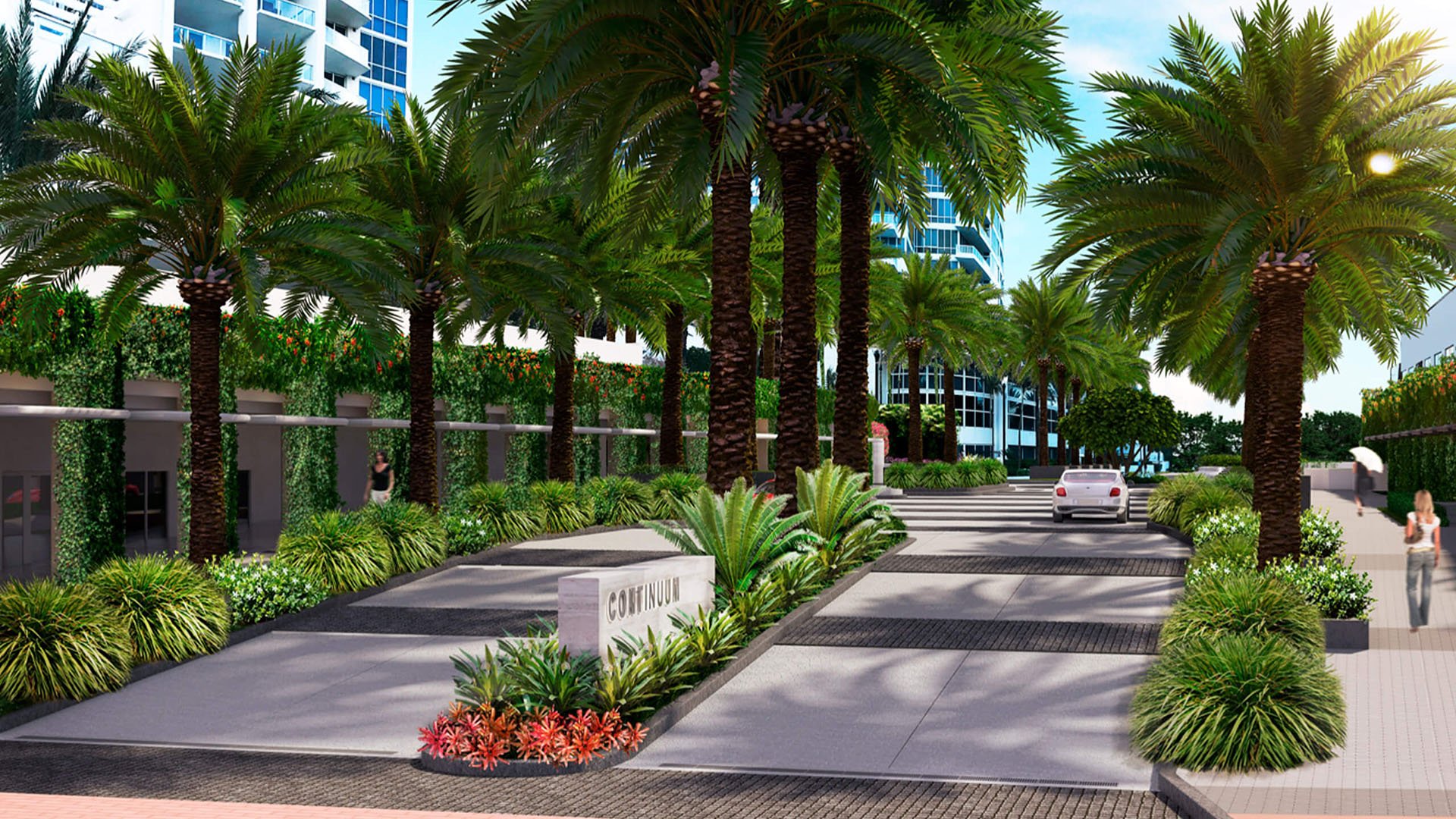
Buying at Continuum on South Beach is not simply a question of views, floor plan, or amenities. It is also a question of daily access. For a buyer considering a residence at the southern edge of Miami Beach, the quieter test is whether the property’s entrances, garage access, porte cochères, valet operation, and pedestrian routes perform smoothly when the neighborhood is under pressure.
The point is not to presume a traffic problem. It is to underwrite a risk before it becomes part of ownership. In Sofi, the same qualities that make the setting desirable can compress movement at certain times: beach access, restaurant demand, hotel arrivals, ride-share activity, marina-related trips, and major event traffic. A well-advised buyer should ask targeted questions, observe real conditions, and separate ordinary urban energy from access friction that affects privacy, convenience, or emergency response.
For a private diligence worksheet, label the pressure points plainly: South of Fifth, Art-basel, Short-term-rentals, Beach-access, and Marina. These are not merely lifestyle categories. They are operating conditions that can shape how easily one leaves for dinner, returns from the airport, receives guests, or accommodates vendors.
The first question is deceptively simple: which vehicle routes do residents most commonly use to reach Continuum, and where do those routes overlap with hotel, restaurant, beach, or marina traffic? A polished lobby experience matters less if the approach roads create recurring uncertainty at peak times.
Ask management, building staff, and current residents which approaches feel most reliable on a weekday morning, a Friday evening, a Saturday afternoon, and a Sunday checkout window. Then drive those routes yourself. Observe whether the issue is moving traffic, curbside stopping, delivery vehicles, ride-share confusion, pedestrian crossings, or valet stacking. Each has a different implication for ownership.
This is also useful when comparing nearby luxury buildings. A buyer weighing Apogee South Beach or The Ritz-Carlton Residences® South Beach should ask the same practical question: how protected is the resident arrival sequence when the surrounding neighborhood is busy?
At this level, an answer such as “the valet handles it” is insufficient. Ask whether the building has a written traffic-management protocol covering resident arrivals, resident guests, vendors, deliveries, emergency vehicles, contractor entry, and valet overflow. If the protocol exists, ask how it changes during high-demand periods.
Specificity matters. Does resident garage access receive priority when guest arrivals cluster? Are delivery windows controlled to avoid preventable bottlenecks? Are contractors routed through a defined process? What happens if a ride-share driver blocks an entrance? If a service vehicle arrives during a peak resident return period, who directs it, and where does it wait?
The strongest buildings make movement feel effortless because they have already rehearsed friction points. Buyers should ask whether security, valet, or management coordinates with nearby hotels, restaurants, or city enforcement when curb space is blocked. The answer should reveal whether the property treats curb management as a daily operating discipline or as case-by-case improvisation.
A single midweek showing is not enough. Visit the property at multiple times before buying: weekday morning, Friday evening, Saturday afternoon, Sunday checkout period, and during a local event. The goal is not to catch one bad moment. It is to understand the range of conditions.
Ask for real examples of congestion events near Continuum, including weekends, holidays, Art Basel or Miami event periods, boat-show timing, cruise-ship activity, and major beach events. Ask what changed operationally during those moments. Did valet staffing increase? Were traffic officers present nearby? Were certain curbs cleared? Were residents notified in advance?
Comparable diligence applies across Miami Beach. Buyers considering Five Park Miami Beach or 57 Ocean Miami Beach may be evaluating different micro-locations, but the same principle holds: the building’s daily choreography is part of the residence.
Luxury buyers often evaluate interiors with precision and curbs with optimism. For this topic, that order should be reversed. The curb is where hotel traffic, resident traffic, service traffic, and pedestrian movement reveal themselves.
Ask whether ride-share drivers tend to stage, idle, or attempt improper pickups near entrances during evening dining hours or weekend beach traffic. Ask whether hotel loading, trash pickup, catering, linen trucks, or vendor deliveries create recurring bottlenecks on streets residents use. Ask whether municipal curb-management rules, no-idling rules, tow-away enforcement, loading-zone placement, or traffic officers are actively used near the building.
Then stand outside long enough to see the pattern. Are drivers confused about where to stop? Are pedestrians protected from vehicle conflicts? Do staff intervene early, or only after a queue forms? Does the entrance preserve a residential tone, or does it begin to feel like a hotel forecourt at certain times?
Not every traffic question is about the street. Internal building rules can either reduce curb congestion or add to it. Ask for the rules on resident guest access, valet use, contractor entry, and delivery windows. Ask whether short-term rental activity is restricted, monitored, or enforced within the condominium, because transient guest behavior can create hotel-like movement inside a residential building.
A building that controls its internal guest and vendor flow may be better positioned to protect the resident experience, even in a busy neighborhood. A building with loose operational discipline may feel more exposed when outside traffic rises. The distinction can influence noise, privacy, walkability, and the ease of leaving and returning.
The most revealing question may be whether any traffic complaints, board minutes, capital projects, or operational changes have addressed access concerns at Continuum. You are not looking for perfection. You are looking for governance. Has the association identified problems, adjusted staffing, changed vendor windows, improved signage, or revised procedures?
Also ask about future conditions. Could hotel, restaurant, marina, beach-club, or mixed-use projects near South of Fifth change the traffic pattern around the property? Even when details are uncertain, a sophisticated buyer should know whether management is watching the horizon.
In ultra-prime condominium ownership, discretion is not only about privacy screens and elevator banks. It is also about whether the street allows the residence to live as intended.
Should hotel traffic be treated as a deal breaker at Continuum on South Beach? Not automatically. Treat it as a due diligence category to be observed, documented, and discussed before contract deadlines.
When should I visit to assess traffic conditions? Visit on a weekday morning, Friday evening, Saturday afternoon, Sunday checkout period, and during a notable local event if possible.
Who should answer traffic-management questions? Speak with building management, valet leadership, security, association representatives, and residents who use the property daily.
What is the most important access question to ask? Ask whether resident driveway, valet, or garage access is ever delayed by nearby hotel arrivals, ride-share pickups, or service vehicles.
Should I ask for written protocols? Yes. A written protocol for residents, guests, vendors, deliveries, emergency vehicles, and valet overflow is a useful signal of operational discipline.
Do ride-share vehicles matter in this analysis? Yes. Ride-share staging, idling, and pickup behavior can affect entrances during dining hours, beach traffic, and event periods.
Can short-term rental activity affect traffic inside a condo? It can. Ask whether restrictions are monitored and enforced, because transient use may add hotel-like movement within a residential building.
Should I review board materials for traffic issues? Yes. Board minutes, complaints, capital projects, and operational changes may show how access concerns have been managed.
What future changes should buyers ask about? Ask whether nearby hotel, restaurant, marina, beach-club, or mixed-use projects could shift traffic patterns around South of Fifth.
Is this only relevant to Continuum buyers? No. The same curb-access discipline applies to many ultra-luxury Miami Beach purchases, especially in high-demand coastal neighborhoods.
To compare the best-fit options with clarity, connect with MILLION.
If branded residences are on your mind — as a home or as an allocation — we would be glad to share what we are seeing, privately.
Begin a quiet conversation