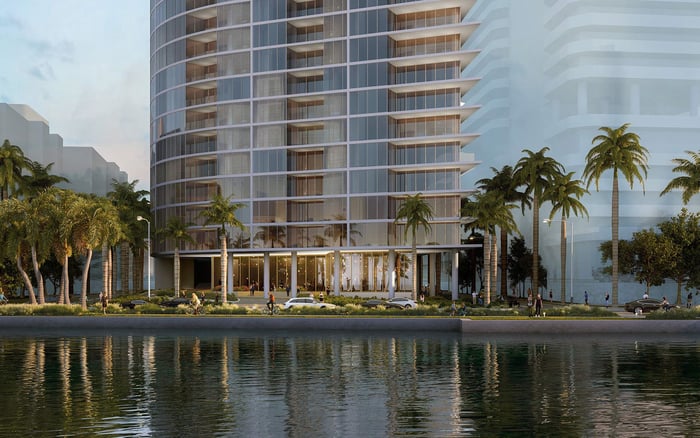
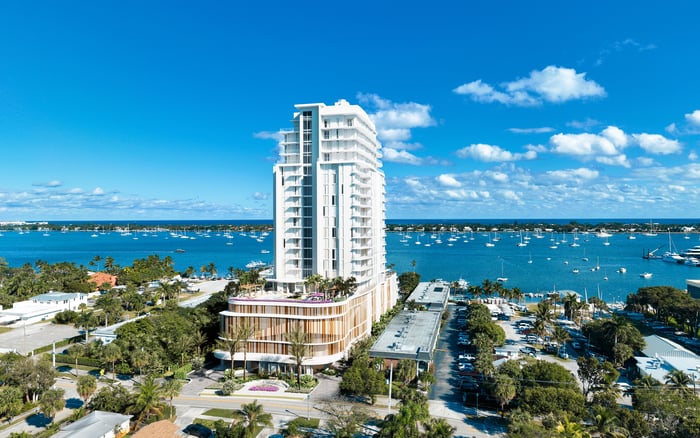
A buyer-focused editorial on why West Palm Beach luxury residences are increasingly judged by ease, privacy, daily function, and service clarity rather than spectacle alone.
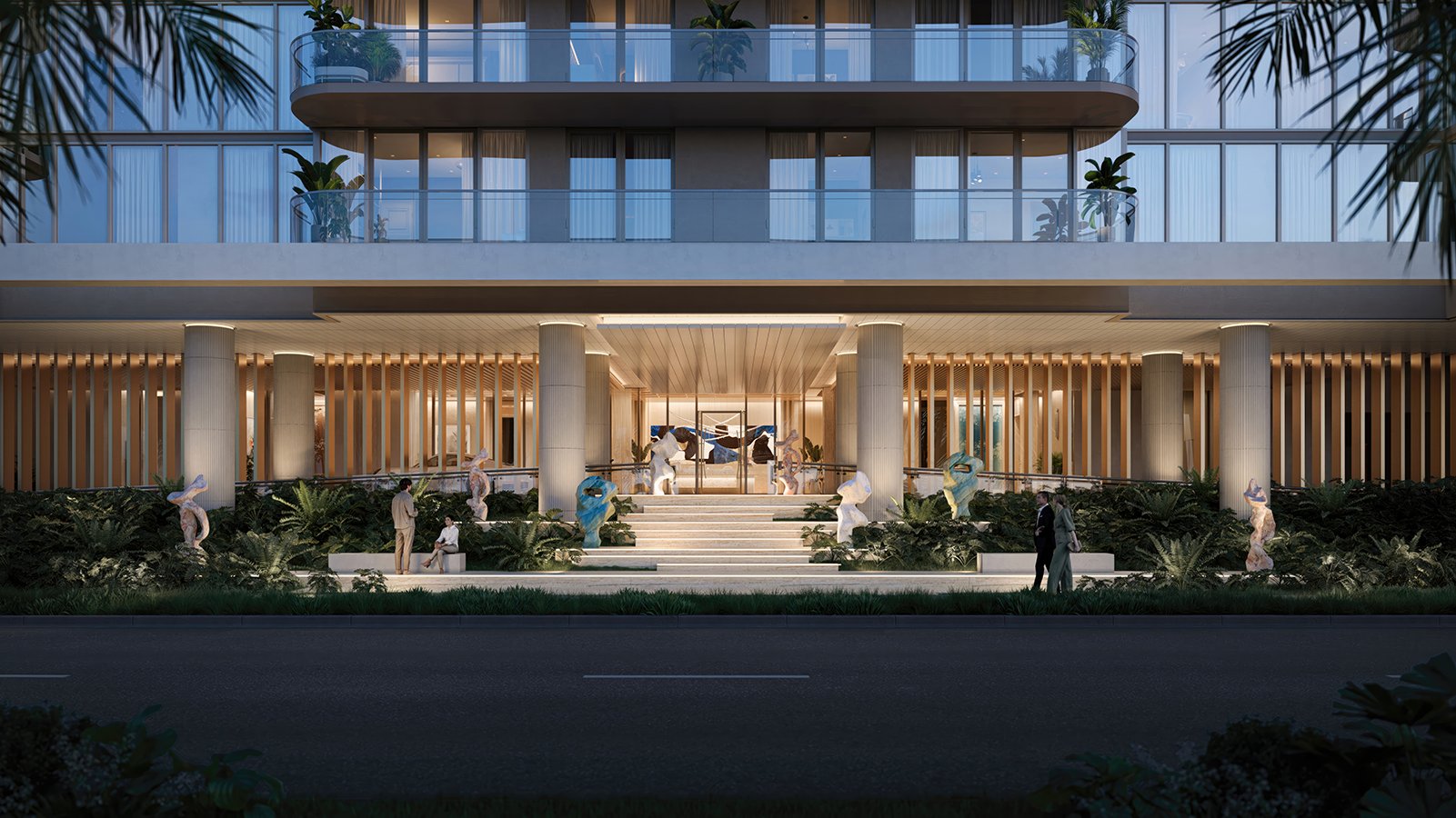
In West Palm Beach, luxury is no longer measured only by what appears in a rendering, a lobby, or a skyline silhouette. The more discerning question is quieter: how well does the residence work after the first impression fades? For buyers who move between cities, manage demanding calendars, host selectively, and expect discretion as a baseline, operational simplicity can be more valuable than spectacle.
Spectacle still has its place. A dramatic arrival, a sculptural amenity space, a cinematic view, and a recognizable hospitality language can all define the emotional pull of a building. Yet the daily experience of ownership is shaped by smaller mechanics: how a car arrives, how guests are received, how packages are handled, how staff communicates, how elevators move, how pets circulate, how maintenance requests are resolved, and how private life remains private.
That is the essential shift. The best residence is not always the one that announces itself most loudly. More often, it is the one that removes friction before the owner has to notice it.
West Palm Beach has a distinct relationship with luxury. It sits close to Palm Beach elegance, yet carries its own urban rhythm, with buyers often seeking access, culture, dining, waterfront calm, and a more contemporary residential experience. The result is a market where a residence must feel polished without becoming complicated.
For the international buyer, even a search term as plain as West-palm-beach should lead to a practical question: will this home make daily life easier? A residence that looks exceptional but requires constant coordination can quickly lose its appeal. Conversely, a building that handles the ordinary with grace can become the rarest form of luxury: a place where ownership feels light.
This is where projects such as Alba West Palm Beach enter the conversation naturally. Not because any single name defines the market, but because the West Palm Beach buyer is increasingly comparing residences through the lens of how smoothly they support real life, not only how well they photograph.
A beautiful residence deserves a rigorous operational review. Before focusing only on finishes, views, and amenity decks, buyers should mentally walk through the first hour of a normal day. Where does the car go? How intuitive is the transition from arrival to elevator? Is there a clear distinction between resident, guest, vendor, and service movement? Can deliveries be handled without creating lobby congestion? Does the building feel composed during peak moments?
The second layer is privacy. Luxury buyers often discuss privacy in architectural terms, but operational privacy is just as important. It includes how staff announces visitors, how vendors are scheduled, how amenity reservations are managed, and whether the residence allows the owner to move through the building without unnecessary exposure.
The third layer is maintenance. A residence with complex systems, elaborate common spaces, and an ambitious service promise needs disciplined management. The goal is not austerity. The goal is confidence. Owners should feel that the building has been designed not only to impress, but to operate with consistency.
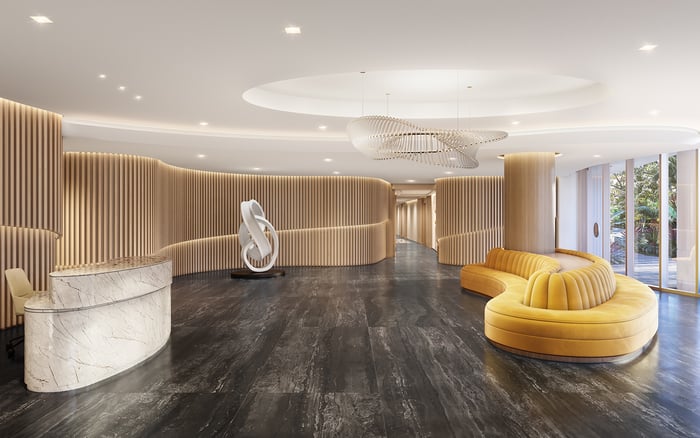
There is a growing appreciation for residential restraint. Not minimalism for its own sake, but a form of design intelligence that understands what buyers actually need. A calm lobby can be more desirable than a theatrical one if it feels secure, easy to navigate, and appropriately staffed. A smaller amenity program can be more useful than a sprawling one if it is curated, bookable, and maintained. Boutique scale can be a virtue when it reduces friction and creates a stronger sense of order.
That is why the word Boutique belongs in the West Palm Beach luxury conversation. It suggests not merely size, but a more intimate operating philosophy. Fewer layers can mean clearer communication. Fewer competing uses can mean more predictable access. Fewer anonymous encounters can mean a more residential atmosphere.
This does not mean buyers should avoid large or highly serviced buildings. It means they should evaluate whether the service model matches the promise. A residence such as Mr. C Residences West Palm Beach may appeal to a buyer drawn to a recognizable hospitality sensibility, while the deeper question remains the same: how naturally does that sensibility translate into daily residential life?
The arrival sequence is one of the most revealing parts of any luxury building. It tells a buyer whether the project has been designed from the owner’s point of view or the camera’s point of view. A seamless arrival is not simply attractive. It is legible. It reduces decisions. It allows a resident to move from street to home without confusion, delay, or performance.
In West Palm Beach, where buyers may be coming from private clubs, offices, airports, marinas, or Palm Beach social engagements, this matters. A strong arrival experience handles different rhythms with composure. It welcomes guests without making residents feel exposed. It supports private routines without turning the building into a stage.
Residences such as Forté on Flagler West Palm Beach speak to the kind of buyer who pays attention to how a building meets its setting. Yet the lasting test is not the first arrival. It is the hundredth arrival, when the owner wants the experience to feel effortless.
Amenity culture has matured. Buyers are less impressed by long menus and more interested in whether the amenities they will actually use are easy to access, thoughtfully staffed, and aligned with the life they want. A fitness space that is well placed and consistently maintained may matter more than a rarely used showpiece. A lounge that can host gracefully may be more valuable than an oversized room without intimacy.
The strongest amenity programs share a common trait: they reduce the need to outsource daily life. They make wellness, hosting, work, quiet, and recreation feel close at hand without creating operational congestion. The question is not how many amenities exist. The question is whether they make ownership easier.
This is particularly important for a Second-home buyer. When the residence is not occupied every day, reliability becomes part of the luxury equation. The owner wants to arrive to a home that feels prepared, not a list of unresolved tasks. In that context, the building’s management culture can be as important as the architecture.
Confidence is difficult to render, but easy to feel. It appears in a staff member who knows how to greet without overstepping. It appears in a service request that does not require repetition. It appears in common spaces that feel cared for without feeling fussy. It appears in the absence of avoidable inconvenience.
For many West Palm Beach buyers, confidence is also tied to Waterview living, where the emotional value of the setting should not be diminished by daily operational strain. A residence with a beautiful outlook still needs the basics to function flawlessly. The view may sell the dream, but operations sustain the ownership experience.
This is one reason buyers continue to study established luxury service languages alongside newer residential offerings. The Ritz-Carlton Residences® West Palm Beach is the kind of name that naturally raises expectations around service, but the buyer’s due diligence should remain practical: staffing, access, privacy, maintenance, and governance.
A disciplined buyer should compare residences through three lenses. First, the private home itself: plan, light, storage, acoustics, outdoor space, and finish quality. Second, the building as a living system: arrival, elevators, service paths, security, staffing, and amenities. Third, the ownership structure: how decisions are made, how standards are maintained, and how the building protects its long-term character.
New-construction can be especially compelling when it allows buyers to participate early in a building’s identity, but it also requires careful attention to what is promised versus what will be operated over time. The most polished presentation should still be tested by ordinary scenarios. Where does the dog go? Where does the caterer arrive? How does a guest find the residence? What happens during a busy evening? How is quiet preserved?
The best answers are often simple. They do not require explanation. They feel built into the plan.
West Palm Beach luxury is entering a more sophisticated phase, one in which restraint, clarity, and service discipline can matter as much as design drama. The most compelling residence is not necessarily the one with the most extravagant gestures. It is the one that understands that time, privacy, and ease are the true luxuries.
Buyers should still seek beauty. They should still expect strong architecture, elegant interiors, and a sense of place. But the deeper value is found in how a building behaves. If a residence can make complex lives feel simple, it has achieved something more durable than spectacle.
What does operational simplicity mean in a luxury residence? It means the building supports daily life with minimal friction, from arrival and service coordination to privacy and maintenance.
Why does this matter in West Palm Beach? West Palm Beach attracts buyers who often value access, discretion, and ease as much as design presence or brand recognition.
Should buyers still care about amenities? Yes, but the best amenities are useful, well managed, and easy to enjoy rather than merely expansive.
Is a Boutique building always better? Not always. Boutique scale can feel calmer, but the quality of operations and governance matters more than size alone.
How should a buyer evaluate arrival experience? Walk through resident, guest, valet, and vendor movement to see whether the sequence feels intuitive and private.
Does New-construction reduce operational risk? It can offer modern planning, but buyers should still examine staffing, service promises, and long-term management standards.
What is the role of privacy in operational design? Privacy depends on more than walls and views; it also depends on circulation, staff protocols, and guest handling.
Why is Second-home ownership different? Second-home owners often need stronger reliability, since the residence must feel prepared and cared for between visits.
Can a dramatic building still be simple to live in? Yes, if the design ambition is matched by clear circulation, disciplined service, and practical everyday systems.
What should buyers prioritize after the residence itself? They should study how the building operates, including arrivals, elevators, service paths, maintenance, and amenity access.
For a confidential assessment and a building-by-building shortlist, connect with MILLION.
If branded residences are on your mind — as a home or as an allocation — we would be glad to share what we are seeing, privately.
Begin a quiet conversation