A buyer-focused comparison of Fendi Château Residences Surfside and Ocean 580 Pompano Beach through the operational realities that matter most in luxury ownership: arrival control, security depth, and guest discretion.
For sophisticated South Florida buyers, the question is rarely whether a building looks expensive. The more consequential question is whether it operates like a serious private residence under pressure. Fendi Château Residences Surfside and Ocean 580 Pompano Beach offer a useful contrast because they sit in different luxury contexts: one a higher-profile branded condominium in Surfside, the other a more lightly documented Pompano Beach asset that calls for direct verification.
This is not a beauty contest. It is a due-diligence lens for owners who understand that privacy is operational. Arrival sequence, security posture, and guest discretion are not amenities in the conventional sense. They are systems that determine how exposed an owner, family member, guest, staff member, or vendor becomes in daily life.
In Surfside, expectations surrounding Fendi Château Residences Surfside are naturally elevated. The building belongs to a luxury setting where brand, beachfront presence, and controlled arrival all carry weight. In Broward, Ocean 580 Pompano Beach sits within a market increasingly viewed through a higher-end oceanfront lens, making its operational details especially important to inspect rather than assume.
An arrival sequence should be evaluated as a chain, not a moment. The checkpoints begin at the vehicle approach and continue through drop-off, lobby entry, elevator control, corridor exposure, and unit access. If any link is weak, the building may still feel polished, but the owner’s privacy can be compromised.
At Fendi Château Residences Surfside, the arrival experience should be read as part of a branded ultra-luxury ownership proposition, not as mere curb appeal. A buyer should ask how the property manages the transition from public street to private residential realm. Does the drop-off remain calm during peak periods? Are residents and guests separated from service or vendor activity where appropriate? Is the lobby not only beautiful, but controlled?
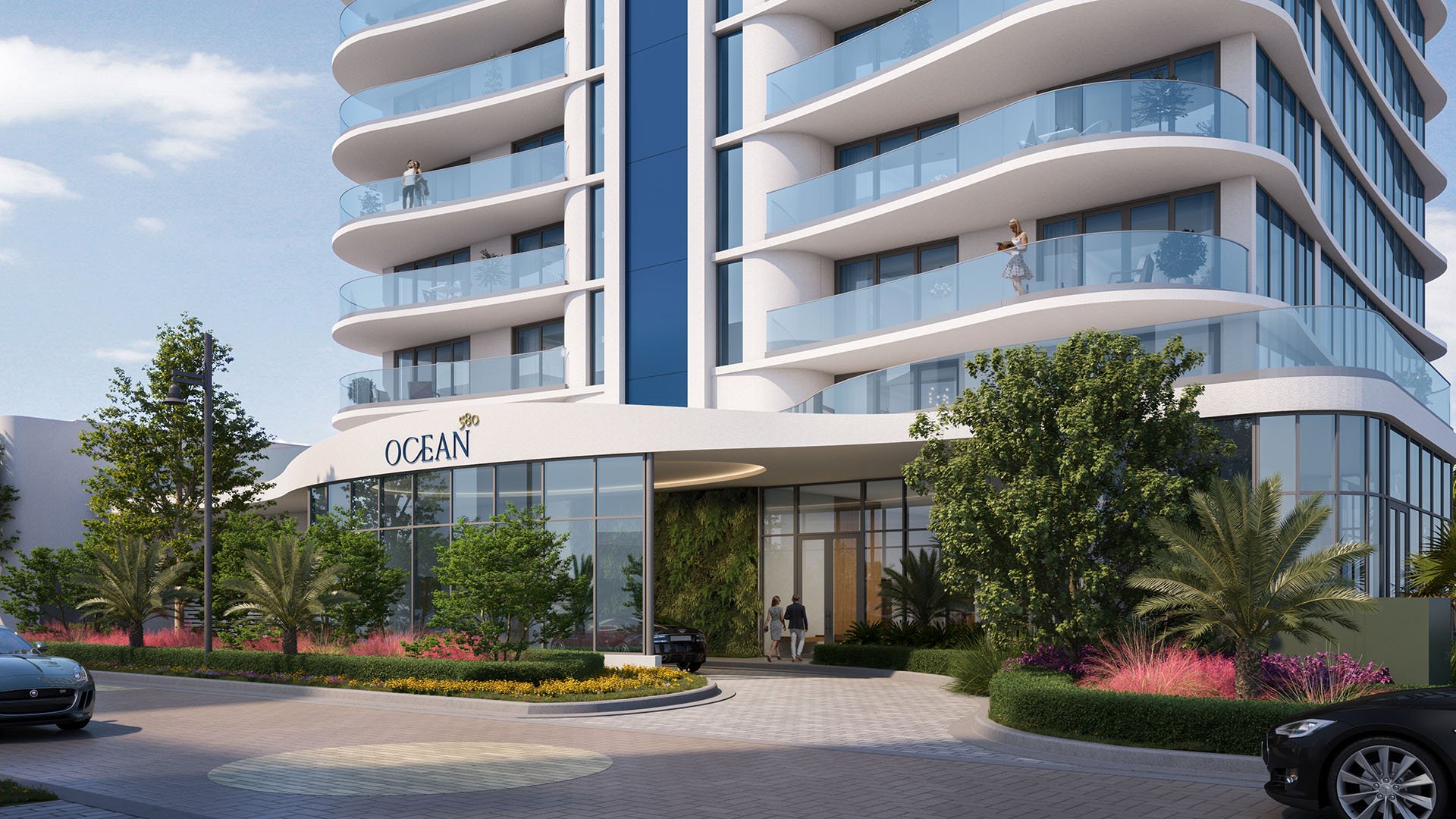
For Ocean 580 Pompano Beach, the arrival sequence deserves direct, physical review. Detail is more limited, so a buyer should treat the showing itself as a test. Arrive at different times if possible. Observe how vehicles enter, where guests wait, how elevator access is handled, and whether corridors create unnecessary exposure. The Pompano Beach repositioning story is compelling, but investment discipline requires confirming how the building actually functions.
The best luxury security is not loud. It is quietly hard: almost invisible when working well, yet difficult to bypass. Buyers should distinguish between visible security theater and a genuinely integrated posture covering architecture, access control, surveillance, staffing, visitor management, and emergency procedures.
At a branded property such as Fendi Château Residences Surfside, it is tempting to assume that design excellence naturally produces operational excellence. That assumption is dangerous. Architecture can support privacy, but staffing, protocols, training, and enforcement determine whether the system holds during holidays, storms, deliveries, private dinners, or simultaneous owner arrivals.
For both assets, buyers should ask how residents and guests are authenticated before reaching private residential levels. A polished lobby is not enough if visitors can drift toward elevators without meaningful control. Elevator permissions, front-desk procedures, valet communication, service-entry rules, and after-hours enforcement should be understood as one integrated system.
At Ocean 580 Pompano Beach, the more limited documentation makes managerial diligence essential. Buyers should request clarity at the association and building-management level, including visitor procedures, vendor access, emergency practices, and how rules are enforced in real conditions. Oceanfront living can feel serene, but coastal exposure, seasonal traffic, and service flow all place pressure on operations.
Guest discretion is broader than owner privacy. It includes family members, invited guests, household staff, vendors, drivers, wellness professionals, chefs, security personnel, and service providers. In the ultra-premium segment, the building must allow life to happen without turning every arrival into a public performance.
For Fendi Château Residences Surfside, the Surfside context heightens this expectation. Owners may value proximity, brand identity, and a refined residential atmosphere, but they should still ask practical questions. Can a guest arrive without creating lobby visibility? Can household staff access the residence without unnecessary interaction with social spaces? Are packages, floral deliveries, and private-service appointments handled in a way that preserves discretion?
For Ocean 580 Pompano Beach, the inquiry should be even more concrete. Because the project is more lightly documented, a buyer should not rely on generalized luxury language. Ask to see the physical path from service entry to residential levels. Understand where vendors wait, where guests are announced, and whether private entertaining creates congestion at the lobby or elevator bank.
The most discreet buildings tend to be calm because they are disciplined. They do not need to feel fortress-like. They simply know who belongs where, when, and under what conditions.
A serious walkthrough should be conducted like a soft audit. Start outside. How exposed is the vehicle approach? Is the drop-off compressed or gracious? Does valet activity create visual friction with residents arriving privately? Then move inward. Is the lobby entry controlled without feeling hostile? Are front-desk roles clear? Does staff appear trained to balance hospitality with boundary-setting?
Next, test the vertical path. Elevator control is one of the most important privacy points in any luxury condominium. Buyers should understand whether guests can access residential floors only after authentication and how staff handle unfamiliar visitors during busy periods. Corridor exposure matters as well. Long, visible hallways, confusing wayfinding, or unmonitored transitions can erode privacy even in expensive buildings.
Finally, ask about stress conditions. Procedures often look elegant on a quiet afternoon. The real test comes during peak traffic, event conditions, simultaneous deliveries, severe weather preparation, and seasonal occupancy. A building that maintains calm under pressure is usually better aligned with true luxury ownership.
Surfside is already associated with high-end residential expectations, so Fendi Château Residences Surfside should be judged against a demanding standard. The buyer’s focus should be whether the branded experience extends into the operational fabric of the property: arrival, screening, elevator discipline, staff consistency, and protection of household privacy.
Pompano Beach, by contrast, is part of a broader Broward conversation about oceanfront repositioning. Ocean 580 Pompano Beach is useful precisely because it invites comparison with more established Miami-Dade luxury product. The due-diligence posture should be respectful but firm: verify the building, its management culture, and its association practices before relying on any broad promise of privacy.
This is where exclusivity assumptions can mislead buyers. A prestigious setting may raise expectations, but it does not eliminate the need to inspect operations. Likewise, an emerging market may offer appeal, but its privacy and security systems must be tested with the same rigor expected in Surfside.
For ultra-prime buyers, the most valuable residence is not merely the one with the strongest design language. It is the one whose daily operating system protects the owner’s time, identity, family rhythm, and guest experience. Fendi Château Residences Surfside brings the weight of a branded Surfside luxury case study. Ocean 580 Pompano Beach brings the importance of deeper verification in a market moving up the luxury curve.
The correct question is not which property sounds more exclusive. It is which property can prove, step by step, that its arrival sequence is controlled, its security posture is integrated, and its guest discretion survives real-world use.
Why compare Fendi Château Residences Surfside with Ocean 580 Pompano Beach? They create a useful contrast between a higher-profile branded Surfside condominium and a more lightly documented Pompano Beach asset requiring direct verification.
What is the most important arrival-sequence checkpoint? The full chain matters: vehicle approach, drop-off, lobby entry, elevator control, corridor exposure, and unit access.
Does a luxury brand guarantee stronger security? No. Brand and design can support the experience, but staffing, protocols, training, and enforcement determine the true security posture.
Why is Ocean 580 Pompano Beach a diligence-sensitive comparison? Available detail is more limited, so buyers should conduct deeper physical, managerial, and association-level review.
What should buyers ask about guest authentication? They should ask how residents, guests, vendors, and service providers are confirmed before reaching private residential levels.
How should buyers evaluate valet and lobby privacy? They should observe whether valet, concierge, and lobby procedures remain discreet during peak traffic and event conditions.
Why does Surfside raise the privacy standard? Surfside’s luxury context makes controlled arrival, discreet staffing, and protected residential access especially important.
What does quietly hard security mean? It means strong operational control that limits exposure without making the residence feel defensive or inhospitable.
Should household staff be part of privacy diligence? Yes. Staff, vendors, and service providers often reveal whether a building’s discretion is truly operational.
What is the best way to shortlist comparable options for touring? Start with location fit, delivery status, and daily lifestyle priorities, then compare stacks and elevations to validate views and privacy.
If you'd like a private walkthrough and a curated shortlist, connect with MILLION.
If branded residences are on your mind — as a home or as an allocation — we would be glad to share what we are seeing, privately.
Begin a quiet conversation