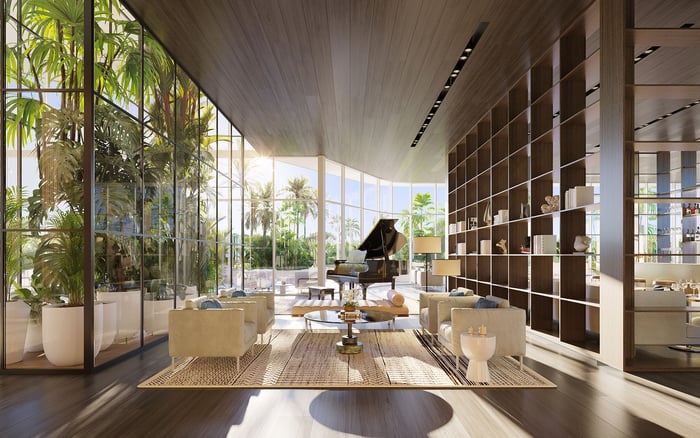
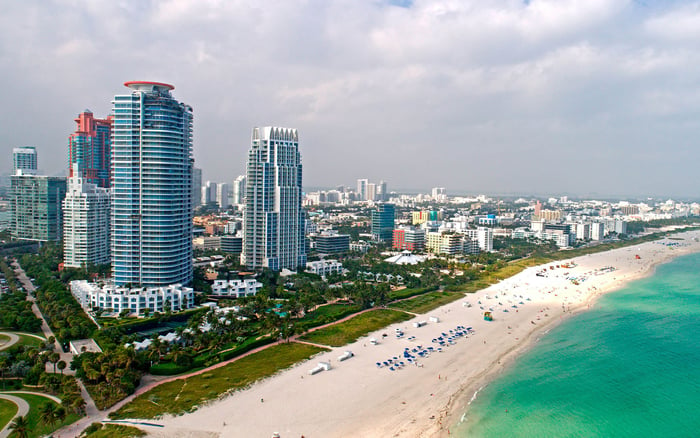
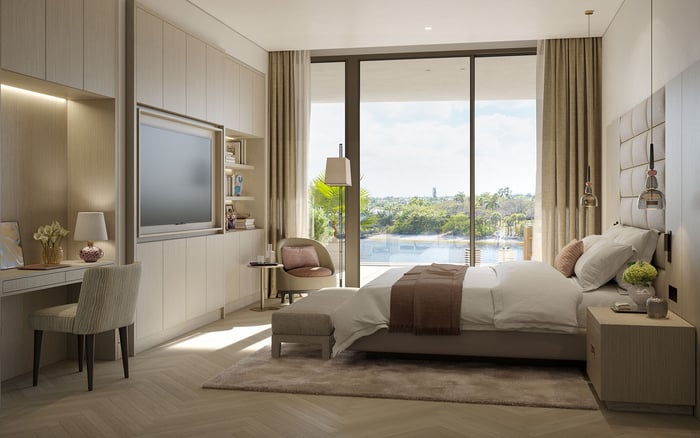
An editorial look at how W Pompano Beach Hotel & Residences fits into Pompano Beach luxury living, with attention to neighborhood texture, dining rhythms, club life, and beach-access priorities.

For buyers studying W Pompano Beach Hotel & Residences, the essential question is not simply whether the address belongs in Pompano Beach’s luxury residential inventory. It does. The more revealing question is how a branded hotel-and-residences property shapes the rhythm of daily life around it.
The name matters. W Pompano Beach Hotel & Residences points to two related but distinct experiences: a hotel component, with the energy and social circulation hospitality can bring, and a private residences component, where ownership is judged by privacy, convenience, service expectations, and the feeling of returning home. The appeal is not only the brand. It is whether the surrounding neighborhood texture supports the way a buyer actually wants to live.
That texture includes the path to the beach, the ease of leaving for dinner, the atmosphere around clubs and social venues, and the balance between coastal leisure and residential calm. In a market where Branded Residences are increasingly evaluated as lifestyle platforms, those details become part of the real estate itself.
A hotel-and-residences property carries a different social charge than a purely private condominium. The hotel side can create movement: guests arriving, lobby activity, dining-oriented plans, and a more animated sense of arrival. The residences side must answer a separate promise: personal space, discretion, and a feeling that the building still belongs to owners when the hospitality component is active.
That distinction is central for Pompano Beach buyers. Some purchasers want the vitality associated with a recognized hospitality brand. Others want the polish of that identity without feeling that home has become an extension of a public resort. The right fit depends on how the residence will be used. A primary resident may prioritize predictability and quiet transitions. A second-home buyer may welcome a setting that feels alive from the moment they arrive.
This is also where the phrase Condo-hotel enters the conversation. Buyers should be precise about what they mean by it, because the legal, operational, and lifestyle implications can vary by property. The daily experience is shaped less by a label than by how the building separates hotel uses from private residential life.
Pompano Beach has become part of South Florida’s broader luxury conversation, but it should not be read as a version of Miami Beach, Fort Lauderdale, or Palm Beach. Its appeal is more local, more coastal, and, for many buyers, more measured. Around W Pompano Beach Hotel & Residences, the most useful exercise is to walk the neighborhood at different times of day and ask whether the texture matches the intended lifestyle.
Morning tells one story. Beach routines, coffee runs, exercise, and the quiet start of the day reveal how livable an address feels before the social calendar begins. Afternoon tells another, especially for residents who work from home or divide the day between business calls and outdoor breaks. Evening is where dining, clubs, and hospitality energy become most visible.
Nearby luxury projects help frame the competitive set without making the decision feel interchangeable. Armani Casa Residences Pompano Beach, for example, speaks to the area’s branded residential direction, while W Pompano Beach Hotel & Residences adds the hotel-and-residences lens. The question for buyers is not which name is louder. It is which living pattern feels more natural.
Dining access is often discussed too narrowly. A buyer may ask how many restaurants are nearby, but the better question is how naturally dining fits into the week. Can a resident leave casually, return comfortably, and avoid turning every evening into a planned production? Does the area support spontaneous meals as well as dressed-up nights? Does the social atmosphere enhance home life or compete with it?
Because restaurant scenes evolve, buyers should avoid making a purchase decision around one venue or one current favorite. A stronger approach is to evaluate the pattern: variety, walkability where relevant, valet and parking expectations, seasonal energy, and the difference between weekday calm and weekend demand. For a branded property, dining is part of the lifestyle proposition, but the neighborhood must still carry its own weight.
This is where Pompano Beach can be compelling for those who want coastal access without automatically choosing a denser urban district. A buyer comparing the area with Fort Lauderdale may also study The Ritz-Carlton Residences® Pompano Beach to understand how different luxury formats interpret the same coastal city.
Clubs and social venues influence a neighborhood even when a resident is not a regular participant. They shape traffic patterns, evening ambience, guest behavior, and the perceived line between public energy and private retreat. Near a hotel-and-residences property, that line deserves careful attention.
For some owners, proximity to social life is the point. They want the option to meet friends without committing to long drives, and they prefer a building that feels connected to the surrounding scene. For others, the ideal residence is close enough to participate but insulated enough to step away. The difference can be subtle during a daytime tour and obvious after dark.
The key is to evaluate the experience from the resident’s perspective. Arrival sequence, lobby mood, elevator privacy, acoustic separation, and the feeling of the immediate streetscape all matter. A branded name may set expectations, but the lived experience is defined by circulation and boundaries.
Beach-access is one of the most emotionally important variables in coastal real estate, yet it is also one of the easiest to oversimplify. Being near the ocean is not the same as having a routine that feels effortless. Buyers should consider the exact path, the comfort of coming and going with family or guests, and how the experience changes between early morning, midday, and evening.
The beach can function as an amenity even when it is not inside the property line. It shapes wellness routines, weekend entertaining, children’s schedules, and the simple pleasure of stepping outside without overplanning. For a buyer evaluating W Pompano Beach Hotel & Residences, the beach is not just a view or a talking point. It is part of the daily operating system.
Other Pompano Beach projects, including Waldorf Astoria Residences Pompano Beach and Ocean 580 Pompano Beach, reinforce how central coastal positioning has become to the area’s luxury identity. Each property should be judged not only by architecture or branding, but by the practical ease of living near the water.
The strongest case for W Pompano Beach Hotel & Residences is not that it exists in a vacuum of luxury. It is that it gives buyers a distinct way to think about Pompano Beach: part hospitality, part private residence, part coastal base. That combination can be powerful when an owner wants service, social energy, and beach-oriented living in one frame.
Still, the decision should be personal and specific. A buyer who entertains often may value the hotel dimension differently than a buyer seeking a quiet seasonal escape. A family may test access and routines differently than an individual owner who prioritizes nightlife and convenience. An investor-minded purchaser may focus on brand recognition, while an end user may care more about the first ten minutes after arriving home.
In that sense, Lifestyle is not a soft category. It is the organizing principle. The best residence is the one where dining, clubs, beach access, privacy, and daily movement feel aligned rather than forced.
What is W Pompano Beach Hotel & Residences? It is a branded hotel-and-residences property in Pompano Beach and part of the area’s luxury residential inventory.
Why does the hotel component matter to buyers? A hotel component can influence arrival energy, social activity, and the overall hospitality feel of the property.
How are the private residences different from the hotel side? The private residences should be evaluated for ownership experience, privacy, daily convenience, and separation from public activity.
Is Pompano Beach a luxury residential market? Pompano Beach is represented within South Florida’s luxury residential inventory, with multiple projects competing for coastal buyers.
Should buyers focus on specific restaurants nearby? Buyers should focus more on dining patterns, convenience, and evening atmosphere than on any single venue.
How should club access be evaluated? Consider how social venues affect noise, traffic, privacy, and the feeling of returning home at different hours.
Why is beach access so important? Beach access shapes daily routines, wellness habits, guest enjoyment, and the emotional value of coastal ownership.
Is W Pompano Beach Hotel & Residences best for primary or second-home buyers? It may appeal to either, depending on whether the buyer values hospitality energy, coastal access, and branded living.
What should buyers compare it with in Pompano Beach? Buyers often benefit from comparing different luxury formats, including branded residences and other coastal condominium offerings.
What is the most important lifestyle question to ask? Ask whether the surrounding dining, social life, beach routine, and privacy profile match how you plan to live.
For a discreet conversation and a curated building-by-building shortlist, connect with MILLION.
If branded residences are on your mind — as a home or as an allocation — we would be glad to share what we are seeing, privately.
Begin a quiet conversation