A discreet buyer’s guide to why water-pressure consistency at Miami Design Residences Midtown Miami is best evaluated through ownership structure, governance, and building operations.
At the top end of Miami real estate, the smallest daily rituals can reveal the most about a building. A morning shower, a kitchen tap, a service sink, a spa fixture, or a terrace hose connection may seem ordinary. In a vertical residence, each depends on a coordinated chain of mechanical systems, maintenance routines, access rights, and governance decisions. For buyers evaluating Miami Design Residences Midtown Miami, the question is not simply whether water pressure feels satisfactory during a tour. The more sophisticated question is who owns, controls, funds, and responds to the infrastructure that makes consistency possible.
That distinction matters because luxury buyers are not purchasing finishes alone. They are purchasing reliability. A residence may photograph beautifully and still depend on hidden systems that require clear authority and disciplined management. Water pressure is one of those systems. It sits behind walls, above ceilings, in equipment rooms, and inside association documents. When it works, it disappears. When it fluctuates, it becomes a quality-of-life issue for owners, guests, tenants, staff, and the perception of the building itself.
In a multi-level residential environment, water-pressure consistency is rarely the result of a single device or decision. It can involve pumps, pressure zones, risers, valves, storage, filtration, metering, maintenance schedules, and emergency procedures. It can also involve how residential areas relate to any other operating components in or around the building. The core buyer issue is not to master engineering, but to understand accountability.
A buyer should want to know whether the association has direct control over the relevant systems, whether any components are shared, and how costs are allocated. If a service issue appears, is the response handled through residential management, a master association, a third-party operator, or another structure? If equipment requires replacement, is there a clear reserve plan, or will owners face a special-assessment discussion? If access is required to mechanical spaces, who grants it, and how quickly?
These are not alarmist questions. They are the normal language of premium ownership. In South Florida, where buyers often compare lifestyle, design, and location across a wide set of addresses, the best buildings are judged by how invisible their operations feel. Consistent pressure is one expression of that invisibility.
Ownership structure can be more consequential than a marble slab. A beautifully appointed lobby may create the first impression, but bylaws, maintenance obligations, budgets, and decision rights determine how the property performs over time. When buyers ask about water pressure, they are really asking whether the building has a governance model capable of protecting daily comfort.
The practical review should begin with documents. Buyers and their advisers should examine the condominium declaration, association rules, budget materials, reserve information, meeting records, maintenance responsibilities, and any materials that describe shared systems. The goal is not to find perfection. The goal is to understand whether responsibility is legible. Ambiguity is rarely elegant.
For investment-oriented buyers, this becomes especially important. Tenants and seasonal users may not understand the mechanics of a building, but they immediately understand inconsistent service. A residence positioned for premium occupancy should be supported by operations that reduce friction. The same principle applies to end users who travel often and expect a home to perform when they return.
Midtown sits within a broader Miami luxury map that invites comparison. A buyer may be considering the cultural energy near Wynwood, the office-and-waterfront rhythm of Downtown, or the established vertical luxury of Brickell. Each submarket carries a different lifestyle language, but the diligence question remains consistent: how does the building operate after the sales presentation ends?
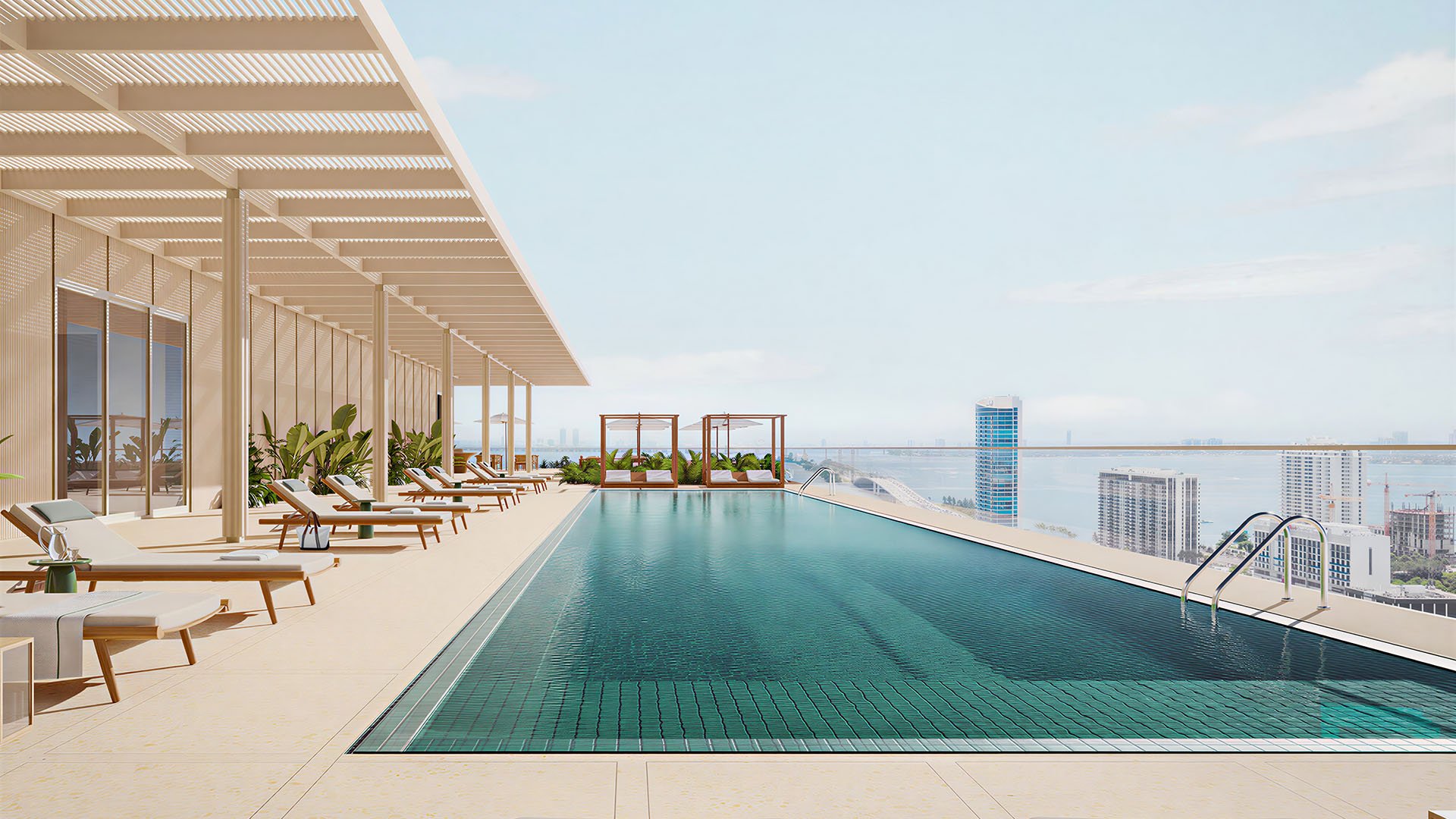
That is why water pressure belongs in the same conversation as elevators, cooling, security, parking, loading, package handling, and amenity staffing. It is part of the daily operating standard. A pool may be the more visible amenity, and a balcony may frame the emotional sell, but the most telling systems are often the least photographed.
Midtown and the Design District context also tends to attract buyers who value design literacy. Those buyers are often precise about materials, layouts, furnishings, lighting, and art. The same precision should extend to infrastructure. A thoughtfully designed residence should be supported by a thoughtfully governed building.
The most efficient approach is direct, calm, and documented. Ask whether there have been recurring water-pressure complaints, how service requests are logged, and what the typical response path looks like. Ask which systems are maintained by the residential association and whether any relevant components are shared or subject to another entity’s decision-making. Ask whether recent or planned mechanical work affects water delivery, pressure balancing, or fixture performance.
It is also reasonable to ask for clarity on operating hours, emergency response, and vendor access. In a luxury building, a minor issue should not become a chain of unanswered emails. Clear escalation procedures are part of the ownership experience.
During a physical review, buyers should avoid relying on a single impression. A brief faucet test during a quiet showing does not answer how the residence performs at peak usage periods, after maintenance, or across different fixtures. The better question is whether management can speak confidently about system design, maintenance history, and ownership responsibility.
Condominium documents can feel dense, but the important themes are straightforward: responsibility, funding, access, and remedies. Responsibility explains who must maintain and repair a system. Funding explains how that work is paid for. Access explains who can reach the equipment when needed. Remedies explain what happens when performance falls short.
A well-run property does not need to overpromise. It should provide a clear framework. Buyers should be cautious when answers are overly casual, when responsibilities are described only verbally, or when a system appears to depend on informal cooperation. In luxury real estate, informality can be charming at dinner, but it is not a substitute for governance.
This is also where representation matters. The right adviser can translate technical and association language into practical ownership implications. The issue is not whether every building system will remain flawless forever. The issue is whether the building is organized to identify, fund, and resolve issues with discretion.
Water-pressure consistency is a refined buyer’s question because it connects private comfort with institutional discipline. It asks whether the building’s visible promise is matched by invisible competence. For Miami Design Residences Midtown Miami, that is the ownership question behind the fixture: not only what you receive, but who is responsible for keeping it consistent.
The most discerning buyers in South Florida increasingly understand that luxury is not simply a finish package or a skyline angle. It is the confidence that the residence will perform quietly, repeatedly, and without unnecessary negotiation. When water pressure becomes part of due diligence, the buyer is not being difficult. The buyer is reading the building like an owner.
What does water-pressure consistency mean in a luxury condo? It means fixtures perform predictably across everyday use, rather than feeling strong one moment and weak the next.
Why does ownership structure affect water pressure? Ownership structure determines who controls, maintains, funds, and repairs the systems that support pressure.
Should buyers test faucets during a showing? Yes, but a single test is only a starting point. Document review and management clarity are more important.
Is water pressure mainly a high-floor concern? It can be more noticeable in vertical buildings, but the real issue is system design, maintenance, and governance.
Which documents are most relevant? Buyers should review association documents, budgets, reserve materials, maintenance responsibilities, and meeting records.
Does this matter for investors? Yes. Reliable daily function supports tenant satisfaction, owner confidence, and the long-term perception of quality.
Can amenity operations affect the discussion? They can, especially if systems, maintenance obligations, or operating responsibilities are shared across components.
How should Midtown be compared with Brickell or Downtown? Compare lifestyle, but also compare governance, response procedures, mechanical planning, and operating discipline.
What is the biggest red flag? Vague responsibility is the concern. A luxury building should be able to explain who acts, who pays, and how quickly.
What is the best way to shortlist comparable options for touring? Start with location fit, delivery status, and daily lifestyle priorities, then compare stacks and elevations to validate views and privacy.
For a discreet conversation and a curated building-by-building shortlist, connect with MILLION.
If branded residences are on your mind — as a home or as an allocation — we would be glad to share what we are seeing, privately.
Begin a quiet conversation