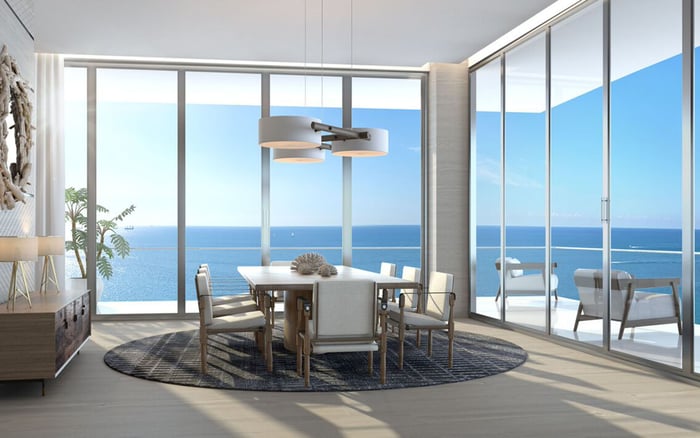
A buyer-focused guide to evaluating family-room acoustics, privacy, and soundproofing due diligence when comparing 321 Ocean Drive with 1 Waterplace Fort Lauderdale.
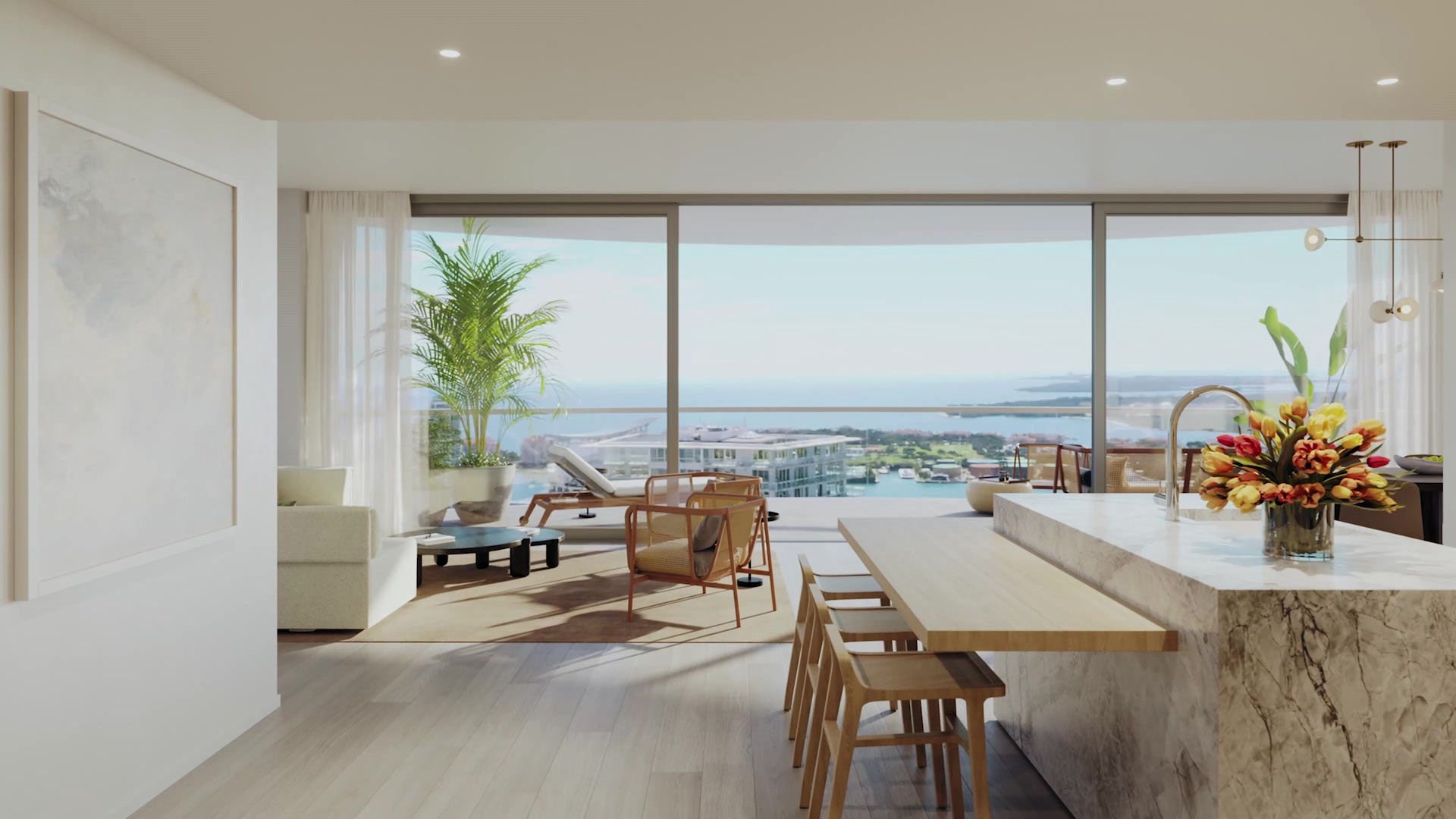
A family room is often the most revealing space in a residence. It is where children watch a film, guests gather after dinner, calls continue after office hours, and a quiet morning can become a full household within minutes. For buyers weighing Family Room Acoustics: 321 Ocean Drive vs 1 Waterplace Fort Lauderdale Soundproofing, the issue is not noise in the abstract. It is whether the main living space can remain composed through real life.
In South Florida, this is a refined but practical concern. Residences are often shaped around views, glass, terraces, and fluid entertaining spaces. Those same qualities can influence how sound travels, reflects, and settles. A spectacular room can feel less luxurious if voices bounce sharply, exterior activity intrudes, or footfall from another area becomes part of the soundtrack.
Luxury buyers may frame the decision as Miami Beach versus Fort Lauderdale, with oceanfront exposure, water-view calm, balcony use, and resale discipline all informing the brief. The most sophisticated approach is not to assume one address will be quieter than another. It is to evaluate how each family room performs as an acoustic environment.
Without relying on general impressions, the comparison should begin with use case. A buyer who wants a cinematic media lounge has a different acoustic target than one who wants an airy conversation room connected to dining, terrace, and kitchen. The same room can succeed beautifully for one household and feel under-controlled for another.
At 321 Ocean Drive, the focus should be how the family room manages exterior sound, internal reverberation, and privacy between adjacent spaces. The essential questions are direct: does the room feel calm when doors are closed, does the glass line introduce brightness or resonance, and can conversation remain intelligible without raised voices?
At 1 Waterplace Fort Lauderdale, the same discipline applies. The name may suggest water-oriented serenity, but acoustic performance should be tested, not presumed. A family room should be assessed for sound transfer from corridors, neighboring residences, mechanical systems, elevators, service areas, terraces, and any nearby social spaces.
The better residence is not necessarily the quietest in every measurable way. It is the one whose sound profile best supports the buyer’s routine.
A quiet showing can be misleading if it occurs at the wrong hour. When possible, the family room should be experienced under more than one condition. Midday, early evening, and weekend periods can reveal different layers of sound. Buyers should sit silently for a few minutes before speaking. The ear often needs time to separate steady ambient hum from occasional interruption.
Start with the windows and doors closed. Listen for low-frequency rumble, traffic wash, marina or street activity, footsteps, voices from adjacent areas, and mechanical vibration. Then open terrace or balcony doors and assess how quickly the room changes. A luxury family room can embrace outdoor living, but it should not require a constant compromise between view, air, and calm.
Next, test normal family behavior. Speak from the kitchen or entry side toward the seating area. Play a familiar piece of music at conversational volume. Walk across the floor in shoes. Close interior doors. If the room is intended for films, test dialogue clarity, not just bass. In high-end residences, refinement is often heard in the absence of strain.
First, examine the envelope. Windows, sliding doors, terrace doors, and perimeter assemblies form the first line of defense against exterior sound. Heavy glass alone is not a complete answer; seals, frames, installation quality, and door alignment can matter just as much.
Second, consider partitions. Walls and ceilings influence privacy between rooms, between residences, and between public and private zones. Buyers should pay attention to sound that seems to arrive from unclear directions, because flanking paths can make noise harder to address after closing.
Third, evaluate the floor assembly. Family rooms often carry heavy use, and footfall can become noticeable when hard surfaces are extensive. Rugs, underlays, furniture placement, and built-in millwork can improve comfort, but they cannot always correct structural transmission.
Fourth, listen to mechanical systems. Air-conditioning, ventilation, pumps, and building equipment can contribute subtle but persistent sound. A faint tone may be easy to ignore for ten minutes and difficult to live with during reading, remote work, or sleep nearby.
Fifth, study the room’s finishes. Stone, glass, lacquer, and expansive hard flooring can create a crisp visual language while increasing reverberation. Drapery, upholstered seating, textured wall treatments, area rugs, acoustic art, and layered furnishings can soften the room without diminishing design intent.
Soundproofing in a luxury residence should not feel like a retrofit. The best solutions are quiet, integrated, and visually disciplined. In a family room, that may mean concealed acoustic backing behind wall panels, properly lined drapery, high-performance area rugs, soft furnishings with depth, and media cabinetry designed to reduce vibration.
If privacy is the priority, the work becomes more technical. Door sweeps, perimeter seals, upgraded interior doors, decoupled wall treatments, and careful treatment of penetrations can help reduce transfer. If reverberation is the issue, absorption and diffusion may be more relevant than isolation. The distinction matters: one strategy keeps sound out or in, while the other makes the room itself sound better.
Buyers should also avoid over-correcting. A family room that is too acoustically dead can feel heavy and unnatural. The goal is controlled liveliness: voices sound warm, films feel immersive, and background noise recedes.
Acoustic concerns are best addressed before emotion overtakes the process. A buyer may love the view, ceiling height, or layout, then rationalize a sound issue as minor. That can be a costly assumption. The sharper move is to identify acoustic risk early, define whether it is manageable, and price any improvements into the decision.
A practical due-diligence plan includes a second visit at a different time of day, a focused listening session, review of building rules for renovations, and consultation with an acoustic professional if concerns arise. For condominium buyers, it is also important to understand what can be modified within the unit and what belongs to common elements or building systems.
The family room should be judged as an everyday luxury asset. If it supports conversation, quiet, media, entertaining, and retreat, it adds value beyond finishes. If it constantly asks the household to adapt, the architecture may be less supportive than it first appears.
The comparison between 321 Ocean Drive and 1 Waterplace Fort Lauderdale should not be reduced to which is quieter. The better question is which residence offers the more controlled, comfortable, and adaptable family-room environment for the way the buyer actually lives.
Soundproofing is part of privacy, and privacy is one of South Florida luxury real estate’s most understated currencies. When the family room sounds right, the residence feels more expensive, more settled, and more personal. For discerning buyers, that may be the difference between a beautiful acquisition and a home that continues to satisfy long after closing.
Is family-room acoustics a major issue in luxury condos? It can be, especially in residences with extensive glass, open plans, terraces, or hard finishes.
Should I assume a higher-end residence is already well soundproofed? No. Luxury finish quality and acoustic performance are related but not identical.
What is the first thing to test during a showing? Sit quietly with doors and windows closed, then listen for exterior sound, mechanical hum, and transfer from adjacent areas.
Does a balcony make a family room noisier? It can change the sound profile when doors are open, so buyers should test the room both open and closed.
Can interior design improve acoustics? Yes. Rugs, drapery, upholstery, wall treatments, and millwork can reduce echo and improve comfort.
Can soundproofing always be added after purchase? Not always. Some improvements are simple, while others may be limited by building rules or common elements.
Is media sound different from general room noise? Yes. A room may feel quiet but still need treatment for dialogue clarity, bass control, or speaker vibration.
Should an acoustic consultant be involved? If sound is a purchase concern, a specialist can help distinguish minor finish issues from structural limitations.
How does soundproofing affect resale? A calmer, more private family room can support buyer confidence because it improves everyday livability.
What is the best way to shortlist comparable options for touring? Start with location fit, delivery status, and daily lifestyle priorities, then compare stacks and elevations to validate views and privacy.
To compare the best-fit options with clarity, connect with MILLION.
If branded residences are on your mind — as a home or as an allocation — we would be glad to share what we are seeing, privately.
Begin a quiet conversation