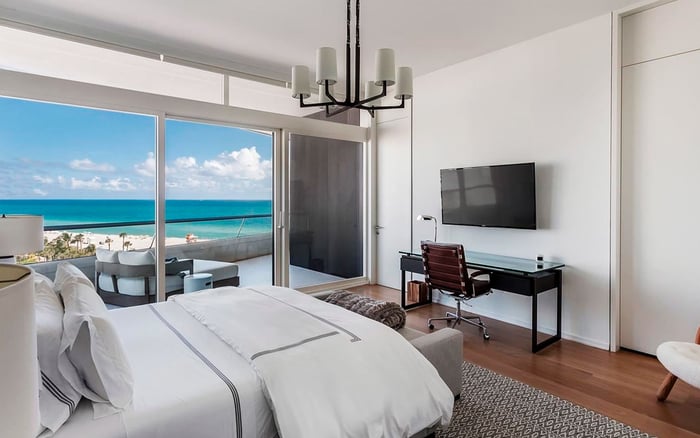
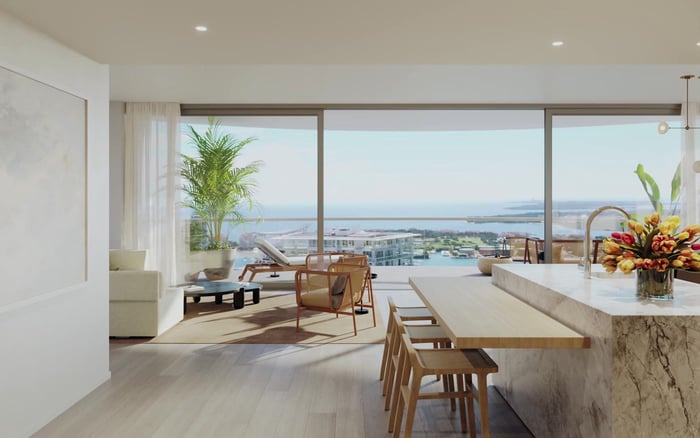
A buyer-focused editorial guide to evaluating family-room sound absorption through materials, layout, furnishings, and finish selections when comparing 321 Ocean Drive and 1 Waterplace Fort Lauderdale.
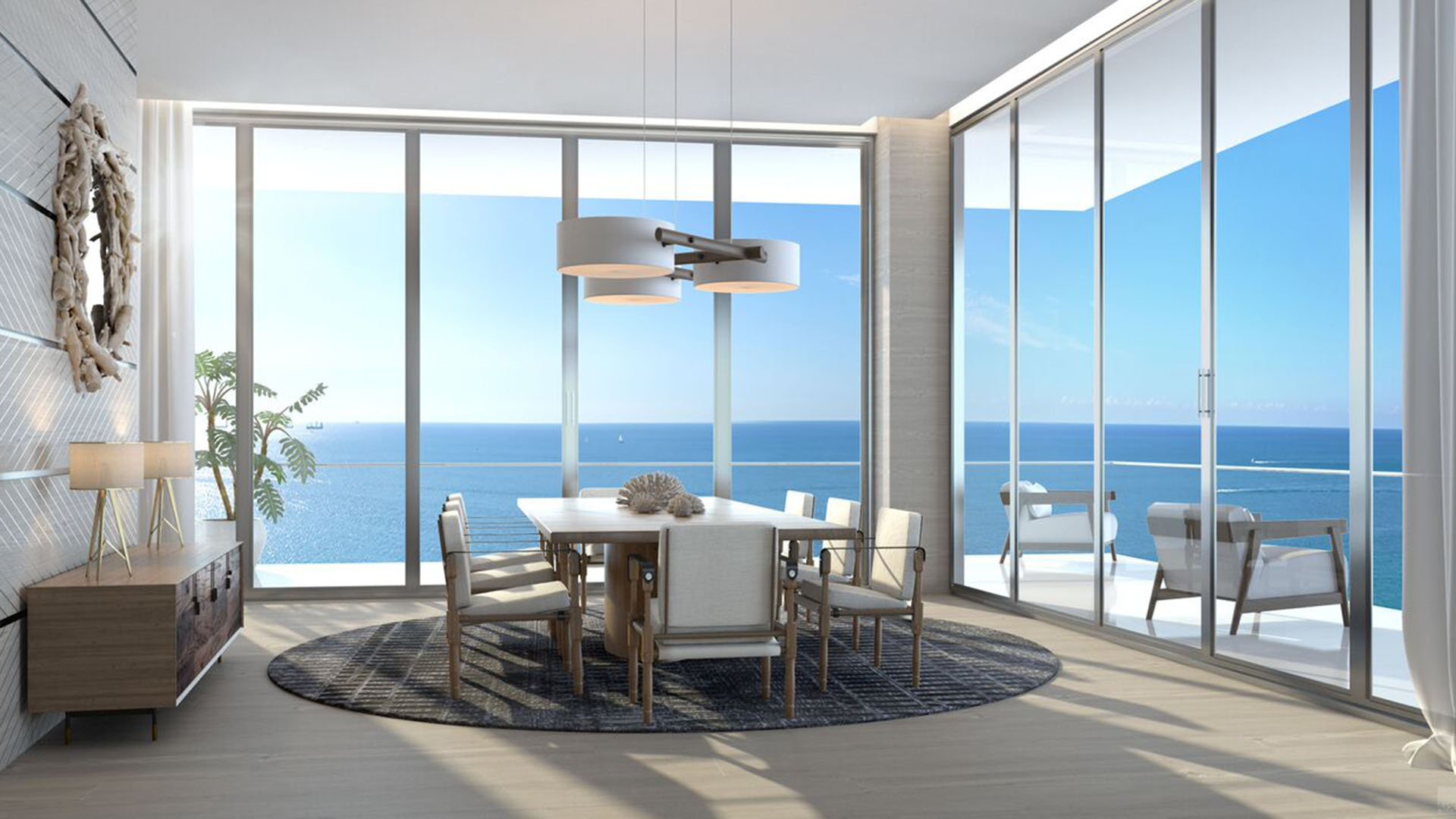
In a South Florida residence, the family room is rarely a single-use space. It becomes the informal salon, media room, homework table, quiet morning coffee seat, and the place where guests naturally gather after dinner. For buyers comparing 321 Ocean Drive and 1 Waterplace Fort Lauderdale, the question is not simply whether the room photographs well. It is whether the room sounds composed when daily life is unfolding inside it.
Sound absorption is a refined form of comfort. It is felt in the absence of harsh echo, in the ease of conversation, and in the way a television can be heard without dominating the entire residence. It also matters in waterfront and high-design environments, where glass, stone, large-format tile, and open layouts can create crisp visual drama while making sound feel more active.
This is a South Florida conversation shaped by Miami Beach, Fort Lauderdale, oceanfront settings, water views, resale residences, and new-construction expectations. The most desirable interiors often rely on hard, luminous surfaces. The best family rooms balance those surfaces with tactility, layering, and quiet technical judgment.
The most immediate absorber in a family room is fabric. A generously scaled sectional, upholstered lounge chairs, textured pillows, and a substantial area rug can shift the acoustic mood before any specialty product is introduced. Dense textiles absorb reflected sound that would otherwise bounce between floors, ceilings, windows, and millwork.
Rugs deserve particular attention. In residences where flooring is stone, porcelain, wood, or another hard finish, a rug with a quality pad beneath it can soften footfall and reduce the brightness of everyday noise. The objective is not to mute the room completely. It is to make speech feel warmer and reduce the clatter associated with children, pets, entertaining, and media.
Window treatments also matter. Full-height glass may be central to the architectural experience, especially where water or skyline views shape the room. Drapery panels, lined sheers, or layered shades can add softness without sacrificing light. For buyers who prefer minimalism, fabric weight, lining, and installation depth become important details. A sheer chosen only for transparency may not perform like one selected for both elegance and acoustic benefit.
During a showing, acoustics should be evaluated with the same discipline as views, storage, and finish quality. Stand in the family room and speak at a normal level. Listen for whether words feel sharp, whether sound lingers, and whether voices remain clear across the seating area. A visually quiet room can still sound hard if the ceiling, floors, and walls create repeated reflections.
Ceilings are often overlooked. A high ceiling can feel gracious, yet it gives sound more volume in which to travel. Coffered forms, recessed lighting coves, wood slats, stretched fabric systems, or discreet acoustic panels may all be considered by a design team, depending on the residence and the owner's aesthetic. The point is not to make the ceiling look technical. The goal is to preserve architectural poise while improving comfort.
Walls can be equally strategic. Bookcases, art with textile backing, upholstered panels, dimensional plaster, and wood detailing can help interrupt reflection. Even a well-composed gallery wall may contribute to a less severe acoustic profile than a completely bare expanse. For families, the best solutions are durable, cleanable, and consistent with the interior language.
Family rooms increasingly need to serve as media spaces without becoming theaters. That makes absorption more valuable. A room with controlled reflections allows dialogue to be understood at lower volume, music to feel fuller, and streaming content to avoid a tinny edge. This is especially relevant in open-plan residences where the kitchen, dining area, and family room may share a continuous volume.
Before committing to a residence, buyers should imagine typical use. Will children watch a film while adults speak nearby? Will the room host game days, holiday weekends, or late-night conversation? Will glass doors be open to a terrace? Each scenario changes the sound profile.
The most elegant answer is usually layered rather than singular. A rug, upholstered seating, lined window treatments, softer decorative objects, and carefully placed millwork can work together. Specialty acoustic products may be appropriate, but they should not be the first or only thought. In luxury interiors, performance should feel integrated, not announced.
When evaluating 321 Ocean Drive and 1 Waterplace Fort Lauderdale through the lens of family-room sound absorption, buyers should focus on the room as a lived environment. Look beyond staging. Notice the floor finish, the amount of exposed glass, ceiling height, the softness of furnishings, and whether the seating plan encourages conversation without raised voices.
Bring attention to transitions as well. If the family room opens to a kitchen, entry gallery, terrace, or corridor, sound may travel farther than expected. If the room is more enclosed, absorption may be easier to manage, but bass from media equipment can become more noticeable. Neither condition is inherently better. Each requires a different material response.
It is also useful to separate permanent conditions from changeable ones. Flooring, ceiling design, wall construction, and window proportions are more fixed. Rugs, sofas, drapery, panels, and loose furnishings can be tailored after purchase. A strong buyer review asks: what must be accepted, what can be improved, and what level of intervention would preserve the residence's design integrity?
Sound absorption is not about making a family room look padded or overly decorated. In the best South Florida residences, it is almost invisible. The room simply feels better. Conversations land softly. Children can move through the space without every sound becoming amplified. Guests stay longer because the atmosphere is gracious rather than fatiguing.
For ultra-premium buyers, this is a small but revealing test of quality. A residence can have impressive finishes and still feel acoustically restless. Another can use texture, proportion, and restraint to create a deeper sense of ease. In that distinction, family-room materials become more than a design preference. They become part of the home's private rhythm.
Why does family-room sound absorption matter in luxury residences? It improves speech clarity, reduces echo, and makes daily life feel calmer without changing the room's purpose.
What materials usually help absorb sound in a family room? Upholstery, rugs with pads, lined drapery, textured wall treatments, books, and soft accessories can all help.
Can a minimalist room still have good acoustics? Yes, but the material choices must be deliberate, especially in rugs, window treatments, seating, and ceiling details.
Should buyers test acoustics during a showing? Yes. Speaking at a normal volume and listening for echo can reveal how the room may feel during everyday use.
Are hard floors always a problem? Not necessarily, but hard floors often need balance from rugs, upholstery, and other soft or textured surfaces.
Do window treatments affect sound? They can. Lined sheers, drapery panels, and layered shades may soften reflections from large glass areas.
Is acoustic comfort different from soundproofing? Yes. Absorption improves sound quality inside a room, while soundproofing focuses on limiting transfer between spaces.
Can furniture placement improve a family room's sound? Yes. Seating, rugs, and bookcases can help break up reflections and make conversation feel more natural.
What should families prioritize first? Start with rugs, upholstery, and window treatments, then consider walls or ceilings if the room still feels bright or echoing.
What is the best way to shortlist comparable options for touring? Start with location fit, delivery status, and daily lifestyle priorities, then compare stacks and elevations to validate views and privacy.
If you'd like a private walkthrough and a curated shortlist, connect with MILLION.
If branded residences are on your mind — as a home or as an allocation — we would be glad to share what we are seeing, privately.
Begin a quiet conversation