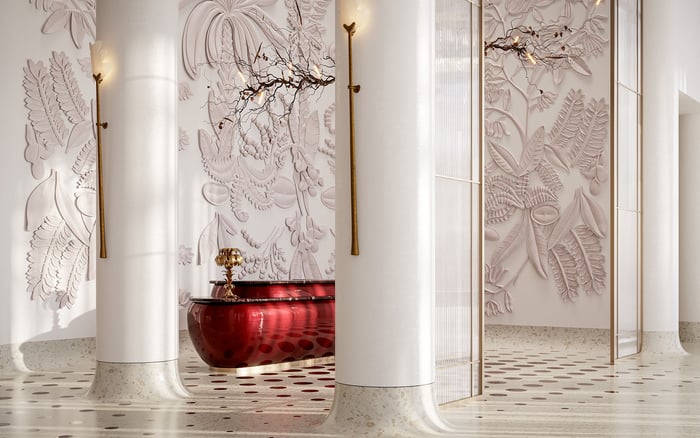
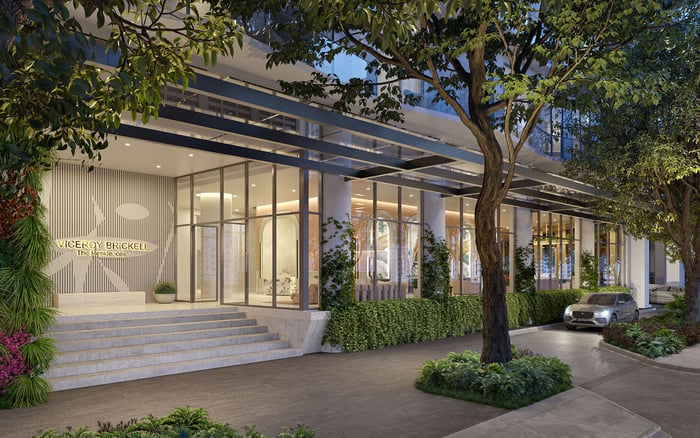
Faena Residences Miami brings an arts-led, hospitality-driven residential concept to the Miami River, positioning ultra-luxury living within Downtown’s evolving waterfront and emphasizing culture as a core part of value.
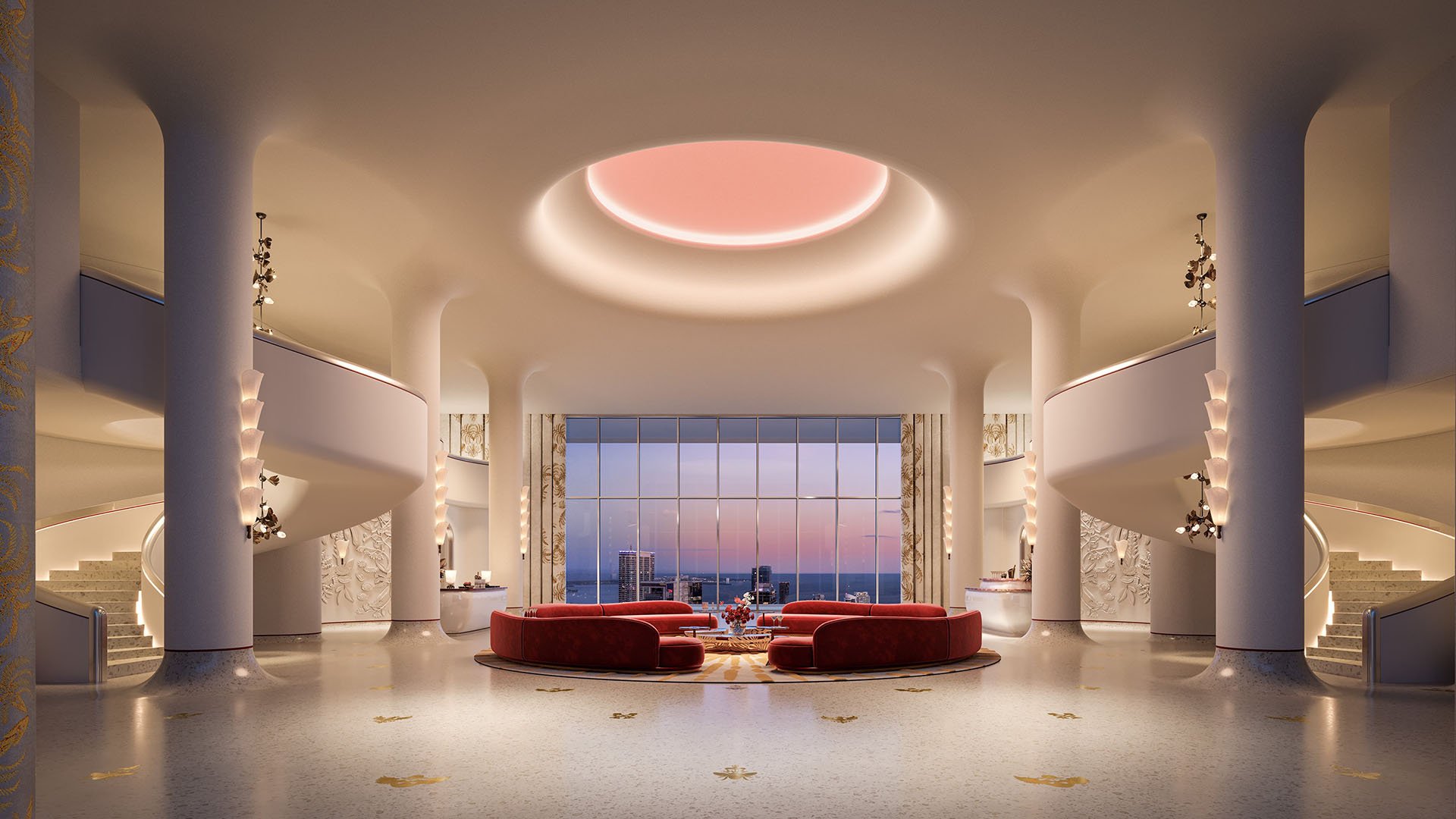
In a market crowded with superlatives, Faena Residences Miami Downtown Miami seeks distinction through something more enduring than height, finishes, or spectacle alone. Its proposition is cultural placemaking: a residential experience shaped by art, hospitality, design, and public-facing energy, all along the evolving edge of Downtown and the Miami River.
That positioning matters. The river is one of Miami’s oldest geographic and commercial corridors, yet its identity has shifted meaningfully in recent years. Long defined primarily as a working waterfront, it has increasingly evolved into a mixed-use urban district, drawing new residential development, hospitality concepts, and broader investment in the public realm. Within that context, Faena Residences Miami enters the conversation not simply as another luxury tower in Downtown, but as an effort to participate in the area’s cultural and civic redefinition.
For buyers watching the premium end of the Downtown market, that creates a different lens for evaluation. Instead of asking only what a residence contains, the sharper question is what kind of world it builds around the owner.
Luxury real estate in Greater Miami has often been framed through familiar shorthand: oceanfront prestige, bay views, marina access, or branded service. The Miami River introduces a more layered narrative. It is urban rather than resort-like, historically rooted rather than purely master-planned, and increasingly compelling to buyers who want immersion in the city rather than distance from it.
Faena Residences Miami appears calibrated to that shift. Its riverfront setting supports a placemaking strategy that feels outward-looking, tied to a neighborhood in transition and to a corridor increasingly positioned as a lifestyle destination as much as a maritime one. For Downtown, that is significant. A project can be luxurious in isolation, but a true cultural address draws value from exchange with its surroundings.
This is where comparison becomes useful. In the broader Downtown and Brickell conversation, Aston Martin Residences Downtown Miami and Waldorf Astoria Residences Downtown Miami express luxury through global branding, skyline stature, and signature service. Faena’s differentiation is subtler and, for the right buyer, potentially more resonant: it frames ownership as entry into a creative milieu.
Faena’s established identity in Miami has never been limited to real estate. The brand is associated with a broader ecosystem where residences, hotels, dining, and cultural programming reinforce one another. That matters because branded living at the top of the market increasingly depends on the strength of the surrounding platform, not merely the apartment itself.
At Faena Residences Miami, the implied value proposition is service-led living with a strong experiential overlay. Concierge-style attention, hospitality integration, and wellness-oriented amenities are central to the appeal. These are not unusual features in the ultra-luxury sector on their own, but Faena has historically positioned them as part of a more immersive composition. The goal is not just efficiency or comfort. It is atmosphere.
For many ultra-high-net-worth buyers, especially those considering a second home or flexible urban foothold, that distinction is meaningful. A residence that offers finely executed interiors and attentive service can satisfy baseline luxury expectations. A residence that also connects ownership to restaurants, events, artistic programming, and a recognizable cultural identity occupies a different category altogether.
Faena’s visual language has long leaned theatrical, art-forward, and highly curated. In residential terms, that signals a departure from generic contemporary luxury. Bespoke design, elevated finishes, and a strong sense of authorship are part of the project’s allure, but the deeper appeal lies in coherence. Buyers are not just purchasing materials and square footage. They are buying into a worldview with a defined aesthetic code.
That gives Faena Residences Miami a distinctive place within the Downtown conversation. Nearby, Casa Bella by B&B Italia Downtown Miami emphasizes design pedigree through furniture and interiors, while Baccarat Residences Brickell channels branded refinement through a different expression of European luxury heritage. Faena’s proposition is less about restraint and more about expressive immersion.
For a certain buyer, particularly one who values collecting, entertaining, and living within a carefully staged environment, that can feel more personal than conventional minimalism. The residence becomes a cultural setting, not merely a private retreat.
The likely audience is not the broad luxury market. Faena Residences Miami is best understood as targeting buyers who are already conversant in branded residences and who expect a high-touch standard as a baseline. What may draw them here is the idea of belonging to a curated community shaped as much by experiences as by architecture.
That makes the project especially relevant to purchasers interested in New Project opportunities where branding is tied to lifestyle capital, not just prestige optics. It may appeal to international buyers, design-conscious end users, and residents who want a pied-a-terre in the city with a stronger emotional register than a conventional glass tower can offer.
The pricing discussion also fits that profile. Public positioning places the project in Miami’s ultra-luxury bracket, with values aligned to the upper end of the condo market rather than the broader Downtown field. Exact figures may fluctuate, but the message is clear: this is intended for the premium buyer seeking rarity, service, and narrative.
One of the more interesting aspects of Faena Residences Miami is that it speaks to a broader shift in luxury development. For years, developers competed through larger amenity decks, increasingly elaborate wellness zones, and a constant escalation of private perks. Those features still matter, but they no longer guarantee distinction.
Cultural placemaking offers a different route. It suggests that value can come from curation, atmosphere, and connection to the public realm. In that sense, Faena Residences Miami is participating in a more sophisticated conversation about what high-end residential development can contribute to its setting.
This contrasts with many projects marketed almost entirely inward. Even among standout properties such as Mercedes-Benz Places Miami, where branding and lifestyle innovation are central, Faena’s riverfront concept stands apart by leaning so directly into arts-driven identity and civic adjacency. That may prove especially compelling for buyers focused on long-term neighborhood relevance, not only immediate amenities.
For discerning purchasers, the essential question is fit. Faena Residences Miami is unlikely to be the universal answer for every luxury buyer in Miami. Those prioritizing a classic bayfront tower, direct resort-style waterfront imagery, or a more neutral design language may look elsewhere. Yet for buyers who see real estate as an extension of cultural life, the project presents a persuasive thesis.
The Miami River location adds a sense of urban specificity. The Faena brand adds hospitality credibility and a recognizable aesthetic universe. Together, they point toward a form of luxury living that feels less passive and more participatory.
That is ultimately what makes the project notable within Brickell and Downtown's larger luxury landscape. It suggests that premium residential demand in Miami is mature enough to reward not just opulence, but meaningfully authored environments. In a city that often sells fantasy, Faena Residences Miami is attempting to sell belonging.
What is Faena Residences Miami best known for? It is best understood for pairing ultra-luxury residences with a culture-led lifestyle rooted in art, hospitality, and curated experiences.
Why does the Miami River location matter? The riverfront gives the project an urban, historic, and increasingly lifestyle-oriented setting within a fast-evolving part of Downtown.
Is this primarily a hospitality brand or a condo project? It is presented as both, with residential living connected to a broader ecosystem of service, dining, and cultural programming.
Who is the likely buyer profile? The project is oriented toward ultra-high-net-worth buyers seeking branded residences with design depth and experiential value.
How is it different from a typical luxury tower? Its emphasis on cultural placemaking sets it apart from projects marketed mainly on views, finishes, and private amenities.
Are wellness features part of the appeal? Yes. Wellness-oriented spaces are part of the broader service and lifestyle proposition associated with the concept.
Is the project relevant for second-home buyers? Very much so, particularly for buyers who want a high-touch city residence connected to a larger luxury ecosystem.
How does it compare with other branded residences in Miami? It competes in the same upper tier but distinguishes itself through artistic identity and immersive atmosphere rather than branding alone.
Does the development engage with the surrounding neighborhood? Its broader narrative suggests a public-facing placemaking strategy tied to the riverfront’s transformation into a civic destination.
What is the main investment thesis? The appeal lies in owning within a premium branded environment that combines luxury residential value with strong cultural positioning.
To compare the best-fit options with clarity, connect with MILLION Luxury.
If branded residences are on your mind — as a home or as an allocation — we would be glad to share what we are seeing, privately.
Begin a quiet conversation