Practical luxury is measured not only by finishes and views, but by how quietly a residence handles storage, deliveries, staff circulation, and maintenance. For buyers evaluating Faena Residences Miami, these operational questions belong at the center of due diligence.

In an ultra-premium tower, the most compelling conveniences are often the least visible. A polished arrival loses its composure when couriers crowd the lobby, maintenance carts share passenger elevators, or seasonal belongings overwhelm the residence. Practical luxury depends on a building’s ability to absorb everyday activity without allowing it to intrude on the resident experience.
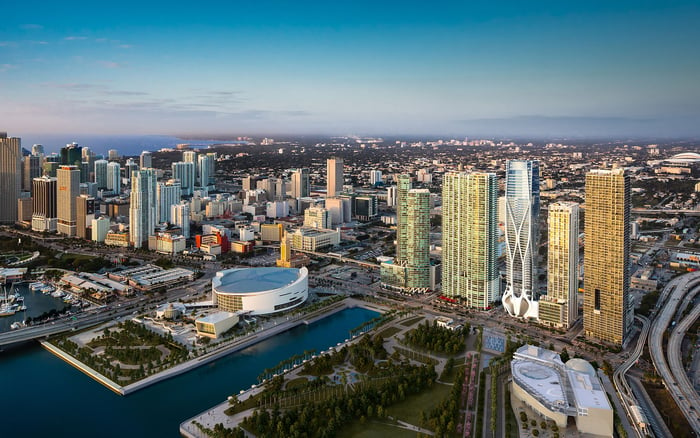
That makes storage, deliveries, staff circulation, and maintenance access essential considerations at Faena Residences Miami Downtown Miami, a Downtown Miami residential project associated with the Faena brand. The operational principles discussed here offer a framework for buyer evaluation, not confirmation of specific project features. Plans, offering documents, and developer disclosures should establish what will actually be provided.
For buyers, the essential standard is coherence: backstage systems should support the same degree of refinement promised within the residence itself.
Storage is not simply a question of volume. In Miami, location, environmental control, access protocols, and resilience can be equally consequential. Secure, climate-controlled space may be appropriate for seasonal wardrobes, art, recreational equipment, luggage, and business materials. Buyers should ask whether different categories of belongings can be separated and whether access remains convenient without compromising security.
Humidity, potential flood exposure, and unauthorized entry deserve explicit attention. Relevant questions include whether storage occupies a vulnerable area, how moisture is monitored, who can enter, and whether residents receive an auditable access record. Insurance requirements and restrictions on stored items should also be reviewed before assuming valuable or sensitive property can be accommodated.
This is especially relevant in new construction, where early review may help buyers determine whether the planned allocation reflects their household’s actual needs rather than an abstract storage count.
Parcel volume now extends well beyond occasional mail. Groceries, prepared food, flowers, furnishings, wardrobe shipments, and temperature-sensitive goods can all arrive within the same day. A well-considered tower could direct this traffic through controlled logistics areas, digital delivery management, and scheduled handoffs rather than routinely routing couriers through resident lobbies.
Refrigerated holding is a particularly useful provision to investigate. Its value depends on capacity, monitoring, collection procedures, and the length of time items may remain in storage. Buyers should also ask what happens when several large deliveries coincide or when a holiday surge overlaps with a move-in or furniture installation.
Capacity matters as much as discretion. Loading areas, freight elevators, service thresholds, and vehicle queues must all function under pressure. Acoustic separation and odor control can help prevent operational activity from reaching residential spaces. These are useful points of comparison when reviewing other Downtown projects, including Aston Martin Residences Downtown Miami and Waldorf Astoria Residences Downtown Miami. Each project’s provisions should be assessed solely through its own disclosures.
Domestic teams, personal assistants, caterers, florists, event personnel, and emergency responders create distinct access demands. A discreet circulation strategy should preserve privacy while remaining flexible enough to accommodate routine schedules, special occasions, and unexpected situations.
Potential tools include dedicated freight elevators, staff corridors, controlled service thresholds, and clearly managed loading access. The buyer’s concern is not merely whether a separate route exists, but whether it works from curb to residence. A fragmented route can still create overlap at elevator banks, parking areas, or residential hallways.
Access control should also distinguish among recurring household staff, one-time vendors, and building technicians. Temporary credentials, restricted time windows, and clear authorization procedures can support security without turning every arrival into a lobby negotiation. In branded residences, operational discipline is especially important because the service experience should remain consistent with the identity presented to residents.
Maintenance planning becomes luxurious when technicians can reach essential building systems directly, diagnose issues efficiently, and complete routine work with minimal entry into private residences. Buyers should ask which systems require in-unit access, how preventive maintenance is scheduled, and whether service personnel can move equipment without crossing primary resident routes.
The distinction becomes meaningful during repairs. A direct, controlled route may reduce noise, delays, and repeat appointments. It can also help isolate work zones from amenity and arrival spaces. Waste removal deserves similar scrutiny, including timing, odor management, and the relationship between refuse routes and residential circulation.
Comparable due diligence can be applied to Casa Bella by B&B Italia Downtown Miami. The purpose is not to assume identical systems, but to compare how clearly each project defines access, capacity, privacy, and operational responsibility.
The strongest framework rests on three principles. First is operational invisibility: deliveries, repairs, waste handling, and staff movement should remain largely outside primary resident circulation. Second is sufficient capacity: back-of-house infrastructure should perform during both ordinary days and peak periods. Third is coherence: service operations should reinforce, rather than interrupt, the residential experience.
Adaptability also matters. Electric delivery vehicles, evolving security practices, new access-control technology, and rising demand for refrigerated storage could change how a building operates. Buyers should determine whether service infrastructure can evolve without disruptive retrofits.
Before committing, request precise answers about storage conditions, loading schedules, move-in rules, freight reservations, vendor credentials, emergency access, waste routes, and maintenance responsibilities. Practical luxury is not a decorative promise. It is the daily result of circulation, capacity, and control working in concert.
Are these operational features confirmed at Faena Residences Miami? No. They form a due-diligence framework, and project-specific provisions should be verified in official plans, offering documents, and developer disclosures.
Why does climate-controlled storage matter in Miami? It may help protect sensitive belongings from humidity, while location and flood exposure remain separate considerations.
What belongings may require specialized storage? Seasonal wardrobes, art, recreational equipment, luggage, and business materials can have different environmental and security requirements.
Should deliveries enter through the resident lobby? A controlled logistics route can reduce lobby traffic and preserve privacy, subject to the building’s actual operating plan.
What is useful about refrigerated delivery holding? It can accommodate groceries and temperature-sensitive items when residents cannot accept them immediately.
How should buyers evaluate freight elevators? Review their location, capacity, reservation procedures, operating hours, and connections to loading and residential levels.
What makes staff circulation discreet? Controlled credentials and a coherent route can limit unnecessary overlap with primary resident spaces while preserving flexibility.
Why is peak-period capacity important? Holidays, simultaneous move-ins, furniture installations, and renovations can place unusual pressure on loading and service systems.
What should buyers ask about maintenance access? Ask which systems technicians can reach directly and which repairs require entry into the residence.
Can service infrastructure become outdated? Yes. Adaptability can help accommodate electric delivery vehicles, changing security protocols, and new access technology.
For a tailored shortlist and next-step guidance, connect with MILLION.
If branded residences are on your mind — as a home or as an allocation — we would be glad to share what we are seeing, privately.
Begin a quiet conversation