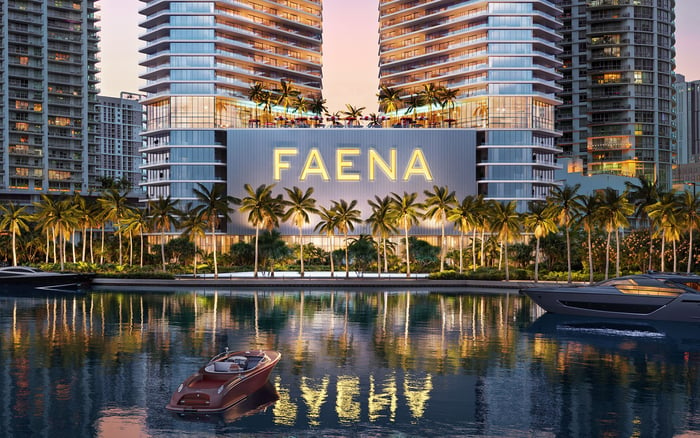
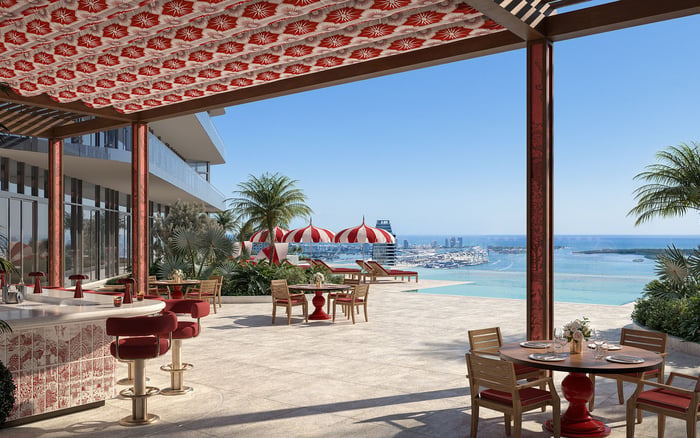
A reservation at Faena Residences Miami Downtown Miami should be evaluated through the operating model behind the lifestyle promise, including staffing, governance, budget durability, privacy controls, and long-term service enforcement.

A reservation at Faena Residences Miami Downtown Miami should be treated as an operating-model decision, not simply a judgment on architecture, location, or entry pricing. In a branded residence, the daily experience is shaped by who receives residents, how quickly requests are handled, how discreetly guests are processed, and whether the atmosphere feels private, social, or hotel-influenced.
The central question is direct: will daily life feel like a private luxury condominium, a hospitality-driven branded residence, or a calibrated hybrid of both? That distinction matters because the service promise is not merely aesthetic. It affects monthly carrying costs, staffing intensity, privacy, quiet enjoyment, and eventual resale positioning.
Pre-construction buyers should therefore look past words such as concierge, valet, lifestyle, and curated. Those terms carry weight only when documents define staffing coverage, service scope, response standards, operating authority, and the cost structure required to sustain them.
The first layer of due diligence is operational control. Buyers should ask whether Faena will operate the residence directly, license the brand, advise as a hospitality consultant, work through a third-party manager, or participate in a layered arrangement with the condominium association. Each structure can produce a different daily experience.
If the brand is primarily a licensor, the buyer should understand who enforces the standards attached to that license. If a manager runs the building day to day, the buyer should review how that manager is selected, replaced, compensated, and supervised. If the association assumes meaningful operational authority after turnover, the buyer should ask how service quality is preserved once developer control ends.
This is especially important in Downtown Miami, where arrival choreography is not ornamental. Valet efficiency, security, visitor flow, guest registration, elevator access, loading activity, and service corridors can materially affect whether the residence feels calm or exposed. A beautifully designed lobby can still disappoint if circulation is confused at peak hours.
The proposed association budget is one of the most revealing reservation-stage documents. It should show whether the staffing levels and hospitality services implied by the marketing are financially sustainable. A high-touch residence cannot operate on vague language; it requires labor, training, supervision, systems, and contingency planning.
Buyers should separate services included in regular assessments from services billed à la carte or through separate usage fees. That distinction can change the real cost of ownership and the perceived value of the brand. A resident who expects seamless daily assistance should know which requests are covered, which require fees, and which may depend on future association decisions.
Long-term underwriting should also account for rising labor, insurance, and operating costs. The question is not only whether the opening-year budget looks elegant. It is whether owners can maintain high-touch staffing without significant assessment increases if costs rise. In that sense, service is both a lifestyle amenity and a financial obligation.
Faena’s experiential positioning makes cultural programming, events, food-and-beverage access, and lifestyle services part of the value proposition. For some buyers, that is the attraction. For others, the concern is whether energy and programming can coexist with residential quiet enjoyment.
Amenity-sharing rules deserve close review because luxury branded projects may involve overlapping residential, hospitality, event, or public-facing spaces. Buyers should verify who may use each amenity, when access may be restricted, how guests are registered, how event traffic is separated, and whether elevators, corridors, valet zones, and service routes preserve residential discretion.
The service model should not force residents to choose between privacy and brand vitality. It should explain how both are protected. If events or outside access are part of the concept, the documents should define practical controls rather than relying on atmosphere alone.
The most useful comparison is not an amenity-count exercise. Buyers should compare how the service model is structured, financed, staffed, governed, and monitored across other luxury and branded residences in Downtown Miami, Brickell, Miami Beach, and Bal Harbour.
Within Downtown Miami, a buyer may look at Waldorf Astoria Residences Downtown Miami and Aston Martin Residences Downtown Miami as part of a broader study of branded or ultra-luxury expectations. In Brickell, Baccarat Residences Brickell offers another reference point for evaluating service identity in a dense urban setting. Miami Beach adds a different lens, while Bal Harbour comparisons may include Rivage Bal Harbour when considering privacy, discretion, and brand-adjacent expectations.
The goal is not to declare one model superior. It is to decide which one best matches how the owner intends to live. Some buyers want a quiet private condominium with refined support. Others want a hospitality-forward environment with programming and access. The best reservation decision recognizes the difference before signing.
A serious review should include the draft condominium documents, proposed management agreement, brand or license agreement, association budget, reserve assumptions, and amenity-use rules. Buyers should focus on obligations, not adjectives.
Important questions include: Who hires and supervises staff? What services are guaranteed, and what services are aspirational? How are standards measured? What happens after turnover to the condominium association? Can owners change management without weakening the brand promise? How are disputes handled if service levels decline?
The key underwriting question is whether the service model supports both lifestyle expectations and long-term resale value. An impressive amenity list may attract attention, but a durable operating model is what protects the experience over time.
Why is the service model so important before reserving? Because the residence will be experienced through daily operations, not only through design, views, or location.
What is the first question a buyer should ask? Ask whether the building is intended to feel like a private condominium, a branded hospitality residence, or a hybrid.
Who should operate the building day to day? Buyers should clarify whether Faena, a third-party manager, the association, or a layered structure will control operations.
Are concierge and valet promises enough? No. Buyers should look for contractual staffing obligations, coverage hours, response expectations, and service standards.
Why does the association budget matter? It shows whether staffing, hospitality services, reserves, and operating costs appear sustainable over time.
What should buyers ask about fees? They should separate services included in assessments from services billed à la carte or through separate usage charges.
Why are amenity rules critical? Shared or event-oriented spaces can affect privacy, elevator access, guest flow, valet circulation, and residential quiet enjoyment.
What happens after developer turnover? Buyers should ask how service standards will be enforced once the condominium association has greater control.
How should Downtown Miami context affect the review? Urban arrival, security, visitor management, valet performance, and access control can shape daily comfort.
What is the ultimate reservation test? Determine whether the service model can support the lifestyle promise and protect long-term resale confidence.
When you're ready to tour or underwrite the options, connect with MILLION.
If branded residences are on your mind — as a home or as an allocation — we would be glad to share what we are seeing, privately.
Begin a quiet conversation