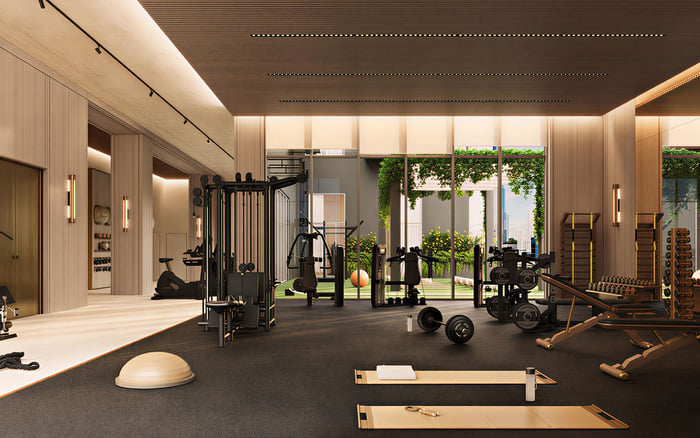
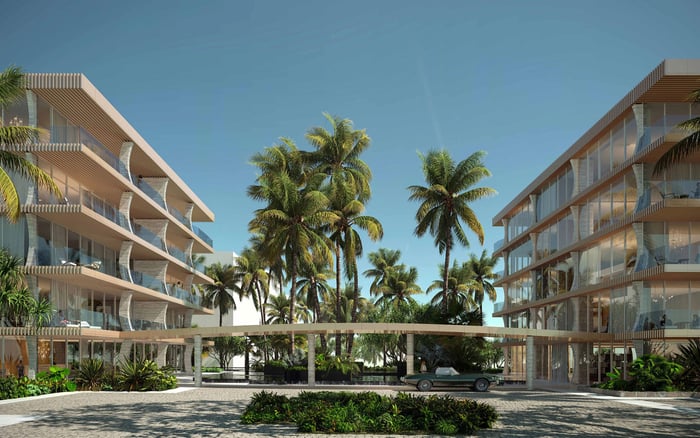
A discreet buyer’s guide to comparing Faena House Miami Beach and House of Wellness Brickell through the practical lenses that matter most to collectors and privacy-driven owners: art movement, freight access, conditioned storage, view strategy, and social-density control.
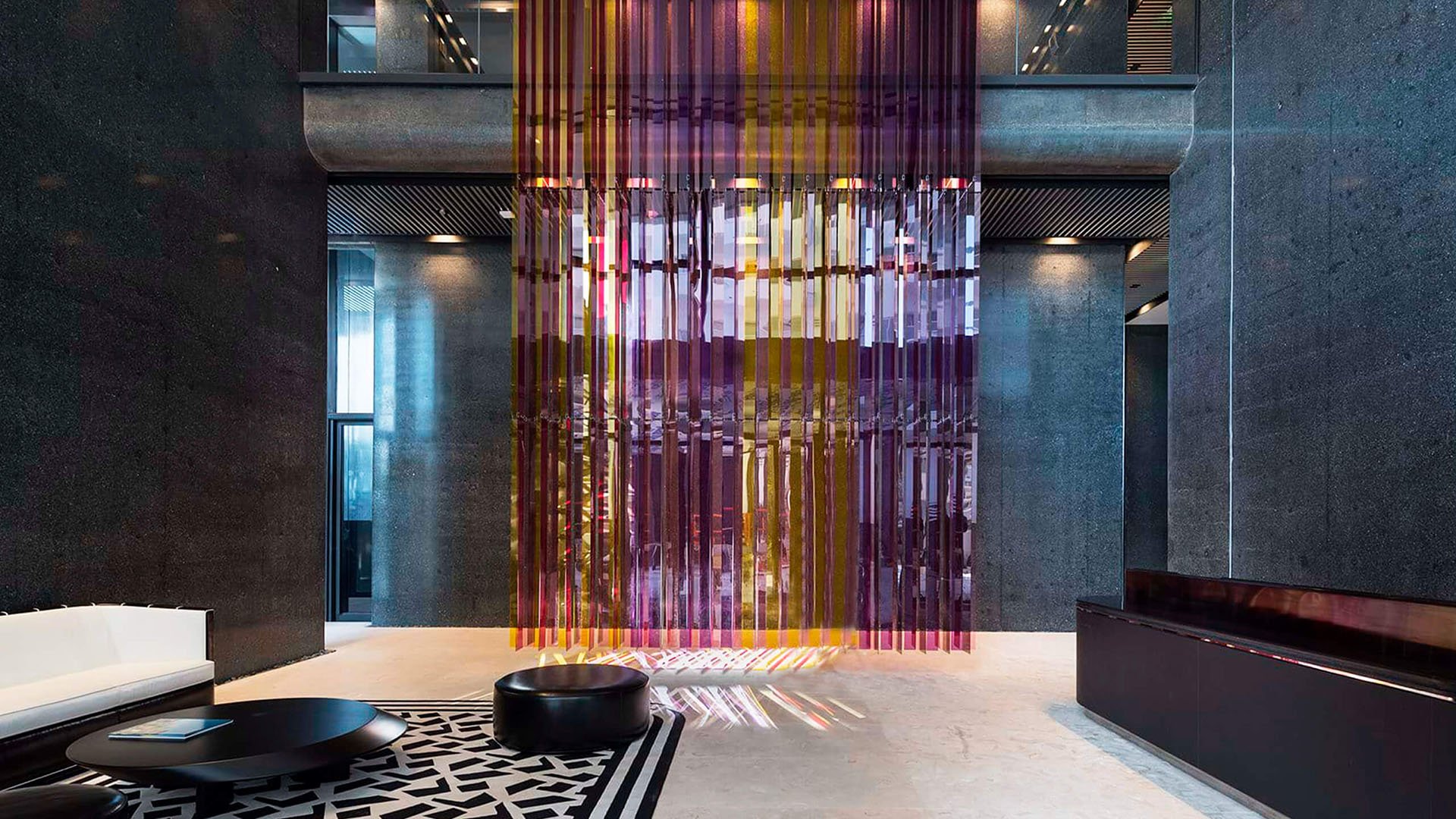
For a buyer weighing Faena House Miami Beach against House of Wellness Brickell, the headline question is not simply which address feels more glamorous. The more consequential question is whether the building supports how the owner actually lives: large-format art, discreet receiving, conditioned storage, service movement, privacy, and a bayfront or water-oriented outlook that does not introduce constant social friction.
That is why this comparison belongs less to lifestyle marketing and more to ownership mechanics. A residence may offer a beautiful lobby and dramatic views, yet still prove difficult for a collector, seasonal owner, or privacy-sensitive buyer if the loading path is awkward, the service elevator is undersized, storage is not conditioned, or amenity circulation makes daily life feel too public.
Faena House Miami Beach has the clearer public presence as an established reference point in this pairing. House of Wellness Brickell, by contrast, should be evaluated with a buyer’s checklist rather than assumptions. In both cases, the right purchase conversation should move from emotion to logistics before contract, not after closing.
Collectors often focus on wall length, ceiling height, and natural light. Those elements matter, but they are not enough. Art installation in a luxury condominium begins at the curb and continues through loading, elevator dimensions, corridor turns, door clearances, humidity control, security protocols, and the rules governing outside vendors.
At Faena House Miami Beach, the buyer should request a complete art-movement path before committing to a unit. That means identifying where a crate arrives, who authorizes access, which elevator is used, whether protective padding is required, and whether installation hours are limited. A magnificent residence can become operationally difficult if a large canvas, sculpture, or custom object cannot move from truck to wall without compromise.
For House of Wellness Brickell, the same questions are even more important because Brickell buyers often balance dense urban convenience with the desire for sanctuary. The issue is not whether Brickell can be elegant. It can. The issue is whether a wellness-focused residence also delivers the quiet back-of-house discipline expected at the top of the market.
Freight access is rarely romantic, yet it is one of the most revealing luxury details. Buyers who entertain, collect, travel seasonally, or maintain multiple homes need a building that handles deliveries without turning private life into a lobby event.
The ideal freight sequence is straightforward: controlled arrival, professional receiving, protected elevator access, direct service routing, and limited contact with guest-facing spaces. If a building requires too much improvisation, the owner pays for it in time, exposure, and avoidable inconvenience.
In Miami Beach, a buyer may compare Faena House Miami Beach with other refined coastal options such as The Perigon Miami Beach when considering how oceanfront or water-proximate living intersects with service movement. In Brickell, a buyer may compare House of Wellness Brickell with a vertical urban residence such as The Residences at 1428 Brickell, not to assume identical features, but to sharpen the right questions about freight, arrival, and privacy in a dense financial district.
Climate-controlled storage is where luxury becomes preservation. South Florida’s environment rewards residences that treat humidity, heat, and materials seriously. For an owner with fine art, designer furniture, couture, wine, archival documents, or seasonal objects, storage is not a leftover closet. It is part of the asset-protection plan.
The key question is whether storage is conditioned, secure, accessible, and appropriately separated from mechanical or high-traffic areas. Buyers should distinguish ordinary storage from true climate-sensitive storage. The former may be useful for luggage. The latter matters for objects that can warp, mildew, fade, or degrade.
This is also where lower social density becomes more than an aesthetic preference. A building with quieter circulation, fewer unnecessary touchpoints, and well-managed service areas can make storage access feel private and composed. A buyer seeking water-view calm should not accept storage conditions that feel like an afterthought.
A bayfront view can be extraordinary, but view quality is not only about what is visible from the glass. It is also about what the owner hears, who passes nearby, how the terrace feels, and whether the building’s social rhythm supports retreat.
Faena House Miami Beach sits within a Miami Beach conversation where light, water, and design culture are central to the purchase emotion. House of Wellness Brickell belongs to a Brickell conversation where skyline energy, bay orientation, and urban convenience tend to shape the buyer profile. Neither context should be reduced to a postcard. The right test is whether the view remains restorative at breakfast, during a quiet evening, and when the building is active.
Privacy-oriented buyers should study elevator banks, amenity adjacency, valet behavior, guest registration, package flow, and the number of casual crossings between residents and visitors. Boutique does not automatically mean private, and large does not automatically mean exposed. The quality of management and the logic of circulation matter more than the label.
Lower social density is not anti-social. It is a preference for fewer forced interactions, more predictable amenity use, quieter arrivals, and a stronger sense of ownership over one’s daily environment. For some buyers, it is as important as view, finishes, or brand.
Through this lens, the comparison between Faena House Miami Beach and House of Wellness Brickell should include questions that rarely appear in glossy tours. How many people share the amenity areas at peak times? Are wellness spaces resident-focused or event-prone? Does the lobby feel residential or theatrical? Can a guest arrive discreetly? Can staff access the residence without unnecessary exposure?
Buyers who like the wellness narrative but want a quieter residential rhythm may also examine projects in softer waterfront settings, including The Well Bay Harbor Islands. Others may look toward The Well Coconut Grove to consider how wellness branding plays differently outside Brickell. These comparisons are useful because they reveal how much of the purchase decision is really about neighborhood tempo.
Before choosing between these two addresses, the buyer should request written clarity on art movement, freight elevator access, delivery scheduling, insurance requirements for installers, after-hours rules, conditioned storage availability, and building policies for large objects. Verbal reassurance is not enough for a sophisticated purchase.
A private walkthrough should include the service route, not just the residence. The buyer should stand at the loading area, enter the service elevator, walk the corridor path, and confirm where crates, furnishings, and staff would move. If a large work of art is central to the ownership plan, dimensions should be tested in advance.
The final decision is not simply Faena House Miami Beach versus House of Wellness Brickell. It is beachside design culture versus urban wellness positioning, established presence versus buyer verification, and emotional water view versus practical day-to-day control. The best residence is the one where the view, the art, the storage, and the owner’s privacy work together without negotiation.
Is Faena House Miami Beach the stronger choice for an art collector? It may be a compelling reference point, but the buyer should verify art movement, elevator access, installation rules, and storage conditions for the specific residence.
Should House of Wellness Brickell be evaluated differently? Yes. Treat it as a Brickell wellness-oriented option that requires careful confirmation of logistics, privacy, freight access, and storage before purchase.
What does lower social density mean for a luxury buyer? It means fewer unwanted interactions, calmer amenity use, more discreet arrivals, and a more residential feeling throughout the building.
Is a bayfront view enough to justify a premium? No. The view should be considered alongside noise, privacy, terrace usability, service access, and long-term comfort.
Why is freight access so important? Freight access determines whether art, furniture, and seasonal deliveries can move discreetly and safely without disrupting private life.
What should collectors ask before signing a contract? Ask for elevator dimensions, loading procedures, installer rules, insurance requirements, permitted hours, and the full route from truck to residence.
Is climate-controlled storage necessary in South Florida? For sensitive possessions, it is highly important because heat and humidity can affect art, textiles, furniture, and archival materials.
Can a Brickell residence still feel private? Yes, but privacy depends on circulation, staffing, guest procedures, elevator planning, and how social spaces are managed.
Does boutique always mean low density? No. Boutique scale can help, but true privacy depends on building operations, resident count, amenity design, and service routing.
What is the best way to compare these two options? Compare the lived experience: view quality, art logistics, freight movement, storage, amenity use, and the degree of daily discretion.
For a confidential assessment and a building-by-building shortlist, connect with MILLION.
If branded residences are on your mind — as a home or as an allocation — we would be glad to share what we are seeing, privately.
Begin a quiet conversation