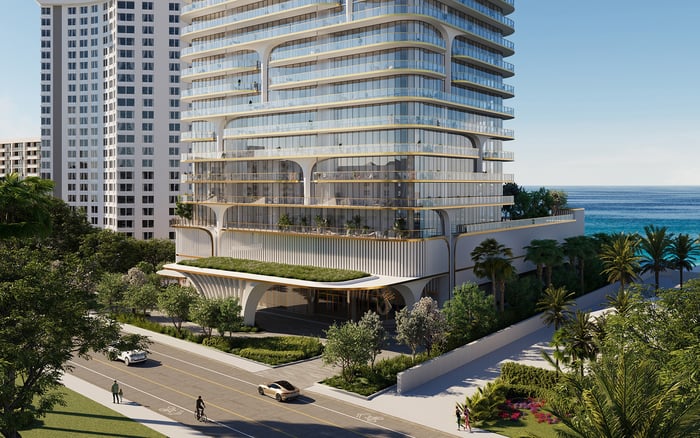
A buyer-focused due-diligence guide for evaluating balcony rules, outdoor kitchen permissions, terrace materials, and coastal weather tolerance at two South Florida branded residences.
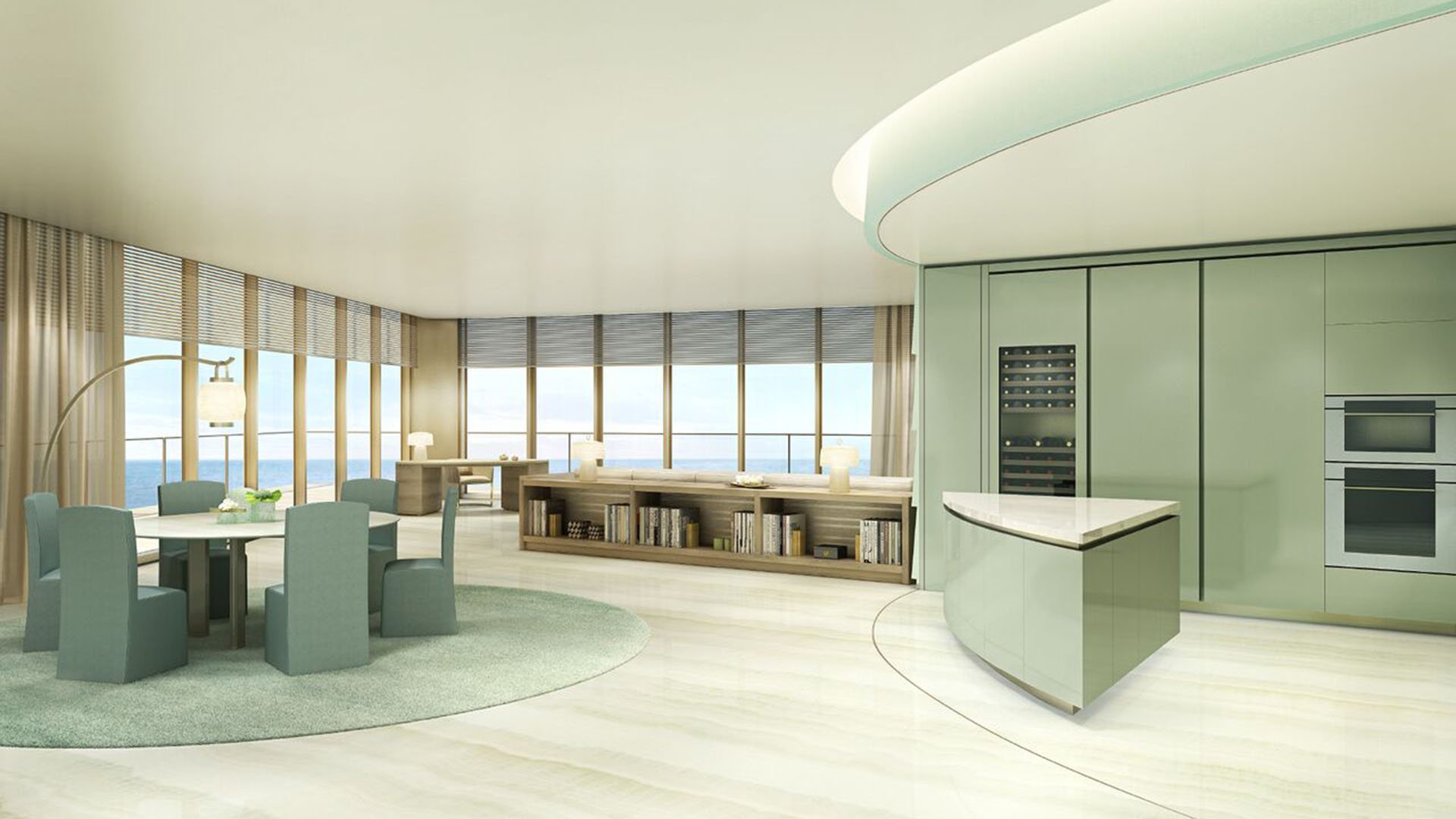
In South Florida’s highest tier of residential real estate, the balcony has become a decisive room. It is where morning light, ocean air, and evening entertaining converge. Yet for buyers considering Four Seasons Hotel & Private Residences Fort Lauderdale or Armani Casa Sunny Isles Beach, the right lens is not simply whether the outdoor space photographs well. It is whether the balcony can be used as intended, maintained without surprises, and protected when coastal weather turns.
That distinction matters. A terrace that reads as generous in a listing may still be governed by association rules, building standards, hurricane procedures, furniture guidelines, and restrictions on cooking equipment. None of those items should be assumed. For a buyer accustomed to private estates, yachts, or club environments, the discipline is familiar: the experience is only as strong as the operating rules behind it.
Four Seasons Hotel & Private Residences Fort Lauderdale and Armani Casa Sunny Isles Beach are the two residences at the center of this comparison. Both sit within South Florida’s broader branded-residence landscape, where architecture, service, and lifestyle expectations often command a premium. The practical question is more granular: what does ownership actually permit on the balcony or terrace?
A buyer should not treat outdoor kitchens, grills, freestanding appliances, planters, umbrellas, privacy screens, heaters, or permanently installed cabinetry as automatically allowed. In a condominium setting, the answer typically sits within a matrix of declaration language, house rules, architectural review procedures, insurance requirements, fire code considerations, and management interpretation. The absence of a prohibition in marketing language is not the same as approval.
For Fort Lauderdale buyers also evaluating nearby branded and waterfront options such as St. Regis® Residences Bahia Mar Fort Lauderdale, the same discipline applies. Broward coastal living rewards buyers who verify not only the view corridor, but also the use corridor.
Outdoor cooking is one of the most common assumptions luxury buyers bring to large terraces. It is also one of the areas most likely to be restricted. Gas, charcoal, electric grills, built-in cooktops, refrigeration, sinks, cabinetry, and ventilation can each trigger different review issues. In some buildings, only certain appliance types may be considered. In others, portable equipment may be limited or prohibited. In all cases, a buyer should seek written confirmation before assigning meaningful value to the possibility.
The due-diligence request should be precise. Ask whether grills are permitted, which fuel sources are allowed, whether appliances require association approval, whether plumbing or electrical additions are possible, and whether any prior owner approvals are transferable. If a residence is being marketed with an outdoor kitchen concept, confirm whether that feature is already approved, already installed, or merely a design idea.
This is especially important in an oceanfront context, where salt air, wind, and exposure accelerate wear. A stainless appliance that performs beautifully inland may require different specifications near the Atlantic. Marine-grade materials, protective covers, fasteners, cabinetry substrates, and corrosion-resistant finishes can matter as much as brand names.
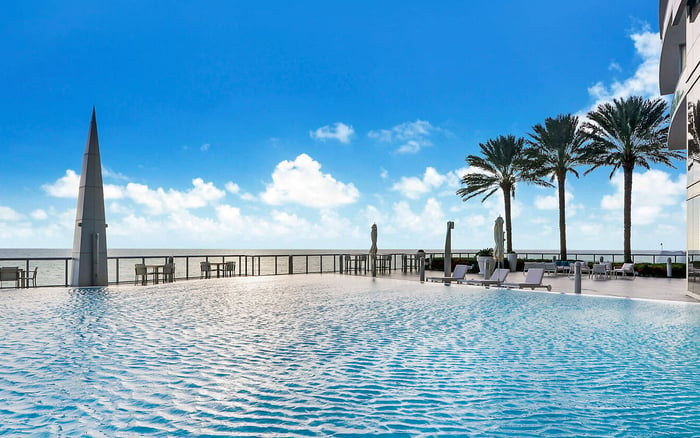
A terrace in South Florida is asked to perform in a demanding environment. Sun, salt, wind, humidity, heavy rain, and tropical storm preparation all shape daily usability. The more elevated or exposed the residence, the more carefully buyers should evaluate what can remain outside, what must be secured, and how quickly a terrace can move from entertaining mode to storm readiness.
The first review point is drainage. Buyers should understand how water moves across the terrace, where drains are located, whether thresholds are vulnerable during wind-driven rain, and whether planters or furniture placement could interfere with drainage. The second is furniture. Some associations regulate weight, materials, cushions, umbrellas, and loose decorative objects. These rules may feel restrictive, but they often exist to protect residents, staff, glazing, and neighboring terraces.
At Bentley Residences Sunny Isles and other high-profile Sunny Isles area residences, buyers often focus on the drama of vertical living. The more seasoned question is how that drama behaves in weather. Sunny Isles Beach can offer magnificent exposure, but exposure is not neutral. It affects cleaning cycles, hardware selection, shade strategy, and the realistic number of days a terrace functions as an outdoor salon.
The most valuable balcony review happens before deadlines, not after closing. A buyer should ask for current house rules, any balcony or terrace guidelines, alteration procedures, storm-preparation notices, and management policies for securing outdoor items. If the residence is a resale, request disclosures regarding any installed terrace elements, approvals, violations, repairs, or insurance claims connected to the outdoor area.
The questions should be written plainly. Are outdoor kitchens allowed? Are grills allowed? Are planters allowed, and are there weight limits? Can lighting be added? Can flooring be changed? Are awnings, shades, screens, or privacy panels permitted? Are furniture covers required during storms? Is management authorized to enter or remove unsecured items? Are there limits on music, dining, or late-evening use?
This is not an attempt to diminish the romance of coastal ownership. It is how sophisticated buyers protect it. A spectacular terrace that can be furnished elegantly, maintained predictably, and secured efficiently is more valuable than a larger space surrounded by uncertainty.
The best outdoor rooms in South Florida look effortless because the technical decisions have already been made. Furniture should be scaled for wind and circulation, not only for photographs. Fabrics should tolerate UV exposure and humidity. Metal components should be chosen with corrosion in mind. Stone, tile, and decking surfaces should be evaluated for slip resistance, heat retention, drainage compatibility, and association approval.
If the buyer intends to create a highly designed terrace, the design team should review building rules before concepts are finalized. A plan that depends on heavy planters, integrated lighting, custom millwork, or kitchen equipment may be elegant, but elegance does not override condominium governance. In this sense, terrace design is a three-party exercise among owner, designer, and association.
Cross-shopping can sharpen the buyer’s eye. A residence such as The Ritz-Carlton Residences® Sunny Isles may prompt similar questions about service, building standards, and outdoor protocols. The point is not to declare one building more permissive than another without documents. The point is to evaluate each residence through the same written framework.
Fort Lauderdale and Sunny Isles Beach both belong to the luxury coastal conversation, but they do not always live the same way. Fort Lauderdale may appeal to buyers who prioritize a refined Broward base, boating culture, and a more relaxed urban cadence. Sunny Isles Beach often speaks to buyers drawn to height, shoreline views, and a concentrated luxury-tower environment. Those lifestyle differences can influence how often a balcony is used, when it is used, and how it is furnished.
Yet the technical questions remain consistent. Verify the rules. Understand the weather. Confirm the approval path. Inspect the terrace as a functional room, not a decorative afterthought. Buyers should also consider how staff, family, guests, and seasonal occupancy affect terrace maintenance. A second-home owner may need a more conservative furniture and storm plan than a full-time resident who can respond immediately to weather advisories.
For Four Seasons Hotel & Private Residences Fort Lauderdale and Armani Casa Sunny Isles Beach, the balcony conversation should be approached as careful ownership planning rather than amenity speculation. If a terrace is central to the purchase thesis, it deserves the same scrutiny as building financials, parking, service model, views, and interior finish quality.
The right due-diligence package can transform uncertainty into confidence. It can also prevent a buyer from overpaying for imagined uses that may not be allowed. In South Florida, the most valuable outdoor space is not simply the largest or most photogenic. It is the space whose rules, materials, and weather tolerance align with how the owner truly intends to live.
Can buyers assume outdoor kitchens are allowed on these terraces? No. Outdoor kitchens should be treated as a document-specific issue requiring written confirmation from the association or management.
Are grills automatically permitted on luxury condo balconies? No. Grill permissions can vary by building rules, appliance type, fuel source, and safety requirements.
What documents should a buyer request first? Request the declaration, bylaws, house rules, terrace guidelines, alteration procedures, and any storm-preparation policies.
Why does salt air matter for terrace planning? Salt air can accelerate corrosion, making material selection, fasteners, covers, and maintenance routines especially important.
Should terrace furniture be reviewed before closing? Yes. Buyers should confirm whether furniture size, weight, materials, umbrellas, and loose objects are regulated.
Is drainage part of balcony due diligence? Yes. Drain placement, water flow, and threshold performance can affect comfort, maintenance, and storm readiness.
Can prior owner approvals transfer to a new buyer? Not always. Buyers should verify whether any existing terrace approvals remain valid after transfer of ownership.
Does a larger terrace always mean better usability? Not necessarily. Usability depends on rules, exposure, furnishing options, drainage, shade, and maintenance needs.
Should designers review association rules before planning? Yes. Design concepts involving planters, lighting, flooring, millwork, or appliances should be checked against building rules.
What is the best way to shortlist comparable options for touring? Start with location fit, delivery status, and daily lifestyle priorities, then compare stacks and elevations to validate views and privacy.
If you'd like a private walkthrough and a curated shortlist, connect with MILLION.
If branded residences are on your mind — as a home or as an allocation — we would be glad to share what we are seeing, privately.
Begin a quiet conversation