A discreet buyer’s guide to how Brightline-connected travel is reshaping the way luxury owners think about South Florida, from primary residences to flexible second-home strategies.
For years, the South Florida luxury buyer chose a city first, then a building, then a view. The emerging question is more nuanced. If travel within the region becomes part of the rhythm of ownership, does the best address need to do everything, or should it do one thing exceptionally well?
Brightline-connected travel has made buyers more conscious of how they actually move. The decision is no longer confined to a single downtown, beach, club, or school corridor. It is about whether a residence can support a broader South Florida life: weekdays in one market, private dinners in another, cultural weekends elsewhere, and family time in a quieter enclave.
That shift matters because ultra-premium ownership is rarely about convenience alone. It is about control: over time, privacy, arrival, guests, wellness, work, and the small rituals that make a residence feel effortless. Connectivity can expand the map, but it also sharpens the need for discipline. A beautiful home in the wrong personal geography can still feel inefficient.
The most sophisticated buyers are not treating rail access as a novelty. They are using it as one more filter in a larger ownership strategy. The question is not simply, “Can I get there?” It is, “How often will I want to get there, and what kind of home should be waiting when I arrive?”
For one buyer, that may mean a residence close to financial, dining, and cultural energy. For another, it may mean a more serene waterfront setting with the ability to move through the region when needed. A third may choose a second residence not as a vacation indulgence, but as a pressure valve: a place that makes South Florida feel larger without making daily life more complicated.
This is where the conventional idea of location begins to broaden. Proximity to the sand, the office, the marina, or the private school still matters. Yet regional access adds another layer: how a property participates in a wider circuit of personal commitments. The best purchases are not necessarily the closest to everything. They are the ones closest to what the owner actually values.
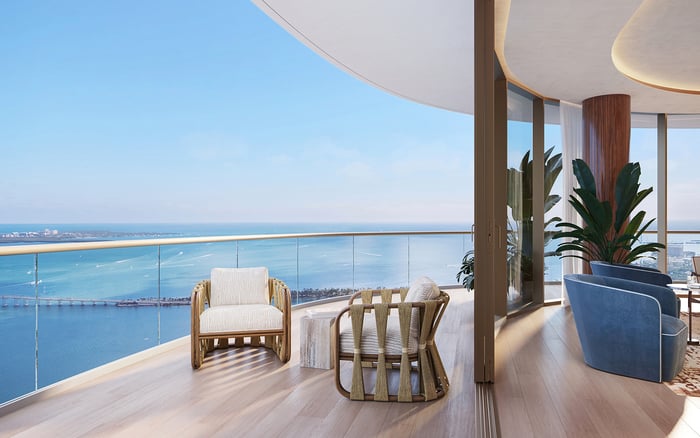
Brickell remains one of the clearest examples of the connected ownership mindset. Its appeal is not only density or skyline presence. It is the idea of a vertical base for buyers who want immediacy: restaurants, private services, work, waterfront views, and a sense of urban momentum.
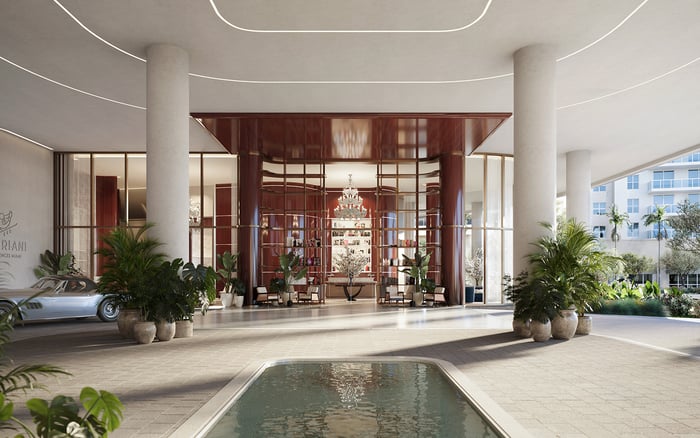
In that context, residences such as Cipriani Residences Brickell speak to a buyer who wants hospitality, polish, and a recognizable lifestyle language at the center of Miami. For some owners, the right Brickell home becomes the operational residence, the place that keeps business and social life fluid.
The same logic can apply at Baccarat Residences Brickell, where the attraction is less about checking a commute box and more about choosing a refined urban setting that can function as a primary home, a seasonal base, or a pied-a-terre. In a region where buyers may move between multiple social and professional poles, Brickell offers the feeling of being anchored without being isolated.
The caution is equally important. Urban convenience should not be mistaken for universal suitability. A buyer who values quiet mornings, private outdoor living, or a more residential pace may prefer to use Brickell as one point in a broader lifestyle rather than the entire answer.
As the ownership map widens, Fort Lauderdale, West Palm Beach, and Boca Raton each invite a different kind of thinking. None should be viewed as a substitute for another. Each can play a distinct role depending on the buyer’s priorities.
Fort Lauderdale often appeals to those who want a maritime sensibility, a more relaxed cadence, and access to urban amenities without adopting Miami’s full intensity. A residence such as Riva Residenze Fort Lauderdale can fit the buyer who wants water, composure, and an address that feels connected yet residential.
West Palm Beach offers a different proposition. For many owners, it is about elegance, scale, and a social rhythm that feels polished without needing to be loud. Alba West Palm Beach belongs in that conversation because it reflects the appeal of a city where lifestyle, dining, culture, and waterfront living can be considered together.
Boca Raton brings another dimension: privacy, order, established residential patterns, and a lifestyle that can suit families, seasonal owners, and buyers seeking a softer daily tempo. Glass House Boca Raton is relevant for purchasers weighing whether the most intelligent South Florida address is not the most obvious one, but the one that best matches how they prefer to live.
The connective thread is not that one market wins. It is that ownership can now be calibrated. A buyer may choose a primary residence in one city and still maintain meaningful access to another. The important decision is which home should carry the weight of daily life and which locations should remain occasional pleasures.
The first test is frequency. If a buyer imagines using regional connectivity often, the home should be selected around routines, not fantasies. How many evenings will be spent locally? Where will guests arrive? Which restaurants, clubs, offices, schools, or wellness appointments actually shape the week?
The second test is friction. Luxury buyers often underestimate the small transitions: parking, elevators, lobby privacy, luggage, pets, household staff, security, and the ease of leaving for a night or returning late. A residence that looks perfect on paper can feel less graceful if every movement requires negotiation.
The third test is identity. A second-home strategy succeeds only when the second home has a clear purpose. It may be for weekends, family overflow, business use, wellness, boating, or cultural access. Without that clarity, the buyer risks acquiring an attractive address that duplicates rather than complements the primary residence.
Finally, there is investment discipline. Connectivity can enhance optionality, but it should not replace fundamentals: architecture, views, service, neighborhood quality, building execution, privacy, and long-term desirability. The strongest properties do not rely on a single mobility trend. They stand on their own, then benefit from the larger regional pattern around them.
The South Florida ownership question behind Brightline-connected travel is ultimately not about chasing the next convenient stop. It is about understanding that time has become a luxury amenity. The right residence should make the region feel more accessible while making home feel more certain.
Is Brightline-connected ownership mainly for commuters? No. For luxury buyers, the larger value is often flexibility across lifestyle, business, dining, culture, and family routines.
Should a buyer choose a home only because it is convenient to regional travel? No. Connectivity should support the ownership strategy, but architecture, privacy, service, views, and neighborhood quality remain essential.
Does Brickell suit every connected buyer? Not necessarily. Brickell is compelling for buyers who want an urban base, but others may prefer quieter residential settings.
Can Fort Lauderdale work as a primary luxury base? Yes, for buyers who value water-oriented living, a calmer pace, and access to refined urban amenities.
Why are West Palm Beach residences part of this conversation? West Palm Beach offers a polished lifestyle rhythm that can complement broader South Florida movement.
How should Boca Raton be evaluated? Boca Raton should be considered for privacy, residential ease, and a daily lifestyle that may feel more settled.
Is a second residence a practical decision or a lifestyle decision? It can be both. The strongest second residence has a defined role and reduces friction rather than adding complexity.
What is the biggest mistake buyers make with connected ownership? They sometimes overvalue theoretical access and undervalue the experience of living in the building every day.
Do branded residences fit this ownership strategy? They can, especially when service, design, and management align with the buyer’s expectations for effortless use.
What should come first, the city or the routine? The routine should come first. The right city and residence become clearer once the buyer understands how life will actually unfold.
For a confidential assessment and a building-by-building shortlist, connect with MILLION.
If branded residences are on your mind — as a home or as an allocation — we would be glad to share what we are seeing, privately.
Begin a quiet conversation