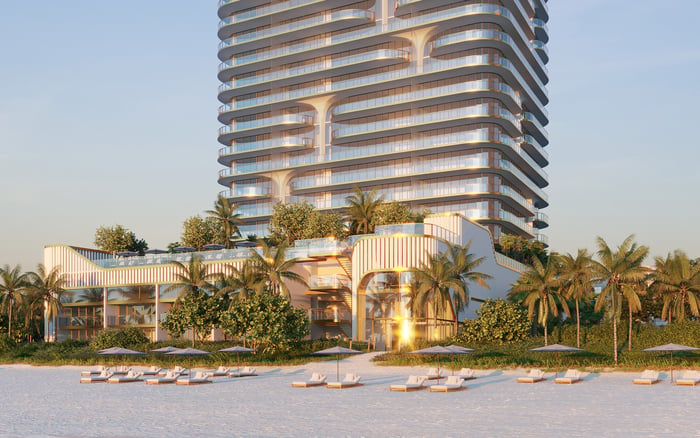
A buyer-oriented editorial on why turnover timing at Waldorf Astoria Residences Pompano Beach should be viewed through capital preservation, lifestyle continuity, and market maturation rather than short-term resale churn.
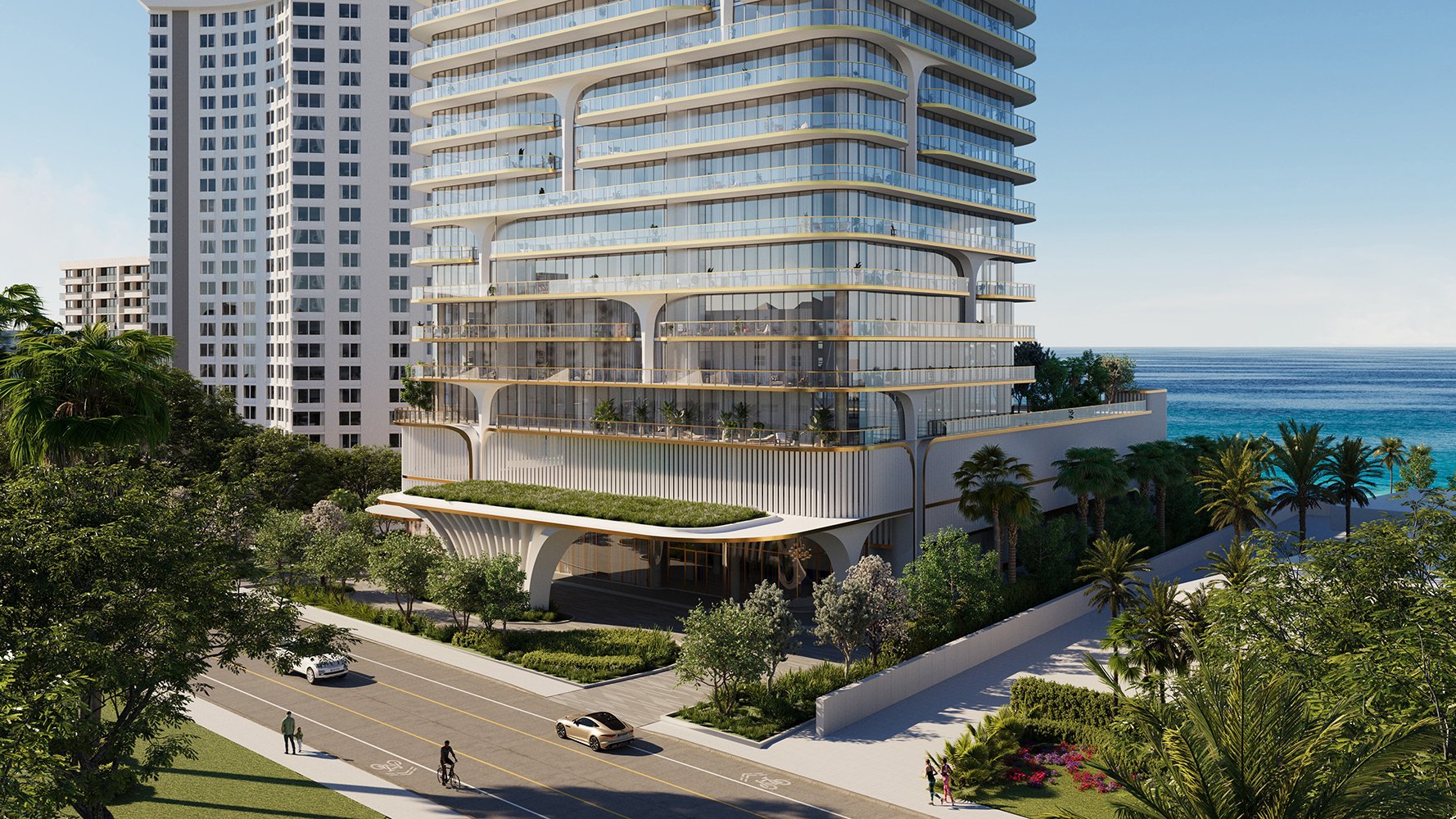
For the ultra-premium buyer, the most revealing question around Waldorf Astoria Residences Pompano Beach is not simply whether the address will feel important on day one. It is whether ownership can be managed with enough patience to let the building, the shoreline, and the brand narrative mature in concert.
That is the essence of turnover timing. Here, turnover does not mean impatient flipping. It means the deliberate moment when an early buyer decides whether to hold, exit, or rebalance exposure. For high-net-worth and ultra-high-net-worth households reallocating within South Florida, the decision belongs as much to wealth management as it does to lifestyle.
The quiet luxury case is built on discretion. It favors capital preservation, measured upside capture, and continuity of use over public urgency. Pompano Beach, still comparatively under the radar within the South Florida luxury map, gives that thesis a particular texture: oceanfront scarcity without the same degree of cultural saturation associated with more established luxury corridors.
Pompano Beach is no longer merely a pass-through shoreline between Fort Lauderdale and Boca Raton. In the ultra-luxury conversation, it is becoming a Broward County oceanfront micro-market with its own rhythm: less performative, more residential, and still defining its next chapter.
That matters for timing. In a mature market, early ownership may be priced more tightly around known comparables. In a transforming market, the value proposition often depends on patience: allowing public perception, neighboring development, retail energy, and buyer confidence to move into alignment. This is why the Pompano Beach wave should not be read only through immediate resale math.
Nearby luxury names, including Armani Casa Residences Pompano Beach and The Ritz-Carlton Residences® Pompano Beach, help frame the area as part of a broader branded-residence corridor rather than a single-building bet. The point is not to predict a winner in a short cycle. It is to understand that a cluster of recognizable luxury offerings can influence how buyers perceive the shoreline over time.
In a portfolio memo, this is a Pompano Beach, Broward, oceanfront investment conversation before it is a trading idea. Resale optionality may matter, but the first discipline is not to confuse liquidity with haste.
Turnover is intentional. Churn is reactive.
The distinction is crucial at a branded oceanfront condominium. Churn is the speculative reflex: buy early, look for noise, sell into attention. Turnover is more sophisticated: assess whether the original thesis has matured, whether the household still uses the residence, whether the building culture has stabilized, and whether capital can be more productively redeployed elsewhere.
For Waldorf Astoria Residences Pompano Beach, turnover timing should be linked to three practical signals. First, the building's culture and operations need time to settle after delivery. Branded residences are not judged only by finishes or views; they are judged by how the daily experience performs once owners live with the service model.
Second, the surrounding Pompano Beach oceanfront redevelopment wave needs room to mature. A luxury residence can be delivered before its neighborhood identity is fully priced by the market. That lag can be a source of opportunity, but only for buyers with enough patience to let perception catch up.
Third, the Waldorf Astoria residential brand footprint in South Florida may become more legible as buyers compare addresses. The existence of Waldorf Astoria Residences Downtown Miami broadens the regional brand conversation, even though the Pompano Beach proposition is fundamentally different: coastal, quieter, and more directly tied to oceanfront living.
A five- to ten-year horizon is not a guarantee of performance. It is a strategic frame that better matches the nature of the asset. Oceanfront branded residences tend to ask more of time than of momentum. Their value is not only in a launch narrative, but in how ownership feels after the building has developed a social identity, after operations are tested, and after the surrounding market becomes easier for incoming buyers to understand.
For an early buyer, the first years may be less about exit and more about information. Which lines are most admired? How does the amenity culture function? Do residents treat the building as a primary base, a second-home retreat, or a seasonal gathering point? Does the surrounding shoreline feel more complete with each cycle? These are the questions that turn a purchase into an asset-management position.
This is also where quiet luxury diverges from trophy display. A buyer does not need constant market validation if the residence serves a durable private purpose. The best timing may arrive not when headlines are loudest, but when the building's everyday desirability is most clearly understood by the next buyer.
For many affluent households, selling too early can create a hidden cost: the loss of continuity. If the residence becomes a reliable oceanfront base for family, work, hospitality, or seasonal migration, the opportunity cost of exiting must be weighed against any prospective gain.
That is especially true in a market where replacement options may not be simple. Another building may have a stronger view, a different service profile, or a more familiar address, but it may not replicate the same blend of brand, oceanfront setting, and lower-profile Pompano Beach positioning. The presence of W Pompano Beach Hotel & Residences adds another marker to the area’s hospitality-residential evolution, but each project will appeal to a different temperament.
Turnover planning, then, should begin before a resale decision becomes urgent. A disciplined owner can define in advance what would justify a hold, a sale, or a partial reallocation: changes in family use, the maturation of the local corridor, the performance of building operations, or a shift in broader portfolio strategy.
The patient buyer is not merely buying a condominium. The buyer is acquiring a position in a transforming shoreline micro-market, paired with a hospitality name that carries established recognition and a residential setting that rewards restraint.
That does not make the purchase immune to cycles. It simply argues against treating the asset as a short-term instrument. The strongest case for Waldorf Astoria Residences Pompano Beach is not speed. It is the possibility that, over time, the market becomes more precise in understanding what this address represents: branded service, oceanfront privacy, and a quieter version of South Florida luxury.
For the right owner, turnover timing becomes an exercise in composure. Hold long enough for the building to become itself. Watch the shoreline mature. Let brand depth accumulate. Then decide whether the residence still belongs in the family's life and balance sheet.
What is the core appeal of Waldorf Astoria Residences Pompano Beach? It combines the Waldorf Astoria hospitality brand with an oceanfront residential setting in Pompano Beach.
Why is turnover timing important for early buyers? It helps owners plan when to hold, sell, or rebalance exposure without reacting to short-term market noise.
Is this thesis about flipping? No. The quiet luxury thesis favors stability, discretion, and longer-term positioning over speculative churn.
What hold period best fits the strategy? A five- to ten-year horizon can better align with building stabilization, neighborhood maturation, and lifestyle use.
What should owners watch after delivery? They should watch how operations, service culture, resident behavior, and daily building life settle over time.
Why does Pompano Beach matter? Pompano Beach is positioned as a transforming, comparatively under-the-radar shoreline market within South Florida luxury.
How does Broward County fit the thesis? Broward's evolving ultra-luxury oceanfront condominium market gives Pompano Beach a broader regional context.
Does the Waldorf Astoria brand matter beyond the building? Yes. A broader South Florida residential brand footprint can influence how buyers compare and understand the offering.
What is the risk of selling too early? An owner may exit before building culture, local redevelopment, and market perception have had time to mature.
What is the best way to shortlist comparable options for touring? Start with location fit, delivery status, and daily lifestyle priorities, then compare stacks and elevations to validate views and privacy.
If you'd like a private walkthrough and a curated shortlist, connect with MILLION.
If branded residences are on your mind — as a home or as an allocation — we would be glad to share what we are seeing, privately.
Begin a quiet conversation