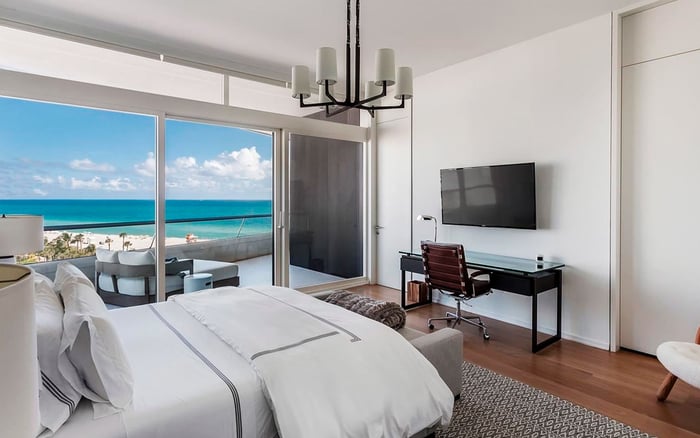
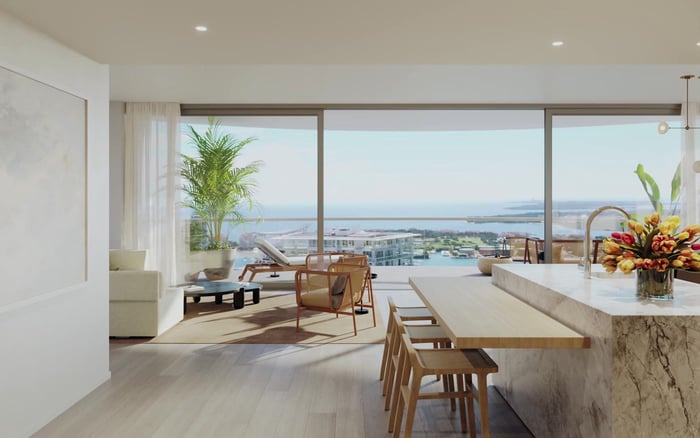
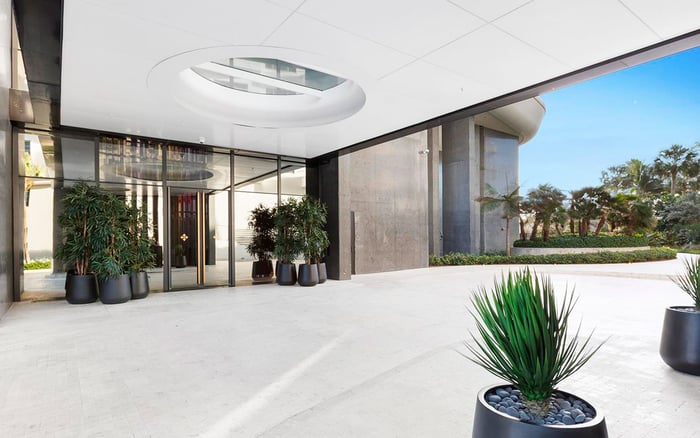
Faena House Miami Beach remains one of Mid-Beach’s clearest signals of how architecture, brand ecosystem, and true scarcity translate into lasting pricing power. Designed by Foster + Partners and limited to 47 residences, the building has been the stage for record-setting transactions and a consistently watched resale narrative that continues to influence how ultra-luxury buyers underwrite Miami Beach.
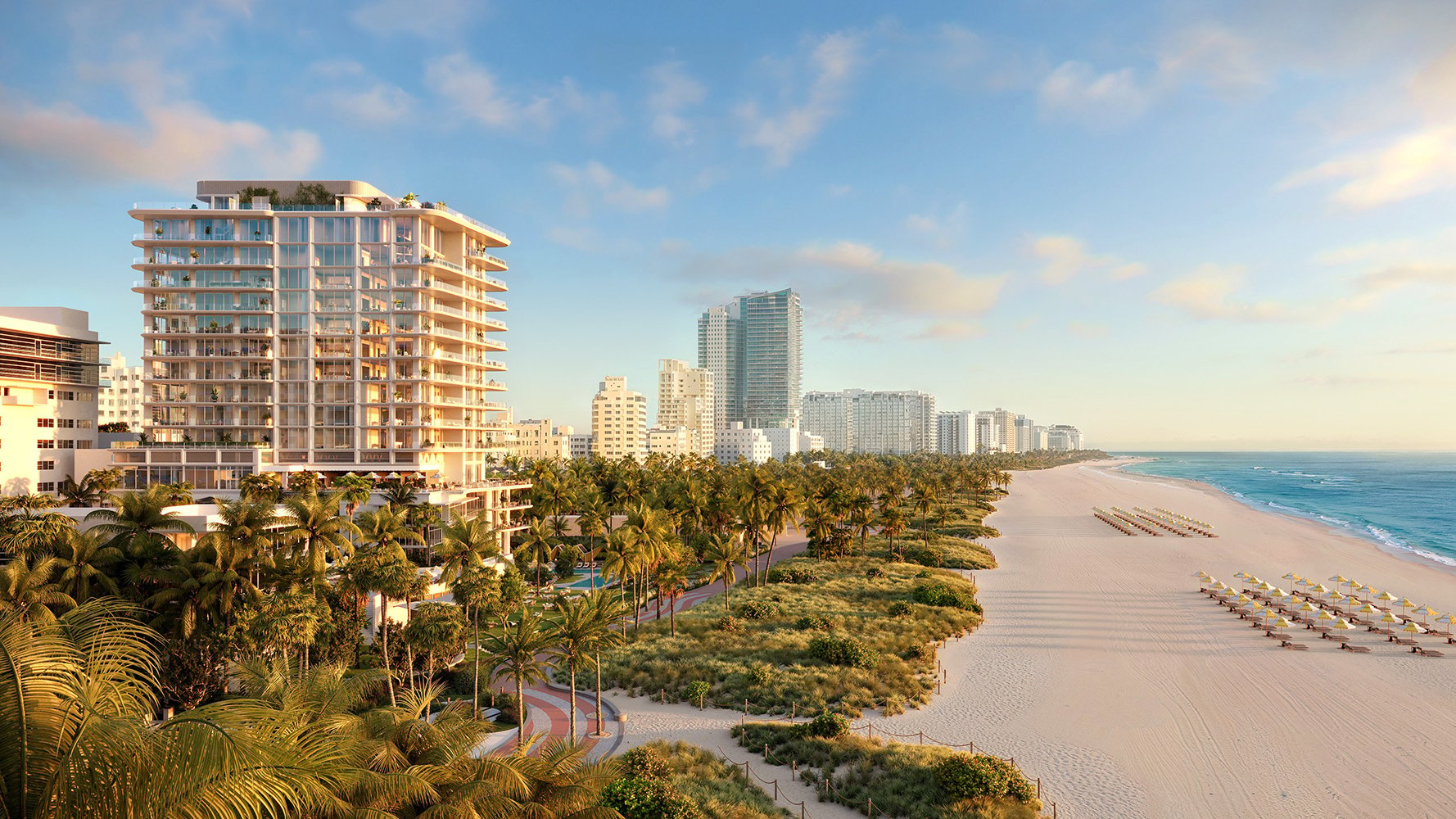
In a Miami Beach market that reinvents itself with constant new supply, a handful of addresses operate less like inventory and more like reference points. Faena House Miami Beach is one of the clearest: an oceanfront condominium at 3315 Collins Ave in Mid-Beach, designed by Foster + Partners and positioned within the broader Faena District concept. With only 47 residences across 18 stories, its scarcity is not a slogan. It is simple math.
That restraint has made the building unusually easy for sophisticated buyers to underwrite. The appeal is not scale or unit variety. It is a tightly curated residential experience whose value is reinforced by design discipline, a lifestyle ecosystem, and a transaction history that remains widely cited at the top end of the U.S. condo market.
For buyers evaluating oceanfront condos as second homes, primary residences, or long-hold assets, Faena House offers a useful lens. It illustrates how signature architecture, meaningful outdoor living, and brand context can sustain demand even as Miami Beach’s development cycle continues to accelerate.
Foster + Partners has emphasized Faena House’s defining “alero” terraces: deep, continuous outdoor spaces intended to extend daily living outward. In practice, the Terrace becomes the organizing principle. The home is not merely adjacent to the outdoors. It is planned around it. Design coverage has also highlighted the building’s curving form and terrace-driven layout as a response to Miami Beach’s light, water, and climate.
For an ultra-premium buyer, this reads as more than aesthetics. Deep terraces can moderate direct sun, strengthen privacy, and create outdoor zones that feel genuinely usable. In a high-end condo, interior square footage is only part of livability. The ability to dine, lounge, and entertain outside with the ocean as backdrop often separates a residence that photographs well from one that is comfortably lived in.
This is also where Faena House’s positioning diverges from many luxury towers. Some buildings treat balconies as accessories. Here, the outdoor condition is fundamental, and that clarity aligns with buyers who consider indoor-outdoor continuity non-negotiable.
Faena House is connected to the Faena District in Mid-Beach, an environment built around hospitality, culture, and real estate under the Faena brand. The Faena Hotel Miami Beach opened with a high-profile launch and has remained a visible anchor for the district’s identity. Separately, Faena’s Miami Beach offering includes a pool-and-beach program, emphasizing beach service and amenities as part of the lifestyle promise.
For many buyers, the most durable premium is not only the view line. It is the experience around the home when guests arrive or when an owner is in residence for a long weekend. A district that can reliably deliver dining, culture, and service helps a condo feel less like a standalone asset and more like a complete, low-friction base in Miami.
Wellness now sits squarely within that value equation. Tierra Santa Healing House has been described as a 22,000-square-foot spa and wellness facility within the Faena ecosystem. Preferences vary, but the larger takeaway is consistent: the district is designed to hold attention, not simply draw it.
Faena House entered the national conversation when a penthouse deal for $60 million closed in September 2015, setting a record for a Miami-area home sale at the time. The record-setting penthouse was described as a duplex with five bedrooms and a 70-foot rooftop infinity pool. Reporting later identified the buyer as Ken Griffin, the Citadel founder, who bought two penthouse units for a combined $60 million.
In luxury real estate, record sales matter less as trivia and more as psychological infrastructure. A widely publicized, top-of-market transaction does three things. First, it establishes a perceived upper boundary that other sellers reference, even when their homes are not truly comparable. Second, it draws attention from a global buyer pool that does not track Miami Beach week to week. Third, it signals that the market can absorb trophy pricing that feels familiar in other elite residential hubs.
Just as importantly, the story was never only about the number. It was about the product that could command it: a true penthouse experience where privacy, outdoor space, and architecture converge.
Ultra-luxury condominiums are sometimes treated as illiquid by default, yet Faena House has been closely watched in the resale market for years. The Real Deal reported in August 2016 that nearly $150 million worth of condos were on the market, underscoring early resale activity and the reality that even at the top, owners reposition.
Later reporting kept the building in focus. In December 2020, South Florida Business Journal reported that Griffin’s firm sold one Faena House unit, purchased as part of the combined penthouse buy, for $35 million. In June 2021, the same publication reported a sale of the other unit for $11.15 million.
Buyers should not overfit a single transaction to a broader thesis, but these datapoints are useful. They show that even trophy assets participate in the cycle: ownership changes, liquidity appears, pricing recalibrates. For a prospective purchaser, the lesson is not to chase headlines. It is to study the building’s long arc. In a market with rapid new supply, a building’s ability to remain part of the conversation is itself a form of value.
Public-facing market tracking has also shown Faena House trading at ultra-luxury levels relative to typical Mid-Beach condos. That relative strength is often what serious buyers care about most: not whether a building is “up” in a given quarter, but whether it holds a premium against its peer set.
Many clients start with an emotional anchor and then validate that instinct with alternatives. If Faena House is the anchor, the comparisons tend to fall into three buckets: new-build statement towers, hospitality-driven branded living, and established icons.
For a more forward-leaning, skyline-shaping expression of Miami Beach’s next chapter, some buyers explore Five Park Miami Beach as a counterpoint. It offers a newer narrative that can appeal to those who want a contemporary residential product aligned with what is arriving.
For buyers who prioritize the cadence of a hotel-backed lifestyle, Setai Residences Miami Beach often enters the discussion because it frames Miami Beach living through service, arrivals, and a globally legible hospitality lens.
And for those who want the reassurance of a legacy luxury flag in a residential format, The Ritz-Carlton Residences® Miami Beach can be part of the comparison set, especially for buyers who value brand consistency and predictable standards.
This is not a question of “better.” It is a question of alignment. Faena House’s alignment is unusually clear: design-forward oceanfront living within a branded district, delivered at a scale that stays private.
At this level, due diligence is less about catching obvious flaws and more about confirming that the home supports the way you actually live. It is the difference between admiring a property and choosing it with conviction.
Start with the outdoor program. Because the Terrace is central to the building’s identity, assess how it performs for privacy, wind, and day-to-day usability. Then evaluate how the district lifestyle fits your rhythm. Do you want a home that feels self-contained, or one intentionally woven into a broader hospitality and wellness ecosystem?
Next, underwrite the building’s resale narrative as carefully as you would any other asset. A limited-residence building can behave differently than a high-unit-count tower. Scarcity can cushion pricing, but it can also mean fewer comps and longer hold times. Your risk tolerance should match your time horizon.
Finally, keep the end goal in focus. The most valuable outcome is often not “the best deal,” but the best fit: a residence you will occupy often enough to justify owning it, and one that holds its position as Miami’s market evolves.
Where is Faena House located? Faena House is at 3315 Collins Ave, Miami Beach, Florida 33140 in Mid-Beach.
Who designed Faena House? The building was designed by Foster + Partners.
How tall is Faena House and how many residences does it have? Foster + Partners lists Faena House as 18 stories with 47 residences.
Why is Faena House considered Oceanfront? It is an oceanfront condominium directly positioned on Miami Beach’s shoreline.
What makes the building’s outdoor spaces distinctive? Its signature “alero” terraces are designed as deep, continuous outdoor living areas.
What was the record-setting sale associated with Faena House? A $60 million penthouse deal in September 2015 set a Miami-area home-sale record at the time.
What features were reported for the record penthouse? It was described as a duplex with five bedrooms and a 70-foot rooftop infinity pool.
Has Faena House seen notable Resale activity? Yes. It has been widely covered for high-end resales and early listing activity in the secondary market.
What is the Faena District lifestyle component? It centers on Faena-branded hospitality and amenities, including a pool-and-beach program and the Tierra Santa Healing House wellness facility.
Who can help me evaluate a Miami Beach Penthouse or condo purchase discreetly? For discreet guidance, connect with MILLION Luxury.
If branded residences are on your mind — as a home or as an allocation — we would be glad to share what we are seeing, privately.
Begin a quiet conversation