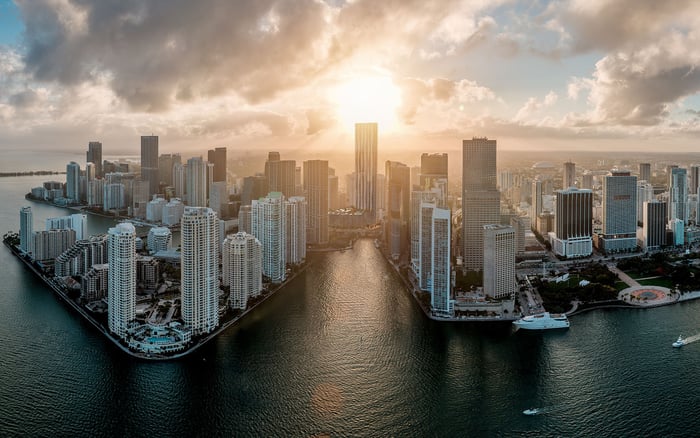
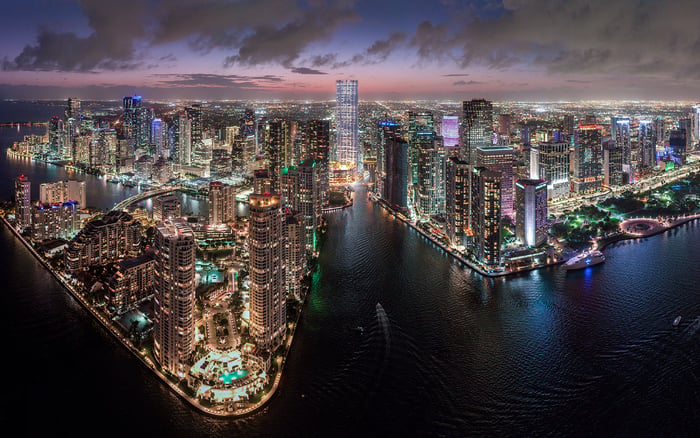
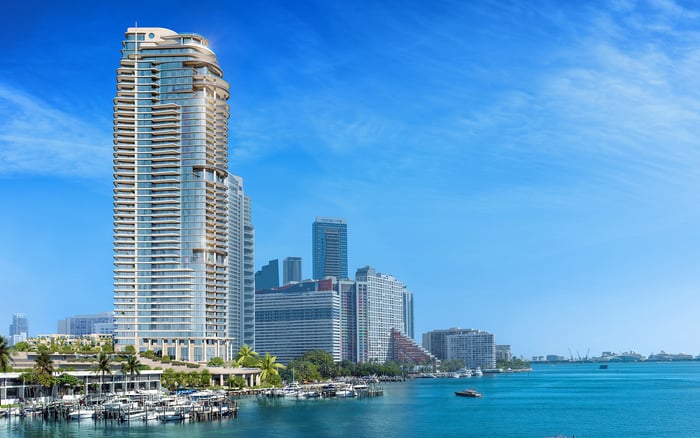
A buyer-oriented design critique of Japanese-inspired elegance as a concept for 619 Brickell, focusing on material honesty, spatial calm, light, landscape, and hospitality-level detailing that resonate in Brickell’s high-density context.
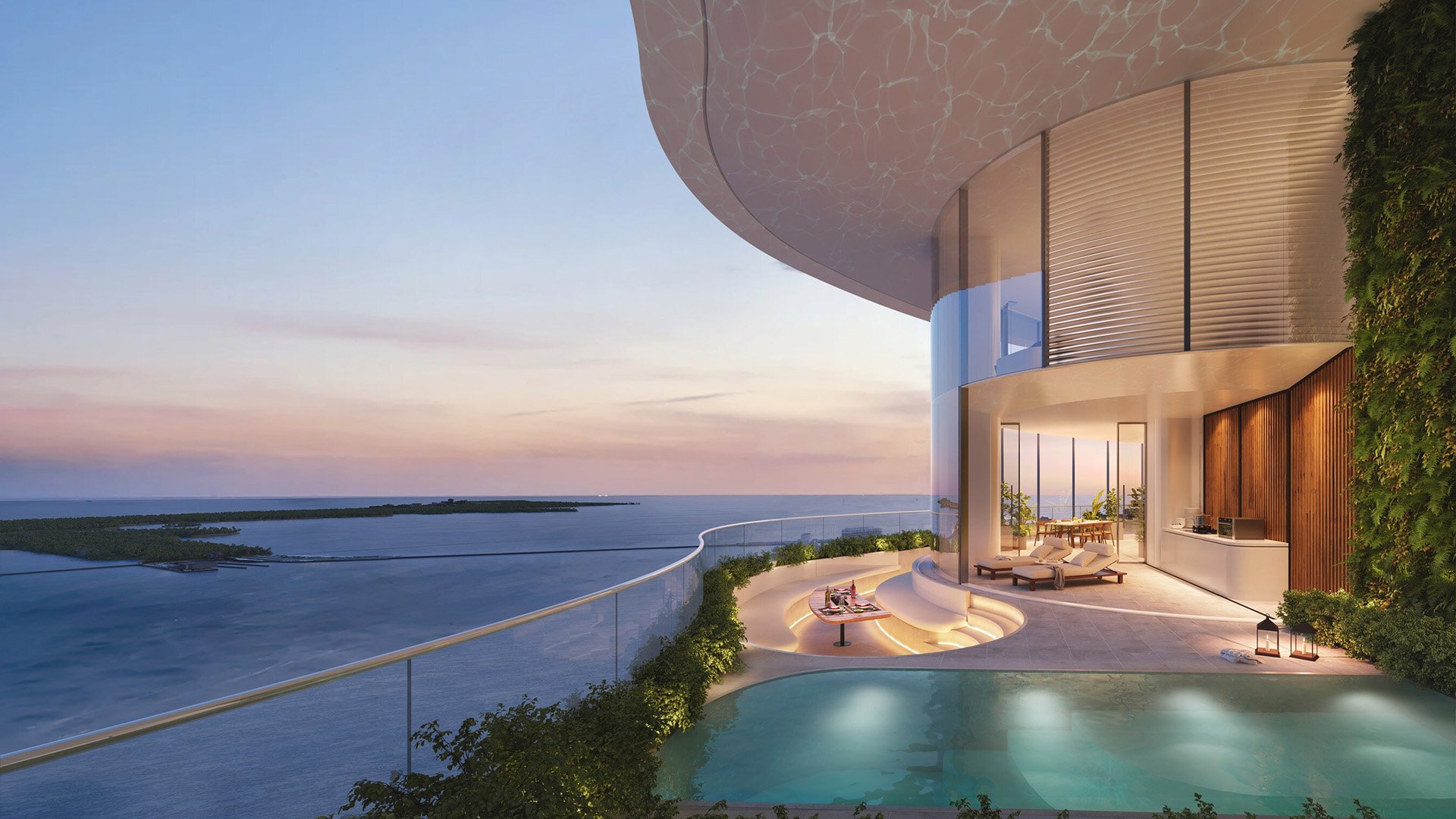
In a neighborhood defined by glass towers and fast-moving capital, “Japanese-inspired elegance” has become shorthand for a specific caliber of modern luxury: calm, disciplined, and materially honest. For a buyer evaluating 619 Brickell, the phrase is best understood as a design standard-not a decorative theme. The strongest expressions are experiential: a deliberate entry sequence, a softened palette, tactility under the hand, and rooms that feel composed at any hour.
Brickell buyers often live between meetings, flights, and global time zones. In that context, Japanese design principles translate into a practical promise: less visual noise, more recovery. When executed well, the result is not austerity. It is comfort that feels curated rather than crowded-and a home that photographs beautifully while still supporting everyday ritual.
What matters most is not whether a space “nods” to Japan, but whether it demonstrates the values typically associated with that sensibility: restraint, proportion, craft, and respect for light.
Because details for 619 Brickell are not fully standardized in public conversation, buyers should assess the integration through a clear lens rather than marketing language. Japanese-inspired elegance typically presents across five categories.
First is spatial hierarchy. The home should deliver a sense of progression: public to private, active to quiet. Even in a condominium, this can be achieved with a true foyer moment, a pause before the main room, and a gradual reveal of views.
Second is material hierarchy. Expect fewer materials, used with greater intention. The goal is not monochrome minimalism; it is coherence. Natural stone, warm woods, and refined plaster or matte wall treatments can carry an entire interior-if transitions are resolved with precision.
Third is joinery and edge discipline. Luxury in this language lives at the margins: shadow gaps, aligned reveals, flush thresholds, consistent base details, and cabinetry that closes with a softened, confident silence.
Fourth is light-layered and warm. A Japanese-informed interior typically avoids harsh, uniform brightness. Instead, it relies on indirect light, low-glare fixtures, and dimming that supports evening calm.
Fifth is the relationship to nature. This does not require a garden. It requires evidence that the home understands breeze, sun, and the feel of natural surfaces. Even a simple planter ledge, a textured stone, or an intentionally framed view can communicate the principle.
One of the most revealing tests is what happens at the front door. A Japanese-inspired approach treats arrival as a decompression ritual. Buyers should look for an entry that offers privacy from the corridor-and a place to set down the day: a console niche, a material shift underfoot, a change in ceiling height, or a subtle screen element.
In Brickell, privacy is a premium. If 619 Brickell aims to deliver this aesthetic, it should also deliver practical shielding: sightlines that do not expose the living room immediately, acoustic separation from shared hallways, and a sense that the residence is a personal sanctuary rather than an extension of the building’s circulation.
This is also where proportion matters. A calm entry can be compact, but it must feel designed. The experience should read as composed, not leftover.
Japanese-inspired elegance is unforgiving of shortcuts. When the palette leans warm and natural, surface quality has nowhere to hide-because it is not competing with ornament.
For buyers, the questions are straightforward:
Does the wood feel like wood, with grain that reads as real rather than printed?
Do stone surfaces have depth, or do they present as thin skins?
Are metal accents quiet and consistent, or mixed and busy?
Is there a disciplined finish schedule throughout, including back-of-house areas?
The most persuasive “quiet luxury” interiors use repetition as refinement: the same tone of wood appearing across multiple rooms, a consistent hardware language, and a limited set of finishes that look better the longer you live with them.
In this style, restraint is expensive. It demands better materials, cleaner installation, and more time spent resolving corners.
Brickell’s light is sharp and bright. A Japanese-inspired interior should not counter it with glare. It should filter and modulate it.
Look for window treatments that can shift the mood without introducing visual clutter. Consider whether the lighting plan supports a true day-to-night transition: indirect cove lighting, wall washing that reveals texture, and warm-temperature fixtures that flatter both skin and materials.
Shadow, in this context, is not a flaw. It is part of the composition. A residence that feels serene at 9 p.m. almost always has a layered lighting strategy that privileges softness over spectacle.
Kitchens and baths are where “Japanese-inspired” either becomes genuinely luxurious-or quietly inconvenient.
In the kitchen, the desired effect is seamlessness. That means integrated storage, concealed appliances where possible, and a clear, uncluttered countertop. But performance still leads: ventilation that actually clears the space, durable surfaces that hold up to daily use, and hardware that feels engineered rather than ornamental.
In baths, look for a spa-like sensibility grounded in practicality: generous storage, thoughtful towel placement, and lighting that is flattering rather than clinical. The strongest versions of this style emphasize tactile comfort: warm stone underfoot, matte finishes that reduce glare, and fixtures that feel precise in hand.
If 619 Brickell’s concept is truly integrated, the “quiet” approach should extend to the most functional rooms-not only the living area.
Japanese-inspired elegance often aligns naturally with wellness and hospitality. In a luxury tower environment, that means amenity spaces that feel like destinations-not checklists.
Buyers should evaluate whether shared areas support ritual: a considered lounge that invites conversation without echo, a wellness space that prioritizes privacy, and circulation that does not feel like a convention center. Material choices matter here, too, because amenities are high-traffic environments. Finishes should be selected to age gracefully.
For context within Brickell’s broader luxury market, buyers comparing sensibilities may also explore buildings where branding and design authorship play a major role, such as St. Regis® Residences Brickell and Baccarat Residences Brickell. Even when aesthetics differ, these references can help calibrate what “luxury execution” feels like in lobbies, lounges, and service-driven spaces.
Brickell is not a retreat; it is a center of gravity. The most successful Japanese-inspired residences acknowledge this by making the interior the counterpoint: quiet, composed, and deeply livable.
A critical, buyer-oriented measure is acoustic comfort. Look for signs that the building prioritizes separation: solid doors, thoughtful mechanical design, and interiors that do not amplify street or neighbor noise. Serenity is not only visual.
Another measure is balcony and threshold design. If the home offers outdoor space, the transition should feel continuous, with thresholds that are safe and refined, and finishes that do not read as an afterthought. In this design language, the edge between inside and out is part of the story.
Japanese-inspired elegance tends to age well because it is built on principles rather than trends. Still, buyers should distinguish between timeless restraint and generic minimalism.
Timeless restraint has character: a signature texture, a consistent material story, and an interior rhythm that makes you slow down. Generic minimalism often reads as empty: white walls, shiny surfaces, and a lack of tactile detail.
Collectability also depends on flexibility. Homes built around a calm palette can adapt to art, sculpture, and changing furniture preferences. That adaptability can be especially valuable in Brickell, where many owners split time between multiple residences and want an interior that welcomes personal pieces without needing to be redesigned.
If you are building a multi-neighborhood portfolio, it can be instructive to compare how different districts express luxury. For example, Coconut Grove often leans into organic modernism and landscape-driven living, as seen in Vita at Grove Isle, while other Brickell towers may emphasize height, skyline drama, and nightlife adjacency. The best choice depends on whether you want your home to energize you or restore you.
When you tour 619 Brickell with this aesthetic in mind, focus on details that cannot be fixed with furniture.
Start with proportions. Do the main rooms feel balanced, with walls that can actually take art and seating layouts that do not force compromises?
Then look at surfaces in natural light. Does the palette hold up at midday, or does it fall flat? Do finishes read matte and sophisticated, or glossy and loud?
Test touchpoints. Cabinetry, doors, and hardware reveal the level of execution.
Finally, observe the building’s common areas. The “Japanese-inspired” promise should carry from the front door through the elevator arrival and into the residence.
If you want to compare Brickell’s direction with other high-design statements in Miami, you might also consider how fashion-forward projects shape a different kind of luxury narrative, such as 888 Brickell by Dolce & Gabbana. The contrast can clarify whether your personal definition of elegance is quiet or expressive.
What does “Japanese-inspired elegance” actually mean in a Brickell residence? It typically signals restraint, natural materials, and a calm spatial rhythm rather than overt cultural motifs.
Is this style compatible with high-rise glass architecture? Yes. When interiors soften light and emphasize texture, they create a counterbalance to the skyline exterior.
What are the biggest red flags of a superficial interpretation? Overly themed décor, shiny finishes, and a lack of detail at edges, reveals, and transitions.
Which rooms best reveal the quality of execution? Kitchens and baths, because minimal design there demands better storage planning and better finishes.
Does “quiet luxury” mean fewer amenities? Not necessarily; it means amenities that feel like hospitality spaces, with comfort, privacy, and calm.
How should lighting be handled in this design language? Look for warm, dimmable layers and indirect illumination that avoids glare and supports evening living.
Will a restrained palette feel cold or empty? It should not-if it is supported by tactile materials, warm light, and considered furniture scale.
Is this a good approach for displaying art and collectibles? Often yes, because quieter backgrounds can elevate art, provided wall proportions and lighting are right.
How can buyers evaluate privacy in a dense Brickell building? Pay attention to entry sightlines, corridor exposure, door solidity, and the overall acoustic feel.
What’s the most timeless element to prioritize? Material honesty and precise detailing, because they remain valuable long after trends shift.
For a confidential assessment and a building-by-building shortlist, connect with MILLION Luxury.
If branded residences are on your mind — as a home or as an allocation — we would be glad to share what we are seeing, privately.
Begin a quiet conversation