A buyer-oriented framework for evaluating private rooftop deck potential at Alma Bay Harbor Islands, including due diligence checkpoints, design considerations, and lifestyle tradeoffs in Bay Harbor.
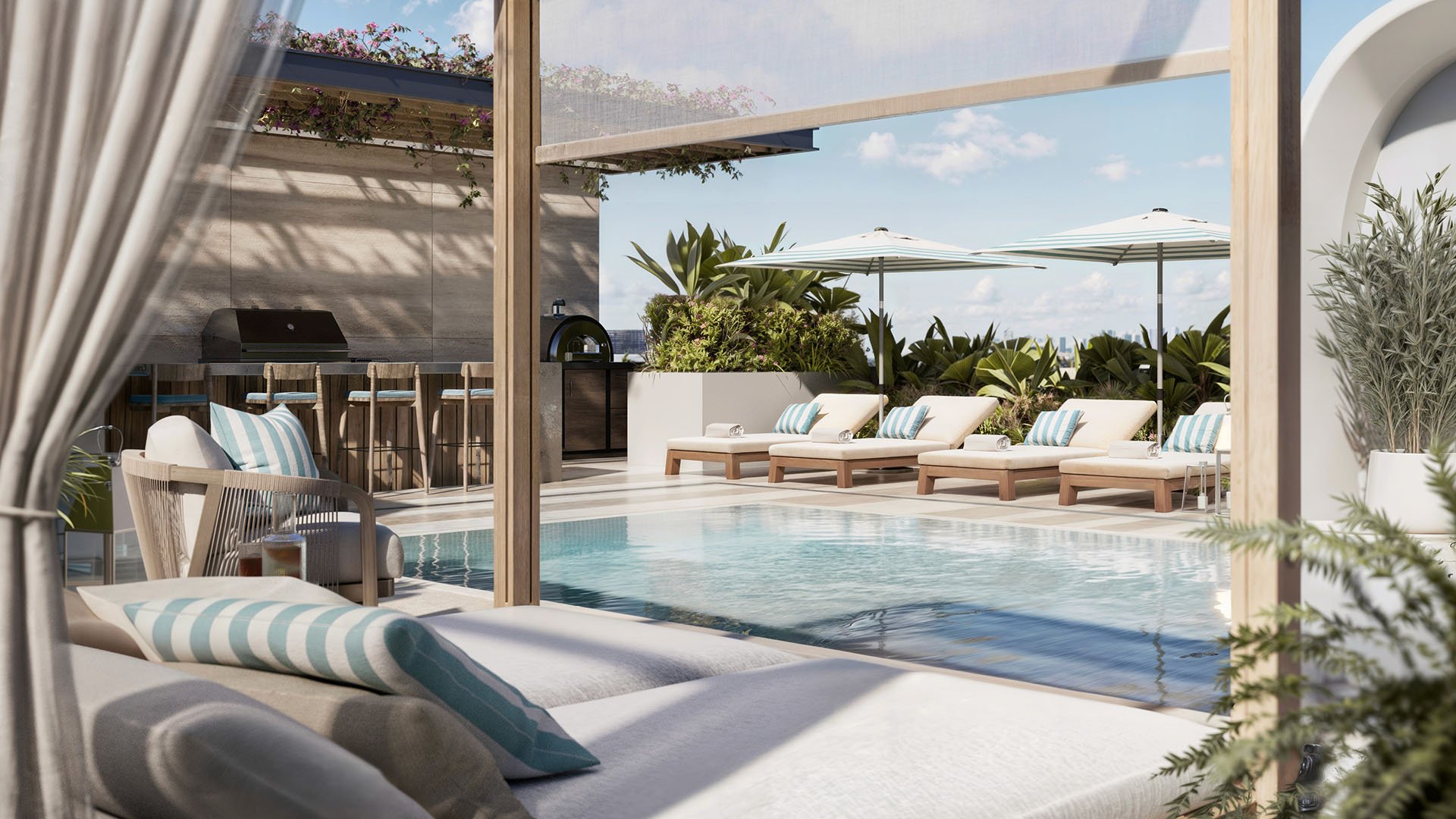
In Bay Harbor Islands, a “private rooftop deck” is not a single amenity-it’s a bundle of capabilities: the legal right to use a defined area, the structural capacity to support daily living above the building, and the real-world comfort of being outdoors in a coastal microclimate. At Alma Bay Harbor Islands, the more sophisticated question shifts from “Does it have a rooftop?” to “Can this rooftop be lived on-elegantly and predictably-without operational surprises?”
Because the Fact Table provided for this assignment contains no property-specific disclosures, this MILLION Luxury editorial focuses on the diligence framework and design logic that typically separate a truly livable private roof from a merely photogenic one. Use it as a working checklist for discussions with the developer, the condominium documents, and your design and engineering team.
A rooftop performs when four layers align.
First is exclusivity: whether the rooftop area is deeded, assigned as a limited common element, or shared under reserved-time rules. Exclusivity is what safeguards privacy, protects the quiet of your gathering, and supports the value of your outdoor investment.
Second is access: how you get there-and how service gets there. A private internal stair reads very differently than a keyed corridor route, and both differ from an elevator that opens to a shared roof. If you entertain, map guest circulation and catering flow so they don’t cut through private sleeping zones.
Third is structure and waterproofing: the work that never shows up in listing photos. Load capacity, slope to drains, membrane specification, and detailing at planters and rail posts often determine whether a roof stays serene-or becomes a recurring maintenance storyline.
Fourth is exposure management: wind, sun, salt, and storm protocols. In a coastal market, a rooftop must perform in imperfect conditions, not only when the sunset is flawless.
Before you fall in love with rooftop dining, confirm who controls what. In a boutique setting, clarity is the luxury.
Review how the governing documents define the roof area and what’s permitted on it. Common tripwires include restrictions on open flame, limits on pergolas or shading devices, rules around music, and requirements for approved finishes. Many buyers also miss the operational details: who insures improvements, who maintains drains, and what happens if a leak originates above another residence.
If the roof is a limited common element, understand the boundary line and any easements for mechanical access. Even an “exclusive” rooftop may still require periodic entry for maintenance of equipment, antennas, or life-safety systems.
A rooftop deck that lives like an outdoor living room requires disciplined engineering.
Start with load. The gap between a roof designed for occasional access and one designed for furniture groupings, planters, a bar, or a spa is substantial. Ask about structural design intent-not just whether an upgrade is “possible.” If your plan includes heavy elements, confirm the roof assembly and slab design can accommodate that weight, along with the dynamic load of people during entertaining.
Next is water management. In South Florida, the roof has to do two opposing jobs at once: move intense rainfall quickly while remaining perfectly sealed. Confirm drain locations and overflow strategy, and ask how the assembly addresses ponding risk. The most common future conflict is not style-it’s moisture.
Finally, scrutinize penetrations. Every railing post, lighting conduit, and pergola anchor can become a pathway for water intrusion if detailing is weak. The best rooftops are designed so features mount to curbs or integrated systems that protect the membrane, rather than puncturing it casually.
In Bay Harbor Islands, the outdoor season is long-but rooftop comfort is never automatic.
Shade is the first lever. A beautiful roof that can’t be used at midday becomes a space you admire from indoors. Aim for layered shading: architectural overhangs where allowed, retractable systems when approvals are restrictive, and high-performance umbrellas only where wind conditions permit.
Wind is the second lever. Rooftops can feel dramatically different from terraces a few stories down, especially at corners and along parapets. Where privacy screens are permitted, they can also moderate wind. The goal isn’t to eliminate breeze; it’s to reduce turbulence at seating height.
Acoustics is the quiet third lever. Hard surfaces, glass rails, and parapet walls can reflect sound. If discretion matters, use softening elements such as outdoor rugs, cushioned seating, and planting where feasible. A rooftop should read like a private club-not an echo chamber.
The highest-value rooftops are programmed with intention. Define zones-arrival, lounge, dining, and a quieter corner for reading-then decide what’s worth the operational complexity.
A small outdoor kitchen is often more practical than a full build-out. Fewer utilities and fewer penetrations typically mean fewer risks. If a plunge pool or spa is on your shortlist, treat it as a structural and waterproofing project first, and a lifestyle feature second.
Lighting should be layered and low-glare. The atmosphere you want at 9 p.m. is rarely delivered by a single bright fixture. Also consider how lighting impacts neighbors and your own interior views.
Furniture selection isn’t merely aesthetic. In a salt-air environment, marine-grade materials and proper anchoring solutions matter, as does storage for cushions during weather events.
A private rooftop is only as private as its sightlines. Evaluate what you can see-and what can see you.
Consider surrounding rooflines, mechanical screens, and adjacent terraces. If Alma’s roof elevation places you above many neighbors, privacy improves, but exposure increases. If you’re level with nearby buildings, you may need screening strategies that still comply with community rules.
Also assess the arrival sequence. Privacy erodes when rooftop access relies on a route that invites unplanned encounters. True discretion often comes from separating owner access from any shared amenity circulation.
Rooftops trade on scarcity, but buyers still underwrite them rationally. A rooftop that’s large yet impractical tends to hold value less effectively than a slightly smaller roof that feels effortless.
Value drivers tend to be: clean legal exclusivity, turnkey infrastructure (power, water, drainage), strong comfort design, and low perceived risk of leaks or restrictions. The steepest discounts usually appear when buyers sense uncertainty-unclear rights, unclear maintenance responsibility, or a history of water issues.
In a boutique context, roof quality can become a signature differentiator, especially for second-home owners who want a controlled environment rather than a high-traffic amenity deck.
Bay Harbor Islands draws buyers who want proximity to the energy of Miami Beach while maintaining a more residential, discreet rhythm. In that setting, a private rooftop becomes a personal horizon line: sunset dinners, morning Pilates, and a quiet place to reset without leaving home.
If you’re comparing nearby options, calibrate your priorities. A rooftop isn’t always the answer if you prefer a more protected terrace, a higher floor with less wind variability, or a building where the amenity deck is fully serviced and you’d rather not manage outdoor operations personally.
For buyers also considering other boutique addresses in Bay Harbor and nearby neighborhoods, it can be helpful to contrast building typologies and outdoor living approaches, including Origin Bay Harbor Islands for a contemporary waterfront-oriented lifestyle, Onda Bay Harbor for a design-forward boutique profile, and La Maré Bay Harbor Islands for another take on refined, low-density living. If wellness programming is central to your decision, The Well Bay Harbor Islands offers a different lens on outdoor life, where the “deck” concept often extends into a broader daily ritual.
A rooftop should be vetted with the same discipline as a waterfront seawall. Focus on these conversations and documents:
Confirm the rooftop’s legal status and boundary, and how exclusivity is enforced.
Review rules for shade structures, grills, sound, and hours, plus any approval process for improvements.
Understand maintenance and insurance responsibilities for decking, drains, railings, and any owner-added features.
Ask for the waterproofing approach conceptually, including how penetrations are handled and how drainage is designed.
Clarify storm protocol: what must be secured or removed, and how the building manages rooftop safety in high winds.
Finally, align your interior plan with the rooftop plan. The best rooftop experiences feel like a natural extension of the residence-not an afterthought reached by a narrow stair to an empty expanse.
What makes a rooftop deck truly “private”? Privacy comes from documented exclusive use and controlled access, not marketing language.
Is a private rooftop always better than a large terrace? Not necessarily; terraces can be calmer in wind and simpler to furnish and maintain.
What is the biggest risk to watch for with rooftop decks? Poorly executed waterproofing and penetrations can create long-term maintenance and repair issues.
Can I add a pergola or shade structure on a rooftop? It depends on building rules and approvals; confirm what is permitted before you design around it.
Are outdoor kitchens on rooftops practical? Yes when kept simple; fewer utilities and fewer penetrations usually means fewer complications.
How should I think about wind on a rooftop in Bay Harbor Islands? Plan for wind moderation with smart zoning and approved screening rather than assuming calm conditions.
Do rooftop improvements usually require condominium approval? Often yes; expect an architectural review process and limits on what can be attached to the roof.
What materials hold up best for rooftop furniture near the water? Marine-grade metals, high-quality composites, and performance fabrics tend to handle salt air best.
Will a private rooftop help resale value? It can when it is exclusive, comfortable, and low-risk, but uncertainty can discount value quickly.
What should I ask for before closing on a rooftop-equipped residence? Get clear documentation on rights, rules, maintenance duties, and the intended use of the roof assembly.
When you're ready to tour or underwrite the options, connect with MILLION Luxury.
If branded residences are on your mind — as a home or as an allocation — we would be glad to share what we are seeing, privately.
Begin a quiet conversation