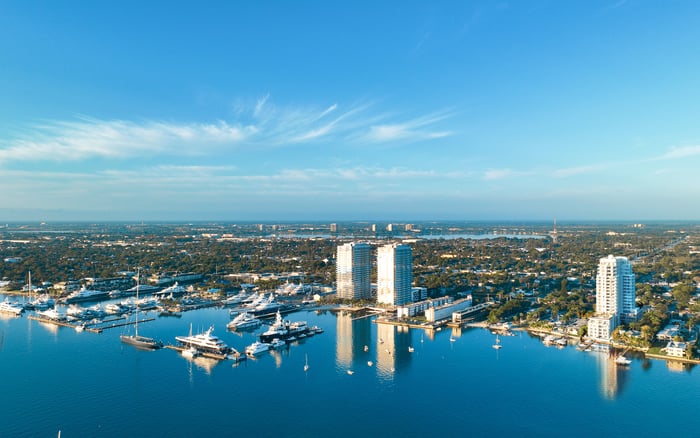
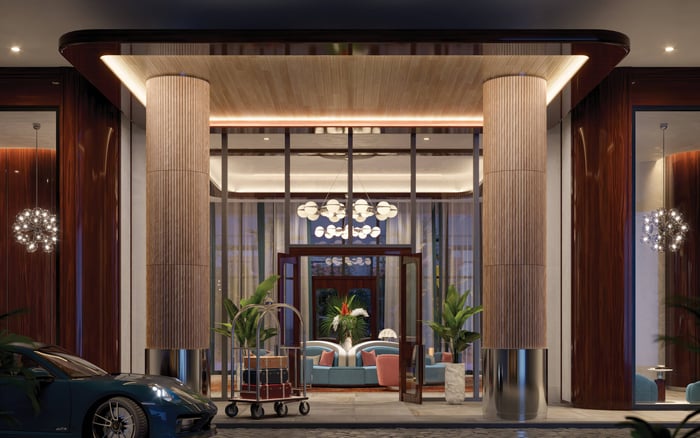
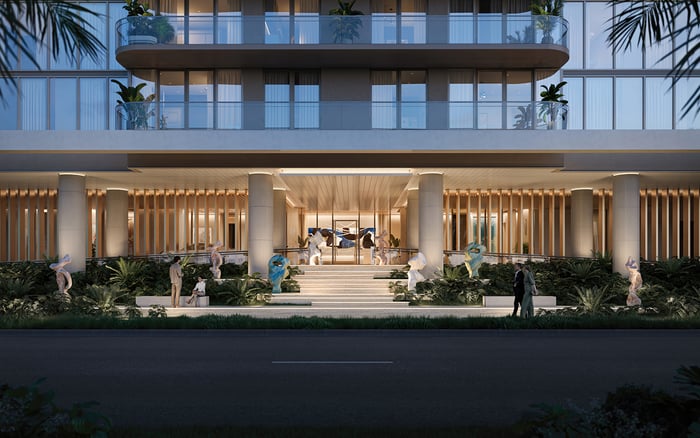
An editorial comparison of open concept “flow” at two ultra-luxury West Palm Beach addresses, focused on sightlines, privacy, entertaining, and daily livability.
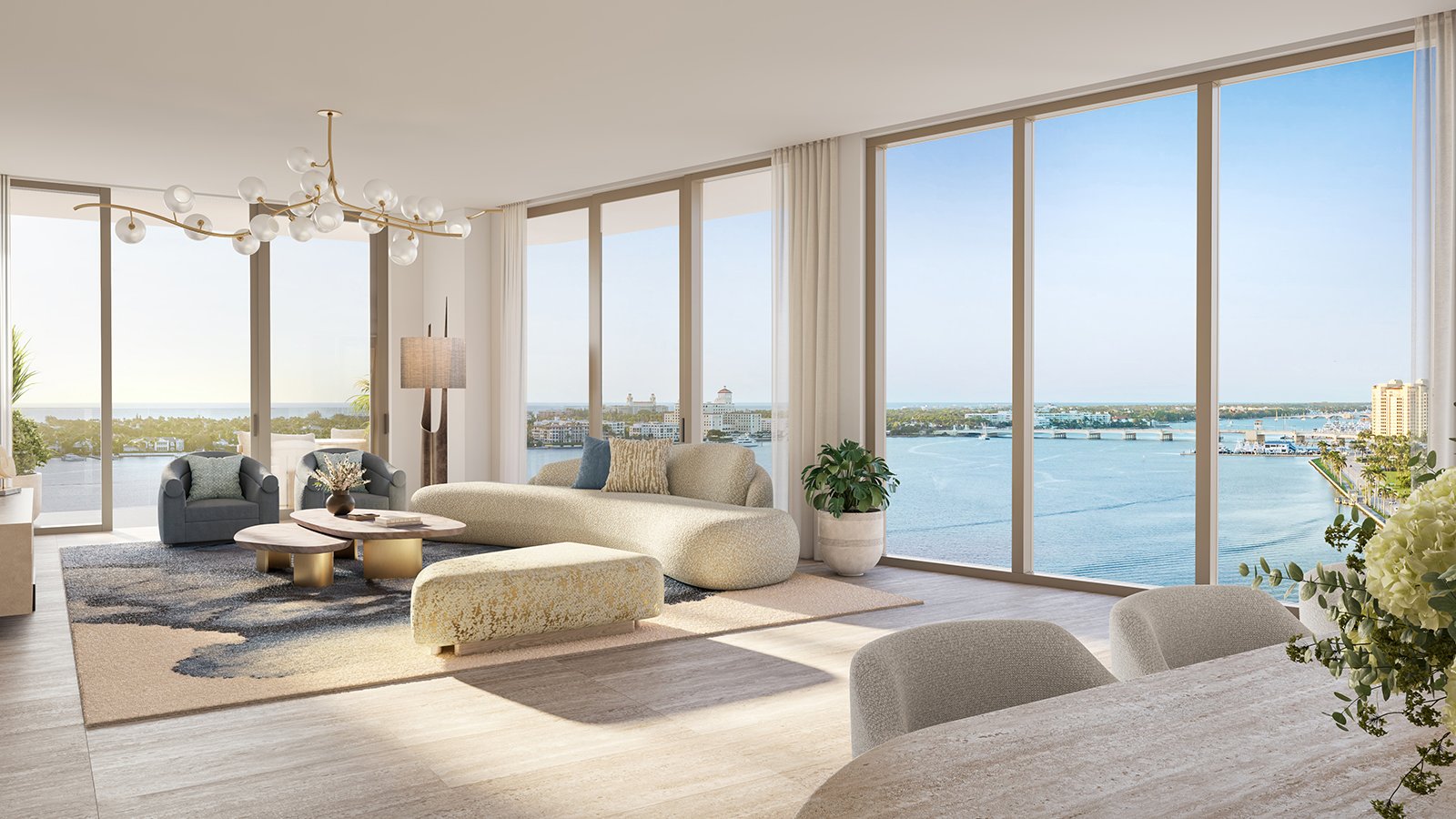
In South Florida’s most design-literate households, open concept is no longer a trend-it is a baseline expectation. What separates a merely large great room from a truly luxurious residence is flow: how you enter, where the eye lands first, how guests circulate without brushing up against private moments, and how the home performs when it is quiet, busy, and entertaining.
When buyers compare The Ritz-Carlton Residences West Palm Beach with The Berkeley Palm Beach, the conversation often starts with brand, waterfront proximity, and lifestyle positioning. Yet the most consequential differences frequently reveal themselves inside the plan-specifically in how open living areas are composed, buffered, and connected to kitchens, terraces, and bedroom wings. Flow is not about removing walls. It is about intentional sequencing.
Before comparing sensibilities, it helps to define what “good flow” looks like for an ultra-premium owner.
First is arrival clarity. A strong plan delivers an entry that feels ceremonial without wasting square footage, with an intuitive place to pause, set down a bag, greet a guest, and orient to the primary view.
Second is sightline control. The strongest open concepts reveal the home in layers: a composed living area first, then the view, while back-of-house functions remain discreet.
Third is social circulation. In a well-planned open layout, guests can move from living to dining to terrace without bottlenecking the kitchen work zone.
Fourth is privacy zoning. Luxury buyers want openness and separation simultaneously. The question is whether the plan creates quiet edges for bedrooms, a buffer for powder rooms, and a sense of retreat even when the main space is active.
These tests matter as much in West Palm Beach as they do in Miami or Fort Lauderdale, and they are useful lenses for evaluating adjacent trophy projects like The Ritz-Carlton Residences® West Palm Beach and The Berkeley Palm Beach.
The Ritz-Carlton sensibility-even in private residences-typically centers on a gracious hosting posture. In open-concept terms, that often translates to a great room that feels ready for arrival: a larger “front stage” where lighting, art walls, and seating can be composed into a decisive first impression.
In practice, buyers drawn to The Ritz-Carlton Residences West Palm Beach often want an open plan that supports entertaining with minimal effort. The ideal is a kitchen that participates in the room without dominating it, paired with a dining zone that can expand for events, and a living zone that anchors the view. When the plan is executed well, the kitchen reads as a design object and a service area at once.
Flow here is about continuity: one visual volume, with subtle cues defining zones. Ceiling treatments, changes in flooring direction, or a sculptural island can establish boundaries without compromising openness. This style suits owners who host often, use catered service, or prefer a home that can shift from morning calm to evening gathering with ease.
The Berkeley Palm Beach tends to appeal to buyers who value composure and quiet control. In open concept layouts, the objective is often less “grand salon” and more “perfectly edited apartment,” where openness is paired with restraint.
Rather than a single uninterrupted expanse, the most livable open concepts create a clear hierarchy: the living area is primary, dining is adjacent but not exposed, and the kitchen is open yet visually contained. Think of it as an open plan with built-in discretion. A small turn in the entry, a gallery-like corridor, or a partial wall can preserve the feeling that the home unfolds rather than broadcasts itself.
For a West Palm Beach buyer who uses the residence as a true retreat, this approach can feel more natural day-to-day. You still get light and volume, but you can leave a breakfast setting without feeling like the entire home is “on display.” Flow becomes less about spectacle and more about ease.
The kitchen is the swing factor in nearly every open-concept evaluation. The question is not whether the kitchen is open. The question is whether it interrupts circulation.
In a hospitality-driven plan, a large island can be a social magnet, but it must be positioned so traffic does not cut through the cook’s zone. The best layouts keep the primary path from entry to living to terrace outside the triangle of sink, cooktop, and refrigeration.
In a calmer, more residential plan, the kitchen may be open but offset. This can be accomplished through cabinetry composition, a recessed appliance wall, or an island that faces the room while the working side faces inward. The goal is for the kitchen to read cleanly from the living area, even when it is being used.
For buyers who also tour nearby alternatives such as Alba West Palm Beach, this is a useful benchmark: the best open concepts in the market share one trait-a kitchen that participates in the architecture rather than competing with it.
In South Florida, the terrace is not an accessory. It is a room. A sophisticated open concept makes the indoor living zone and the outdoor living zone feel like one composed suite.
Pay attention to where the doors land relative to furniture. If the primary seating group must be pushed away from the view to preserve circulation, the plan may feel larger on paper than it lives. Ideally, you can create a seating arrangement that faces outward while maintaining a clear, unobstructed path to the terrace.
Also consider whether the dining area can naturally extend outside. The most elegant plans allow for an “indoor dining” and “outdoor dining” pairing without forcing guests to pass through the kitchen work zone.
This indoor-outdoor choreography is part of why buyers often cross-shop West Palm Beach with other coastal environments, including ultra-amenitized oceanfront products like 2000 Ocean Hallandale Beach. The location changes, but the flow logic is the same: the terrace should feel inevitable, not appended.
A high-functioning open concept plan does not make everything open. The smartest layouts protect the bedroom wing through distance, a turn, or a transitional corridor that acts as a psychological buffer.
If the primary suite door is visible from the main seating area, the home may feel less private during entertaining. Likewise, powder room placement is a quiet tell: in well-composed luxury plans, guests can locate it without walking past private doors.
For buyers comparing The Ritz-Carlton Residences West Palm Beach against The Berkeley Palm Beach, this is where preference becomes personal. Some owners want the primary suite as a near-immediate retreat off the great room-convenient and efficient. Others want more layered separation, where the open public areas feel distinctly removed from the private wing.
Flow, at its best, supports both: generous openness for living and hosting, paired with a private sequence that feels hotel-like in comfort but residential in discretion.
Even within the same building, two open-concept residences can live completely differently based on how they are furnished. Buyers should evaluate not only the plan, but the plan’s ability to accept a sophisticated furniture layout.
Use rugs to define zones. In a large great room, one oversized rug that anchors the living area often reads more luxurious than multiple smaller rugs that fragment the space.
Create a visual pause at entry. A console, a sculptural chair, or a low credenza can establish arrival and prevent the feeling of stepping directly into the main seating group.
Plan for lighting in layers. Open concepts require more than recessed lights. A chandelier over dining, a statement floor lamp, and wall washers for art create a sense of rooms within a room.
Finally, consider the role of doors. Sliding panels, pocket doors, or acoustic partitions can provide occasional separation for media, work calls, or staff movement while preserving the architectural volume.
Choose The Ritz-Carlton-style openness if you value a social center of gravity: a plan that feels ready for guests, resilient during events, and naturally oriented toward hosting. The strongest version of this approach delivers continuous sightlines and a central great room that reads as a single, composed volume.
Choose The Berkeley-style openness if you want a calmer daily rhythm: openness that still feels edited, with subtle separations that keep the home serene even when it is in use. The strongest version of this approach delivers light and continuity while allowing the kitchen, corridors, and private doors to remain discreet.
In both cases, the right answer is not a label. It is the lived experience of moving through the home. In West-palm-beach, flow is the luxury you feel every day, long after the first impression.
What does “flow” mean in an open concept luxury residence? It is the combination of sightlines, circulation paths, and zoning that makes the home feel effortless.
Is open concept always better for resale in West-palm-beach? Not always; buyers tend to pay for well-resolved plans, whether fully open or subtly separated.
How can I evaluate a plan quickly during a tour? Walk the path from entry to living to terrace and note any kitchen bottlenecks or exposed doors.
What is the biggest open concept mistake buyers overlook? A kitchen island that blocks circulation or forces traffic through the cooking zone.
Can an open concept still feel private for a primary suite? Yes, if the bedroom wing is buffered by a corridor, a turn, or a clear separation from the great room.
Do large great rooms require more furniture than expected? Often yes; scale-appropriate seating, rugs, and lighting prevent the space from feeling unfinished.
How do I reduce noise in an open plan? Use soft materials, layered textiles, and optional door systems to control acoustics without closing rooms.
Is indoor-outdoor flow mostly about large sliding doors? Doors help, but true flow comes from furniture planning and clear circulation to the terrace.
Should I prioritize an open kitchen if I entertain frequently? Usually, but only if the kitchen is designed to be both presentable and operational under traffic.
What should I ask my designer about an open concept layout? Ask for a furniture plan that preserves walkways, balances zones, and protects private sightlines.
For a tailored shortlist and next-step guidance, connect with MILLION Luxury.
If branded residences are on your mind — as a home or as an allocation — we would be glad to share what we are seeing, privately.
Begin a quiet conversation