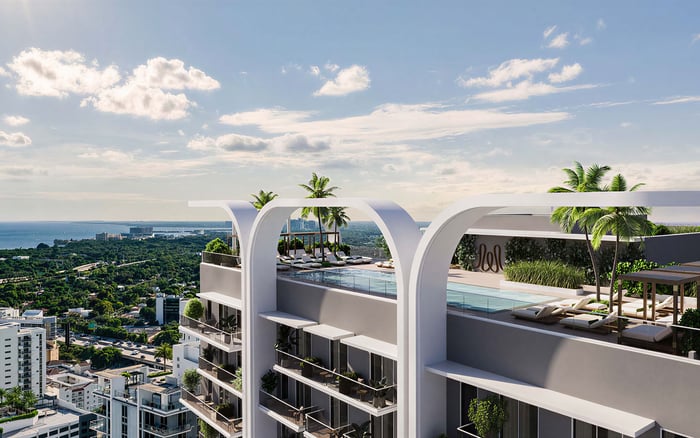
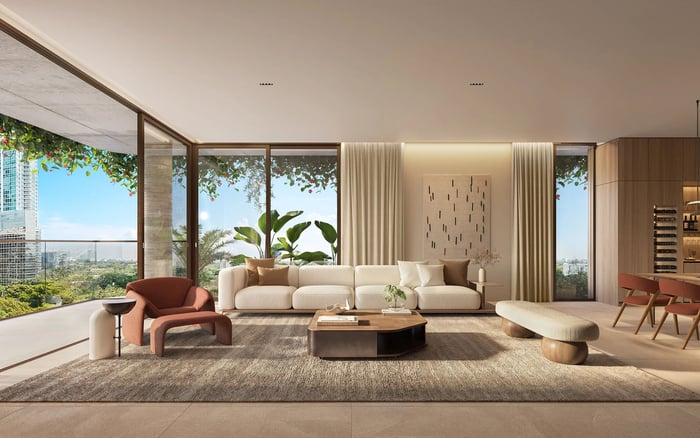
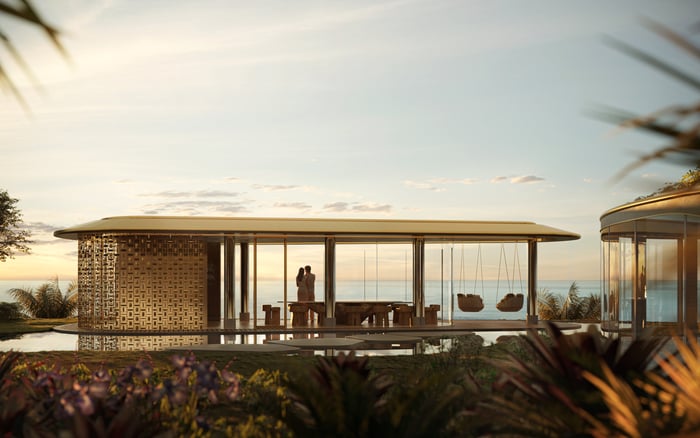
For South Florida penthouse buyers, the most revealing luxury feature is often not the top floor, but the way the residence receives its owner, guests, staff, and daily rhythm.
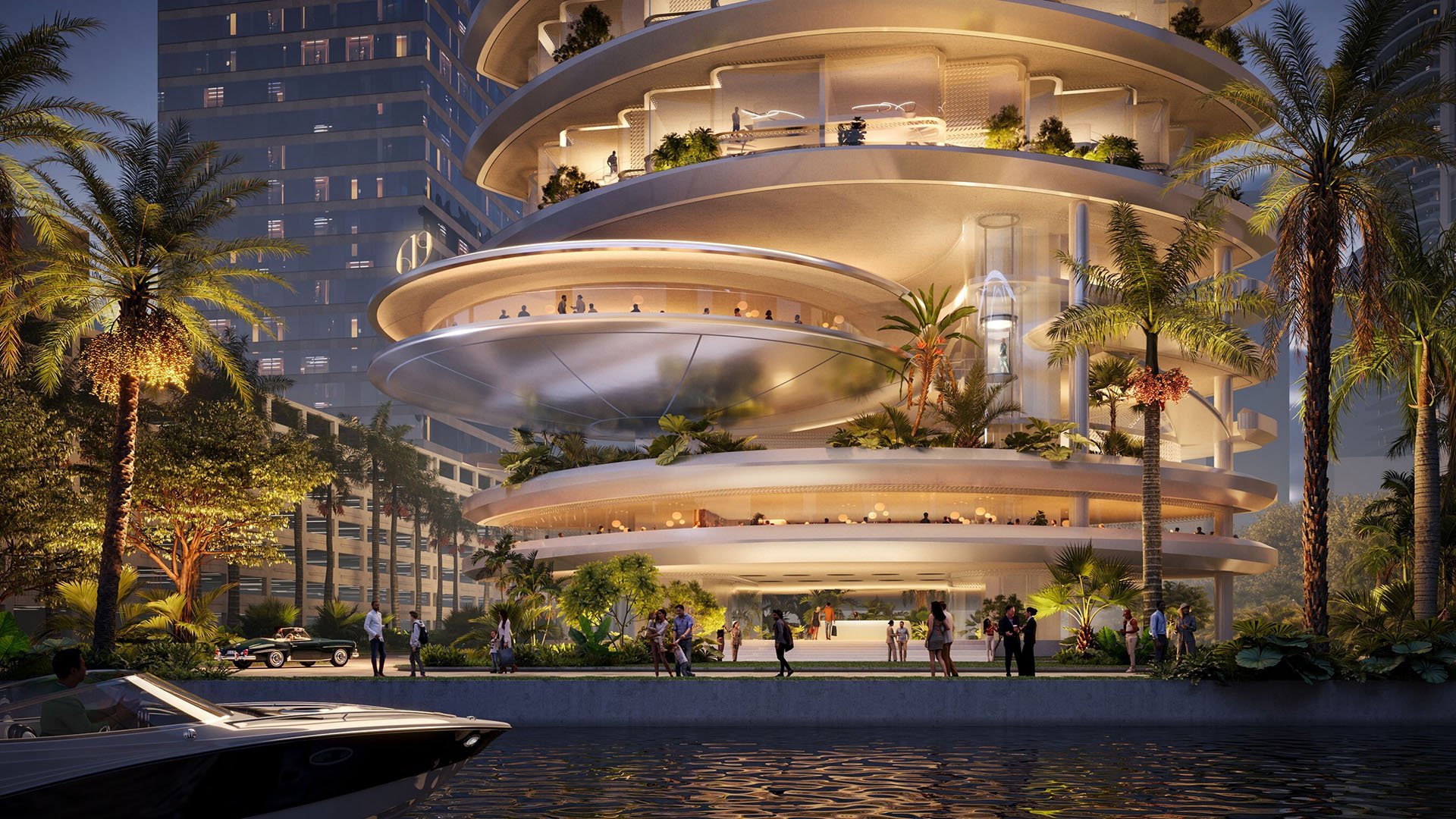
In South Florida luxury real estate, height has an undeniable seduction. A penthouse in the clouds promises horizon, light, privacy, and the intoxicating sense that the city has fallen away beneath you. Yet the more seasoned buyer often studies something less theatrical and more revealing: how the residence receives you.
Private-driver arrival is not a minor amenity. It is the first chapter of daily life. The route from car door to lobby, from lobby to elevator, and from elevator to private threshold determines whether a building feels composed or congested. It tells an owner whether the property understands discretion, staff movement, luggage, guests, children, security, and the rhythm of multiple homes across multiple cities.
The highest floor can still feel ordinary if arrival is public, exposed, or awkward. A slightly lower residence can feel more valuable if it offers a quieter, more controlled transition from the outside world into private space.
Height has legitimate value. It can expand waterview, improve light, reduce street noise, and create a sense of separation. For many buyers, high-floors remain a meaningful part of the emotional equation. They can also provide the architectural drama that makes a penthouse memorable.
But height alone does not solve how a resident actually lives. A buyer moving between Brickell meetings, private aviation, marina weekends, art events, family dinners, and guest arrivals may spend more mental energy on ease than altitude. The penthouse experience begins before the door opens. If arrival is crowded, if valet stacking feels visible, or if the passenger must cross an active lobby in front of strangers, the aura of privacy has already been compromised.
The strongest residences treat altitude and arrival as a pair. The view is the reward. The approach is the discipline.
A useful test is simple: imagine arriving on a rainy evening with luggage, a guest, a child, or a principal who does not want to be seen. Does the building protect the moment, or does it expose it?
A refined arrival sequence should feel intuitive. The car pulls in without confusion. Doors open away from unnecessary attention. Staff know where to stand and where not to stand. The transition to the elevator is short, legible, and dignified. If there is a private or semi-private elevator experience, it should feel natural rather than ceremonial. The goal is not spectacle. It is frictionless control.
This is especially important in South Florida, where the luxury day often moves between indoor and outdoor worlds. Beach, boat, dining, school, office, airport, and evening events all create different arrival needs. A penthouse that handles only the glamorous arrival is incomplete. The best one handles the ordinary day with equal grace.
Many buyers use privacy as shorthand for being unseen. In practice, privacy is more nuanced. It includes who shares your path, who can anticipate your schedule, how deliveries are separated, and whether guests can be received without turning the lobby into a social stage.
A private-driver arrival does not require isolation from the building. It requires choreography. In a highly serviced tower, residents may want warmth from staff, recognition without performance, and responsiveness without intrusion. The most successful arrival courts balance these tensions. They allow life to happen smoothly while keeping the owner’s movements discreet.
This distinction matters in resort-style markets such as Miami Beach, Sunny Isles, Fort Lauderdale, Boca Raton, and Palm Beach, where lifestyle amenities are often highly visible. A building may have a beautiful pool, spa, terrace, and entertaining spaces, yet the true luxury may be the quiet route that allows an owner to bypass the social energy when desired.
There is a particular kind of calm when a residence anticipates you. The driver knows where to stop. The attendant is ready without hovering. The elevator sequence is prepared. Guests are guided without needing explanation. Nothing feels improvised.
This emotional value is difficult to photograph, which is why it can be overlooked in early searches. Floor height, ceiling height, and view corridors are easy to compare. Arrival quality is experiential. It reveals itself during a showing, a second visit, or a quiet observation of how the building operates at different times of day.
For an ultra-premium buyer, that operational intelligence can be decisive. The difference between a good penthouse and a truly livable one is often not found in brochure language. It is found in five minutes at the curb.
It may seem counterintuitive, but low-floors in certain boutique or carefully planned buildings can feel more discreet than higher residences in larger, more active towers. The reason is not elevation. It is the number of transitions, the density of shared spaces, and the clarity of access.
A residence with fewer shared touchpoints can deliver a stronger sense of control. If the path from car to home is direct, quiet, and well managed, the owner may experience a privacy advantage that height alone cannot provide. Conversely, a trophy-level unit can feel less serene if its daily access depends on crowded amenity zones, visible waiting areas, or inconsistent service.
This does not diminish the appeal of the sky residence. It simply reframes the question. The best purchase is not always the highest address. It is the one where arrival, floor plan, view, service, and lifestyle behave as one coherent system.
A serious penthouse visit should include more than the residence itself. Arrive by car, not only on foot. Notice whether the entry sequence feels protected. Look at turning radius, canopy depth, valet movement, pedestrian overlap, and whether guests appear uncertain. Observe the lobby not as a design object, but as a living threshold.
Then continue the route. Is the elevator bank calm? Are service and resident paths thoughtfully separated? Does the building create a graceful sequence for luggage, art, catering, flowers, pets, and staff? Does the private-driver experience work during peak social hours, not only during a quiet appointment?
Inside the residence, compare that arrival feeling with the main rooms. A spectacular waterview should not be asked to compensate for daily inconvenience. A grand terrace should extend the life of the home, not distract from a compromised approach. True luxury is cumulative. Each step should reduce friction.
South Florida magnifies arrival because the region is built around movement. Owners may live seasonally, entertain frequently, host family from abroad, and move between waterfront, financial, cultural, and resort settings. In this context, a private-driver arrival is less about status than functionality.
In Brickell, the issue may be urban pace and how gracefully a building separates residents from the energy of the street. On the barrier islands, it may be the transition between beach informality and residential privacy. In quieter enclaves, it may be whether a boutique building can deliver service without feeling overstaffed.
The penthouse buyer should ask a precise question: does this building make my life feel easier every time I come home? If the answer is yes, height becomes one of several luxuries rather than the only measure.
A trophy penthouse is not merely the highest unit with the largest view. It is the residence that performs beautifully across the entire ownership experience. It protects arrival. It respects privacy. It manages service. It receives guests elegantly. It allows the owner to move through the building without unnecessary exposure.
Height may create the headline, but arrival often determines loyalty. Buyers remember the calm of a seamless return home. They remember the absence of awkwardness. They remember that the building made complex life feel simple.
For the most discerning South Florida buyers, that is the quiet advantage. The penthouse begins at the curb.
Why can private-driver arrival matter more than penthouse height? Because arrival shapes daily privacy, convenience, and emotional ease every time the owner comes home.
Does this mean high-floors are less valuable? No. High-floors can be exceptional, but they should be evaluated alongside access, service, and flow.
What should I look for during a penthouse showing? Arrive by car, observe the valet sequence, walk the full path to the residence, and notice any friction.
Is a private elevator always necessary? Not always. A calm, well-managed semi-private elevator sequence can feel equally refined in some buildings.
Can low-floors offer better privacy? Yes, if the building has fewer shared touchpoints and a more controlled arrival path.
How does Brickell change the arrival equation? Brickell adds urban energy, so protected drop-off, clear circulation, and staff precision become especially important.
Should views still be a top priority? Yes, but waterview should complement the living experience rather than compensate for poor daily function.
How important is a terrace in this decision? A terrace can be central to South Florida living, but it should be considered with arrival, privacy, and layout.
What signals strong building operations? Look for calm staff movement, clear guest handling, organized valet flow, and consistent discretion.
What defines the best penthouse purchase? The best penthouse combines view, privacy, arrival, service, and floor plan into one seamless experience.
For a discreet conversation and a curated building-by-building shortlist, connect with MILLION.
If branded residences are on your mind — as a home or as an allocation — we would be glad to share what we are seeing, privately.
Begin a quiet conversation