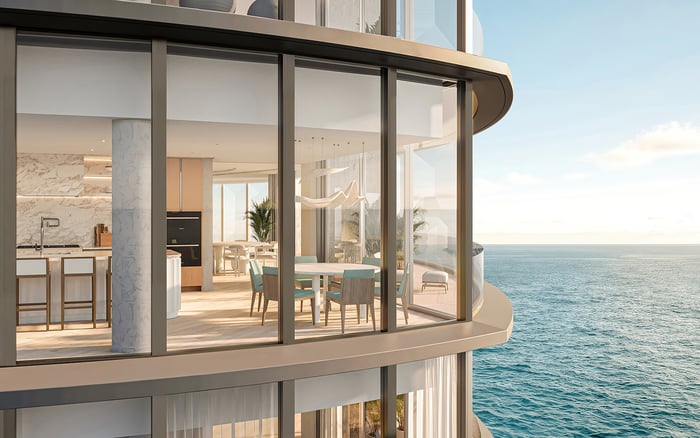
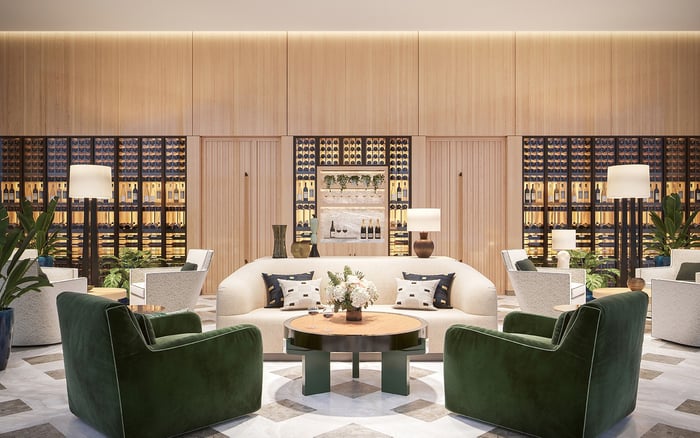
A buyer-oriented comparison of arrival, valet flow, privacy, and curb appeal at two ultra-luxury oceanfront addresses, with practical criteria for judging drop-off elegance in Miami Beach and Bal Harbour.
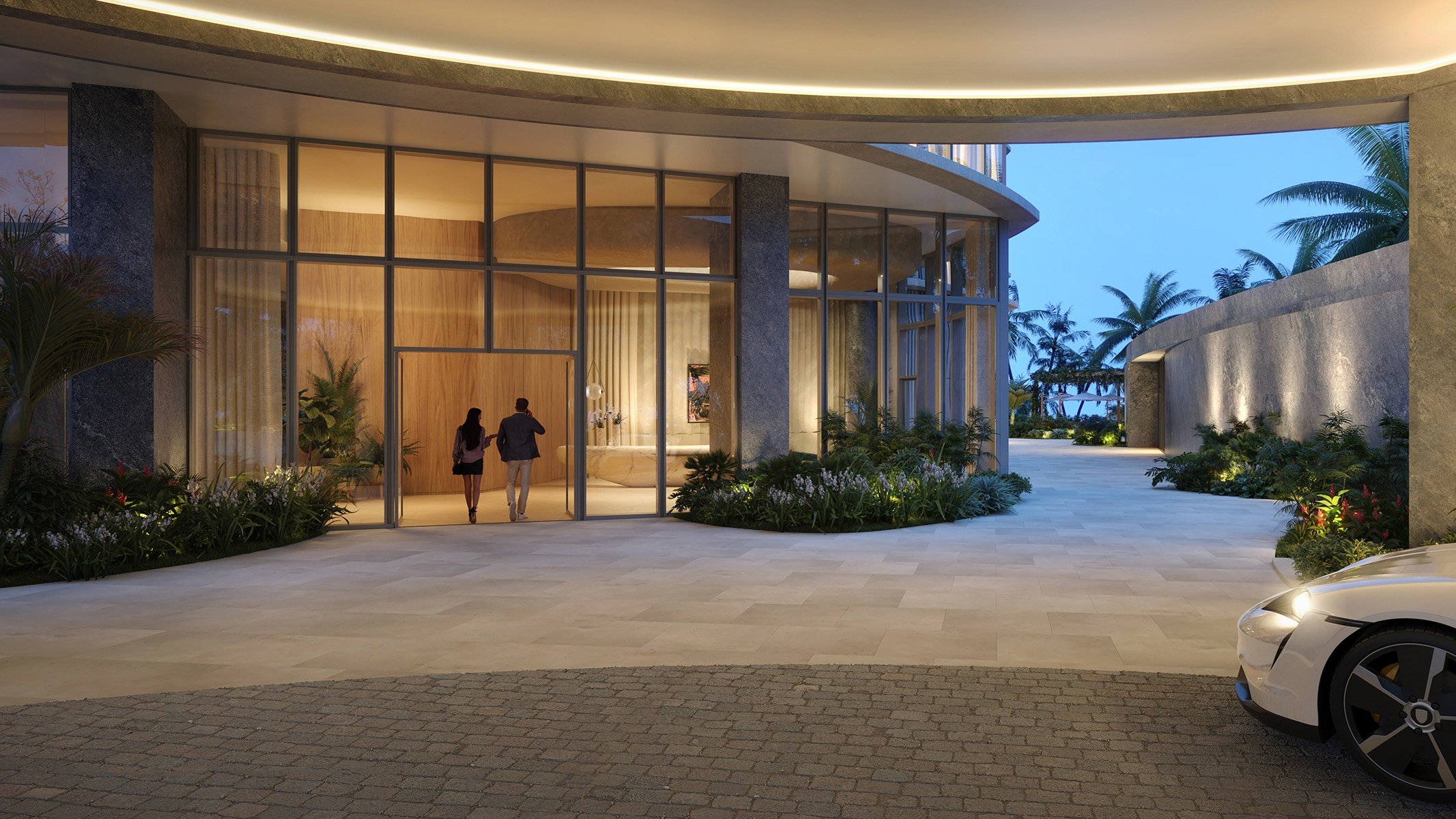
In ultra-premium oceanfront living, the residence doesn’t begin at the front door. It begins the moment your car turns in-when architecture, landscaping, staff presence, and security resolve into a single, wordless impression. That impression becomes a daily ritual for residents, a first sentence for guests, and an operational stress test for ownership.
This is why the oceanfront drop-off has quietly become a differentiator between otherwise comparable luxury towers. The Perigon Miami Beach and Rivage Bal Harbour both appeal to buyers who value coastal proximity, discretion, and design refinement. Yet drop-off elegance isn’t about a beautiful canopy. It’s choreography: how the site manages movement, edits noise, and frames you against the ocean.
For buyers weighing The Perigon Miami Beach against Rivage Bal Harbour, the more useful question isn’t “Which is flashier?” It’s “Which arrival sequence better matches my habits, my guests, and my tolerance for friction?”
Elegance at an oceanfront drop-off can be evaluated using a tight set of criteria that holds across buildings, regardless of marketing language.
1) Privacy by design, not by instruction.
A refined arrival doesn’t rely on staff asking people to move along. It uses setbacks, landscaping, and angled approaches to reduce direct sightlines into the lobby and keep arrivals from turning into a spectacle.
2) Operational cadence.
Even the most striking porte-cochere fails if valet queues spill into the street, ride-shares block residents, or deliveries intersect with evening arrivals. Real elegance is a predictable, repeatable rhythm.
3) Architectural “first frame.”
The first frame is what you see the instant you step out of the car. The best buildings stage a layered view: a composed threshold, controlled lighting, and a calibrated glimpse of the lifestyle beyond. In an oceanfront context, that “beyond” is often the horizon.
4) Material honesty in a marine environment.
Salt air, wind-driven rain, and intense sun are unforgiving. A curb sequence that photographs beautifully in year one but degrades quickly isn’t elegant. Detailing, drainage, slip resistance, and wind comfort are part of luxury-even when they’re invisible.
Miami Beach buyers often want a balance of glamour and protection. The strongest arrival courts do two things at once: they feel social enough for a night out, yet controlled enough to avoid the mood of a hotel curb.
In practice, evaluating The Perigon’s drop-off should start with mode separation. Where do resident vehicles pause relative to ride-share pickups? How are guests directed? Can staff manage peak windows without creating a bottleneck? On Miami Beach-where traffic patterns can shift dramatically by time of day and season-the goal is a drop-off that stays composed when the neighborhood isn’t.
Design-wise, the Perigon buyer typically values scene management: the ability to arrive dressed for dinner or the beach without feeling exposed. The most satisfying oceanfront arrivals create a clear compression-and-release moment. You move from street energy into a protected threshold, then into a calmer interior that signals ownership rather than transience.
For buyers also considering the broader Miami Beach luxury ecosystem, it can be useful to experience how other address types handle arrival and valet choreography. A resort-adjacent approach such as Setai Residences Miami Beach often reinforces arrival as a service experience. A more residentially assertive approach, like Apogee South Beach, emphasizes privacy and control. The Perigon’s appeal sits in how a buyer prefers those instincts blended.
Bal Harbour has long attracted a quieter kind of luxury buyer-one who wants arrival to feel inevitable, almost unnoticeable. In that mindset, elegance is measured by the absence of conflict. You shouldn’t have to think about where to pull in, where to wait, or who is watching.
When assessing Rivage’s drop-off, focus on micro-privacy: the few seconds between the car door opening and the moment you’re inside. Are there direct sightlines from passing vehicles? Are there lingering zones where drivers and guests congregate, or does the design move people smoothly through the threshold?
Bal Harbour buyers also tend to care about residential hierarchy. A truly elegant arrival distinguishes residents, their guests, and service activity without feeling like a back-of-house maze. The best solutions make logistics effectively invisible while still feeling welcoming.
To calibrate expectations in this submarket, it helps to notice how established oceanfront neighbors solve the same problem. An address like Oceana Bal Harbour sets a benchmark for polished, controlled entry. Rivage will be judged against that inherited standard-where “quiet” is the most expensive effect.
A sales gallery conversation can make any arrival sound perfect. The real comparison between The Perigon Miami Beach and Rivage Bal Harbour emerges when you tour like an owner with a real calendar.
Tour at two times.
Visit once during a likely peak arrival window and once during a calmer weekday hour. You’re testing whether elegance is structural or merely situational.
Measure friction, not beauty.
Ask yourself: How many decisions did I have to make to arrive? Did I hesitate? Was signage intuitive? Did I feel rushed? The lowest-friction arrival often reads as the most luxurious.
Observe the handoff.
A refined drop-off makes staff work look effortless. Notice whether the car-door moment feels calm, whether the greeting reads personal rather than procedural, and whether there’s a protected place for a guest to wait without blocking circulation.
Look for crossing paths.
Few things erode exclusivity faster than seeing deliveries, contractors, and ride-shares competing for the same curb. Even when you accept operational reality, you want it edited.
Oceanfront drop-offs in South Florida face pressures that inland projects simply don’t. The most sophisticated buildings treat these constraints as design opportunities.
Wind comfort at the threshold.
A canopy isn’t decoration; it’s a microclimate tool. The goal is to reduce gusts at the car door, limit wind-driven rain, and protect finishes.
Slip resistance and drainage that don’t advertise themselves.
Elegant paving feels secure underfoot in wet conditions and doesn’t trap puddles near door swings. Proper slopes, discreet drains, and durable surface selections protect long-term curb appeal.
Lighting that flatters, not floods.
Luxury arrival lighting is layered: enough for safety and security, but warm and deliberate so it reads as hospitality-not a parking facility.
Acoustic softening.
Landscaping, walls, and vestibule design can reduce street noise before you enter. In an oceanfront setting where the objective is tranquility, quiet functions as a finish.
The Perigon Miami Beach and Rivage Bal Harbour ultimately serve different lifestyle temperaments, even when both speak the language of luxury.
Choose the Perigon-style arrival if you value a curated sense of energy. Miami Beach living can be wonderfully kinetic. When the drop-off is designed well, it lets you engage that energy on your terms-stepping from street life into a controlled, elevated environment.
Choose the Rivage-style arrival if you prioritize near-invisibility. Bal Harbour’s strongest appeal is the feeling that everything is handled. The curb should read like a private entrance to a private world, with minimal exposure and minimal decision-making.
For buyers still mapping the coastline’s nuances, it can help to contrast with oceanfront experiences farther north, where sites can sometimes allow different arrival geometries and setbacks. A visit to 57 Ocean Miami Beach can add perspective on how Miami Beach projects interpret the entry sequence when the surrounding context differs.
Before choosing between The Perigon Miami Beach and Rivage Bal Harbour, bring a short, practical checklist.
Ask about guest arrivals.
Where do guests wait, and how are they guided? If you host often, guest comfort at the curb matters.
Ask how ride-shares are managed.
The most elegant buildings make ride-share logistics feel discreet and orderly.
Ask how service activity is separated.
Deliveries, contractors, and move-ins shouldn’t share the same theater as resident arrivals.
Ask what happens during weather.
A truly oceanfront-ready drop-off stays dignified in wind and rain-not just in sunshine.
Elegance isn’t a marketing adjective. It’s a daily experience, and it’s easiest to judge in the first sixty seconds of a visit.
What is an “oceanfront drop-off” in a luxury condo context? It’s the arrival court and curb sequence where vehicles pause for resident and guest entry, typically integrating valet, security, and a protected threshold.
Why compare drop-offs between The Perigon Miami Beach and Rivage Bal Harbour? Both target an oceanfront buyer, but Miami Beach and Bal Harbour lifestyles often prioritize different blends of scene, privacy, and cadence.
What is the single biggest sign of an elegant drop-off? Low friction: you arrive without hesitation, without queues, and without feeling observed.
How can I evaluate privacy during a tour? Stand where the car door would open and check sightlines from the street and from other waiting areas.
Do valet operations affect resale value? Yes, because daily convenience, guest experience, and perceived exclusivity are part of what future buyers remember.
What should I look for in oceanfront materials at the curb? Durable finishes, smart drainage, and slip-resistant surfaces that remain refined in sun, salt, and sudden rain.
Is a grand canopy always better? Not necessarily; the best canopies also manage wind and rain while keeping the entry sequence proportionate and discreet.
How do ride-shares change luxury arrival design? They increase turnover at the curb, so separation and staging areas become essential to keep resident arrivals composed.
Does Bal Harbour generally feel more private than Miami Beach? In many cases, yes; Bal Harbour often favors quieter, more discreet arrival experiences, while Miami Beach can be more kinetic.
What is the best next step if I am deciding between these two addresses? Tour both at peak and off-peak times and judge the arrival sequence the way you would on your busiest week.
For a discreet conversation and a curated building-by-building shortlist, connect with MILLION Luxury.
If branded residences are on your mind — as a home or as an allocation — we would be glad to share what we are seeing, privately.
Begin a quiet conversation