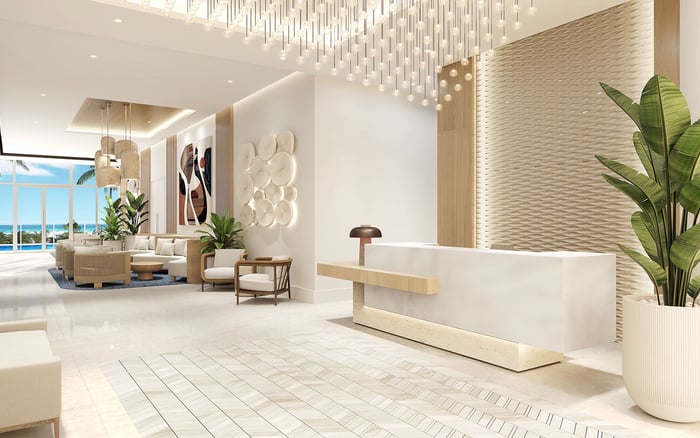
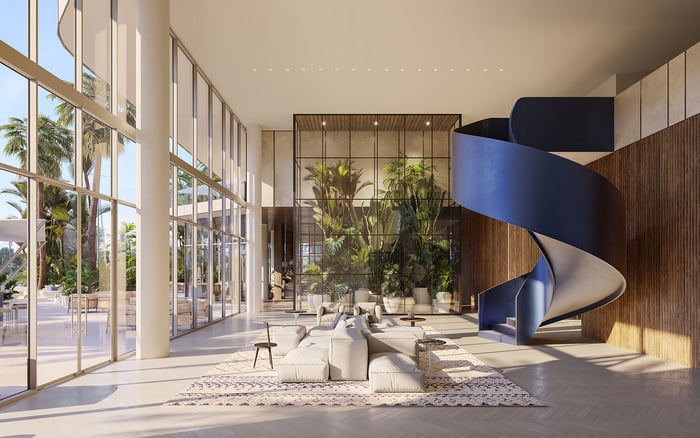
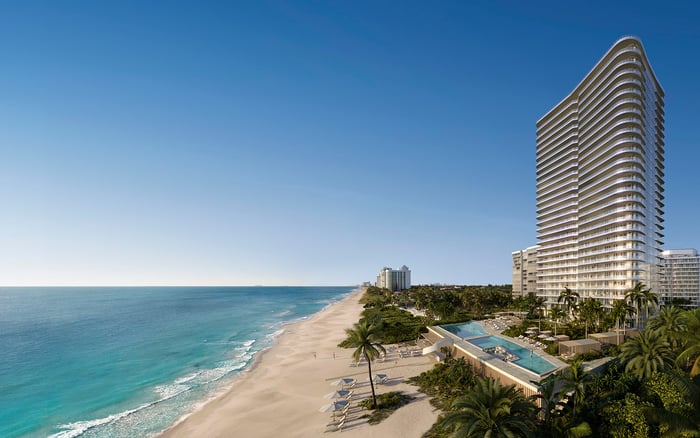
Peak-season arrival is one of the most revealing stress tests in luxury residential life. At The Ritz-Carlton Residences® Pompano Beach, valet operations are not merely a convenience; they are the front door to privacy, security, and the cadence of the day. This MILLION Luxury editorial examines how to evaluate valet efficiency during high-demand periods, what residents should ask to understand real performance, and which operational signals tend to separate seamless from merely adequate.
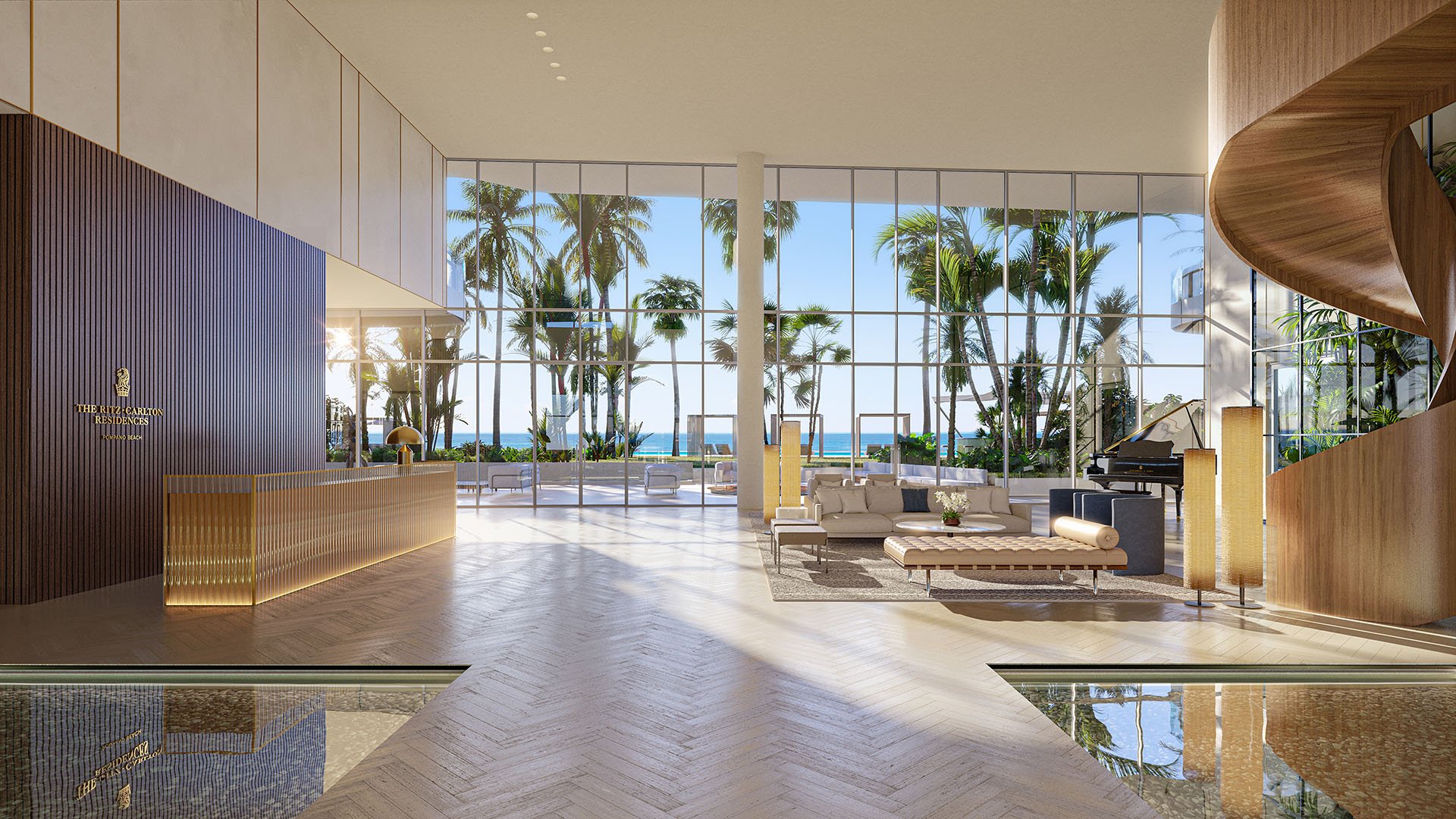
In South Florida, peak season compresses time. Morning tee times, late lunches that stretch into sunset, weekend guests arriving in clusters, and the steady rhythm of contractors, deliveries, and service providers all converge at the same threshold: the arrival court. At The Ritz-Carlton Residences® Pompano Beach, valet operations are best understood as a lifestyle system, not a parking function.
When valet is efficient, it safeguards what ultra-premium buyers are paying for: discretion, predictability, and calm. When it is not, even exquisite interiors can feel less luxurious because the transition from car to home turns into a bottleneck. Peak season magnifies the issue because small inefficiencies compound-one late retrieval becomes a line, the line becomes friction, and friction becomes a reputational drag within the community.
The objective is not to chase a single metric like “minutes to retrieve.” The objective is to determine whether the operation is built to remain graceful under stress-simultaneous arrivals, weather disruptions, and irregular demand included.
In a branded residential environment, efficiency must be matched by polish. A fast valet that reads as chaotic is not efficient in luxury terms, because it trades time for privacy and composure.
A practical definition of efficiency is the ability to move high-volume arrivals and departures while keeping the curb quiet, protecting residents’ routines, and delivering consistent standards for owners and guests.
For owners evaluating peak season, four dimensions matter:
Throughput: Can the curb process multiple cars without spillback into the street?
Predictability: Are pickup times consistent, or do they swing dramatically at the same time each day?
Discretion: Are key exchanges, queuing, and staging handled to minimize visibility?
Recovery: When something goes wrong (a car staged incorrectly, a surge event, rain), does the team correct it quickly-without escalating tension?
This is why valet is inseparable from the building’s broader service culture. In peak season, residents are not judging a single interaction; they are judging whether the system is trustworthy.
Operational performance often starts with geometry. Even with strong staffing, a poorly configured arrival sequence can create conflict between drop-off, pickup, and service traffic.
When you tour, look for these cues:
Clear separation of functions: Ideally, resident arrivals do not collide with deliveries, ride-share, or vendor access.
Staging capacity: There should be sufficient space to stage vehicles without turning the curb into a visible queue.
Weather-protected transitions: In South Florida, weather events are operational events. Covered areas that let staff keep moving without guests clustering protect both efficiency and comfort.
Sightlines and privacy: A luxury arrival should limit direct visibility into who is coming and going. Efficiency also means preventing curbside lingering because there is nowhere else to wait.
Logical pedestrian flow: Elevators, lobby routes, and concierge points should reduce crossings that slow down both cars and people.
If you are comparing experiences across Pompano Beach, note how newer waterfront residential concepts increasingly treat arrival as a managed experience. The same lens applies when considering nearby branded and design-led towers such as Waldorf Astoria Residences Pompano Beach or fashion-branded neighbors like Armani Casa Residences Pompano Beach. The architecture may differ, but the question is consistent: does the building’s front door scale for high season?
Peak-season performance is rarely a talent issue. It is an orchestration issue: staffing levels, scheduling, communication, and rules.
To evaluate, focus on what you can observe-and what you can ask.
Observe the handoffs.
Efficient valet is choreography: greeting, ticketing or digital capture, key handling, and confirmation. If residents have to repeat their unit number multiple times, or staff are walking back and forth to clarify instructions, friction is built in.
Listen for calm, not urgency.
In high-end operations, urgency is kept out of view. A raised-voice curb, visible rushing, or arguments about where to stage cars suggest the system is operating at the edge of control.
Ask how peaks are staffed.
Peak season is predictable. Strong operations plan for predictable peaks-late afternoons, weekends, holidays, and event-driven surges. Look for a defined surge-staffing framework, not ad hoc reinforcement.
Ask how guest arrivals are handled.
A building can feel smooth for owners and stressful for guests, which ultimately falls back on the owner hosting them. The best operations keep guest procedures discreet and simple, without forcing the host to act as a traffic coordinator.
Ask about escalation.
When something slips, who has the authority to fix it quickly? Luxury residents often care less about perfection than about competent recovery.
You do not need proprietary data to evaluate operations. You need pointed questions that require specificity.
Use these, and listen for clarity:
What are the building’s busiest arrival and departure windows in season, and how are they staffed? Vague answers typically signal reactive planning.
How do you prioritize resident pickups versus guest or ride-share pickups? Priority rules should exist and be applied consistently.
Is there a defined maximum curb dwell time? Efficient buildings actively manage the curb to prevent lingering and secondary congestion.
How are oversized vehicles and specialty cars handled? Premium residents often have vehicles that require extra care. The process should sound confident-not improvised.
What is the policy for keys, tickets, and verification? Efficiency must align with security.
How do you handle simultaneous event arrivals? In season, small gatherings can create meaningful surges.
The strongest answers are operational, not promotional: “Here’s how we stage,” “Here’s who triages,” “Here’s where guests wait,” “Here’s how we communicate delays.”
Some residents want maximum speed. Others want maximum privacy. Peak season forces the building to reconcile both.
Discretion-forward valet may include controlled staging away from the most visible areas, a lobby flow that avoids crowding, and communication protocols that reduce curbside waiting. Those choices can add seconds, but they protect privacy.
Speed-first valet can feel impressive-until it creates curb congestion or public moments owners would prefer to avoid. In ultra-premium living, the right standard is usually “quietly fast,” not “visibly fast.”
For buyers who prioritize anonymity, it can be useful to compare valet culture with other high-service environments across South Florida. In dense neighborhoods like Brickell, where drop-off and pickup demand can be relentless, buildings are often forced to refine curb logic and communications. That same operational maturity is part of what buyers look for in service-forward towers such as 2200 Brickell, even though the urban context differs from Pompano Beach.
A discreet evaluation can be done with timing and observation across two visits.
Arrive at a predictable peak. Late afternoon into early evening is often revealing. Note whether cars stack-and whether staff proactively directs flow.
Watch two consecutive retrievals. If the first is quick and the second is slow, that can indicate inconsistent staging rather than “bad luck.”
Check what happens when it rains. Weather reveals whether the operation has redundancy or simply relies on perfect conditions.
Note communication. Do residents receive proactive updates if there is a delay, or does the curb become the communication channel?
Observe vendor traffic. Peak season is not only residents. Deliveries and service providers can overwhelm a curb without a defined protocol.
These tests do not require confrontation. They require attention.
In luxury residential communities, operations become part of the asset’s story. A building known for smooth arrival creates a subtle psychological advantage: owners experience the property as “easy.” Ease is a premium.
Operational friction does the opposite. It can influence:
Owner satisfaction: Daily micro-frictions weigh more than occasional major issues.
Guest experience: Hosts remember the friction their guests face.
Service culture: If valet is strained, other front-of-house services often feel strained as well.
Perceived quality: Buyers equate operational discipline with overall building management.
This is especially relevant in coastal markets where residences are used as second homes. When time in South Florida is limited, owners are less tolerant of avoidable delays.
Pompano Beach continues to mature as a luxury coastal destination, and with that comes a higher bar for service. Peak season brings a more international, multi-property owner profile. Those residents often benchmark service standards across multiple cities and multiple buildings.
What they typically value in valet operations:
Consistency: The same rules and the same tone every day.
Recognition: Not performative familiarity, but accurate preference memory.
Security-aligned efficiency: Fast, but never loose.
A quiet curb: Minimal lines, minimal lingering, minimal public confusion.
If you are weighing multiple waterfront options, consider how the total arrival experience compares among nearby trophy buildings, including Ocean 580 Pompano Beach, without assuming branding alone guarantees a specific operational outcome. The most reliable approach is to evaluate the system in motion.
Valet efficiency is not a minor amenity. In peak season, it becomes the building’s operating system for daily life. For The Ritz-Carlton Residences® Pompano Beach, the most useful evaluation blends design observation, peak-hour stress testing, and targeted questions that reveal whether the operation is proactive, discreet, and recoverable under pressure.
A truly efficient valet program feels almost invisible. You notice it mainly by what you do not experience: no lines, no uncertainty, no curbside negotiations, no exposure of your routine.
What is the simplest sign of an efficient valet during peak season? A quiet curb with steady flow, even when multiple cars arrive at once.
Should I prioritize speed or discretion in a luxury building? Discretion usually wins long-term, as long as retrieval times stay consistent.
When is the best time to evaluate valet performance? Visit during a predictable rush window, then compare it to a calmer period.
How do rain and wind affect valet efficiency in coastal towers? Weather increases dwell time and congestion unless the arrival is designed for it.
What questions should I ask about guest handling? Ask where guests stage, how verification works, and who manages ride-share.
Do staffing levels alone guarantee good peak-season service? No; curb design, staging, and communication protocols matter just as much.
How does valet affect privacy for residents? Queues and curbside waiting can expose routines, visitors, and household patterns.
Can valet operations influence resale desirability? Yes; smooth daily logistics strengthen a building’s overall reputation.
What is a red flag I can notice quickly during a tour? Visible confusion at the curb, repeated questions, or inconsistent instructions.
How should owners address recurring delays? Use building management channels to request a process fix, not a one-off favor.
To compare the best-fit options with clarity, connect with MILLION Luxury.
If branded residences are on your mind — as a home or as an allocation — we would be glad to share what we are seeing, privately.
Begin a quiet conversation