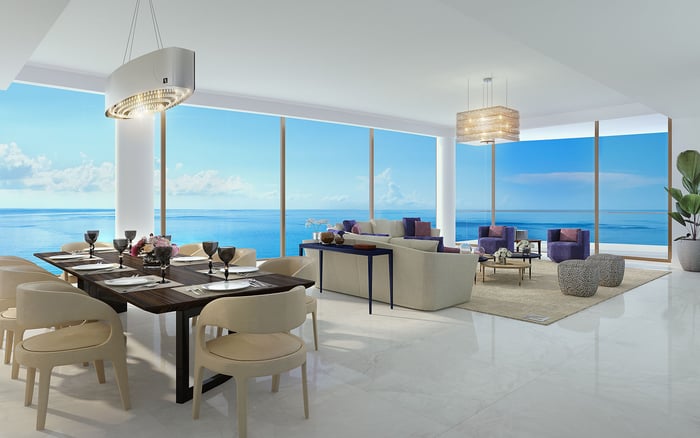
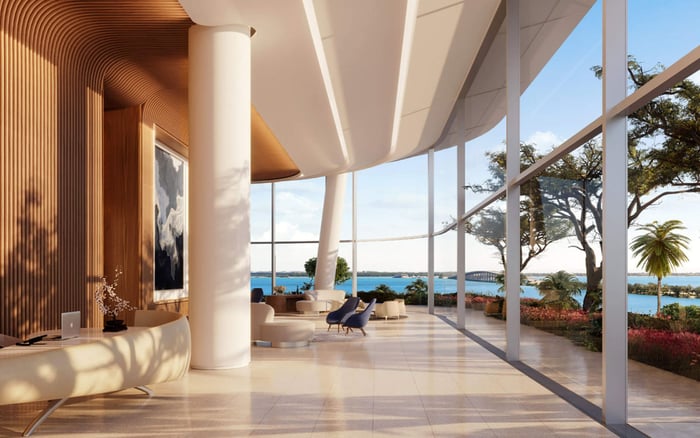
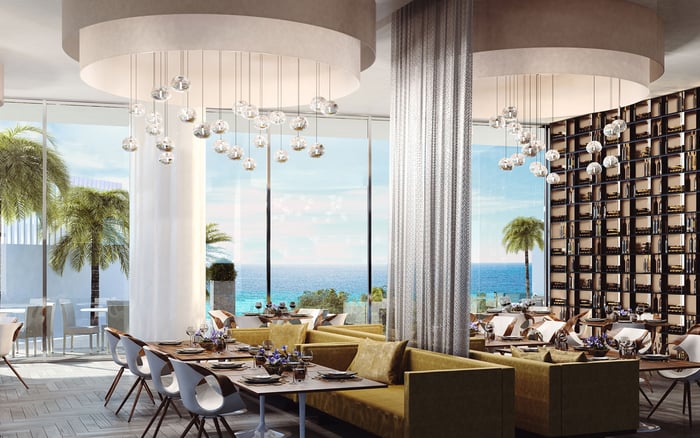
A buyer-focused MILLION Luxury editorial examining whether separate service entrances for housekeepers at The Estates at Acqualina should be viewed as an expected feature of ultra-luxury living, and why discretion, privacy, and operational flow matter more than any single architectural detail.
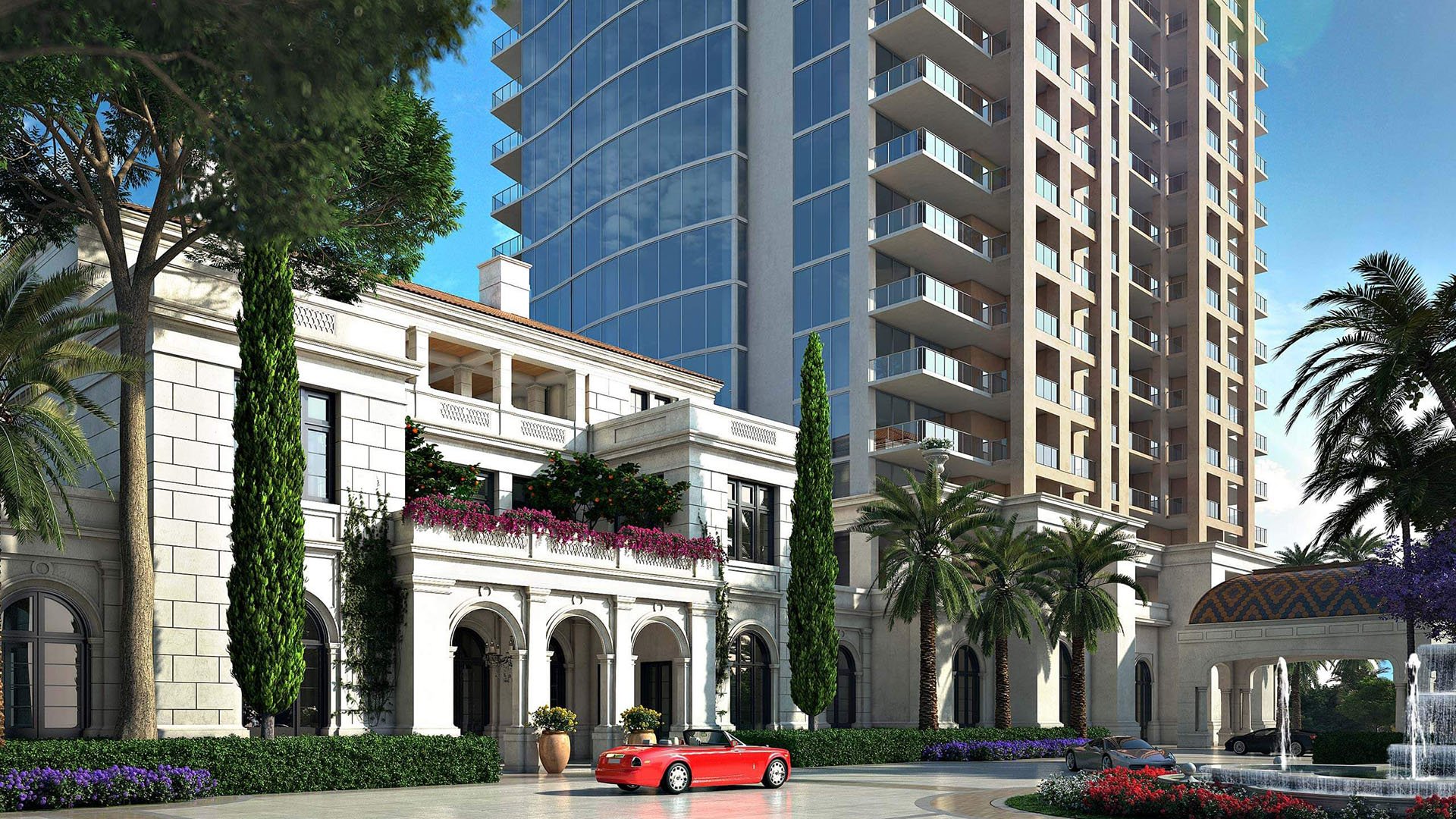
In ultra-prime residential living, discretion is rarely decorative. It is operational. At a property such as The Estates at Acqualina Sunny Isles, buyers are not simply purchasing a residence with ocean views and branded polish. They are buying a daily environment in which arrivals, departures, housekeeping, maintenance, deliveries, and resident life are meant to coexist without friction.
That is why the question of separate service entrances for housekeepers deserves careful attention. In this tier of the market, a distinct staff route is less a showpiece amenity than part of the invisible architecture of comfort. When service movement is handled thoughtfully, the home feels serene, the lobby remains composed, and the resident experience preserves the sense of effortless order affluent buyers expect.
For MILLION Luxury readers, the more precise question is not whether a dedicated service sequence would be desirable at The Estates at Acqualina. It plainly would. The meaningful inquiry is whether the development belongs to the category of buildings where that level of discretion should be assumed as part of the service ethos, even if exact technical details are not fully disclosed in public marketing.
The Estates at Acqualina is positioned as an ultra-luxury oceanfront residential development in Sunny Isles Beach, with the broader Acqualina identity extending the resort-driven sensibility associated with the brand. Its public-facing presentation emphasizes hospitality, attentiveness, and a highly serviced style of living. That matters because once a building is framed through the language of white-glove residential hospitality, buyers reasonably expect the back-of-house choreography to be equally refined.
What public material does not appear to provide, however, is a detailed technical map showing exactly where a housekeeper or staff-specific entrance sits within the arrival sequence. That distinction matters. It would be imprecise to present a specific separate housekeeper entrance as a confirmed, publicly documented fact without access to private plans, direct developer confirmation, or on-site verification.
Still, the absence of a published schematic should not be mistaken for the absence of service planning. In this echelon of residential design, service circulation is typically embedded into the architecture and operations precisely because it is not meant to call attention to itself.
In the modern luxury condominium, service routes are often designed to keep staff, maintenance teams, and deliveries away from the primary resident arrival sequence. The practical reason is obvious: privacy. Residents should not feel that the flow of daily operations interrupts the emotional calm of returning home.
There is also an efficiency argument. Separate service circulation can reduce housekeeping travel through lobbies, amenity zones, and social areas. That saves time, improves operational rhythm, and protects the atmosphere of exclusivity premium buildings work hard to maintain.
For privacy-oriented buyers, especially those accustomed to hotel-caliber living, segregated back-of-house movement is not a novelty. It is a standard. Across South Florida, comparable addresses are marketed around privacy, service quality, and resort-level management. In that context, a project like The Estates at Acqualina Sunny Isles fits naturally within the class of residences where discreet service infrastructure would be expected.
The same logic appears across the broader upper tier of the market, from Jade Signature Sunny Isles Beach to Turnberry Ocean Club Sunny Isles, where the lived experience depends as much on circulation planning as on finishes or views. Buyers may not always see these systems, but they feel their success every day.
When assessing discretion at The Estates at Acqualina, sophisticated buyers should think beyond the phrase separate entrance and focus on five practical tests.
First, consider resident arrival purity. Does the primary entrance sequence feel insulated from operational traffic, or does it share too much visual overlap with deliveries and staff movement?
Second, consider vertical circulation. In well-resolved towers, service-related movement is managed in a way that minimizes unnecessary crossover with residents moving between residences, wellness areas, and social amenities.
Third, evaluate staffing efficiency within the residential experience. Housekeeping, in-residence dining support, and maintenance access should feel smooth and almost pre-arranged, not improvised.
Fourth, consider acoustic and visual privacy. True discretion is not just about doors. It is about limiting the sense that back-of-house activity is constantly present in front-of-house spaces.
Fifth, ask whether the building's operating model matches its branding. At a development aligned with the Acqualina standard of hospitality, the expectation is not merely luxury design but luxury management. The building should function with the same polish it promises visually.
This framework is increasingly relevant across oceanfront product in South Florida. Whether one is comparing Sunny Isles to Surfside or Miami Beach, the differentiator is often not the existence of service planning, but the elegance of its integration. That same sensibility can be seen in highly curated projects such as Fendi Château Residences Surfside and The Perigon Miami Beach, where privacy and choreography are part of the value proposition even when buyers are focused on architecture and views.
In Miami-Dade, high-rise design unfolds within a regulatory framework that governs construction, circulation, egress, and related planning decisions. For buyers, that backdrop matters less as a matter of code literacy and more as reassurance that service and life-safety circulation are not casual afterthoughts.
At the ultra-luxury level, however, code compliance is only the starting point. The highest-performing buildings go further, using planning discipline to support a composed emotional experience. That is the distinction between a technically successful tower and a genuinely exceptional one.
For The Estates at Acqualina, the key point is that any service access strategy would sit at the intersection of regulation, architecture, and hospitality operations. A buyer should expect those layers to work together seamlessly, especially in Sunny Isles, where competition among elite oceanfront developments is intense and the service benchmark is elevated.
Separate or discreet service circulation can also be read as a proxy for management quality. Buildings that think carefully about these invisible systems tend to understand resident expectations at a granular level. Over time, that affects daily satisfaction, staff performance, and the staying power of the address.
This is why service planning should be viewed as part of asset quality, not merely convenience. In the highest bracket of branded and hospitality-driven residences, much of the value lies in what residents do not have to notice. The fewer operational frictions visible in common areas, the more convincingly a property delivers on its promise.
For buyers considering The Estates at Acqualina Sunny Isles, the conclusion is measured but clear: a discreet staff circulation strategy is entirely consistent with the caliber, branding, and market positioning of the project. What remains less publicly defined is the exact architectural execution of a separate housekeeper entrance. That final layer belongs to private diligence, direct inquiry, and on-site observation.
The most intelligent reading of this issue is not to search for a dramatic yes-or-no answer. At The Estates at Acqualina, the stronger conclusion is that discreet service access belongs to the expected luxury operating model, even if the exact details are not exhaustively presented in public material.
For the buyer, that means asking sharper questions during tours and review: how are housekeeping routes handled, how are deliveries sequenced, where does staff circulation intersect with residential paths, and how consistently is privacy preserved from porte cochere to residence entry. Those answers reveal far more about true luxury than any amenity brochure can.
In this segment, discretion is architecture in service of calm. And calm, in the end, is one of the rarest luxuries a tower can deliver.
Does The Estates at Acqualina publicly confirm a separate housekeeper entrance? Public materials do not appear to detail a specific housekeeper entrance in granular architectural terms.
Is separate service circulation typical in ultra-luxury condominiums? Yes. In this tier, service routes are commonly planned to reduce crossover with resident arrival and amenity use.
Why do buyers care about a staff entrance if they rarely see it? Because invisible operations shape the feeling of privacy, order, and ease throughout the building.
Does a separate entrance improve efficiency as well as privacy? Yes. It can reduce housekeeping and maintenance movement through primary social and lobby spaces.
Should buyers treat this as a unique selling point at The Estates at Acqualina? Not necessarily. In this market segment, discreet service infrastructure is better understood as a baseline expectation.
What is the key question for a purchaser evaluating this feature? The critical issue is how well service circulation is integrated into the resident experience and daily operations.
Can public marketing materials fully verify back-of-house planning? Usually not. The finest operational details are often not fully illustrated in consumer-facing presentations.
How can a buyer verify the exact layout? The most reliable path is direct confirmation from the sales team, private plan review, or on-site verification.
Does this matter more in branded, hospitality-oriented residences? Yes. High-touch residential brands create stronger expectations for seamless and discreet back-of-house movement.
Is this discussion especially relevant in Sunny Isles oceanfront product? Absolutely. In competitive oceanfront towers, service choreography is central to preserving the white-glove standard.
For a confidential assessment and a building-by-building shortlist, connect with MILLION Luxury.
If branded residences are on your mind — as a home or as an allocation — we would be glad to share what we are seeing, privately.
Begin a quiet conversation