In ultra-luxury towers, discretion is engineered as much as it is staffed. Back-of-house planning, including service corridors, deliveries, and resident support routes, determines whether daily life feels serene or simply staged. This buyer-oriented editorial looks at how to evaluate discretion at St. Regis® Residences Sunny Isles, with a framework you can apply across Sunny Isles and neighboring markets when touring new construction and resale.
Discretion in an ultra-premium building is rarely accidental. It’s a deliberate choreography of routes, thresholds, and acoustics-one that keeps a tower running smoothly without turning resident life into a shared backstage.
Back-of-house service corridors sit at the center of that choreography. They are not simply utilitarian circulation; they are the operational spine where deliveries are staged, maintenance teams move, housekeeping and resident support function, and building logistics stay out of view when everything is working properly.
For a buyer evaluating St. Regis® Residences Sunny Isles, the question isn’t merely whether a service corridor exists. It’s whether the service network is truly separated from resident-facing spaces-and how intelligently the two systems reconnect when they inevitably must.
In Sunny Isles, best-in-class towers compete on views, wellness amenities, and arrival sequences. Yet the day you move in, what you may notice most is simpler: whether you can step out of your residence and feel calm, unobserved, and uninterrupted.
Discretion is measurable. On tours, it helps to define it as three conditions that either hold-or don’t:
Separation: Service circulation should be physically separated from resident amenity corridors, lobbies, and lounge zones-not merely visually disguised.
Controlled intersections: Where service and resident paths inevitably cross, the intersection should be managed through doors, vestibules, scheduling, and clear operating rules.
Low sensory footprint: Even if you never see a cart, you shouldn’t hear it, smell it, or feel it. Discretion includes sound, odor control, and clean sightlines.
A discreet building doesn’t just hide operations. It prevents operations from spilling into the resident experience.
Without leaning on marketing language, you can still evaluate planning quality by watching for specific moments. When you tour, try to “walk the day,” not “tour the dream.”
Start outside. Ask yourself where deliveries, ride-share drop-offs, and service vendors would logically enter. A discreet property typically delivers a resident arrival that feels ceremonial and calm, while routing operational traffic through a separate, controlled entry.
Once inside, watch for these cues:
Do you see hand trucks, cartons, or staging within the lobby’s sightlines?
Are there doors that feel like afterthoughts-such as unprotected service doors opening directly into a resident corridor?
Does staff movement have a dedicated lane, or does it weave through the same path as residents?
These details matter as much as the lobby finishes. They signal whether privacy was designed in-or merely hoped for.
Service corridors matter most where vertical circulation meets the floor plate. The highest-value towers treat elevator lobbies as sanctuaries, which means controlling the moments when carts and vendors could appear.
Run a “collision point” test:
Identify where a service elevator would discharge.
Identify where a resident would exit their elevator.
Then look for a buffer: a door, a vestibule, a turn, or a separate corridor alignment.
If the floor plan allows service traffic to surface in the same visible zone as resident doors, discretion depends entirely on operating rules. Rules can be excellent, but architecture is more dependable.
For context across Sunny Isles, compare what you feel in other established luxury environments such as Regalia Sunny Isles Beach, where buyers often prioritize controlled access and low-circulation calm. The goal isn’t to crown a winner on a single visit-it’s to calibrate your own tolerance for shared circulation.
Discretion most often fails through sound. Even in a beautiful building, corridor resonance can reveal heavy daily use.
Listen for:
Door closers that slap instead of sealing.
Elevator chimes and mechanical noise bleeding into hallways.
Hard surfaces with no acoustic softening.
Then check the practical details:
Are there corner guards and wall protection that suggest constant cart traffic?
Do service doors look robust and well-fitted-or lightweight and prone to noise?
A corridor can look pristine yet still feel operational if acoustics aren’t addressed. True luxury is quiet, including in the spaces no one photographs.
Even strong physical separation can be undermined by poor operating discipline. Conversely, disciplined operations can partially offset imperfect planning.
When you evaluate discretion, you’re effectively underwriting a management philosophy. Ask questions that surface how the building intends to function day to day:
Are there defined delivery windows?
How are large packages and furniture moves routed?
Where are vendors checked in, and how are access credentials controlled?
How are refuse and recycling movements timed relative to resident peak hours?
You’re not looking for a pitch. You’re looking for a coherent operating story that aligns with what you just observed.
In a market where branded residences are often compared for their “service culture,” it can help to anchor your expectations by touring another branded, service-forward environment-even outside Sunny Isles. For example, seeing how a Brickell tower handles arrival and staff movement can sharpen your eye for planning. A useful point of comparison is St. Regis® Residences Brickell, where many buyers prioritize privacy and a predictable daily rhythm alongside high design.
Bring a short checklist to your next tour or design presentation. The strongest answers will be specific-and consistent.
Where do service elevators land relative to resident elevator lobbies?
Is there a dedicated service corridor on residential floors, or shared back-of-house access?
Are there doors or vestibules that separate service discharge points from resident-facing hallways?
Where do packages get sorted and staged?
Where do contractors load in, and how are they supervised?
Where do moving trucks and furniture deliveries queue?
What measures reduce corridor noise from carts and doors?
How is odor controlled near refuse rooms and service areas?
Are service routes designed to avoid passing amenity entries?
This checklist matters in any oceanfront tower, including neighboring properties designed to feel seamless in daily life. Touring Jade Signature Sunny Isles Beach can help you notice how the calmest-feeling buildings often have the most disciplined separation between the “seen” and the “unseen.”
Sunny Isles is a vertical beachfront environment with constant movement: visitors, staff, deliveries, maintenance, and resident arrivals compressed into peak hours. That density is exactly why back-of-house planning becomes a luxury feature.
In this neighborhood, the ideal experience is:
A resident corridor that feels low-traffic and almost residential-not hotel-like.
An elevator lobby that reads as a private threshold rather than a crossroads.
Deliveries and service that feel prompt, but not present.
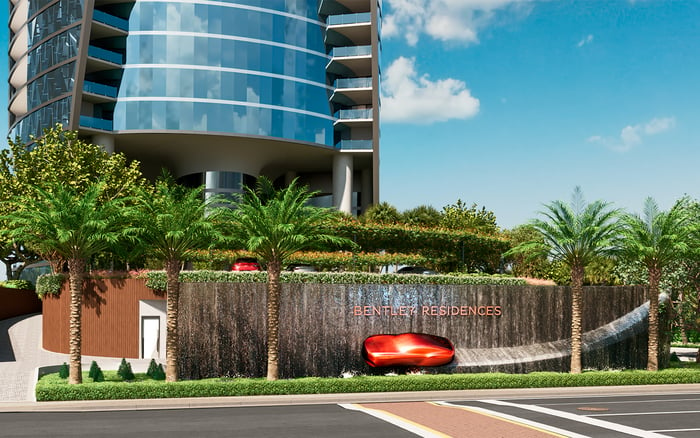
If you’re also considering other ultra-luxury towers nearby, such as Bentley Residences Sunny Isles, pay attention to how each project frames privacy. Some buildings lean into dramatic arrival and shared energy; others emphasize controlled quiet. Neither is universally “better,” but only one will match how you want to live.
Discretion is easiest to evaluate before you’re emotionally committed. If available during your process, request materials and walkthroughs that clarify the back-of-house story.
Useful items to request or review include:
A clear explanation of service elevator access, including who may use it and when.
A description of move-in/move-out procedures, including protective measures for resident corridors.
Clarification on package handling: where items are stored, how notifications work, and how pickups are managed.
Then, during your final walk-through, re-check the most common failure points: door seals, corridor noise, and any sightline that allows operational movement to spill into resident areas.
Discretion isn’t only about privacy. It’s also about preserving the emotional tone of the property. When the back-of-house network is well resolved, the building feels like it’s working for you-without asking for your attention.
What is a back-of-house service corridor in a luxury condo? It’s an operations circulation path for deliveries, maintenance, and staff movement-designed to minimize impact on resident areas.
Why does corridor discretion affect resale value? Buyers pay for calm and privacy; visible operational traffic can make daily life feel less exclusive.
Is a separate service elevator enough to ensure discretion? Not always. It also depends on where it opens, what buffers exist, and how vendor access is controlled.
What is the biggest red flag during a tour? Service staging, carts, or vendor movement appearing in the same visual zone as the lobby or residential elevator landing.
How can I evaluate noise risk without living there? Stand quietly near service doors and elevator lobbies; listen for door slap, chimes, and rolling-cart resonance.
Do all Sunny Isles towers handle deliveries the same way? No. Routing and policies vary widely, which is why observing “collision points” is so revealing.
Should I ask to see service areas as a buyer? Yes, when possible. A well-run building can explain how operations stay invisible without leaning on vague assurances.
Can strong management compensate for weaker design? To a point-but architecture is more reliable because it reduces the need for constant enforcement.
How do move-ins typically impact discretion? Move-ins stress the system; strong procedures and protected routes keep resident corridors from feeling like loading docks.
What is the simplest way to compare buildings on discretion? Compare arrivals, elevator lobbies, and the visibility of service doors, then note exactly where service and resident paths intersect.
For a tailored shortlist and next-step guidance, connect with MILLION Luxury.
If branded residences are on your mind — as a home or as an allocation — we would be glad to share what we are seeing, privately.
Begin a quiet conversation