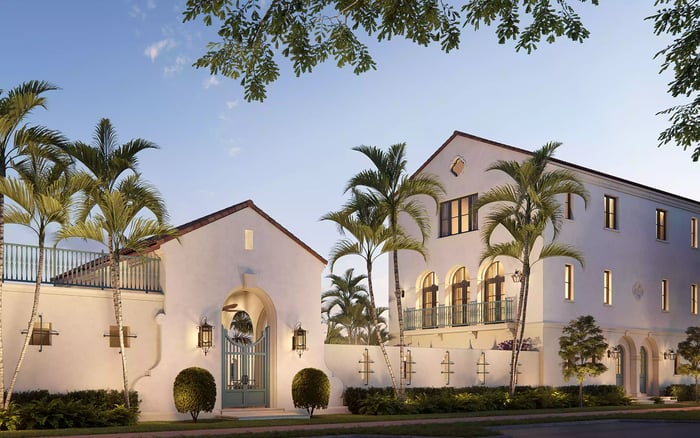
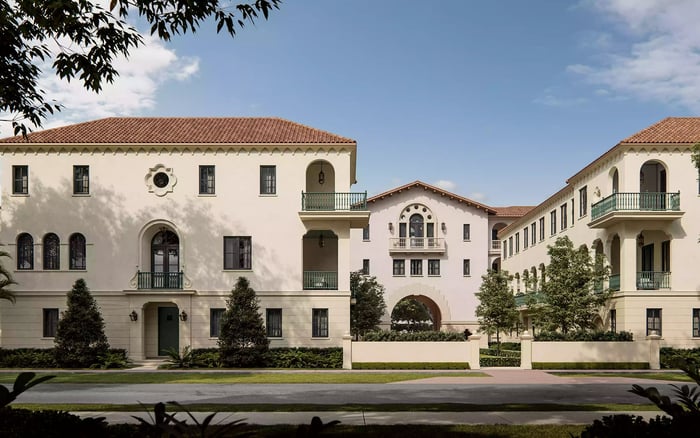
A buyer-oriented privacy comparison between a gated Coral Gables enclave lifestyle and a Brickell high-rise profile, with practical criteria for access, sightlines, staffing, and daily exposure.
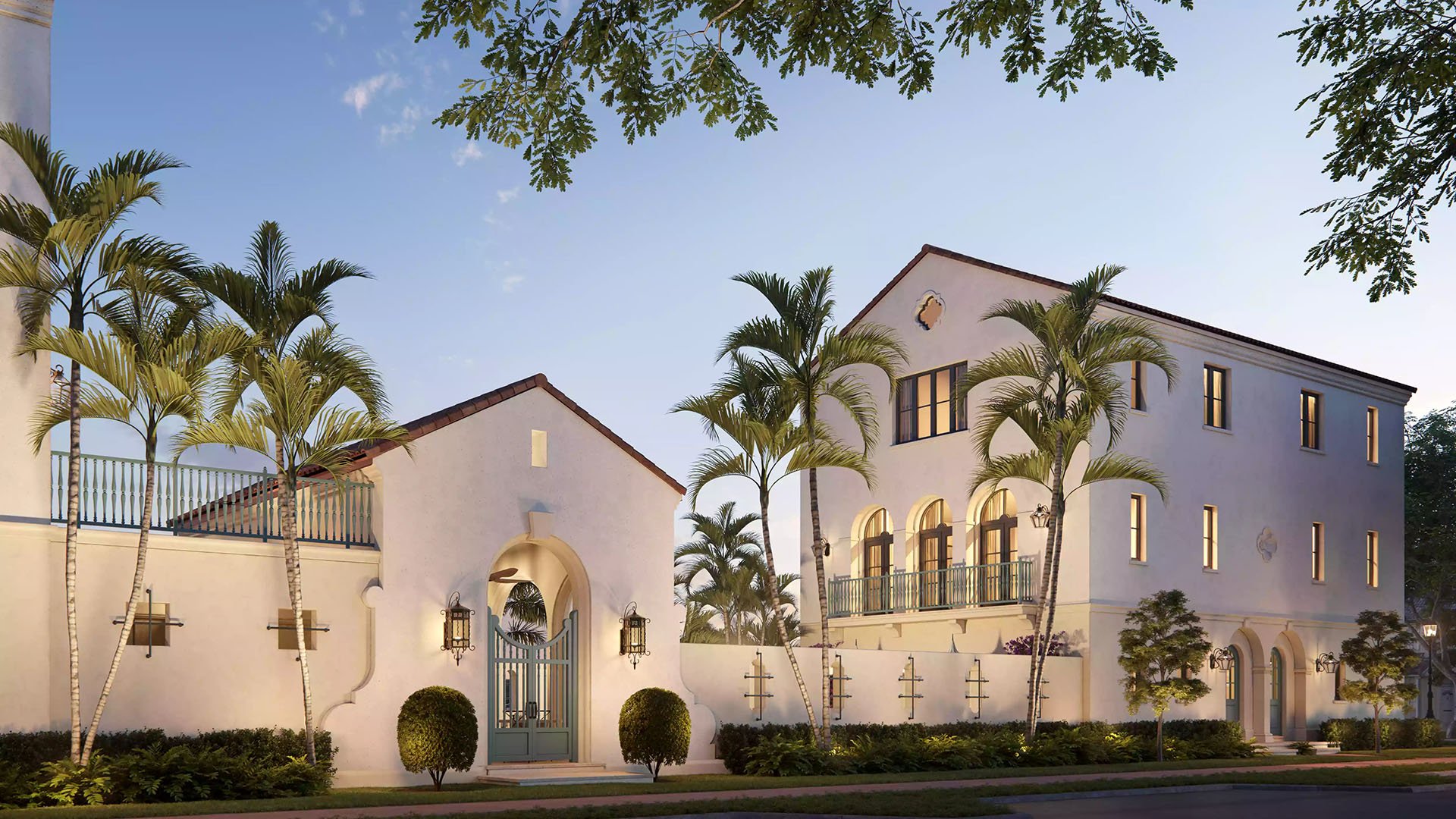
In South Florida luxury real estate, “privacy” is often described as an atmosphere. In reality, it is an intentional mix of systems-designed and managed-to reduce unscheduled contact and create buffers when contact is unavoidable. The comparison between The Village at Coral Gables and 2200 Brickell is a useful lens because it places two distinct privacy philosophies side by side: a lower-density, residential rhythm in Coral Gables versus the controlled verticality of a Brickell tower.
For buyers weighing Gated-community expectations against the realities of urban life in Brickell, the most productive first step is definition. Do you mean anonymity-being rarely recognized or discussed? Seclusion-rarely seeing other people at all? Control-deciding who gets near your door, your car, and your daily rituals? Or protection from view-living in a home that is difficult to look into or photograph?
This editorial treats privacy as four measurable layers: access control, circulation, sightlines, and social exposure. Viewed through those layers, the decision becomes less emotional and more architectural.
A gated or enclave-style residential setting such as The Village at Coral Gables tends to prioritize perimeter control and neighborhood predictability. The logic is straightforward: fewer entry points and a more local pattern of movement generally mean fewer random encounters. Your “public” moments are typically limited to your driveway, a short walk, and a smaller set of familiar faces moving along the same internal streets.
An urban high-rise such as 2200 Brickell often achieves privacy through internal choreography. You may sit in the middle of a dense city, but the building can place layers between street life and your residence: staffed arrival, controlled access, elevator separation, and resident-only amenity zones. The premise is not fewer people overall, but fewer people who can reach you.
Neither model is universally “more private.” Each is better at managing different pressure points: the enclave often reduces casual outside intrusion, while the tower can reduce proximity to neighbors and day-to-day exposure-when the building is configured for it.
If privacy is a priority, start with the arrival sequence. It is where the outside world meets your home.
In an enclave environment like Coral Gables, privacy is typically front-loaded. You benefit from a neighborhood pattern where many visitors are either invited or belong. Even when an area is not formally gated, the street texture, the pace of traffic, and the absence of destination footfall can function as an effective filter. The practical result is fewer “accidental” visitors drifting near your front door.
In Brickell, the building becomes the filter. A tower can deliver a more definitive handoff between public and private when entry is truly controlled: clear separation of resident circulation from guest circulation, and an arrival sequence that does not force a social lobby moment when you are simply trying to get home. If you often use a car service, host recurring business guests, or keep a high-tempo schedule, a well-run tower can feel exceptionally private because it professionalizes access.
The nuance is that the city itself is more porous. The moment you step outside the building, you are back in an urban environment where cameras, crowds, and instant visibility are part of the baseline. If your definition of privacy includes the entire block-not just your front door-Coral Gables may read as calmer.
Privacy is often compromised not at the front desk or the gate, but in circulation: hallways, elevators, mail and package pickup, gyms, pools, and the shared corridors of daily life.
In an enclave setting, circulation is horizontal and often dispersed. That can reduce repeated micro-encounters, particularly if your routine does not require a centralized lobby or amenity core. The tradeoff is visibility: much of your movement happens outdoors or near windows, and outdoor movement can be easier to observe by neighbors, staff, and passersby when streets or sidewalks are active.
In a high-rise, circulation is concentrated. That concentration can be either an asset or a liability. When elevators, service routes, and amenity access are thoughtfully separated, vertical living can be highly discreet. When they are not, the building becomes a social funnel-predictable crossings at predictable times. Buyers who prize discretion should evaluate whether everyday necessities are designed to be frictionless and private, or whether they repeatedly require time in common areas.
This is one reason urban luxury buyers often compare multiple Brickell options before committing. For example, Una Residences Brickell and Cipriani Residences Brickell illustrate how different towers can interpret resident circulation and amenity “visibility,” even within the same neighborhood.
Privacy is also optical.
In a suburban-style environment, windows often face streets, gardens, or neighboring homes. Even in ultra-premium neighborhoods, low-rise living can be easier to observe at close range. Landscaping helps, but it does not replicate the privacy that comes from distance.
A Brickell high-rise can create privacy through elevation. Vertical distance reduces the odds of casual street-level views into your residence. It can also reduce noise intrusion, which many buyers experience as a form of privacy. But towers introduce new sightline variables: adjacent buildings, angled balconies, and rooftop vantage points can create unexpected exposure. If you use large terraces, your outdoor life may be more visible than you anticipate.
The practical takeaway: do not judge privacy from the sales gallery. Judge it from the unit’s viewpoint. Stand at the windows and balconies, look outward, and identify what looks back.
Some buyers want privacy because they want fewer interactions. Others want privacy because they want more controlled interactions.
Enclave living in Coral Gables can feel socially selective because the environment is primarily residential. Encounters often center on neighbors, schools, and the rhythm of local errands. For households prioritizing quiet, routine, and separation from the city’s entertainment circuitry, the setting can feel inherently private-even without constant staffing.
Brickell living can be socially dynamic. The neighborhood’s energy is a benefit when you want proximity to dining and business life, but it can also increase exposure. Your residence may be private, while your lifestyle becomes legible through patterns: where you dine, how you arrive, and how frequently you are seen.
If you want a Brickell address with a heightened emphasis on discretion, compare how multiple new-construction towers handle amenity placement and resident-only zones. A project such as ORA by Casa Tua Brickell can appeal to buyers who care about the tone of shared spaces, not just the floorplan.
Luxury privacy is not only about keeping people out. It is also about letting the right people in-quietly.
In an enclave setting, service relationships can be more bespoke but also more visible. Staff, deliveries, and vendors may park curbside, walk up, and become part of the street’s daily theater. That can be perfectly acceptable, but for certain public profiles it creates a predictable pattern.
A tower can centralize and professionalize service. Package handling, maintenance access, and guest check-ins can be managed with more control when the building is designed for it and run with discipline. The tradeoff is dependency: privacy is only as strong as the building’s operational culture and the consistency of its front-of-house standards.
For buyers who host frequently, keep late hours, or travel often, this operational privacy can be decisive. A well-staffed building can preserve anonymity through repetition: consistent routines, consistent protocols, and fewer improvisations.
Privacy conversations often blend three distinct concerns:
Uninvited access: the risk of someone getting too close to your home.
Unwanted attention: being noticed, photographed, or discussed.
Information leakage: staff, vendors, or casual acquaintances learning patterns.
An enclave-style lifestyle tends to be strong against uninvited access because the environment itself discourages casual entry. A tower can be strong against access and information leakage when staff and systems are consistent. Unwanted attention is more context-driven: Brickell’s visibility can amplify it, while Coral Gables can soften it through calmer surroundings.
It is also personal. If your comfort depends on not being seen at all, a quieter, more residential setting can feel natural. If your comfort depends on being seen only on your terms, a well-designed urban building can offer a remarkably controlled bubble.
Before choosing between Coral-gables enclave living and Downtown-adjacent vertical living, validate privacy with a disciplined walk-through.
Can you enter without lingering? Is there a discreet place for pickups and drop-offs?
How many doors exist between street and residence? Who controls them?
Are resident routes separated from guest and service routes?
Are the pool and fitness areas designed to be observed, or sheltered?
If you value terraces, are your outdoor areas exposed to neighbors’ sightlines?
Does the environment feel calm and controlled, or busy and porous?
If privacy is a top priority, treat these elements as non-negotiables-not lifestyle add-ons.
Choose a Coral Gables enclave such as The Village at Coral Gables if privacy means a quieter perimeter, fewer random encounters, and a residential cadence that reduces public exposure as part of daily life. This is especially compelling for buyers who want discretion to feel effortless rather than managed.
Choose a Brickell tower such as 2200 Brickell if privacy means controlled entry, professionalized service, and the ability to live in the center of the city while keeping your personal world behind layers of access. This fits buyers whose schedules, travel patterns, or hosting needs benefit from the building acting as a buffer.
In South Florida, the most private home is not simply the one with the most security. It is the one whose architecture and operations align with your routines, your visibility tolerance, and your preferred distance from the public realm.
Is a gated community always more private than a high-rise? Not always. Gates reduce casual access, but towers can add multiple controlled layers to reach your front door.
What is the single most important privacy moment to evaluate? The arrival sequence. How you enter and exit determines how often you are exposed to others.
Can a high-rise feel private if it is in Brickell? Yes, if the building’s access, staffing, and resident circulation minimize public contact.
Does elevation automatically improve privacy? Elevation can reduce street-level visibility, but nearby buildings and angled balconies can create new sightlines.
What should I ask about elevators on a tour? Ask whether resident, guest, and service routes are separated and how access is controlled.
Are amenities a common privacy weak point? Often, yes. Pools, gyms, and lounges can become predictable places for repeated encounters.
Which lifestyle is better for frequent hosting? A well-run tower can manage guest arrival smoothly, while an enclave can feel calmer but less centralized.
How does staffing affect privacy? Strong staffing can protect anonymity and reduce friction, but it requires consistent operational standards.
What type of buyer tends to prefer Coral Gables for privacy? Buyers who want a residential cadence, quieter streets, and fewer random interactions often gravitate there.
What type of buyer tends to prefer Brickell for privacy? Buyers who value professionalized access control, service, and city proximity often prefer Brickell towers.
To compare the best-fit options with clarity, connect with MILLION Luxury.
If branded residences are on your mind — as a home or as an allocation — we would be glad to share what we are seeing, privately.
Begin a quiet conversation