A buyer-oriented comparison of amenity scale and lifestyle positioning between two Downtown Miami branded towers, framed around hospitality DNA, waterfront access, and day-to-day usability.
In today’s Downtown Miami luxury market, amenity scale is no longer a brochure flourish. It’s an operational promise-how a building supports your mornings, your privacy, your guests, your training regimen, your workday, and your return home at night. When residences carry global brand names, the discussion moves beyond a “nice pool” to a sharper question: what lifestyle does the amenity program truly support, and does it still feel effortless when the building is fully lived in?
This is exactly where Waldorf Astoria Residences Downtown Miami and Aston Martin Residences Downtown Miami diverge. Both live in the same gravitational field of Downtown, yet their amenity philosophies read differently at human scale: one grounded in classic hospitality choreography, the other defined by a bolder, club-like sense of arrival with a waterfront edge.
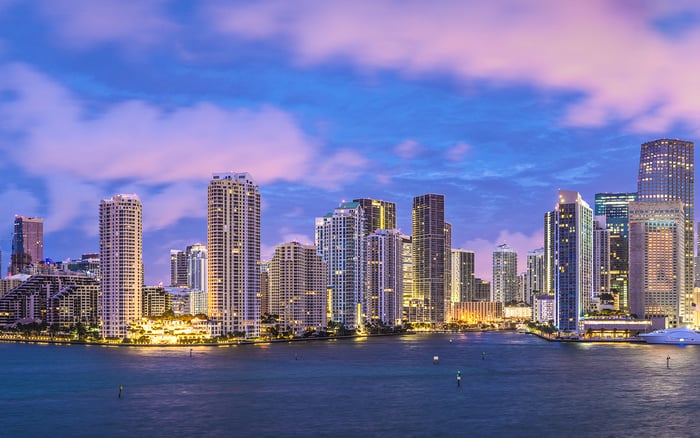
Downtown is no longer a single neighborhood in a buyer’s mind. It’s a corridor that extends into Brickell, Edgewater, and the bayfront-each pocket carrying its own rhythm. Amenity scale matters here because residents often want city access without absorbing city friction. The most competitive programs reduce external errands by providing layers of usable space: places to work privately, train seriously, host gracefully, and retreat quickly.
For buyers also weighing the broader branded landscape, Downtown and Brickell continue to attract design-forward concepts such as Casa Bella by B&B Italia Downtown Miami, while Brickell’s next wave signals an even more fashion-led approach with 888 Brickell by Dolce & Gabbana. These comparisons clarify what “amenity scale” is becoming in Miami: not sheer quantity, but a deliberately sequenced set of environments.
Waldorf’s amenity scale is best understood through a hospitality lens. Even buyers who don’t want a “hotel feeling” often still want hotel-level predictability: trained staff, a strong sense of order, and spaces that feel composed rather than performative.
In practical terms, the most persuasive version of amenity scale is the one you use on a Tuesday. The program tends to emphasize a controlled arrival experience, resident-forward service touchpoints, and indoor-outdoor spaces designed to distribute activity rather than concentrate it. The result is a building that can feel calmer even when it’s active-your gym time, your guest arrival, and your quick meeting are less likely to collide.
For buyers who equate luxury with discretion, this is the Waldorf advantage: amenities that operate as infrastructure for a well-run life, not a stage. The implied promise isn’t merely “more,” but “managed.”
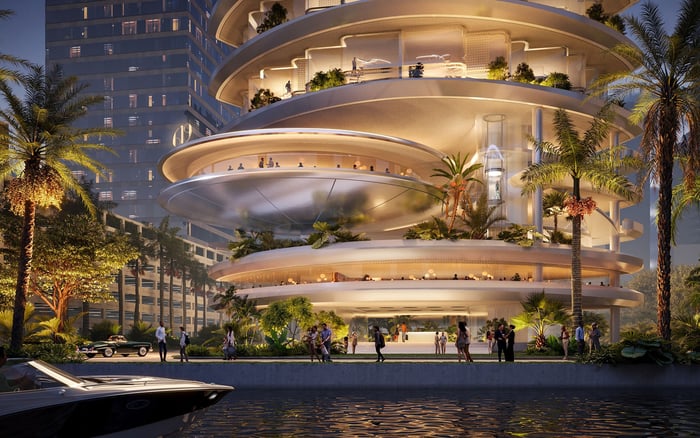
Aston Martin’s amenity scale is often perceived through brand theater: the arrival, the aesthetics, and the sense of owning a piece of a globally recognizable design story. The deeper differentiator in Downtown, however, is how that story is paired with a waterfront posture. Even before you enter a resident space, the building’s identity is tied to motion, proximity, and the city’s marine edge.
Day to day, that typically translates into amenities that feel social and kinetic-spaces you reach for when you want the building to be part of your evening, not simply your refuge afterward. The mood is less “quietly orchestrated” and more “confidently curated.”
This matters for buyers who host often, keep irregular schedules, or prefer a building that reads as a destination. Amenity scale here is about impact: the kind of tower where bringing a guest home feels like a moment, not a routine.
When buyers ask about amenity scale, they often mean square footage. The more revealing metric is allocation-where the best light, the best views, and the most convenience are placed.
A service-forward tower typically allocates premium real estate to the flows that eliminate friction. It’s an “invisible luxury” strategy: you feel the advantage in how smoothly your day moves. A statement-forward tower often allocates premium real estate to the spaces that create memory and social gravity. You feel the advantage in how the building performs for you-and for guests.
Put simply, Waldorf-style amenity scale is about removing decisions. Aston Martin-style amenity scale is about amplifying identity.
Wellness amenities are now non-negotiable, but usage patterns differ. The real question is whether you want a building that supports quiet discipline, or one that motivates through atmosphere.
A more hospitality-coded environment typically prioritizes separation and serenity: easier transitions from residence to wellness space, and a calmer tone that suits early training, recovery, and routines. A more club-coded environment tends to make wellness feel embedded in the lifestyle narrative, with an energy that can be motivating if you like to feel the building around you.
If your personal luxury is consistency, the service-first approach often wins. If your personal luxury is momentum and social adjacency, the statement approach may feel more aligned.
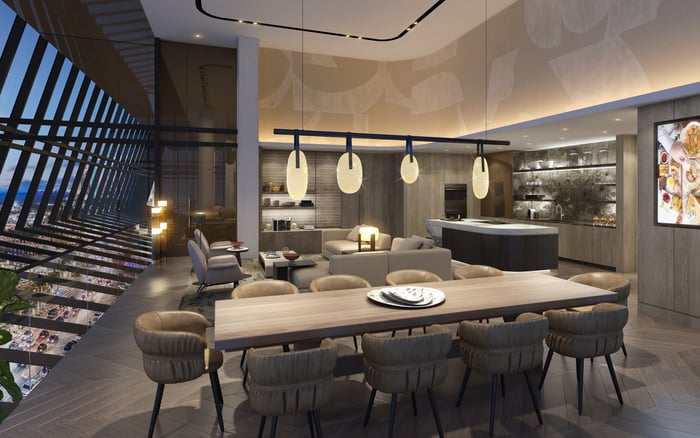
Hosting is where amenity scale becomes measurable. Either you have spaces that handle real-world entertaining, or you have spaces that photograph well but bottleneck under real use.
Waldorf’s likely strength is practicality: hosting supported by staff presence, controlled access, and a predictable environment. The goal is a seamless evening with minimal improvisation.
Aston Martin’s likely strength is atmosphere: an amenity environment where the building itself becomes part of the event. The goal is impact-a sense of occasion and a backdrop that carries the night.
Neither is universally “better.” The deciding factor is whether you value a building that disappears behind your lifestyle, or one that actively participates in it.
Many amenity decks claim “business centers” or “co-working,” but ultra-premium buyers recognize the difference between a token workspace and an environment designed for real confidentiality.
Look for whether the amenity scale includes:
multiple settings for different modes of work (call, focus, meeting)
acoustic privacy and sightline control
circulation that prevents the workspace from becoming a pass-through
If you want your building to function as a private club for your workday, evaluate not just whether these spaces exist, but where they sit and how easily you can access them. In Downtown-where schedules skew later and globally-the strongest amenity programs anticipate that your “office hours” may begin when the city’s nightlife begins.
Downtown buyers often choose between a “vertical neighborhood” and a “horizontal neighborhood.” The first means the building supplies most of your day-to-day life. The second means the building is a launchpad.
Waldorf Astoria Residences Downtown Miami tends to appeal to the vertical-neighborhood buyer: the resident who wants the building to function as a complete, quietly capable world. Aston Martin Residences Downtown Miami tends to appeal to the launchpad buyer who still wants robust amenities, but also wants the building to signal something when they come and go.
If you’re comparing beyond Downtown, it helps to sanity-check your preferences against nearby typologies. Edgewater’s newer inventory, for example, often sells a different kind of scale and resort logic, such as Aria Reserve Miami, where lifestyle is framed around expansive bayfront living and a more residential cadence.
Choose Waldorf Astoria Residences Downtown Miami if your definition of amenity scale is:
service that reduces daily friction
privacy that feels engineered, not improvised
spaces designed for repeat use, not occasional spectacle
Choose Aston Martin Residences Downtown Miami if your definition of amenity scale is:
a strong arrival experience and brand-forward identity
a social, energetic building rhythm
a waterfront posture that feels integrated into the lifestyle story
Both are credible expressions of ultra-premium Miami. The smartest purchase is the one that matches how you actually live-not how you vacation.
Which building has the better amenity program overall? It depends on whether you prioritize service-first daily ease (Waldorf) or statement-led, social energy (Aston Martin).
Is amenity scale more important than interior finishes? For many buyers, yes-because amenities shape daily life and hosting more consistently than finishes you may later customize.
Which is better for entertaining guests? Waldorf typically suits seamless, staff-supported hosting, while Aston Martin suits an arrive-and-impress atmosphere.
Which building feels more private day to day? Buyers seeking engineered discretion often gravitate to the hospitality-coded experience associated with Waldorf.
Which one fits an owner who is in Miami part-time? Part-time owners often prefer strong service and predictability, though brand identity and arrival may matter more for some.
Do these amenities change how resale performs? A coherent, usable amenity program can support long-term desirability, especially as buyers become more lifestyle-driven.
What should I ask on a tour besides “what amenities are included”? Ask how spaces are accessed, how they’re staffed, and what the peak-time experience feels like.
Are waterfront-adjacent amenities actually used, or just marketing? They’re used when access and circulation are practical; otherwise, they function more as backdrop than lifestyle.
How do I compare these to newer branded projects nearby? Compare allocation of prime space, privacy controls, and how the amenity program supports your real weekly routine.
What is the simplest way to decide between them? Choose the building whose amenities you’ll use on ordinary weekdays, not only when you want to be impressed.
If you'd like a private walkthrough and a curated shortlist, connect with MILLION Luxury.
If branded residences are on your mind — as a home or as an allocation — we would be glad to share what we are seeing, privately.
Begin a quiet conversation