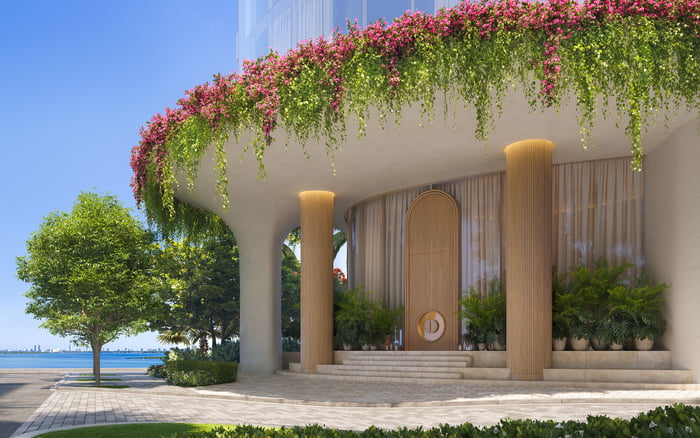
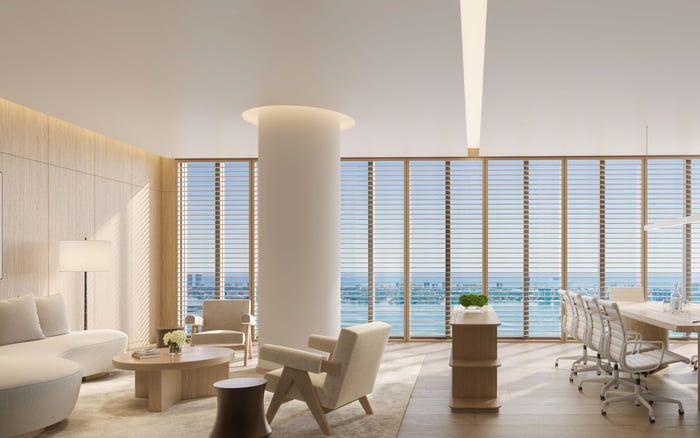
A buyer-focused editorial framework for evaluating commercial-tenant, hospitality-programming, amenity, curb, and urban noise risk at EDITION Residences Edgewater before contract, during design review, and after early occupancy.
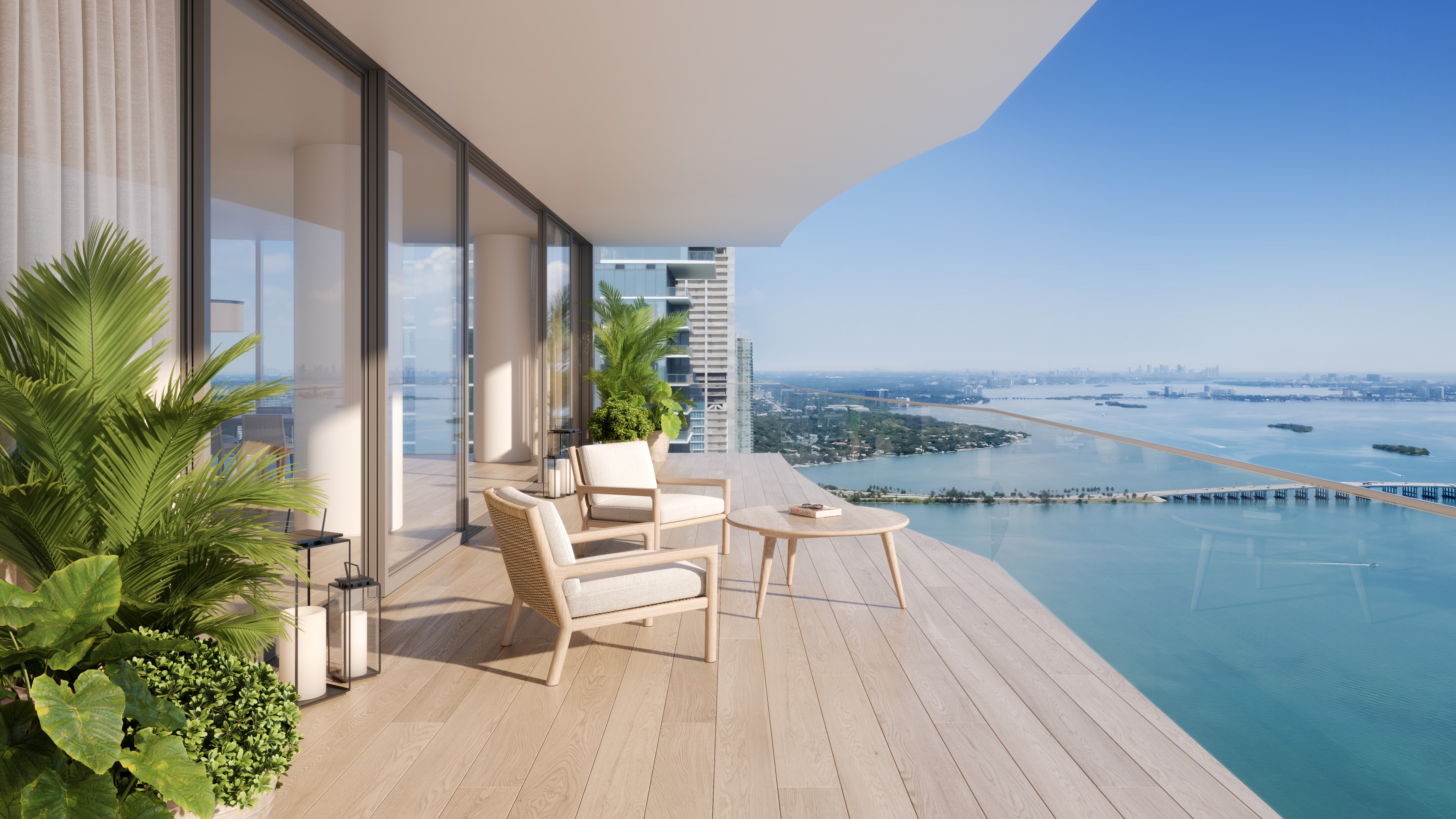
At EDITION Residences Edgewater, the most sophisticated buyer question may not be about finishes, views, or service. It may be about sound. In Miami’s dense waterfront corridor, acoustic comfort has moved from a secondary lifestyle preference to a core due-diligence issue, particularly for buyers evaluating branded residential living with a hospitality sensibility.
That does not mean there is a confirmed noise problem at EDITION Edgewater. It means the buyer standard in 2026 should be higher. A luxury residence is judged not only by what it offers, but by what it filters out: late arrivals at the curb, music from amenity spaces, mechanical hum, pool deck activity, food-and-beverage programming, elevator movement, nearby construction, and the broader pulse of the city.
Edgewater is not a low-activity enclave. It is a vertical, water-view, urban luxury district where residential towers, restaurants, service arrivals, traffic, and construction energy can sit close together. For an ultra-premium purchaser, the test is not whether a building is beautiful. The test is whether the residence remains serene when the neighborhood and the property are fully alive.
Commercial activity changes a building’s sound profile. Restaurants, lounges, guest-entertainment areas, valet operations, and curated resident programming can introduce repeated sound events that differ from ordinary residential life. A dinner service has rhythms. A lounge has peak hours. A valet lane has doors, voices, engines, and arrivals. An amenity deck has music, furniture movement, and social energy.
For buyers, the issue is not volume alone. It is recurrence, timing, proximity, and transmission. A sound that is acceptable at 4 p.m. may feel intrusive after midnight. A terrace that is sublime on a quiet weekday may read differently during a programmed evening. A lower-level stack may live differently from a higher elevation. A residence facing away from a source may feel more private than one with direct exposure.
This is why commercial due diligence belongs in the purchase conversation. Buyers should ask what commercial leases are contemplated, what hours of operation may apply, whether amplified music is permitted, how events are governed, how deliveries are routed, and how complaints are handled. In a luxury building, the contract is only one layer of protection. Governance, enforcement, and design discipline matter just as much.
A branded residential tower can deliver a hospitality-style experience without functioning as an on-site hotel. That distinction matters. The absence of a hotel component may reduce certain guest-turnover issues, but it does not eliminate hospitality-programming questions. Resident lounges, food-and-beverage concepts, pool decks, private dining rooms, and social spaces can still generate recurring acoustic conditions.
For EDITION Edgewater, the buyer test should focus less on labels and more on use. Which spaces are intended to be quiet? Which are intended to be social? Where are the active zones located in relation to residential stacks? Are food-and-beverage areas separated from private residences by sufficient massing, distance, mechanical planning, and operational rules?
The best buyers will distinguish between occasional energy and structural exposure. Occasional energy is part of urban waterfront living. Structural exposure is different: the repeated alignment of a sensitive residence with a predictable sound source. That is the risk to identify before commitment.
The most practical mitigation tool is unit selection. Elevation, stack, orientation, terrace position, and distance from amenity or commercial levels can all affect perceived sound. A residence directly above or adjacent to an active podium may have a different acoustic profile from one several levels removed. A line with exposure to the curb may differ from one oriented toward a calmer edge of the site.
Buyers often prioritize view first, then floor plan, then price. In 2026, sound should enter the order before a final choice is made. A quieter unit may protect not only daily livability, but also sleep quality and future resale liquidity. In the ultra-luxury market, silence is not emptiness. It is a premium condition.
This is especially relevant in new-construction and pre-construction purchases, where the finished building cannot yet be experienced in its operating state. In those cases, buyers should study plans with an acoustic lens. Where are elevators? Where are mechanical rooms? Where are amenity decks? Where do deliveries enter? Where will valet circulation happen? Where could a restaurant or lounge operate, and what sits directly above it?
The strongest protection comes before contract execution, when leverage is greatest and unit choice remains flexible. Buyers should request clear information about contemplated commercial tenants, operating hours, music policies, event policies, amenity rules, mechanical-system locations, and resident complaint procedures. If some details are not finalized, that fact becomes part of the risk assessment.
A serious buyer should also ask how vertical sound transfer has been addressed. Podium-level restaurants, lounges, pools, or amenity decks can transmit noise upward through structure, facade, terraces, and open air. The question is not whether the project has luxury materials. The question is how the active and private zones are separated in practice.
The same discipline applies to external sources. Traffic, construction, neighboring buildings, service drives, emergency routes, and urban nightlife can all shape the residential soundscape. Edgewater’s appeal is its energy and waterfront position. Its due-diligence requirement is understanding how that energy behaves at the specific unit level.
Once access is available, buyers should avoid touring only at the most flattering hour. A mid-morning visit may reveal little about evening dining activity. A quiet weekday may not reveal weekend amenity use. A short showing with closed doors may not show terrace exposure. Sound diligence should include different times of day, different days of the week, and both interior and outdoor conditions.
During early occupancy, the buyer test continues. Residents should observe how management enforces amenity rules, how quickly issues are addressed, whether valet and delivery procedures remain orderly, and whether music or event policies are applied consistently. The first months of operation often reveal how the building’s service culture translates from brand promise into residential discipline.
This is where branded living either earns its premium or weakens it. The most valuable service is not spectacle. It is control, discretion, and the ability to preserve private life within an active setting.
Noise can affect resale in subtle ways. A buyer may not write “acoustic exposure” into a negotiation at first, but it can influence showing impressions, terrace use, perceived privacy, and confidence. In ultra-luxury real estate, hesitation is expensive. If a residence feels compromised at night, near an amenity, or during a busy curb cycle, its buyer pool may narrow.
Conversely, a well-selected residence in an active district can benefit from the best of both worlds: service, design, waterfront energy, and a calm private interior. That is the premium outcome. It is not achieved by assuming quiet. It is achieved by testing for it.
For EDITION Residences Edgewater, the 2026 buyer test is simple in concept and demanding in execution: identify every predictable sound source, understand its timing, map it against the chosen residence, and secure answers before the decision becomes irreversible.
Is this article saying EDITION Edgewater has a noise problem? No. It frames acoustic comfort as a buyer due-diligence issue, not as a claim of confirmed problems.
Why is noise diligence important in Edgewater? Edgewater is a dense waterfront luxury corridor, so urban activity, curb movement, amenities, and commercial uses can sit close to residences.
What are the main sound sources buyers should evaluate? Buyers should review commercial tenants, hospitality-style amenities, food-and-beverage areas, valet activity, mechanical rooms, elevators, and nearby urban activity.
Does a residential-only branded tower remove hospitality noise risk? It may reduce hotel-style turnover questions, but resident programming, lounges, dining spaces, and amenity decks can still create sound events.
Which units may be more exposed to sound? Exposure can vary by elevation, stack, orientation, terrace position, and proximity to podium, curb, amenity, or commercial areas.
When should buyers ask acoustic questions? The best time is before contract execution, while unit selection, disclosure requests, and negotiated protections may still be available.
What documents or policies should buyers request? Buyers should ask about commercial hours, music rules, event policies, mechanical locations, amenity operations, and complaint enforcement procedures.
Should buyers visit at different times of day? Yes. Evening, weekend, and curb-active periods may reveal conditions that a quiet daytime showing does not capture.
Can sound affect resale value? It can influence perceived livability, sleep quality, terrace use, buyer confidence, and the depth of the resale audience.
What is the simplest buyer test for acoustic comfort? Map every likely sound source against the specific residence, then evaluate timing, distance, transmission path, and management controls.
For a tailored shortlist and next-step guidance, connect with MILLION.
If branded residences are on your mind — as a home or as an allocation — we would be glad to share what we are seeing, privately.
Begin a quiet conversation