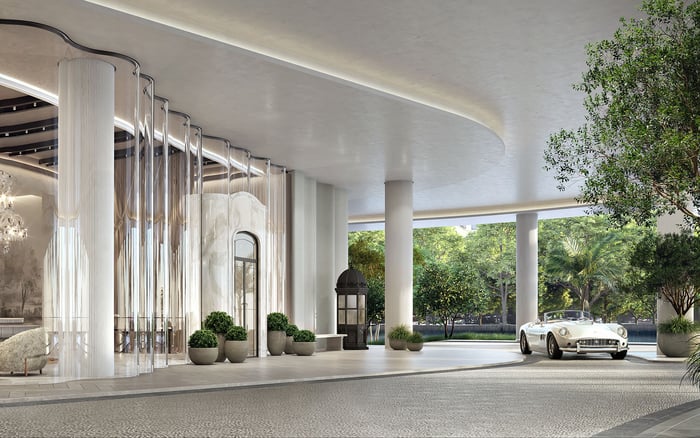
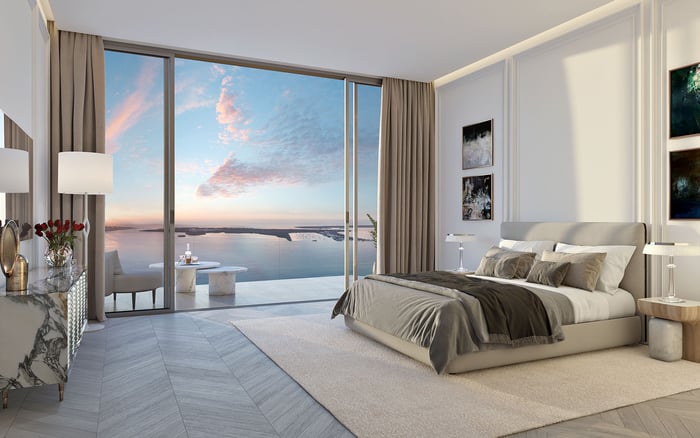
Elevator performance can become a meaningful resale advantage when it supports privacy, daily rhythm, peak-hour convenience, and the quiet efficiency expected in South Florida luxury towers.
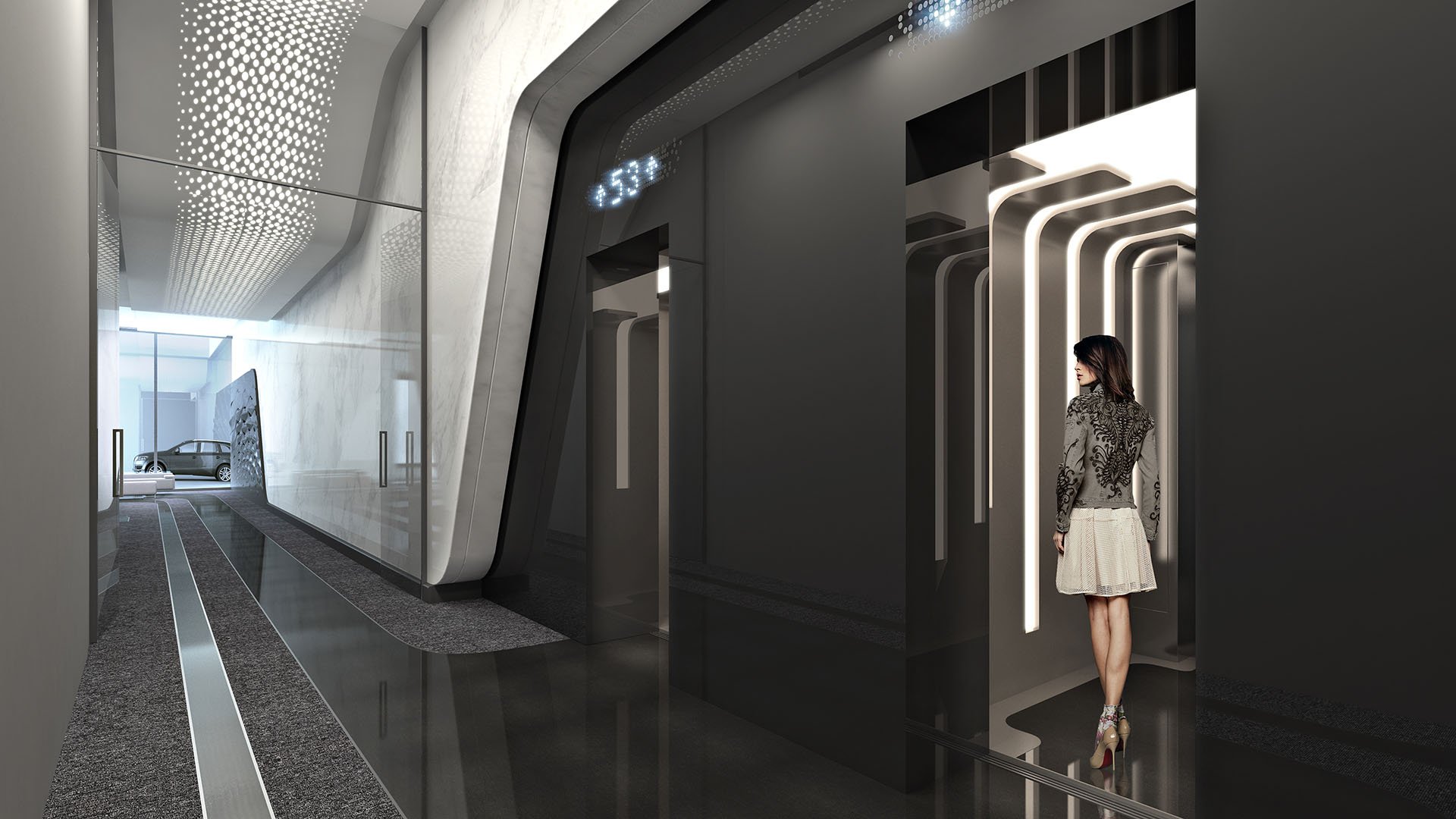
In South Florida luxury real estate, the most memorable features are often the most visible: water views, terraces, private clubs, wellness floors, arrival courts, and architectural glass. Yet for many sophisticated buyers, daily life is shaped by a quieter sequence: the approach to the building, the transition from valet to lobby, the time spent waiting, and the privacy of the ride upward. Together, these details determine whether a residence feels truly effortless.
That is why elevator wait times can become a genuine resale advantage, especially in vertical markets such as Brickell, Downtown, Edgewater, Aventura, and mature beachfront corridors. A buyer may fall in love with a view, but they live with the elevator system every day. When a building moves residents with discretion, speed, and calm, the experience reinforces the value proposition. When it does not, even a beautifully finished home can feel less composed.
The key is not to present every short wait as a headline feature. Elevator performance matters most when it aligns with the buyer profile, building density, floor height, service culture, and daily patterns of use.
A short elevator wait becomes a resale asset when it removes a real point of friction. In South Florida, that often means a building where residents move between home, garage, lobby, pool deck, marina, restaurant, gym, pet area, or beach access several times a day. Convenience is not abstract in this context. It affects school runs, airport departures, dinner reservations, household staff schedules, and the transition from public life to private space.
The value is strongest when a buyer can feel the difference during a showing. If the lobby is calm, the elevator arrives promptly, the cabin is not crowded, and the ride feels private, the building communicates control. That impression is subtle but powerful. It suggests that the residence belongs to a well-managed environment, not merely an impressive address.
For owners considering a sale, this advantage should be presented with restraint. “Efficient elevator circulation” is more persuasive than an exaggerated promise. The right phrasing positions the experience as part of the building’s overall lifestyle performance.
Elevator performance becomes especially important for high-floor residences and penthouse homes, where the journey is longer and privacy expectations are higher. A buyer considering an upper-floor home is often purchasing a sense of separation from the city or shoreline below. The elevator should reinforce that feeling, not interrupt it.
Private or semi-private elevator access can be meaningful because it changes the emotional register of arrival. Instead of moving through shared corridors, the owner steps directly into a controlled threshold. The value is not only time saved. It is the absence of unwanted social friction, the ease of receiving guests, and the feeling that the residence begins before the front door.
This does not mean every penthouse requires a private elevator to hold value. It means the vertical journey should feel proportionate to the price level. At the upper end of the market, buyers notice whether the building’s circulation system respects the privacy implied by the residence.
The issue is most relevant in dense, amenity-rich condominium environments where many residents share peak moments. Brickell and Downtown buyers may be especially sensitive to morning and evening movement because daily schedules often align. Edgewater buyers may weigh elevator experience alongside view corridors, parking access, and proximity to dining, arts, and waterfront recreation. In Aventura, where second-home owners, full-time residents, families, and seasonal occupants may overlap, the rhythm of the building can matter as much as the floor plan.
Beachfront and waterfront towers add another layer. Residents are not only moving to and from their homes. They are circulating between pool decks, spas, fitness areas, cabanas, garages, service areas, and outdoor amenities. When the building handles those transitions smoothly, the entire property feels more luxurious.
Low-rise boutique buildings can also use elevator ease as a differentiator. In smaller buildings, buyers may expect a more intimate lifestyle, and a calm elevator experience reinforces that promise. The advantage is different from a tall tower, but it is no less real.
Sellers should be practical before treating elevator wait times as a resale feature. The first question is consistency. A building that feels seamless only during quiet hours may not support a strong claim. The real test is how it performs during predictable pressure points: weekday mornings, late afternoons, dinner hours, weekend amenity periods, and holiday or seasonal occupancy peaks.
The second question is separation of uses. Buildings with thoughtful circulation often reduce conflict between residents, guests, deliveries, service teams, pets, and move-ins. Where that separation is well managed, the resident experience feels more private and less congested. Even without citing technical specifications, a seller can point to the lived result: smoother arrivals, quieter transitions, and less waiting during ordinary routines.
The third question is condition. A handsome lobby cannot compensate for elevators that feel dated, noisy, or unreliable. Luxury buyers are attentive to the full sensory experience. Lighting, cabin finishes, speed, maintenance culture, and ride quality all contribute to confidence.
Not every building should lead with elevator performance. If the residence is on a low floor, if the building is small enough that waits are rarely discussed, or if the buyer pool is more focused on land, outdoor space, or price efficiency, the elevator story may be secondary.
It can also backfire if the claim invites scrutiny the building cannot withstand. A buyer who hears that elevators are a selling point may test them carefully. If the experience feels ordinary, the feature loses force. If it feels inconsistent, the claim may create doubt.
The strongest resale narratives are not forced. Elevator performance should be used when it naturally supports a broader story: privacy, service, convenience, low-friction living, and a building that feels composed under everyday pressure.
Buyers should observe the elevator sequence as carefully as they inspect finishes. Notice how long the wait feels in the lobby and garage. Watch whether residents appear relaxed or impatient. Consider how many stops occur during the ride. Pay attention to whether the cabin feels crowded, quiet, well-kept, and appropriately scaled for the building.
It is also wise to visit at more than one time if the property is a serious contender. A midday showing may not reveal the same rhythm as an early evening appointment. For buyers who travel often, host frequently, rely on staff, or live with pets, the elevator system can have an outsized effect on comfort.
In South Florida’s premium condominium market, true luxury is not only what happens inside the residence. It is the seamless movement between private life and the city, bay, or ocean beyond.
Can elevator wait time really affect resale value? It can support resale when it improves daily convenience, privacy, and the perceived quality of building management.
Is a private elevator always better for resale? Not always, but it can be compelling for high-floor, large-format, or privacy-driven residences.
Should sellers advertise exact elevator wait times? It is usually better to describe the experience carefully rather than make a rigid claim that may vary by time of day.
When should buyers test elevator performance? Buyers should pay attention during peak residential periods, not only during quiet showing hours.
Do low-floor residences benefit from this issue? Sometimes, but elevator performance is usually a stronger selling point for upper-floor homes or dense buildings.
Does a boutique building have an advantage? It may, especially when fewer residences create a calmer and more private arrival experience.
What is the biggest red flag? Long waits combined with crowded cabins, frequent stops, or an arrival sequence that feels disorganized.
How does this matter for seasonal owners? Seasonal owners often value ease of arrival and departure, making efficient circulation especially relevant.
Should elevator quality be compared with amenities? Yes, because amenities attract attention, but circulation determines how effortlessly residents use the building.
What language should a listing use? Phrases such as efficient elevator circulation, private arrival, and low-friction daily access are suitably precise.
If you'd like a private walkthrough and a curated shortlist, connect with MILLION.
If branded residences are on your mind — as a home or as an allocation — we would be glad to share what we are seeing, privately.
Begin a quiet conversation