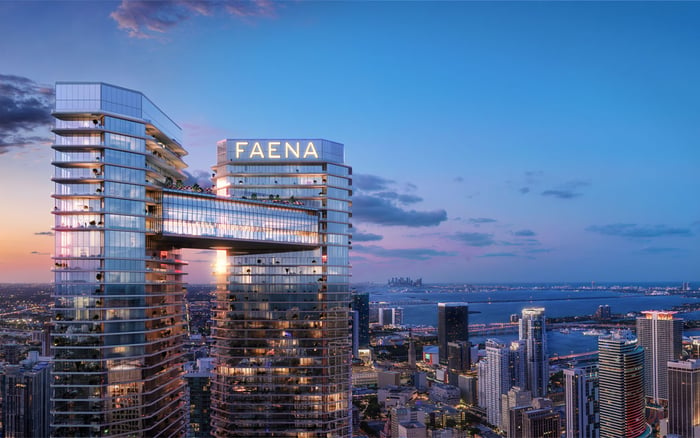
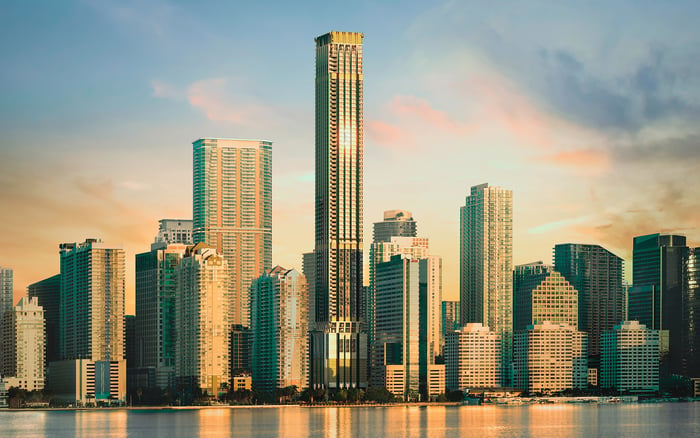
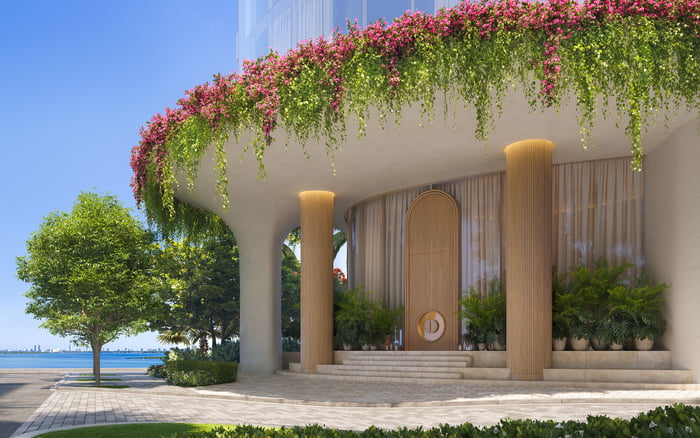
A practical editorial guide for full-time buyers comparing EDITION Edgewater and Waldorf Astoria Residences Downtown Miami through brand promise, service staffing, monthly cost exposure, governance, and household autonomy.
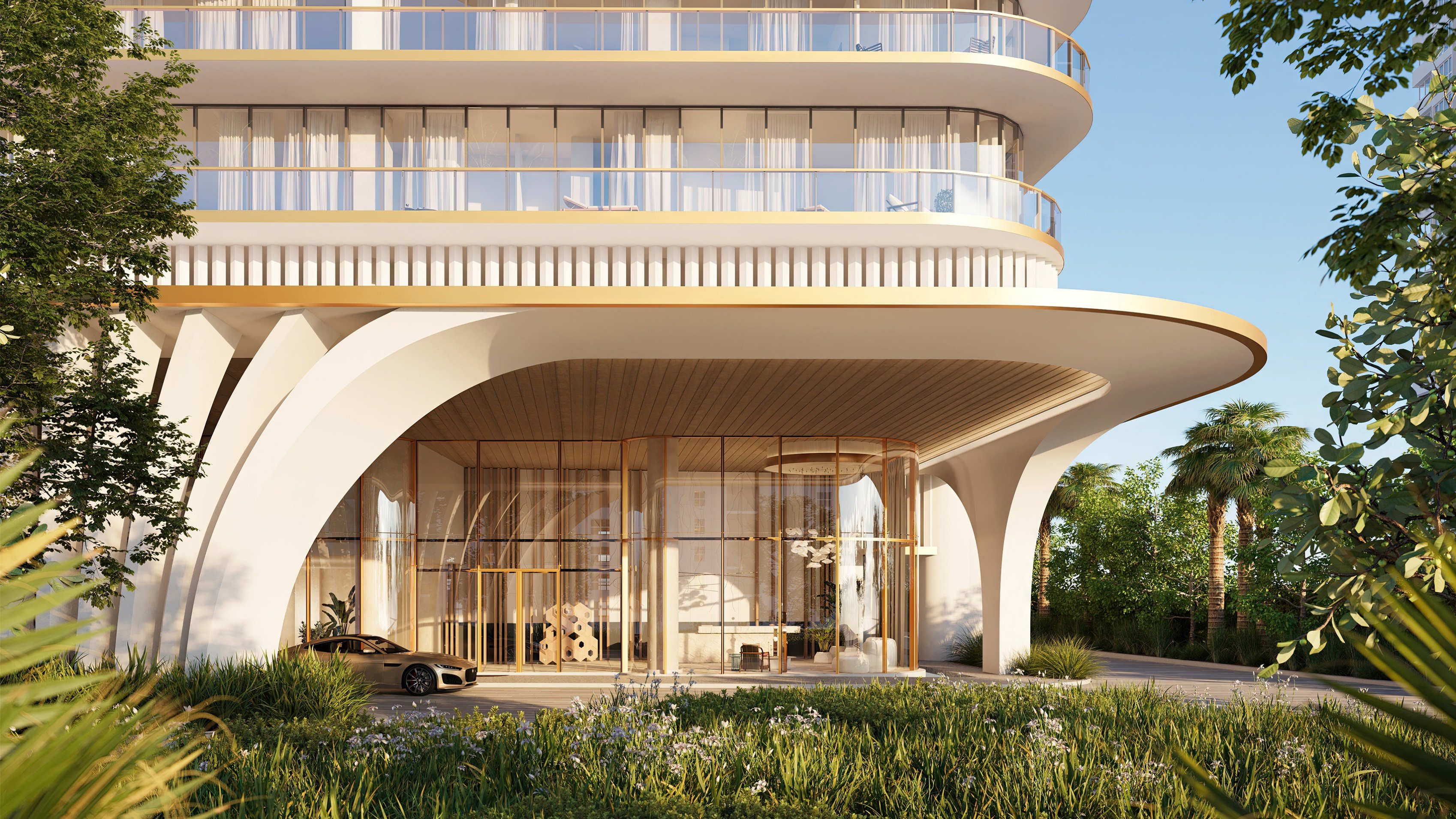
For many South Florida buyers, a branded residence suggests a more composed version of high-rise life: sharper service, a refined arrival sequence, polished amenities, and a residential experience shaped by a globally recognized hospitality sensibility. That promise is especially relevant when comparing EDITION Edgewater with Waldorf Astoria Residences Downtown Miami, because both address the same broader desire while operating in different urban contexts.
For a full-time owner, the essential point is straightforward: a brand can frame the experience, but the condominium documents, budgets, staffing plans, service agreements, and rules determine how that experience is delivered. The name on the tower may influence design, expectations, and buyer confidence. It does not, by itself, answer who opens the door at midnight, who manages a private request, how many employees are scheduled, what is included in monthly costs, or how much discretion the owner retains inside the home.
That distinction matters more for primary residents than for occasional users. A second-home owner may judge the property by arrival moments and amenity impressions. A full-time owner lives with the operating model every morning, every holiday weekend, every service request, every guest arrival, and every board decision.
EDITION Edgewater should be evaluated through the lens of daily residential use in Edgewater, not simply as a luxury asset with a hospitality flag. The brand promise may carry associations of style, atmosphere, and a cultivated social environment. For a full-time resident, the deeper question is whether that promise becomes enforceable obligations and predictable operations.
Buyers should separate the physical amenity package from the service experience. A building can deliver beautiful lounges, wellness spaces, pools, and arrival areas as part of its built environment. Yet staffing those spaces, maintaining their tone, and coordinating resident services require ongoing funding, supervision, and governance. Amenities are visible in renderings and tours. Service consistency is revealed in budgets, operating documents, and post-turnover management.
This is where the full-time owner has to be precise. Which services are included in association costs? Which are à la carte? Which depend on future staffing decisions? Which are controlled by the association, the developer, a brand manager, or a third-party operator? The difference between an amenity and an operating commitment can become the difference between a gracious daily rhythm and an expensive set of optional add-ons.
For households considering EDITION Edgewater within the broader new-construction and pre-construction market, the most useful review is not whether the tower feels luxurious. It is whether the building’s operating structure supports the life the owner intends to live there.
Waldorf Astoria Residences Downtown Miami carries one of the most recognizable hospitality names in the luxury market. That recognition can shape expectations immediately: privacy, ceremony, consistent service, refined arrival, and a sense that the tower will operate with a hotel-informed standard. In Downtown, where energy, density, and vertical living are part of the setting, that promise becomes even more consequential.
But the Waldorf Astoria name should not be treated as automatic proof of hotel-level residential operations. A private condominium is not the same as a hotel, even when a hospitality brand helps define the identity. The relevant question is how the brand translates into daily residential service: who is hired, who trains staff, who supervises them, what protocols apply, and what happens when operating costs change.
This is especially important for owners who expect both service and privacy. A highly serviced building can create ease, but it can also introduce more touchpoints with staff, access protocols, guest handling, package management, and reservation systems. The best experience is not simply the most service-heavy one. It is the one that matches the household’s tolerance for visibility, scheduling, and building involvement.
For a resident considering Waldorf Astoria Residences Downtown Miami, the key is to test the hospitality promise against the residential documents. The brand may set the tone, but the owner’s daily life will be shaped by the governing structure beneath it.
In branded residences, service staffing is not a decorative feature. It is infrastructure. The right staffing plan can make a tower feel seamless. The wrong one can make even a beautiful building feel strained.
Full-time owners should ask how front desk, concierge, valet, security, amenity, housekeeping, engineering, and management functions are expected to be handled. Not every role may apply in the same way to both towers, and buyers should not assume parity between EDITION Edgewater and Waldorf Astoria Residences Downtown Miami simply because both are branded. The operating context, brand structure, association budget, and building rules may differ substantially.
The staffing question has several layers. Are employees dedicated to the residence, shared, contracted, or managed by a third party? Are service standards formalized? Is training ongoing or limited to opening? Are staffing levels guaranteed, budget-dependent, or subject to board adjustment? Are services available at all hours or during defined periods? None of these issues should be left to ambiance.
Monthly cost exposure is part of the same analysis. A generous service model can be valuable, but it must be funded. If the full-time owner wants a high-touch building, the association budget must support it. If the owner wants cost discipline, the building may deliver a more selective service platform. Luxury is not only abundance. It is alignment between expectation, funding, and execution.
Branded residential life can be elegant, but it can also be more governed than a conventional condominium. Household autonomy should be central to the buyer’s review, particularly for families, frequent hosts, collectors, design-driven owners, and residents with private staff.
The relevant topics include renovation approvals, finish changes, contractor access, elevator reservations, service entrances, in-unit staff access, delivery protocols, guest registration, pet rules, leasing restrictions, and amenity conduct. Some buyers welcome a highly controlled environment because it preserves tone and privacy. Others may find the same controls too restrictive for a primary home.
This is where the full-time use case becomes decisive. A residence that works beautifully for seasonal stays may feel different when every dinner delivery, household repair, visiting relative, trainer, chef, housekeeper, and contractor must move through building protocols. The issue is not whether rules exist. Sophisticated buildings need rules. The issue is whether the rules match the owner’s lifestyle.
In Edgewater, the residential rhythm may be shaped by waterfront living, neighborhood growth, and a quieter daily pattern than the Downtown core. In Downtown, the building may need to mediate a more urban environment with greater emphasis on access, privacy, arrivals, and staff coordination. Neither context is inherently superior. They are different operating propositions.
Before relying on phrases such as five-star living or hotel-style service, buyers should request the documents that convert marketing language into obligations. The review should include condominium documents, proposed budgets, rules and regulations, service agreements, brand-management agreements, and any disclosure materials governing owner use.
The most important questions are practical. What services are included in regular association assessments? What services are optional and separately billed? Who controls the brand standards after turnover? What authority does the association have to change staffing levels? Are there limitations on residence customization? Are leasing, guests, and household employees governed in a way that suits a full-time owner?
The answer may not be identical across both projects. That is precisely why a careful comparison matters. EDITION Edgewater and Waldorf Astoria Residences Downtown Miami both participate in Miami’s branded-residence conversation, but they should be judged as distinct residential systems, not interchangeable luxury labels.
For primary residents, the decision should rest on five pillars: brand promise, service infrastructure, monthly cost implications, governance control, and residence-level autonomy.
Brand promise answers what the name is meant to evoke. Service infrastructure answers who delivers the experience. Monthly cost implications reveal whether the desired lifestyle is sustainably funded. Governance control shows who can modify operations after the building matures. Residence-level autonomy clarifies how freely the owner can live, host, renovate, staff, and manage the household.
Seen this way, the comparison becomes less about which brand is more famous and more about which operating model fits the owner. Some buyers will value a more visible hospitality identity. Others will prefer discretion, flexibility, and fewer daily protocols. The best choice is the one whose documents and staffing assumptions support the life being purchased, not merely the image being sold.
Are EDITION Edgewater and Waldorf Astoria Residences Downtown Miami the same type of branded residence? They are both branded residential towers, but they should be evaluated separately because their location, brand identity, and operating context differ.
Should full-time owners rely on the brand name as proof of service quality? No. The brand frames expectations, but documents, budgets, staffing, and service agreements determine how service is delivered.
What is the most important staffing question to ask? Ask who employs, trains, schedules, supervises, and funds the staff after turnover.
Are all services usually included in monthly association costs? Not necessarily. Buyers should verify which services are included, which are à la carte, and which depend on future operations.
Why separate amenities from operating commitments? Amenities are physical features, while service levels depend on budgets, personnel, governance, and management decisions.
How does household autonomy affect daily life? It can shape renovation approvals, staff access, guest procedures, leasing, service protocols, and everyday privacy.
Is Downtown living different from Edgewater living for a branded tower? Yes. Downtown and Edgewater can create different patterns of arrival, privacy, neighborhood energy, and building operations.
What documents should a buyer request before signing? Request condominium documents, budgets, rules and regulations, service agreements, and brand-management agreements.
Can a branded residence change service levels over time? Service levels may depend on budgets, staffing decisions, agreements, and association governance, so buyers should verify what is fixed.
What is the best framework for comparing these two projects? Compare brand promise, service infrastructure, monthly costs, governance control, and residence-level autonomy.
If you'd like a private walkthrough and a curated shortlist, connect with MILLION.
If branded residences are on your mind — as a home or as an allocation — we would be glad to share what we are seeing, privately.
Begin a quiet conversation