A discreet buyer framework for comparing House of Wellness Brickell and Setai Residences Miami Beach through privacy expectations, security technology questions, guest screening protocols, and document-driven due diligence.
For South Florida’s ultra-premium buyer, the real question behind House of Wellness Brickell vs Setai Residences Miami Beach is not simply which address feels more glamorous. It is whether the building can document how privacy is protected, how access is controlled, how guests are handled, and how daily movement through the property actually functions.
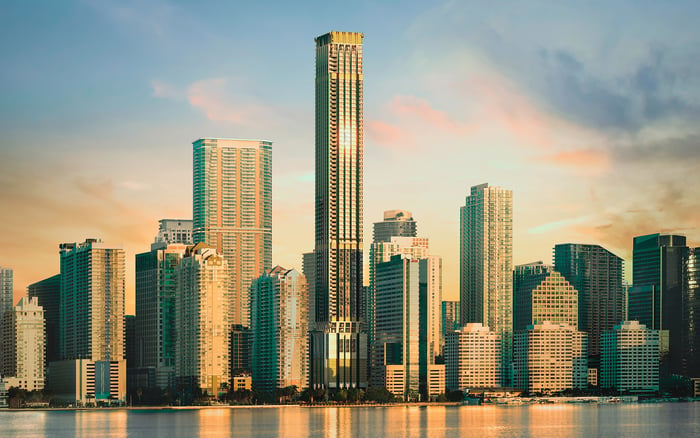
Setai Residences Miami Beach is identifiable as a Miami Beach residential property, giving it a clear role in this comparison. House of Wellness Brickell, by contrast, should be approached through buyer verification rather than assumed operational detail. That does not make the question less useful. It makes it more practical.
In today’s luxury market, privacy language can sound similar from one residence to another. The meaningful distinction is found in condo documents, association rules, building policies, staffing protocols, and written explanations from the sales or management team. A polished lobby, a wellness narrative, or a famous coastal setting may shape desire, but none substitutes for operational clarity.
Buyers often describe privacy as a feeling: quiet arrivals, limited visual exposure, calm elevator journeys, and the ability to host without becoming visible to the entire building. Yet privacy is also procedural. Who sees the guest log? Who can call up to the residence? Who has access to resident floors? Are vendors routed separately? Are deliveries held, screened, escorted, or released directly?
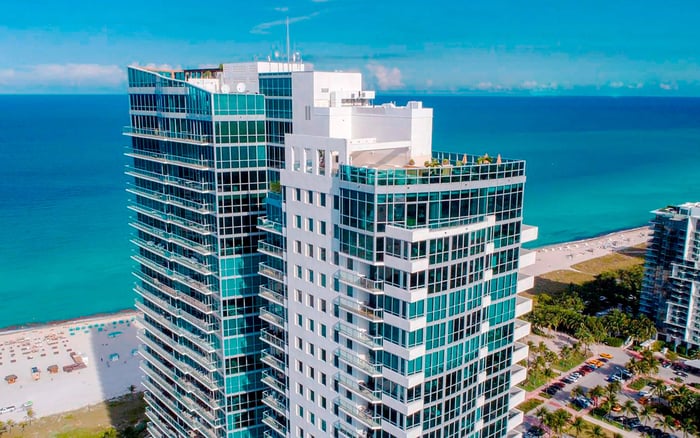
For Setai Residences Miami Beach, buyers can anchor the conversation around its Miami Beach identity, then request the specific documents that explain resident access, guest movement, and any separation between private residential circulation and other uses. The point is not to presume the answer. The point is to obtain it in writing.
For House of Wellness Brickell, the same discipline applies. Brickell buyers often prize convenience, restaurant proximity, office access, and an energetic urban setting. Those strengths can also make access management more important. A buyer should ask whether the building has written policies for guests, staff, deliveries, rideshare arrivals, wellness visitors, and any amenity guests who are not residents.
The tag words are not the substance. Brickell, Miami Beach, and Setai Residences Miami Beach can all signal location, lifestyle, and market identity. They do not, by themselves, define privacy.
Luxury buyers increasingly ask about technology: cameras, access control, elevator permissions, license-plate systems, biometric entry, package-room controls, and monitoring. These are reasonable questions, but they should be treated as due diligence topics rather than assumptions.
The available facts do not support a detailed specification of security technology at either property. A buyer should not rely on verbal shorthand such as “high security,” “private access,” or “smart building” without asking what those phrases mean operationally.
A sophisticated request can be direct: provide the current access-control overview, resident and guest entry protocol, camera governance policy, elevator access procedure, delivery handling process, and emergency communication plan. If the building will not provide sensitive details for security reasons, it can still explain categories of control, resident-facing procedures, and who is responsible for enforcement.
This is especially important for buyers who travel frequently, maintain household staff, host family from abroad, or purchase for investment purposes. A residence may feel secure during a sales tour, but the real test is what happens on a holiday weekend, during a large event, or when multiple vendors arrive at once.
Guest screening is one of the least glamorous and most important parts of ultra-prime residential life. It affects dinner guests, private chefs, drivers, trainers, beauty professionals, nurses, yacht crew, designers, art handlers, and contractors. It also affects residents who value spontaneity.
Buyers comparing House of Wellness Brickell and Setai Residences Miami Beach should ask the same core questions: Are guests pre-registered? Is identification required? Are guests logged? How are repeat visitors handled? Can residents approve access digitally? Are vendors treated differently from social guests? Are overnight visitors tracked differently from daytime visitors?
Short-term rentals deserve a separate question. A buyer should request the building’s rental restrictions, minimum lease terms, approval process, move-in rules, occupancy policies, and enforcement history where available. Without written rules, it is difficult to understand whether a residence will feel primarily owner-occupied, transient, service-oriented, or mixed over time.
Condo-hotel dynamics, if applicable to any structure under consideration, should also be reviewed with precision. Buyers should ask whether hotel guests, service users, spa visitors, restaurant guests, or event attendees can enter areas used by private residents. They should also ask how shared amenities are governed and whether residents have private-only spaces.
The most refined buyers do not ask, “Is the building private?” They ask for the materials that prove how privacy is administered. Before signing, request the declaration, bylaws, house rules, rental policy, guest policy, delivery policy, amenity rules, staffing overview, move-in and move-out protocol, and any written resident handbook available for review.
For a Miami Beach property such as Setai Residences Miami Beach, the questions should include how beach access, valet activity, service routes, and amenity traffic affect resident circulation. For a Brickell property positioned around wellness and urban convenience, the questions should include how non-resident users, wellness-related appointments, deliveries, and high-volume arrival periods are handled.
The most important answer is not always the most restrictive one. Some buyers want a fortress-like environment. Others want hospitality with discretion. Others prioritize easy access for family, staff, and service providers. The right building is the one whose rules match the buyer’s lifestyle and whose management can apply those rules consistently.
A vague answer is not necessarily a warning sign, but it is not enough for a major purchase. A strong answer names the policy, explains the resident process, identifies who enforces it, and clarifies how exceptions are handled. It also distinguishes marketing language from actual building practice.
Buyers should listen for operational clarity. Who controls access after hours? How are temporary staff credentials issued? Can a resident restrict access to certain visitors? Are deliveries allowed beyond the front desk? What happens if a guest arrives without approval? How are amenity guests registered? How is resident data protected?
These questions matter because privacy is cumulative. One small exception may not matter, but repeated exceptions can change the character of a building. In luxury real estate, the difference between serene and exposed is often found in protocols that guests never notice and residents should never have to chase.
There is no responsible basis here to declare House of Wellness Brickell or Setai Residences Miami Beach more private, more secure, or stricter on guests. The correct conclusion is more nuanced: compare the written operating environment, not only the brand atmosphere.
Setai Residences Miami Beach offers a Miami Beach frame for the conversation. House of Wellness Brickell brings the buyer question into an urban Brickell context. Both require disciplined review before privacy expectations become purchase assumptions.
For the buyer spending at the top of the market, discretion is not merely architectural. It is legal, technological, managerial, and cultural. The best residence is the one where those layers align with how the owner actually lives.
Is Setai Residences Miami Beach part of this comparison? Yes. Setai Residences Miami Beach is identifiable as the Miami Beach property in this buyer-focused comparison.
Can buyers assume either building has superior privacy? No. Privacy should be evaluated through written policies, operational procedures, and direct confirmation before purchase.
What should House of Wellness Brickell buyers verify first? Buyers should verify access control, guest rules, delivery handling, rental policies, amenity access, and staff procedures directly through official documents.
Should security technology be a deciding factor? It can be important, but buyers should request documented explanations rather than rely on generalized luxury language.
What guest questions matter most? Ask whether guests are pre-registered, logged, identified, routed, and treated differently when they are vendors, staff, or overnight visitors.
Why do rental rules matter for privacy? Rental rules influence building traffic, guest turnover, resident familiarity, and the overall feel of daily life.
Are short-term rentals automatically allowed or prohibited? Do not assume either. Request the current rules, minimum lease terms, approval process, and enforcement procedures.
Does a Miami Beach setting change the privacy analysis? It can add questions around beach access, valet movement, amenities, and visitor circulation, all of which should be reviewed.
Does a Brickell setting change the privacy analysis? It can add questions around urban arrivals, deliveries, rideshare volume, office proximity, and amenity traffic.
What is the smartest buyer approach? Treat privacy as a documented operating system, then compare how each building’s rules fit the way you actually live.
When you're ready to tour or underwrite the options, connect with MILLION.
If branded residences are on your mind — as a home or as an allocation — we would be glad to share what we are seeing, privately.
Begin a quiet conversation