A discreet buyer’s guide to evaluating Edgewater condos through the lens of private-school routines, family logistics, privacy, amenities, and long-term livability.

For years, Edgewater was discussed primarily in the language of skyline, water, design, and access to Miami’s cultural core. Today, the conversation is more nuanced. For luxury families, the neighborhood is increasingly evaluated through the rhythm of school mornings, after-school commitments, tutoring, sports, weekend travel, and the need for a home that feels composed before and after every transition.
Private-school proximity is not simply a matter of being near a campus. It is the ability to create predictability in a city where bridges, events, weather, and peak-hour patterns can reshape the day. Edgewater gives families a central Miami base with a residential feel along the bay, yet the right condominium choice depends on how carefully a buyer reads the building beyond its renderings and views.
A residence may have the right address, but family life asks more specific questions. How does the elevator system perform at school departure time? Is the garage easy for a driver, nanny, grandparent, or security detail to navigate? Can the floor plan absorb backpacks, uniforms, laptops, sports gear, instruments, and visiting relatives without compromising the elegance of the home? These are the details that define daily luxury.
The first priority is consistency. A family focused on private-school access should map the daily routine in both directions, not just the ideal commute. Morning drop-off, afternoon pickup, extracurricular returns, and evening events all create different patterns. A school that feels convenient on a quiet weekend may function differently during the week.
Edgewater’s advantage is its position within Miami’s urban fabric. It can place families close to arts districts, dining, offices, healthcare, waterfront recreation, and several established residential neighborhoods. That centrality is valuable, but buyers should resist reducing the decision to distance alone. The more important measure is whether the home supports the full educational ecosystem around the child.
For younger children, proximity may mean fewer transitions and a calmer morning. For older students, it may mean independence, efficient rides, and access to academic support or sports facilities. For parents, it may mean moving between home, school, office, airport, and dinner without the household feeling overextended.
A family-oriented Edgewater condominium should be evaluated from the garage upward. Valet, self-parking, guest access, package handling, bicycle storage, and elevator flow all matter. A beautiful lobby is only part of the experience. The true test is whether the building can manage real family movement discreetly and efficiently.
Floor-plan depth is equally important. Luxury families often need more than bedroom count. They need a proper arrival sequence, generous laundry capacity, flexible dens, secondary entries where available, and separation between entertaining areas and children’s rooms. A balcony can be a meaningful extension of family space if it feels usable, protected, and connected to the living area rather than decorative.
Amenities deserve the same practical lens. Pools, fitness rooms, lounges, children’s spaces, wellness areas, and private dining can all add value, but only if they serve the way the household actually lives. A building with thoughtful amenity programming may reduce the need to cross town for every activity. A building with elegant but underused spaces may be less compelling for a school-focused buyer.
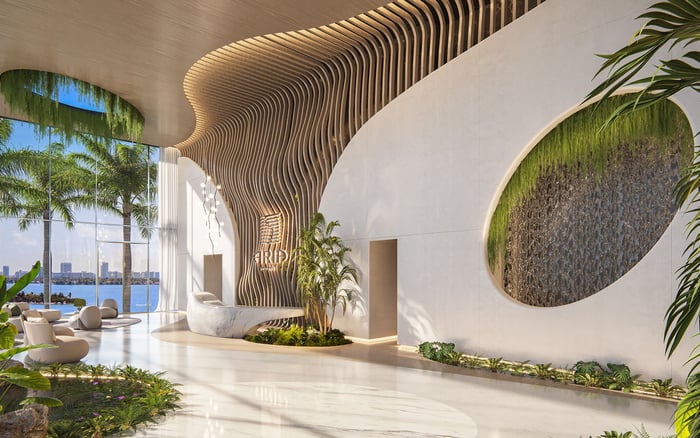
For families considering new construction and newer luxury offerings, Edgewater provides several distinct interpretations of vertical living. Aria Reserve Miami is often part of the conversation for buyers who want a bay-oriented residential setting with a contemporary high-rise profile. In the family context, the key is not only the view, but whether the residence supports the morning and evening pace of a full household.
EDITION Edgewater speaks to buyers who value branded hospitality language, refined common areas, and a more service-forward lifestyle. For parents, the question becomes how that service culture translates into everyday convenience: arrivals, guests, deliveries, and calm transitions between school obligations and home life.
At Villa Miami, the appeal is tied to a more intimate reading of luxury, where design identity and bayfront sensibility can shape the emotional experience of the home. Families should focus on whether the plan feels warm enough for daily life while still polished enough for entertaining.
The Cove Residences Edgewater may resonate with buyers looking for a quieter residential tone within the broader Edgewater market. For school-oriented households, quieter does not mean less sophisticated. It can mean fewer frictions, more privacy, and a building culture that feels livable throughout the week.
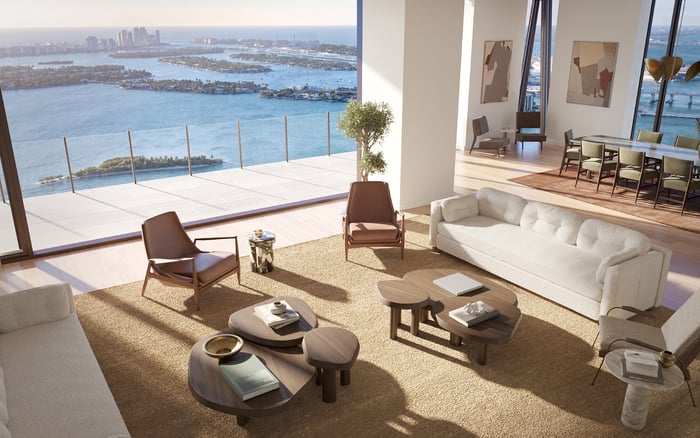
Waterview residences will always command attention in Edgewater. Biscayne Bay gives the neighborhood much of its emotional identity, and the sense of openness can be deeply restorative for families moving through demanding academic calendars. Yet a view should not overpower the operational questions.
A higher-floor residence may offer drama and privacy, while a lower- or mid-level home may feel more efficient for daily exits. A corner plan may bring light and separation, while an interior plan may offer a more practical layout for children. The best choice depends on how the household moves, not just how the residence photographs.
Families should also consider acoustics, window treatments, morning light, and evening glare. A home that feels serene during a showing should be tested mentally against breakfast, homework, bedtime, and weekend guests. In the highest tier of the market, luxury is not merely visual. It is the absence of daily irritation.
Edgewater often competes with Brickell, Miami Beach, Coconut Grove, Coral Gables, and the islands for family attention. Each area offers a different equation of privacy, school access, cultural life, and commuting pattern. Brickell may appeal to families prioritizing proximity to offices and dining. Miami Beach may offer a different lifestyle rhythm centered around coastal living. Coconut Grove and Coral Gables may speak to buyers who want a more traditional neighborhood texture.
Edgewater’s proposition is its blend of urban centrality and bayfront residential calm. It is not the most secluded choice in South Florida, nor is it trying to be. Its strength is that a family can live vertically, maintain a sophisticated city lifestyle, and still build a school-week routine that feels intentional.
The right buyer will likely be one who values design, service, and access in equal measure. The wrong fit may be a household that needs a large private yard, a purely suburban cadence, or minimal elevator dependence. Clear self-knowledge is essential before comparing buildings.
Before choosing an Edgewater condominium for private-school proximity, families should rehearse a normal week. Who leaves first? Who returns last? Where do tutors meet? Where does a driver wait? How are visiting grandparents accommodated? Can a sick child rest away from the entertaining area? Is there enough storage for seasonal sports, travel, and school materials?
Buyers should also evaluate privacy. Luxury families often value discretion as much as amenity. The tone of the lobby, the density of shared spaces, the professionalism of staff, and the ease of receiving guests all shape the lived experience. A building may be architecturally impressive, but if it feels too public, it may not suit a family seeking a quieter daily life.
Finally, consider future adaptability. Children age quickly, and school needs change. A nursery becomes a study space. A playroom becomes a media room. A parent’s occasional office becomes essential. The most resilient residence is one that can evolve without requiring the family to move prematurely.
Is Edgewater a practical condo market for families focused on private schools? Yes, for families who value centrality, bayfront living, and efficient access to multiple parts of Miami. The best fit depends on the family’s specific school route and daily schedule.
Should buyers choose a condo based only on distance to school? No. Timing, traffic patterns, garage access, elevator efficiency, and household routines are often more important than distance alone.
Are larger residences always better for families? Not necessarily. A well-planned residence with storage, separation, and flexible rooms can outperform a larger home with inefficient circulation.
Do views matter for school-focused buyers? Yes, but views should be balanced against layout, morning light, elevator convenience, and the way the family uses the home every day.
What amenities matter most for luxury families? Practical amenities such as fitness, pool, lounge, children’s areas, private dining, and secure guest handling can support a smoother week.
Is new construction preferable for family buyers? It can be, particularly when buyers want contemporary systems, modern layouts, and current amenity standards. Each building still requires careful review.
How should families evaluate parking and arrivals? They should consider self-parking, valet flow, guest access, stroller movement, security, and how easily multiple caregivers can manage the routine.
Can Edgewater work for buyers comparing Brickell and Miami Beach? Yes. Edgewater may offer a middle ground for buyers who want urban access, bayfront atmosphere, and a more residential tone than some denser districts.
What is the most overlooked family feature in a luxury condo? Storage is often underestimated. School gear, travel items, sports equipment, and household supplies require more capacity than many buyers expect.
When should a family begin evaluating buildings around a school decision? As early as possible. Housing, admissions timing, commute testing, and household staffing are easier to align when considered together.
If you'd like a private walkthrough and a curated shortlist, connect with MILLION.
If branded residences are on your mind — as a home or as an allocation — we would be glad to share what we are seeing, privately.
Begin a quiet conversation