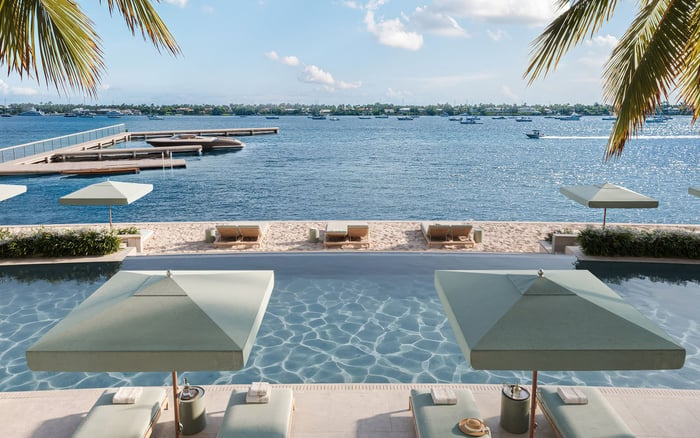
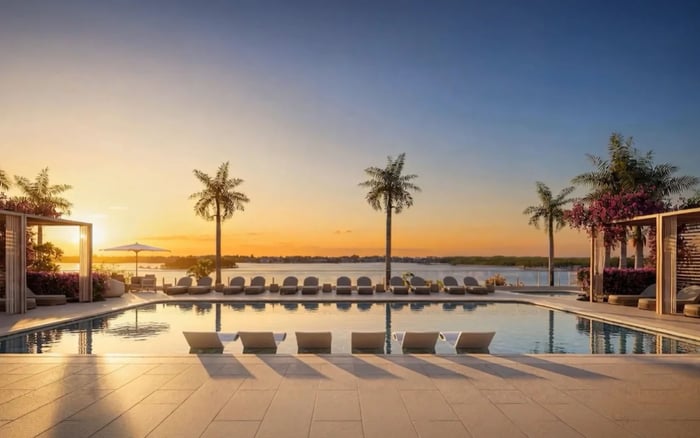
A buyer-focused diligence framework for three ultra-luxury South Florida condominium profiles: boutique waterfront privacy, hospitality-branded West Palm Beach living, and globally branded Downtown Miami scale.

For buyers evaluating South Florida's newest ultra-premium condominium offerings, the first mistake is treating every trophy launch as if it carries the same risk profile. These residences should be approached as Pre-Construction or newly launched ultra-luxury condominiums, where diligence extends well beyond floor-plan preference, exposure, and finish selection. The more consequential questions are often less visible: who stands behind delivery, how service obligations are funded, what the governing documents allow, and how deep the eventual resale market may be.
The three projects in this discussion are best understood as different expressions of luxury rather than direct substitutes. Maison D'Or South Flagler points buyers toward a boutique waterfront lens on South Flagler, where privacy, delivery quality, and future resale depth deserve close attention. Mr. C Residences West Palm Beach raises the defining Branded Residences question: will the hospitality promise remain durable after turnover, and how will it be paid for? Waldorf Astoria Residences Downtown Miami introduces the added complexity of a globally branded supertall mixed-use tower in an urban setting.
In preconstruction luxury, renderings can create desire, but they do not prove execution. Buyers should review the development sponsor's track record, capitalization, lender relationships, and history delivering comparable luxury projects before becoming anchored to brand cachet or presentation materials. This matters across all three properties, though the emphasis changes by profile.
For Maison D'Or South Flagler, sponsor and construction diligence should be filtered through the expectations of a limited, boutique waterfront building. A buyer is effectively underwriting privacy and delivery quality in a narrower inventory environment. For Mr. C Residences West Palm Beach, scrutiny shifts to the relationship among developer, brand, operator, and association. For Waldorf Astoria Residences Downtown Miami, scale and mixed-use complexity make sponsor capability and document review especially consequential.
Preconstruction deposits may represent a substantial capital commitment. Buyers should understand escrow terms, release provisions, default remedies, delay provisions, and what happens if delivery timing changes. A Florida real estate attorney should review these documents before a buyer assumes that deposit protections, walk-away rights, or delay remedies will function as expected.
The most elegant brand presentation still needs to translate into enforceable rights. Across branded condominiums, a central diligence question is whether the brand is the developer, an operator, or a licensor. Recourse typically depends on the sponsor, purchase agreement, condominium declaration, management contracts, and association documents rather than the brand name alone.
This is particularly relevant for Mr. C Residences West Palm Beach, where buyers should examine how the hospitality-driven service promise is delivered and funded after turnover from developer control to condominium-association control. Are services mandatory, optional, or billed separately? What staffing, amenity programming, valet, security, food-and-beverage access, and brand-standard obligations are embedded in the budget? If the brand experience is central to the purchase rationale, buyers should confirm how that experience survives governance changes.
At Waldorf Astoria Residences Downtown Miami, the global brand may improve recognition and potential liquidity, but it can also sit within a more complex urban mixed-use structure. The diligence question is not whether the name is powerful. It is whether the structure, service obligations, and operating model support the buyer's intended use over time.
Luxury buyers often compare views and aesthetics first. The more disciplined exercise is to compare what is physically delivered in each residence. Ceiling heights, view corridors, private outdoor space, finishes, appliance packages, parking, storage, and included versus upgrade items should all be reviewed carefully against the purchase documents.
Construction and delivery diligence should also cover expected completion timing, permitted design changes, material substitutions, force-majeure language, and buyer walk-through rights. In a boutique waterfront setting such as Maison D'Or South Flagler, a small variation in view, terrace utility, or finish execution can materially affect perceived value. In a hospitality-driven West Palm Beach building, a buyer should connect the physical residence to the service model that supports it. In Downtown Miami, the analysis should account for the realities of an urban mixed-use environment, including scale, access, and long-term building operations.
Operating-cost diligence is just as important as design diligence. Buyers should review condominium budgets, reserve assumptions, insurance assumptions, possible assessment exposure, and the treatment of hotel-style services. A tax advisor and insurance specialist can help test carrying-cost assumptions against a buyer's broader ownership plan.
The purchase agreement is only the beginning. Legal diligence should include the condominium declaration, bylaws, rules and regulations, rental restrictions, pet policies, alteration rules, and dispute-resolution provisions. These documents determine how an owner may use the residence, modify it, lease it, and resolve conflicts.
Location diligence should also differ by project. South Flagler emphasizes waterfront residential character. West Palm Beach emphasizes a branded lifestyle setting. Downtown Miami emphasizes urban mixed-use access and broader global visibility. The right answer depends on whether the buyer values discretion, daily service, international recognition, or a combination of all three.
Exit liquidity is not a secondary issue in ultra-luxury condominiums. For Maison D'Or South Flagler, resale should be analyzed through the lens of limited boutique inventory and the narrower buyer pool for high-end waterfront residences. Scarcity may support distinction, but it can also reduce the number of natural future buyers.
For Mr. C Residences West Palm Beach, buyers should test whether the brand, service model, and location create resale differentiation beyond personal-use enjoyment. For Waldorf Astoria Residences Downtown Miami, the question is whether global recognition and supertall scale improve liquidity enough to offset operating considerations and urban complexity. A disciplined buyer weighs beauty and status against documents, budgets, governance, and the depth of the future market.
Are these three projects direct substitutes? No. They represent different risk-return profiles: boutique waterfront privacy, branded West Palm Beach lifestyle, and globally branded Downtown Miami scale.
What should buyers review first in a preconstruction purchase? Start with sponsor quality, capitalization, lender relationships, deposit terms, and the sponsor's history delivering comparable luxury projects.
Why does the brand structure matter? A brand may be a licensor rather than the developer, so buyer rights usually depend on the sponsor and governing documents.
What is the key diligence issue for Maison D'Or South Flagler? Buyers should focus on privacy, delivery quality, physical specifications, and the depth of the future resale pool.
What is the key diligence issue for Mr. C Residences West Palm Beach? Buyers should test whether the hospitality service model is durable, clearly funded, and enforceable after turnover.
What is the key diligence issue for Waldorf Astoria Residences Downtown Miami? Buyers should evaluate the benefits of global recognition against the complexity of a supertall mixed-use urban tower.
Which documents should a Florida attorney review? The purchase agreement, declaration, bylaws, rules, rental restrictions, alteration provisions, and dispute-resolution language should all be reviewed.
Why are operating budgets so important in Branded Residences? Staffing, valet, security, amenity programming, food-and-beverage access, and brand standards can materially affect monthly costs.
Should buyers compare included finishes and upgrades? Yes. Ceiling heights, views, terraces, appliances, parking, storage, and upgrade allowances can meaningfully affect value.
How should a buyer think about resale liquidity? Consider the future buyer pool, building scale, brand durability, location appeal, and monthly carrying costs before committing.
For a confidential assessment and a building-by-building shortlist, connect with MILLION.
If branded residences are on your mind — as a home or as an allocation — we would be glad to share what we are seeing, privately.
Begin a quiet conversation