A due-diligence guide for estate owners moving from private homes to South Florida condominiums, with emphasis on storm preparation services, association responsibility, insurance, reserves, inspections, evacuation communication, and the documents to review before signing.
For many South Florida estate owners, the appeal of downsizing into a condominium is immediate: fewer private-house obligations, enhanced security, lock-and-leave flexibility, and a lifestyle supported by professional management. Hurricane season, however, exposes the defining difference between an estate and a condominium. In a single-family residence, the owner can often direct shutters, vendors, generators, landscape crews, drainage checks, and post-storm repairs. In a condominium, those decisions usually sit within a shared framework of board direction, association budgets, property-management protocols, vendor relationships, and unit-owner responsibilities.
That shift is not a reason to avoid condo living. It is a reason to ask sharper questions before signing. The most polished lobby, discreet valet sequence, or private elevator arrival does not answer who removes terrace furniture, how evacuation notices are communicated, which building systems receive backup support, or how quickly access may resume after a storm. Storm preparation is not merely maintenance. At the ultra-premium level, it is part of the residential service promise.
For buyers comparing waterfront, urban, and barrier-island residences, the core issue is not whether a building says it is prepared. The issue is whether that preparation is written, funded, insured, and understood before contract deadlines arrive.
South Florida buyers often describe storm risk in shorthand: oceanfront, bayfront, riverfront, inland, or high floor. Those categories are useful, but incomplete. A tower several blocks from the beach may still raise questions about garage exposure, while a coastal building with clear flood-management planning may present a different ownership conversation.
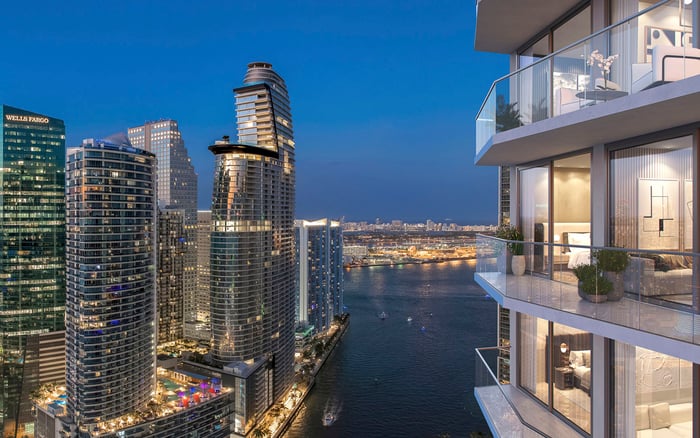
Before contract execution, buyers should ask how the building evaluates flood exposure, drainage, critical equipment placement, garage planning, and recovery procedures. In Miami Beach, a buyer considering The Perigon Miami Beach might frame the conversation around coastal exposure, terrace protocols, and evacuation communication. In Brickell, a buyer evaluating St. Regis® Residences Brickell should still ask about river, bay, garage, and power-continuity planning rather than assuming an urban address simplifies storm risk.
Rainfall deserves the same scrutiny. Drainage, waterproofing, garage flood exposure, sump systems, elevator pits, and post-storm remediation plans can become central to luxury due diligence, especially for owners accustomed to directing every detail in a private estate.
Hurricane readiness runs on a sequence. A serious condominium storm-service plan should explain what management does before a storm threat, as conditions change, when the property is secured, and after weather has passed. Ask how the building organizes preparation, communication, access, and recovery.
The questions should be precise. When are terrace items secured? Who handles oversized planters, outdoor kitchens, cushions, umbrellas, art, and loose decor? Are owners required to clear balconies themselves, or does the association offer a service? If an owner is away, can management enter the unit or terrace to perform protective work? Is that authorization already in the documents, or must it be signed separately?
Power is another timeline issue. Buyers should ask which systems receive backup support, including life-safety equipment, elevators, garage gates, access control, domestic water pumps, and communications. A luxury high-rise can feel effortless in normal conditions and constrained after a storm if access, elevators, or cooling are limited. The difference is usually found in written policy, not marketing language.
The phrase lock-and-leave can be misleading. It describes convenience, not abdication. Even in a highly serviced condominium, owners may remain responsible for unit-specific property, interior contents, certain finishes, insurance claims, and compliance with building procedures.
Buyers should understand how the board and management team plan to act during a storm event. Has the building adopted written hurricane procedures? Does management have identified vendors for storm preparation, water extraction, security, temporary power, debris removal, and remediation? Are there emergency purchasing procedures? How are absent owners notified if access is restricted?
Estate owners are accustomed to delegating to a private house manager. In a condominium, the equivalent is not a single person. It is the alignment of the board, manager, staff, vendors, budget, insurance, and governing documents.
Association insurance and unit-owner insurance should be reviewed together. The important issue is not merely whether insurance exists, but what each policy is intended to cover, what may remain the unit owner's responsibility, how deductibles are handled, and how water intrusion or storm damage would be processed.
Before closing, buyers should coordinate the master policy, windstorm coverage, flood coverage, deductibles, and their own unit-owner policy with qualified advisers. A buyer who is reducing square footage but bringing important art, collectible furnishings, custom millwork, wine storage, or specialized electronics into a condominium should not treat insurance as an afterthought.
The document trail is equally important. Buyers should request available insurance records, contracts, budgets, reserve information, inspection materials, and board minutes during due diligence. These records can help reveal whether storm-related systems, building envelope components, waterproofing, roofs, windows, doors, and structural needs are being discussed, maintained, and funded.
For glass-forward residences, buyers should also ask what documentation exists for exterior openings, shutters, doors, and related storm-protection components. The answer should come from the building's records and qualified professionals, not assumptions based on appearance.
Each market presents a different storm conversation. Sunny Isles Beach buyers considering vertical waterfront living at Bentley Residences Sunny Isles should think carefully about terrace contents, garage planning, access control, and owner communication. Fort Lauderdale buyers looking near the coast or waterways, including those evaluating Four Seasons Hotel & Private Residences Fort Lauderdale, should ask about pre-season preparation, vendor readiness, and evacuation-zone communication.
Palm Beach and West Palm Beach buyers should be equally disciplined, especially near coastal corridors, barrier islands, and low-lying garages. A buyer comparing The Ritz-Carlton Residences® West Palm Beach may be focused on service, privacy, and lifestyle, but storm-service documents should sit beside floor plans and finish packages.
The larger point is simple: South Florida luxury condominium quality varies not only by architecture and amenity program, but also by governance. A well-organized association with clear records, experienced management, and identified storm vendors may offer a different ownership experience than a building relying on last-minute improvisation.
Before signing, request the written hurricane plan, storm vendor list, emergency communication procedure, generator and elevator policy, insurance declarations, flood policies, reserve information, inspection status, recent board minutes, and any terrace or balcony rules. Ask whether the building is in an evacuation area and how official evacuation guidance is relayed to owners, tenants, guests, staff, and service providers.
The answers do not need to be theatrical. The best responses often sound calm and specific: written procedures, named contacts, clear timelines, established access rules, and documented financial preparation. For an estate owner moving into shared ownership, that quiet infrastructure is what protects the luxury proposition when the weather turns.
Why should downsizing estate owners focus on storm preparation before signing? Condo ownership shifts many storm decisions from private control to shared governance, so the quality of the association's plan directly affects the owner experience.
Is a high-floor residence automatically free from storm-related concerns? No. High floors may reduce some concerns, but garage flooding, power continuity, elevators, access, and water intrusion still matter.
What is the first storm document a buyer should request? Ask for the building's written hurricane plan, then compare it with vendor information, insurance records, reserve information, and board minutes.
Who is responsible for balcony and terrace furniture? It depends on the condominium documents and building policy, so buyers should confirm whether the association, staff, vendor, or owner handles removal.
Do association policies cover everything inside the unit? Not necessarily. Buyers should review the association policy and their own unit-owner coverage with qualified advisers before closing.
Should flood insurance be reviewed separately from wind coverage? Yes. Flood and wind coverage can address different risks, and association coverage may not replace individual unit-owner coverage.
Why do reserve materials matter for storm readiness? They can help buyers understand whether major building components and storm-related maintenance needs are being planned for financially.
What should buyers ask about elevators and generators? Ask which elevators and systems receive backup support, how access is managed, and what restrictions may apply after a storm.
How do evacuation zones affect luxury condo living? Evacuation status can influence owner planning, guest access, staff procedures, garage use, and post-storm communication.
Can concierge service replace written storm procedures? No. Concierge support is valuable, but storm readiness depends on documented authority, vendors, timelines, insurance, and funding.
To compare the best-fit options with clarity, connect with MILLION.
If branded residences are on your mind — as a home or as an allocation — we would be glad to share what we are seeing, privately.
Begin a quiet conversation