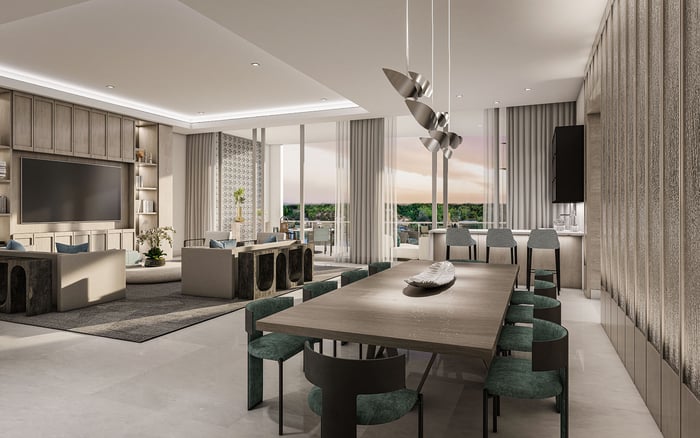
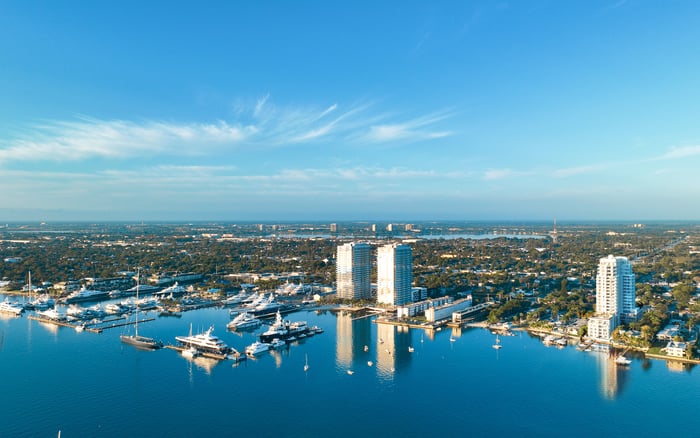
A discreet buyer’s guide to the turnover questions that matter before closing on luxury real estate in Palm Beach Gardens, from punch lists and warranties to association control, staffing, manuals, access, and post-closing service expectations.

In luxury real estate, turnover is more than a handoff of keys. It is the moment architectural promise becomes daily life: doors should align, systems should respond, amenity spaces should operate as described, and the building team should understand how to care for both residents and residences.
For buyers in Palm Beach Gardens, where privacy, service, outdoor living, and a composed resort sensibility often shape the purchase decision, turnover procedures deserve the same scrutiny as floor plans and finishes. The question is not simply whether a residence is beautiful. The sharper question is whether the residence, building, association, staff, warranties, and service protocols are ready for the way you intend to live.
This is especially relevant for buyers considering New-construction properties, branded residences, and Move-In Ready offerings. A completed kitchen, a sparkling pool, or a staged great room can suggest finality, but luxury ownership depends on what happens after closing. At The Ritz-Carlton Residences® Palm Beach Gardens, as with any premium residential purchase, the most discerning review is not only of finishes and views, but of procedures, documentation, and accountability.
Begin with a deceptively simple question: what, precisely, is included in turnover? The answer should be specific. A residence-level turnover may include keys, fobs, access credentials, appliance manuals, warranty information, smart-home instructions, parking assignments, storage details, and a review of installed systems. A building-level or association-level turnover may involve governance documents, operating budgets, maintenance contracts, reserve planning, amenity rules, staffing structures, insurance information, and control of common areas.
A buyer should understand whether turnover happens in one clean step or in stages. Private residences, amenities, landscaping, marina-related elements, or ancillary spaces may be completed on different timelines. If a pool deck, wellness room, club space, dock area, lobby, garage, or service corridor is not fully operational at closing, ask how that condition is documented and who is responsible for completion.
The language matters. “Substantially complete,” “available for use,” “operational,” and “finished” do not always mean the same thing in practice. Your objective is to move from atmosphere to accountability.
Every refined residence deserves a rigorous punch list. Before closing, ask who conducts the walk-through, who attends it, how items are recorded, how photographs are logged, and whether the buyer receives a written copy of open items. The strongest procedure is organized, dated, and traceable.
Ask whether the punch list distinguishes cosmetic items from operational items. A minor paint touch-up is different from an HVAC concern, a water intrusion issue, an appliance malfunction, or a smart-home integration problem. The response timeline should reflect that distinction.
Buyers should also clarify whether there is a post-closing inspection period and how new issues are submitted. Luxury residences often contain layered systems: lighting controls, motorized shades, climate zones, audio, security, irrigation, pool equipment, outdoor kitchens, elevators, wine storage, and specialty appliances. A single walk-through may not reveal how each system performs over several weeks of normal use.
If the seller or developer offers a warranty protocol, ask for the workflow in writing: the contact point, submission method, expected response standards, emergency procedures, vendor access requirements, and escalation path. In a premium property, service clarity is part of value.
For condominium and planned community buyers, association turnover can be as important as residence turnover. Ask who controls the association today, when control may transition, and what documents will be provided to owners. Governance affects budgets, staffing, maintenance priorities, architectural approvals, amenity rules, capital planning, and the tone of daily life.
A sophisticated buyer should ask to review the current operating budget, anticipated assessments, reserve approach, maintenance contracts, insurance arrangements, and rules that govern rentals, pets, guests, service providers, renovations, deliveries, and private events. These details are not glamorous, but they shape the ownership experience.
This belongs in any serious Buyer's Guides conversation because luxury is operational. A beautifully designed residence can feel diminished if the front desk is understaffed, the valet protocol is unclear, the pool rules are unsettled, or owners do not understand how service requests are handled.
For comparison across the broader Palm Beach corridor, buyers may evaluate the procedural sophistication of nearby offerings such as Forté on Flagler West Palm Beach and Alba West Palm Beach. The point is not to compare aesthetics alone. It is to compare how each residential environment defines readiness, service, and owner communication.
Amenities often anchor the luxury narrative, but buyers should press into practical details. Which amenities are open at first occupancy? Which require reservations? Who manages them? Are there hours of operation, guest policies, event limitations, staffing plans, or private service options? If an amenity is not complete at closing, what is the procedure for updates?
Waterfront settings require particular attention. In Palm Beach Gardens and the surrounding Palm Beach market, outdoor living, water views, boating access, terraces, gardens, and resort-style pools can be part of the appeal. Ask how exterior spaces are maintained, who handles storm preparation, how furniture and equipment are secured, and how access is managed during maintenance or repairs. The word Waterfront should prompt a higher level of diligence, not a more casual one.
A buyer should also ask how common-area defects are handled. If a lobby feature, elevator, parking area, façade element, landscaping zone, dock component, or club room requires correction, will updates be communicated to owners? Is there a schedule? Is there a designated representative? Procedures protect serenity.
The most elegant turnover package is not necessarily the thickest. It is the one that is useful. Before closing, ask whether you will receive appliance manuals, finish schedules, paint colors, stone care instructions, flooring specifications, lighting details, smart-home guides, vendor contacts, warranty documents, emergency protocols, association rules, move-in instructions, and insurance requirements.
For a large residence, ask whether there will be a systems orientation. A private tour with the property manager, concierge team, building engineer, or relevant vendor can save weeks of friction. How do you shut off water in an emergency? Who resets access credentials? What is the procedure for elevator reservations? How are deliveries handled? Where are service providers allowed to park? How are terrace furnishings protected in severe weather?
Comparable diligence applies across South Florida’s luxury markets. At Alina Residences Boca Raton or The Residences at Mandarin Oriental Boca Raton, a buyer may be drawn to design, location, and service culture, but the ownership experience is ultimately clarified through documentation and procedure.
In Palm Beach Gardens, many luxury buyers prize discretion as much as square footage. Turnover should address who has access to the residence and common areas, how credentials are issued, how former access is deactivated, and how vendors are approved. Ask whether fobs, garage transmitters, keys, smart locks, alarm codes, app permissions, gate access, and elevator credentials are transferred or reset.
For buyers planning immediate improvements, ask about renovation rules before closing. Are there contractor insurance requirements, work-hour limits, elevator padding rules, sound restrictions, architectural review procedures, security deposits, or blackout dates? A buyer intending to install custom millwork, lighting, art systems, wine storage, or specialty wall finishes should understand the approval path early.
If the residence will be a second home, ask who can inspect it while you are away. Does the building offer absence checks, package handling, plant watering, vehicle access, housekeeping coordination, or emergency entry protocols? If not, you may need a private property manager. Either way, the turnover conversation should define responsibility before keys change hands.
Turnover questions can influence price, timing, credits, holdbacks, closing conditions, and post-closing obligations. The right approach depends on the property, the contract, and the parties involved, but buyers should avoid treating open items as informal assurances. If an item matters, it should be documented.
Ask whether any incomplete work will be finished before closing, after closing, or by a specified service team. Ask whether access will be required after closing and how appointments will be scheduled. Ask who pays for repairs, replacements, reinspection, temporary accommodations if needed, and any incidental costs.
For high-value residences, the calmest closings are rarely the least detailed. They are the ones where expectations have been converted into written procedures. In the Palm Beach luxury context, polish is not merely visual. It is administrative, operational, and personal.
What is a turnover procedure in luxury real estate? It is the process for transferring the residence, access, documents, systems, warranties, and relevant building or association information to the buyer.
Should I ask about turnover before making an offer? Yes. Early questions can reveal whether delivery, amenities, association operations, and post-closing service are aligned with the price point.
What should be on a residence punch list? It should capture cosmetic, mechanical, system, appliance, access, and finish issues, ideally with dates, photos, responsible parties, and target timing.
Is Move-In Ready the same as fully complete? Not always. Move-In Ready may describe immediate occupancy, while certain punch list items, amenities, or documentation may still need confirmation.
Why does association turnover matter? Association turnover affects governance, budgets, rules, reserves, staffing, maintenance, insurance, and owner communication.
What documents should I request before closing? Ask for association documents, rules, budgets, warranty procedures, manuals, access instructions, maintenance guidance, and emergency contacts.
How should I evaluate unfinished amenities? Ask what is open, what remains incomplete, who is responsible, how updates are communicated, and whether any timing is documented.
Are waterfront properties different at turnover? They can require extra attention to exterior maintenance, storm procedures, access control, terrace care, dock-related rules, and insurance requirements.
Can turnover issues affect negotiation? Yes. Open items may influence timing, credits, repair obligations, holdbacks, or closing conditions when properly documented.
Who should review turnover procedures with me? A qualified real estate advisor, attorney, inspector, and property specialist can help review the practical and contractual implications.
For a discreet conversation and a curated building-by-building shortlist, connect with MILLION.
If branded residences are on your mind — as a home or as an allocation — we would be glad to share what we are seeing, privately.
Begin a quiet conversation