EB-5 is often discussed in the same breath as luxury condos in Miami, but the immigration benefit depends on compliant investment structure and job creation, not the deed. Here is a discreet, buyer-oriented guide to how the program works, why it is marketed through regional centers, and how to evaluate risk while still choosing a residence that fits Miami’s top lifestyle corridors.
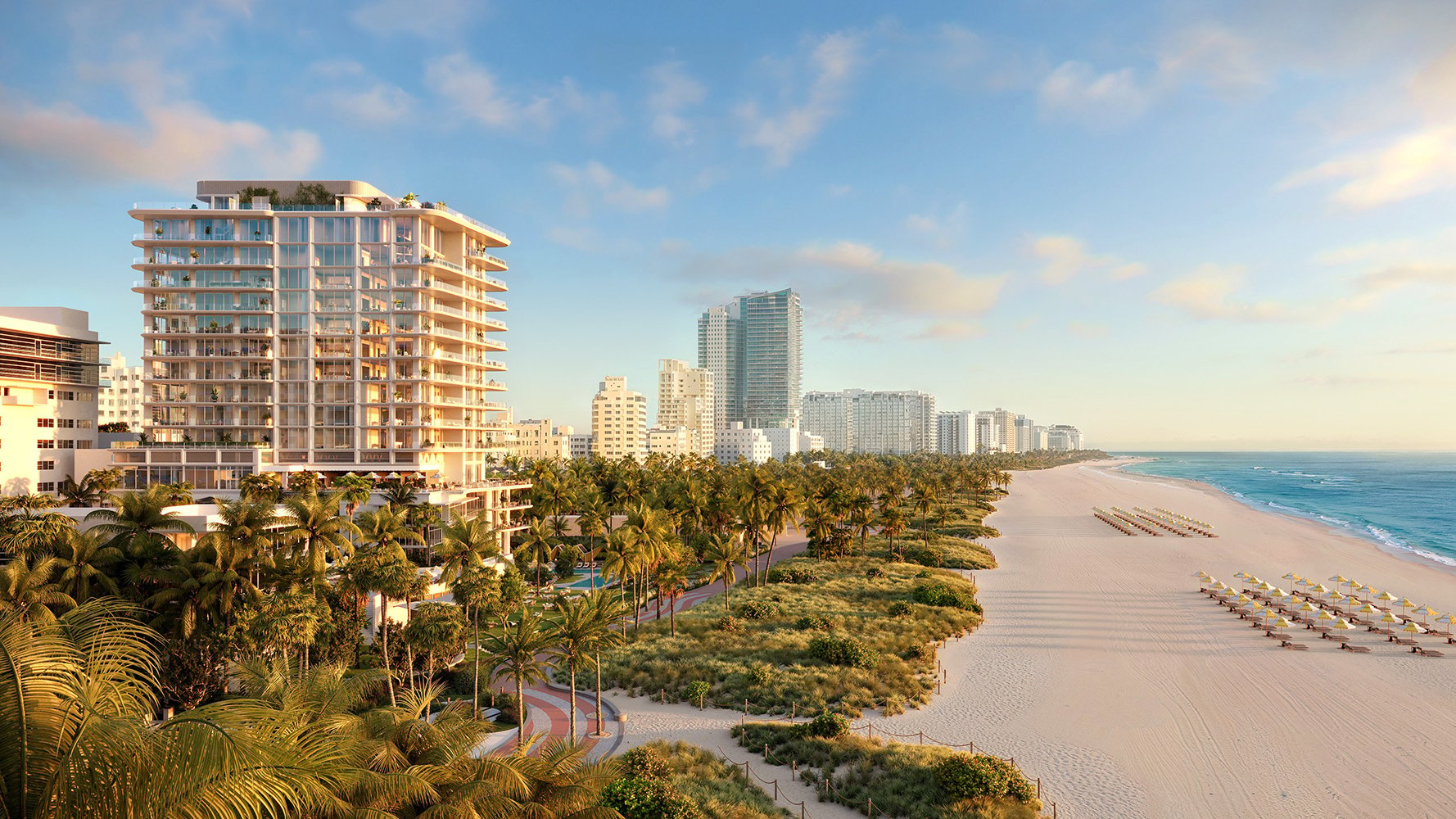
In South Florida, international capital has always arrived with mixed motivations. Buyers are balancing tax planning, family education, business expansion, and the straightforward pleasure of living near the water. Within that reality, the EB-5 Immigrant Investor Program routinely appears in the same conversations as Brickell sales galleries, Miami Beach penthouses, and branded residential launches.
EB-5 can be a legitimate path to U.S. permanent residence for qualifying investors and their families. It can also be misread, oversimplified, or treated as a lifestyle add-on in real estate marketing. The distinction matters. EB-5 is an immigration process defined by rules, evidence standards, and timelines. A condo purchase, even at the top of the market, remains a real estate transaction with its own contracts, disclosures, and financing logic.
This MILLION Luxury brief is for global buyers who want South Florida’s lifestyle upside, but who insist on precision the moment immigration planning enters the room.
Congress created EB-5 in 1990 to stimulate the U.S. economy through foreign capital investment tied to job creation. The program is not designed to reward ownership of an American asset. It is designed to channel capital into a qualifying investment that supports U.S. employment.
Today, EB-5 is commonly summarized by its investment and job-creation thresholds. In general terms, an investor must invest $1,050,000, or $800,000 if the investment is in a Targeted Employment Area (TEA), and the investment must support the creation of at least 10 full-time U.S. jobs. The investor (and qualifying family members) typically receives conditional permanent residence first, then later seeks removal of conditions by demonstrating that the investment and job-creation requirements were met.
Two practical implications follow from that structure.
First, EB-5 is documentation-heavy by design. Source of funds and path of funds analysis, the investment terms, and the job-creation approach must all align. Precision is not optional; it is the foundation of eligibility.
Second, the “project” is not simply the building you can see from a balcony. The relevant subject is the underlying enterprise, its capital structure, and the economic activity that can be credited toward job creation. In other words, the address may be compelling, but the immigration outcome depends on the compliant investment framework beneath it.
In luxury circles, a persistent misconception still circulates: buy a home, get a visa. That is not how U.S. immigration works. Purchasing U.S. real estate alone does not automatically grant a U.S. visa or a green card.
EB-5 is one potential pathway, but only when structured properly as a qualifying investment supported by compliant documentation and job creation. The deed itself is not the benefit.
For sophisticated buyers, the clean mental model is simple: you may choose to buy a residence for lifestyle, diversification, or family use, and separately choose to pursue EB-5 through a compliant investment. Those decisions are sometimes marketed as a single narrative, but legally and financially they are best understood as distinct. When you separate them, you can evaluate each on its own merits, rather than forcing a housing decision to carry immigration expectations it cannot deliver.
Many EB-5 investors do not want to operate a U.S. business day to day. That is where the Regional Center model often becomes relevant. In broad terms, a regional center is a designated entity through which investors can participate in larger projects. This structure is widely used in real estate and mixed-use development because it can pool multiple investors within a single capital stack and apply accepted job-creation methodologies.
However, the Regional Center pathway is also where execution quality and compliance discipline can vary. Industry commentary often points investors toward a regional center’s track record, the credibility of its job-creation approach, and its compliance history. For the buyer, the principle is straightforward: the polish of a showroom and the beauty of a rendering should never substitute for a careful review of the offering structure.
This is also where the 2022 EB-5 Reform and Integrity Act (RIA) reshaped the conversation. The RIA introduced integrity and compliance measures and structured reserved visa set-asides, including for rural and high-unemployment projects. In practice, those features can influence how offerings are positioned, how timelines are described, and why TEA qualification is emphasized in marketing. The message for buyers is not to assume the law makes outcomes automatic. It is to recognize that the legal environment affects how projects are presented, and to require clarity where the presentation becomes too smooth.
Miami has a mature ecosystem around international buyers. EB-5 is frequently marketed alongside luxury condos, hospitality-adjacent concepts, and mixed-use development, particularly in corridors where global demand is strongest. Local real estate coverage tracks EB-5-tagged opportunities, which reflects how often immigration-linked investment appears in the city’s development narrative.
Several high-profile projects have been publicly associated with EB-5 positioning in recent coverage. ORA by Casa Tua, a planned branded luxury residential tower in Brickell, has been reported as launching an EB-5 investment program. That example illustrates how developers may blend hospitality language and brand prestige with immigration-adjacent capital raising. In Downtown, Paramount Miami Worldcenter is frequently cited as a luxury condo tower marketed to international buyers as part of the broader Miami Worldcenter district. Elsewhere, the Four Seasons Surf Club in Surfside has been presented as an EB-5 project through a dedicated EB-5 site. Downtown’s Okan Tower has also been reported as opening to EB-5 investors, underscoring a recurring pattern: hospitality-leaning, condo-hotel adjacent narratives can be easier to market globally, even when the investor’s legal outcome hinges on documentation and job creation rather than the view.
For the buyer, the takeaway is not that these projects are “good” or “bad.” It is that Miami is highly skilled at packaging. You should be equally skilled at separating three things:
Once those three categories are disentangled, diligence becomes calmer and more effective. You can like the building, dislike the investment structure, or vice versa, without confusing preference with eligibility.
Even when EB-5 is part of a family’s planning, the residence decision in South Florida remains deeply personal. Privacy, service, proximity to the water, and the comfort of a building that feels established all matter, especially for buyers who expect their home to perform as a sanctuary, not a statement.
In Miami Beach, many top-tier purchasers are choosing between “quietly clubby” and “socially kinetic.” A members-club-inflected approach, for example, can be expressed through Casa Cipriani Miami Beach, where the branding signals discretion and hospitality-forward living. Nearby, Shore Club Private Collections Miami Beach speaks to a different Miami Beach narrative, one rooted in legacy and resort positioning.
For buyers who treat service as infrastructure, branded residences can offer a familiar operating cadence, even if the owner is only in town seasonally. Setai Residences Miami Beach sits within that conversation, often attracting purchasers who want a clean, established luxury language that translates well across continents.
If your priority is a more residential interpretation of the brand experience, The Ritz-Carlton Residences® Miami Beach can sit naturally in a portfolio alongside other global holdings.
The essential point is not that one building is “an EB-5 building” and another is not. The point is that your home choice should be anchored in livability, services, and resale logic, while your EB-5 choice should be anchored in compliance, documentation rigor, and job-creation credibility. The strongest strategies keep those decision criteria separate, even when marketing tries to merge them.
Brickell and Downtown have become two of Miami’s most legible environments for global buyers. The appeal is practical: walkable convenience, high-rise views, and a business-forward atmosphere that can feel familiar to buyers arriving from New York, London, Dubai, or São Paulo.
This is also where investment narratives most often intersect with immigration strategy. When a project like ORA by Casa Tua Brickell is publicly discussed in connection with EB-5, it highlights how developers may position participation as part of a larger “Miami plan” for the buyer: a base, a social orbit, a school strategy, and a path to longer-term presence.
Downtown’s development story, including high-profile towers within branded districts, reinforces why international buyers gravitate to the area. At the same time, the density and ambition that make Downtown exciting can make diligence more complex. For EB-5, complexity is not automatically a problem. It simply means you should insist on crisp explanations of the offering, the regional center’s role, and the job-creation methodology. Sophisticated buyers do not fear complexity; they demand transparency.
EB-5 is not a consumer product. It is a regulated pathway with defined thresholds and evidence standards. The most useful diligence is rarely dramatic. It is methodical, well-documented, and grounded in clear roles for qualified immigration counsel and financial advisors.
Consider this framework as a starting point:
Confirm the threshold and category. EB-5 commonly centers on $1,050,000 or $800,000 in a TEA, plus 10 full-time jobs. Ask how TEA qualification is determined and documented, and ensure you understand what is being represented and what is being proven.
Understand what you are investing in. In many regional center offerings, you are not buying a condo unit as your EB-5 investment. You are investing into a project structure. Make sure you can explain, in one sentence, what the enterprise is and how it creates jobs. If you cannot, you are not ready to evaluate risk.
Interrogate the job-creation plan. EB-5 success ultimately requires credible job creation. Ask for the high-level methodology and how it will be evidenced at the stage when conditions are removed. A confident answer should be clear, consistent, and appropriately documented.
Separate marketing from terms. Miami is a masterclass in lifestyle storytelling. That is a feature, not a flaw, as long as you can locate the terms that matter: your rights, the timeline, the fees, and the risk factors.
Track the macro context without chasing rumors. EB-5 demand is meaningfully country-concentrated and shifts over time, and industry data dashboards exist to monitor issuance and usage trends. Use data as context, not as a promise of your personal timeline.
Decide what “success” means beyond immigration. For many buyers, the best outcome is not merely residency, but optionality: the ability to live in South Florida, diversify holdings, and maintain a residence that still feels like a good decision even if timelines change.
This framework does not replace legal advice. It does, however, help buyers ask the right questions early, before enthusiasm hardens into assumptions.
EB-5 does not exist in isolation. Globally, residence-by-investment programs are marketed as mobility tools, and “golden visa” narratives compete for the same buyer psychology: security, flexibility, and family planning.
What makes the U.S. different is the nature of the promise and the nature of the proof. The offering is not EU mobility or a second passport storyline. It is access to U.S. permanent residence under a framework that demands job creation and disciplined documentation. For many ultra-high-net-worth families, that tradeoff is acceptable, even attractive, provided the investment is structured conservatively and the residence choice is made for the right reasons.
South Florida benefits from that logic because it is both international and livable. The region can function as a primary base, a seasonal home, or a strategic foothold. If your plan involves school timing, business expansion, or multi-generational residence, the goal is alignment: an immigration pathway that is evaluated on compliance, paired with a real estate decision that stands on its own as a sound lifestyle and asset choice.
Is EB-5 simply a real estate purchase in Miami? No. EB-5 is an immigration program tied to qualifying investment and job creation. A property purchase alone does not grant immigration status.
What are the basic EB-5 thresholds buyers should know? EB-5 is commonly discussed as a $1,050,000 investment, or $800,000 in a TEA, supporting at least 10 full-time U.S. jobs.
Why do so many offerings use a regional center? Regional centers allow investors to participate in larger projects without operating a business day-to-day, but investors should still evaluate compliance, job-creation methodology, and track record.
Does the 2022 RIA change how projects are positioned? Yes. The RIA introduced integrity and compliance measures and reserved visa set-asides, which can influence how TEA qualification and timelines are discussed.
Can I buy a Miami Beach residence while pursuing EB-5 through a separate investment? Often, yes. Many buyers separate the lifestyle purchase from the EB-5 investment, choosing their home for livability and the EB-5 offering for compliance and job creation.
For a discreet, buyer-first view of South Florida’s premier buildings and neighborhoods, visit MILLION Luxury.
If branded residences are on your mind — as a home or as an allocation — we would be glad to share what we are seeing, privately.
Begin a quiet conversation