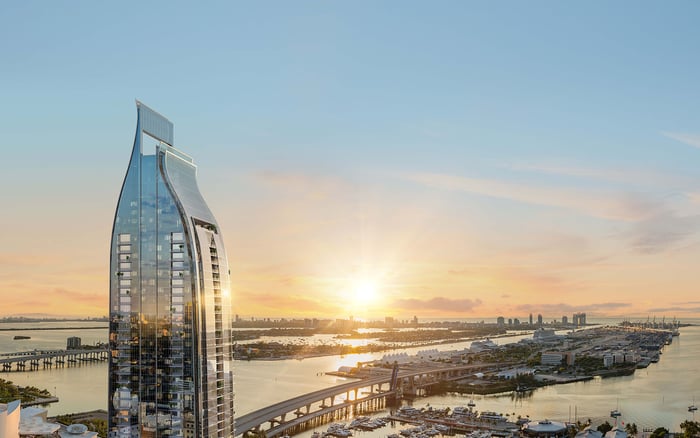
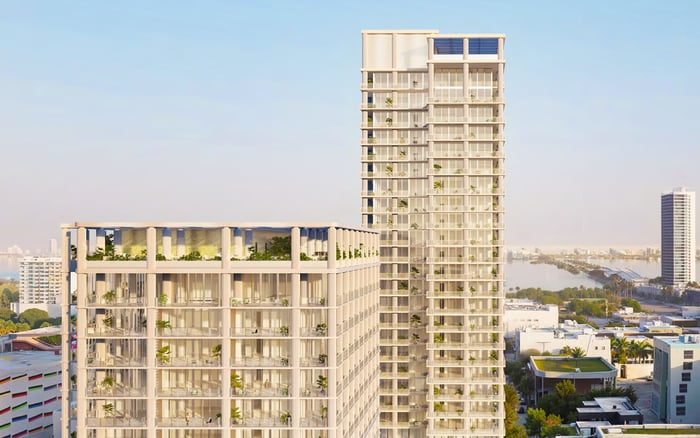
A discreet buyer-focused comparison of Delano Residences & Hotel Miami and House of Wellness Brickell, centered on school-day logistics, staff movement, and family privacy rather than amenity spectacle.
At the top of South Florida’s residential market, serious buyers rarely compare buildings by surface glamour alone. The more revealing question is how a residence performs at 7:15 a.m., when children are leaving for school, staff are arriving, a driver is waiting, and the household needs order rather than theater. That is the lens through which Delano Residences & Hotel Miami and House of Wellness Brickell become especially interesting.
Both names sit comfortably in the prestige conversation. Yet for families, prestige is not the same as convenience. It has to be translated into arrival sequences, elevator patterns, guest control, household staffing, school-day departures, and the ability to live privately inside a highly serviced urban setting. The buyer who understands that distinction is already thinking beyond the market brochure.
This is not a comparison of which name is louder. It is a comparison of which residential answer may better support a particular kind of life.
School-day convenience is often reduced to drive time. In practice, it is choreography. Where does the car wait? How calm is the movement from residence to lobby? Can a nanny, tutor, or driver move through the building without disrupting the household’s sense of privacy? Is the morning route intuitive enough that it does not become a recurring source of friction?
Brickell has obvious appeal for households that want an urban center of gravity. For parents balancing office life, dining, services, and private-school routines, proximity to the city’s daily rhythm can be useful. The phrase private-school matters here not as a ranking claim, but as a planning category. Families choosing high-end vertical living should map the actual morning and afternoon pattern, including parking, loading, lobby wait time, and the return home after activities.
House of Wellness Brickell speaks to buyers who want that Brickell orientation while placing personal routine near the center of the residential decision. In the same neighborhood conversation, 2200 Brickell offers another example of how families evaluate Brickell living through day-to-day practicality rather than skyline identity alone. The area can work beautifully for households that want density, access, and a more urban pace, provided the building’s internal logistics meet the family’s standards.
Delano Residences & Hotel Miami, by contrast, belongs to a Downtown frame of reference. For a Downtown buyer, the attraction may be less about retreating from the city and more about living within its cultural and hospitality energy. The school-day question remains the same, but the answer may feel different: the building must support smooth family departures while preserving the aura expected from a hospitality-adjacent residence.
In ultra-prime real estate, staff circulation is one of the clearest divides between an impressive residence and a truly livable one. A family residence may involve housekeepers, estate managers, chefs, drivers, trainers, tutors, assistants, pet care, and visiting wellness professionals. The question is not whether a building can receive them. The question is whether it can receive them discreetly.
The most sophisticated buyers ask how service movement is separated from family movement. They study whether deliveries feel controlled, whether recurring staff have clear access patterns, whether children are likely to cross paths with service traffic at sensitive moments, and whether visitors can be handled without turning the home into a reception desk.
A condo-hotel environment can be attractive because it suggests a hospitality mind-set, with services and operational rhythm embedded into the lifestyle. That same energy, however, should be evaluated carefully by family buyers who prioritize residential quiet. A name with hotel identity may feel elegant, efficient, and socially alive. It may also require extra attention to how residential and nonresidential flows are managed.
Wellness-led living raises a different circulation question. If the residence is shaped around well-being, the household may host trainers, therapists, nutrition support, or other routine providers. In that case, the best floor plan is not merely beautiful. It is legible. Private areas remain private. Service areas function without spectacle. Guests know where to go. Children are not constantly exposed to the operational life of the household.
Family privacy in South Florida’s luxury market is often mistaken for a question of residence size. Size matters, but privacy is more complex. It includes acoustic separation, entry sequence, bedroom positioning, staff access, guest routing, and the ability for each family member to maintain a private rhythm within a shared home.
For families comparing Delano Residences & Hotel Miami with House of Wellness Brickell, the privacy question should be asked in layers. First, does the building feel residential at the moments that matter most? Second, does the home allow parents to entertain or work without exposing children’s routines? Third, can staff support the household without constantly crossing through family zones? Fourth, does the arrival experience protect identity and calm, rather than turning every entrance into a social scene?
This is where new-construction buyers should be especially disciplined. Newness can be seductive, but the deeper luxury is operational intelligence. The prettiest amenity deck cannot compensate for a poorly considered service path. The best view cannot solve a lobby that feels too public for a family’s temperament.
Brickell families often compare multiple expressions of vertical prestige. Una Residences Brickell, for example, belongs in the broader Brickell conversation for buyers studying how waterfront identity, urban access, and family privacy can coexist. Nearby, The Residences at 1428 Brickell reinforces the point that the neighborhood’s upper tier is not one single lifestyle. It is a set of different answers to privacy, access, and household rhythm.
The Delano name carries a hospitality association that can appeal to buyers who enjoy service culture, arrival presence, and a more social residential atmosphere. For some families, that is precisely the point. They want a polished home that feels connected to the energy of Miami, with a sense of occasion built into daily life.
House of Wellness Brickell appears to answer a different psychological need. Its name places well-being at the center of the conversation. For families, that may resonate when the home is expected to function as a private base for health, routine, and recovery from a demanding schedule. The building decision becomes less about public performance and more about whether the family can maintain order inside a high-intensity urban setting.
Neither approach is inherently superior. The better choice depends on household personality. A socially active couple with older children may welcome the atmosphere of a hospitality-associated address. A family with younger children, strict school routines, and frequent household staff may value the clarity and predictability of a wellness-oriented residential environment. The nuance is everything.
This is also why some buyers widen the comparison beyond the two named projects. A household considering Brickell may also study wellness-adjacent alternatives in other neighborhoods, including The Well Coconut Grove, if a softer village rhythm is part of the family brief. The point is not to dilute the search. It is to understand what kind of privacy the family actually needs.
The best tour is not a passive walk-through. It is a rehearsal. Arrive at a realistic school-day hour if possible. Ask how children move from residence to car. Ask where staff enter, wait, park, and circulate. Ask how recurring visitors are registered. Ask how packages, food deliveries, pet care, and household services are handled. Ask what happens when parents are entertaining and children are returning from school.
The buyer should also separate emotional impact from operational fit. A dramatic entrance may impress at first glance, but the more important test is whether it remains comfortable after the tenth morning rush. A serene wellness narrative may be compelling, but it should be supported by circulation that genuinely protects the household’s private zones.
For a South Florida family, the most luxurious residence is often the one that reduces invisible friction. It makes mornings easier, staff movement quieter, privacy more natural, and family life less exposed. Delano Residences & Hotel Miami and House of Wellness Brickell may share prestige, but they should not be evaluated as interchangeable trophies. They are different answers to the same refined question: how should a high-profile family actually live?
Are Delano Residences & Hotel Miami and House of Wellness Brickell direct substitutes? Not necessarily. They may appeal to similar prestige buyers, but their household fit should be judged through lifestyle, privacy, and circulation needs.
Why does school-day convenience matter in luxury condo selection? Because daily departures reveal the strengths and weaknesses of arrival areas, elevators, parking, staff support, and family privacy.
Is Brickell practical for families with school routines? It can be, especially for buyers who want an urban base, but the building’s internal logistics should be tested carefully.
What should families ask about staff circulation? They should ask how household staff, deliveries, drivers, tutors, and wellness providers move through the property without disrupting private family areas.
Does a hospitality-associated residence always mean less privacy? No. It means buyers should study how residential access, guest flow, and service functions are separated and managed.
What makes wellness-oriented living relevant to families? It can support routines around health, recovery, and daily balance, but the real test is how calmly the home functions.
Should families prioritize amenities or floor plan privacy? Floor plan privacy should usually come first. Amenities enhance life, but they cannot fix poor household circulation.
How should a buyer compare Downtown with Brickell? The comparison should focus on daily rhythm, commute patterns, household staffing, privacy expectations, and the family’s preferred urban energy.
Can a high-profile family live discreetly in a central Miami tower? Yes, if access, staff movement, parking, elevator use, and guest control are aligned with the household’s privacy standards.
What is the best next step before choosing between them? Conduct a practical tour focused on morning routines, staff paths, family privacy, and how the residence feels during real daily use.
When you're ready to tour or underwrite the options, connect with MILLION.
If branded residences are on your mind — as a home or as an allocation — we would be glad to share what we are seeing, privately.
Begin a quiet conversation