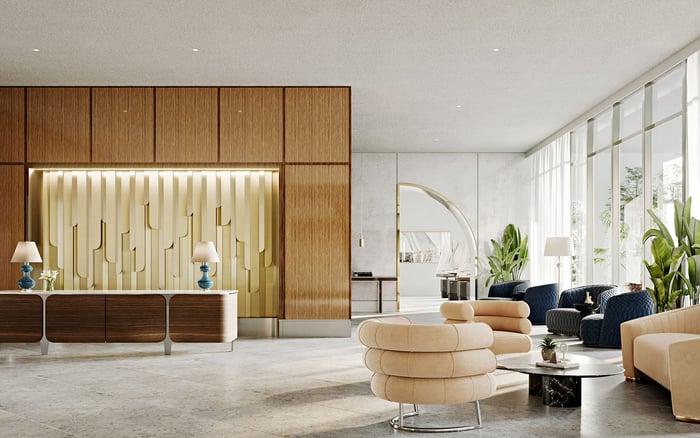
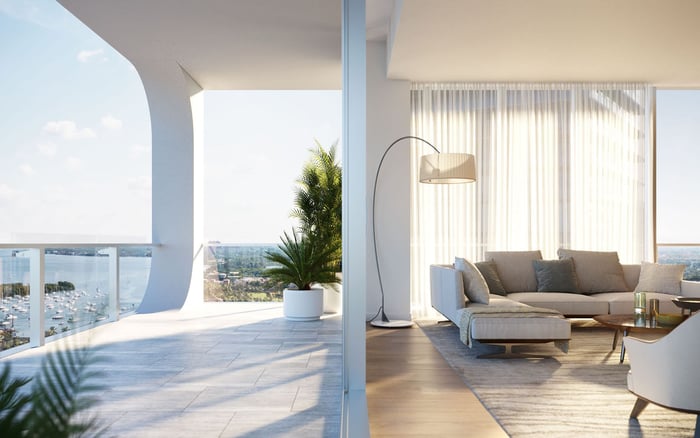
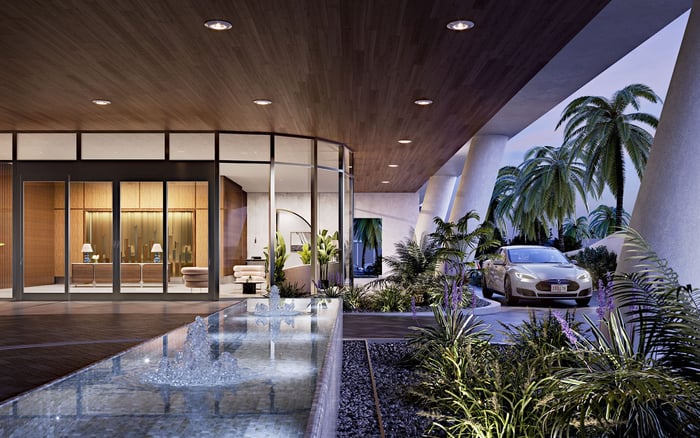
A discreet look at why Grove Isle resonates with South Florida buyers who want privacy, design sensitivity, and measured access to Miami’s cultural corridors.
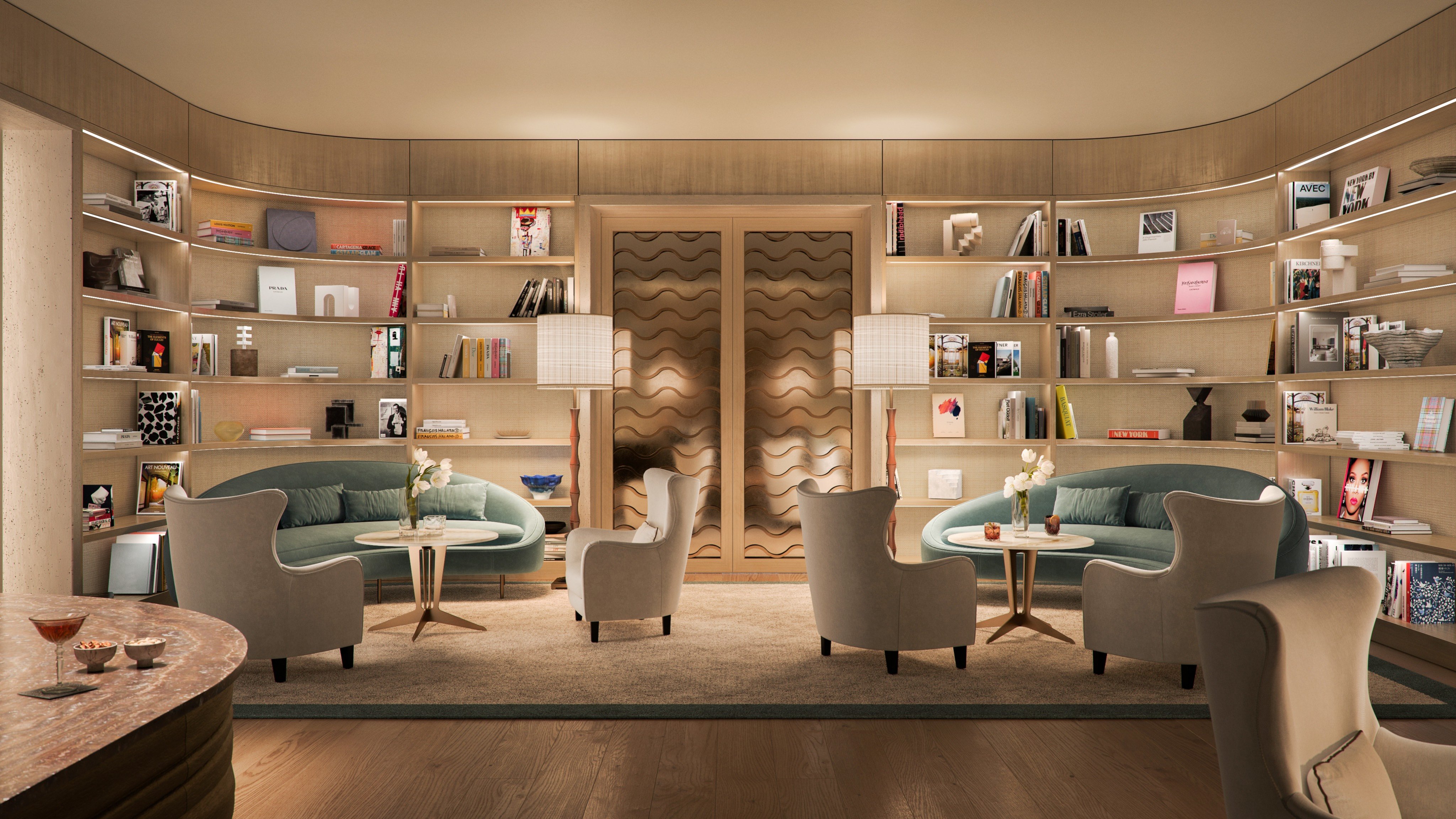
For a certain South Florida buyer, the most persuasive luxury is not the loudest address. It is the one that lets life recede from view when the day is done. That is the quiet luxury case for Grove Isle: a residential posture defined by privacy, visual calm, and proximity without constant exposure to the city’s social theater.
This matters especially for collectors, design patrons, seasonal residents, and executives whose Miami lives move among galleries, showrooms, private dinners, waterfront clubs, and cultural weeks. The goal is not to live inside the spectacle. The goal is to access it on one’s own terms, then return to a setting that feels composed.
In that sense, Grove Isle belongs in the same conversation as Coconut Grove’s broader design-led residential wave, but with a more secluded sensibility. A buyer considering Vita at Grove Isle is not simply shopping for a residence. The buyer is weighing a lifestyle premise: calm at home, cultural reach by intention, and a daily rhythm that avoids the performative intensity of more visible corridors.
South Florida has no shortage of high-profile luxury addresses. Some buyers want a skyline arrival, a beachfront landmark, or a lobby that announces itself with fashion-house confidence. Grove Isle appeals to a different instinct. Its value proposition is quieter and more deliberate, built around the feeling of separation while remaining connected to the places that matter.
That distinction becomes important when Art and Design District proximity is part of the decision. Buyers who frequent Miami’s creative circuits often do not want their home to feel like an extension of the event calendar. They want a private base that supports dinners, collecting, studio visits, and philanthropy without turning daily life into a public-facing performance.
Coconut Grove gives that preference a credible neighborhood context. It is leafy, residential, established in tone, and generally less hard-edged than Miami’s most vertical business districts. However buyers search for it, Coconut Grove captures the intent clearly: a desire for a more intimate Miami, where architecture, landscape, and privacy carry as much weight as immediate nightlife.
The quiet luxury buyer is rarely choosing isolation. The better word is selectivity. Grove Isle works for the person who wants to be near Miami’s cultural and design energy without being engulfed by it. Brickell offers finance, dining, and urban convenience. Wynwood brings creative energy and gallery-adjacent momentum. The Miami Design District adds a concentration of fashion, design, art, and hospitality that shapes how many global buyers experience the city.
The key is not to reduce the decision to a commute. Ultra-prime buyers think in terms of friction. How does the residence feel before an opening? How does it feel after a dinner? Can the home absorb a full calendar without becoming another source of noise? Grove Isle’s appeal is that it can serve as a quiet counterweight to those more public districts.
That is why comparisons with Brickell should be handled carefully. A residence such as 888 Brickell by Dolce & Gabbana speaks to a highly designed, urban, branded lifestyle. Grove Isle speaks to a buyer who may admire that world, visit it often, and still prefer a home environment that is more private in mood.
Grove Isle’s positioning is strengthened by the broader refinement taking place across Coconut Grove. The neighborhood has become a magnet for buyers who want design credibility without surrendering to the tempo of a dense downtown core. That does not mean every Coconut Grove residence serves the same buyer. It means the area now offers multiple expressions of luxury, from boutique intimacy to wellness-driven living to architectural statements.
For example, Four Seasons Residences Coconut Grove brings a hospitality-informed lens to the neighborhood, while Park Grove Coconut Grove reflects the area’s established appetite for refined residential design. A buyer drawn to Grove Isle may study those alternatives not because they are interchangeable, but because each clarifies a different version of Coconut Grove luxury.
There is also a softer wellness dimension to the Grove buyer. Projects such as The Well Coconut Grove speak to the idea that home is increasingly expected to support recovery, privacy, health, and routine. For art-driven buyers, that matters. Cultural lives can be highly social, but the residence must restore balance.
The Grove Isle decision should begin with temperament. If a buyer wants constant visual drama, a highly public lobby, and immediate immersion in the city’s busiest social corridors, other addresses may feel more aligned. If the buyer wants discretion, a softer arrival, and a residential atmosphere that feels removed from the city’s noise, Grove Isle deserves serious attention.
Architecture is central, but it should be assessed through the lens of livability rather than spectacle alone. How does the residence frame light? How private are the main living areas? Does the plan support art, entertaining, and separation between guests and daily family life? Does the experience feel serene in the morning as well as elegant at night?
Service should be evaluated with the same restraint. Quiet luxury does not mean less service. It means service that is intuitive, precise, and unobtrusive. The best version of this lifestyle allows the owner to host, travel, collect, and return without feeling managed by the building’s personality.
New-construction buyers should also consider how the residence will age aesthetically. The most durable luxury in South Florida tends to avoid trend dependence. Materials, proportions, landscape, and privacy matter because they continue to read well after the first wave of attention moves elsewhere.
In ultra-prime markets, rarity often has less to do with flash than with emotional specificity. A home that offers privacy near culture can be difficult to replicate, especially when the surrounding market leans toward either high-density urban living or highly visible waterfront display. Grove Isle’s appeal is that it occupies a quieter lane.
That lane may not attract every buyer, and that is part of the point. The strongest quiet luxury properties are not designed for consensus. They are designed for the buyer who already understands that proximity and privacy are not opposites. For a collector or design patron, being close to Miami’s creative life is valuable. Being able to leave it behind is equally valuable.
During Art Basel season and throughout the city’s broader cultural calendar, this distinction becomes more pronounced. The most sophisticated buyers often want access without saturation. Grove Isle gives that preference a name, a geography, and a residential mood.
Is Grove Isle mainly for buyers seeking privacy? Yes, its appeal is strongest for buyers who prioritize discretion, calm, and a more residential atmosphere.
Why does Design District proximity matter for Grove Isle buyers? It matters because many luxury buyers want access to art, fashion, dining, and design without living inside the busiest cultural corridors.
Is Grove Isle a substitute for Brickell? Not exactly. Brickell is more urban in feel, while Grove Isle is better understood as a quieter residential counterpoint.
How should buyers compare Grove Isle with other Coconut Grove residences? They should compare privacy, architecture, service style, amenity philosophy, and the emotional feel of daily life.
Does Grove Isle suit collectors? It can, particularly for collectors who value serene interiors, controlled entertaining, and proximity to Miami’s art ecosystem.
Is quiet luxury the same as minimalism? No. Quiet luxury is about restraint, quality, and discretion; it can be warm, layered, and highly personal.
Should seasonal buyers consider Grove Isle? Yes, if they want a Miami base that feels composed between cultural events, travel, and private entertaining.
What is the biggest mistake buyers make with this type of property? They focus only on location and overlook the daily rhythm, privacy, and service experience that define long-term satisfaction.
Does new construction matter in this segment? It can matter when buyers want modern planning, current design standards, and a fresh residential experience.
Who is the ideal Grove Isle buyer? The ideal buyer values cultural access, waterfront calm, design quality, and a level of discretion that does not need to announce itself.
If you'd like a private walkthrough and a curated shortlist, connect with MILLION.
If branded residences are on your mind — as a home or as an allocation — we would be glad to share what we are seeing, privately.
Begin a quiet conversation