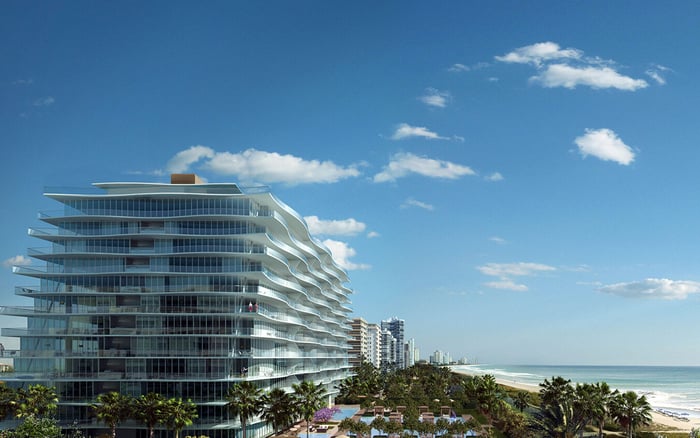
A discreet buyer’s guide for Dallas principals evaluating Sunny Isles Beach as part of a business relocation and broader South Florida residential strategy.

For a Dallas buyer considering Sunny Isles Beach, the first decision is not which residence photographs best. It is whether the move supports the life, business rhythm, family calendar, and capital plan that brought South Florida into the conversation. A relocation tied to business is rarely a single transaction. It is a sequence of decisions: where leadership will spend time, how family members will use the property, how much privacy is required, how quickly the residence must be usable, and whether the purchase should remain flexible over time.
Sunny Isles Beach appeals to buyers who want a coastal residential posture rather than a purely urban one. The brief often centers on vertical privacy, ocean exposure, building services, security-minded arrivals, and a home that can operate as both a daily residence and a polished retreat. Some buyers also use Brickell as a separate point of comparison for days when business requires a more urban frame of reference.
A business relocation requires more than enthusiasm for a new market. Before touring property, define how the residence will be used during a normal month. Will the principal be in South Florida continuously, or will the home serve as a high-frequency landing point? Will family members arrive separately? Does the buyer need staff access, guest separation, private outdoor space, a secondary office area, or a residence that can host discreet dinners without feeling staged?
Those answers shape the building category. Some buyers prefer a completed residence because it removes uncertainty and allows the lifestyle to be tested immediately. Others accept the timing of pre-construction because they want selection, finish control, and a longer planning runway. A third group studies resale inventory to evaluate established building cultures, ownership patterns, and the texture of day-to-day operations.
Sunny Isles Beach should be evaluated at the level of the individual building, not only by the address line. The right residence is the one that aligns arrival, elevator experience, light, exposure, acoustic comfort, service culture, and long-term confidence. A glossy view may start the conversation, but livability completes it.
A Dallas-to-Sunny Isles Beach move often benefits from a two-market map. One layer is personal: beach, privacy, family routines, wellness, and hospitality. The second is professional: meeting patterns, advisory relationships, banking, legal counsel, and access to Miami’s business districts when required. Sunny Isles Beach can play the residential role while other neighborhoods support business-facing needs.
That is why some buyers compare Sunny Isles residences with a Brickell reference point, not because the lifestyles are interchangeable, but because the workweek may touch both. A buyer focused on oceanfront calm may study St. Regis® Residences Sunny Isles or The Ritz-Carlton Residences® Sunny Isles while also keeping a mental benchmark for the urban core through properties such as The Residences at 1428 Brickell.
The point is not to chase every neighborhood. It is to clarify roles. Sunny Isles Beach can be the family-facing residence. Brickell can inform the business-facing comparison. Aventura, Bal Harbour, Surfside, and Miami Beach may enter the conversation depending on schools, clubs, dining patterns, medical preferences, or family geography. The more precise the map, the less likely the buyer is to confuse lifestyle appeal with strategic fit.
Relocation buyers often underestimate timing. If the business move has a defined calendar, a completed or near-term residence may carry strategic value. If the move is exploratory, pre-construction may offer a calmer path, especially when the buyer wants to align design choices with a future chapter rather than solve an immediate housing need.
Timing also affects negotiation posture. A buyer who must occupy quickly should be decisive about non-negotiables and flexible about secondary preferences. A buyer with time can compare stacks, exposures, contract structures, and projected delivery windows with more patience. In either case, the residential search should run parallel to legal, tax, estate, insurance, and corporate planning. The property should not be asked to solve what governance has not yet defined.
For some families, Bentley Residences Sunny Isles may enter the conversation because the buyer wants to evaluate a new-development option in the same coastal corridor. For others, a completed-building comparison such as Muse Residences Sunny Isles Beach can help frame what the existing market feels like in practice. The strongest buyers study both, then decide which timing profile best matches the relocation.
Luxury buyers often know how to buy property. Relocation buyers need to know how to buy context. That means asking disciplined questions before emotional attachment forms. How does the residence function at different times of day? How private is the arrival sequence? How does the building handle service, deliveries, guests, maintenance, and seasonal occupancy? What restrictions, governance rules, and insurance considerations will affect use?
The same rigor applies to financing and title structure. Some buyers purchase personally. Others coordinate ownership with estate planning or broader family-office structures. The correct answer depends on counsel, risk tolerance, long-term use, and reporting requirements. The real estate advisor’s role is not to replace those professionals. It is to keep the property search aligned with the decisions those professionals are helping define.
A useful discipline is to create three columns before touring: must have, should have, and emotionally appealing. Ocean views may be both emotionally appealing and essential, but not every buyer ranks them above privacy, elevator configuration, bedroom separation, or ease of arrival. The exercise keeps the search elegant, efficient, and less reactive.
The best relocation purchase should still make sense after the first year. A principal may discover that South Florida becomes the family’s primary base, or that it serves best as a seasonal headquarters. Children’s schedules may evolve. Business commitments may expand or contract. Guests may visit more often than expected. The home should be resilient enough to absorb those changes without feeling like a compromise.
This is where Sunny Isles Beach can be compelling for buyers who want a clear residential identity. The area’s luxury inventory is defined by high-rise coastal living, so the comparison set is relatively direct: view, building caliber, privacy, services, floor plan, timing, and confidence. The discipline is to avoid buying solely for arrival impact. The more important question is whether the residence will still feel correct on a quiet Monday morning, during a family holiday, and after the business move has settled into its true rhythm.
Should a Dallas buyer rent before buying in Sunny Isles Beach? Renting can be useful if the relocation timeline is uncertain. Buyers with a clear long-term plan may prefer to purchase once the residential brief is well defined.
Is Sunny Isles Beach better for primary living or a second home? It can serve either role depending on family needs, business patterns, and desired privacy. The key is matching the building to the intended use.
Should business relocation planning happen before the property search? It should happen alongside the search. Legal, tax, insurance, and estate considerations can influence ownership structure and timing.
How should buyers compare new developments with resale residences? New developments may offer future optionality and selection, while resale can show current building operations. Both should be tested against the same lifestyle criteria.
What is the biggest mistake relocation buyers make? The most common mistake is choosing the most visually impressive residence before defining how the home must function every week.
Does Brickell need to be part of the search? Not always. Brickell is useful as a business-facing reference point when the buyer’s professional life requires frequent time in Miami’s urban core.
How important are building rules and governance? Very important. Rules can affect guests, leasing, renovations, pets, staff access, and the overall ease of ownership.
Should buyers prioritize ocean views above all else? Ocean views matter, but they should be weighed against privacy, floor plan, service quality, arrival experience, and long-term usability.
Can one residence serve both family and business entertaining? Yes, if the layout supports separation, hosting, and privacy. Buyers should test how the residence works for both quiet living and occasional entertaining.
When should a buyer engage a South Florida advisor? Early engagement helps shape the brief before touring begins. It also prevents wasted time across buildings that do not match the relocation strategy.
To compare the best-fit options with clarity, connect with MILLION.
If branded residences are on your mind — as a home or as an allocation — we would be glad to share what we are seeing, privately.
Begin a quiet conversation.jpg&width=700&height=438&fit=cover)