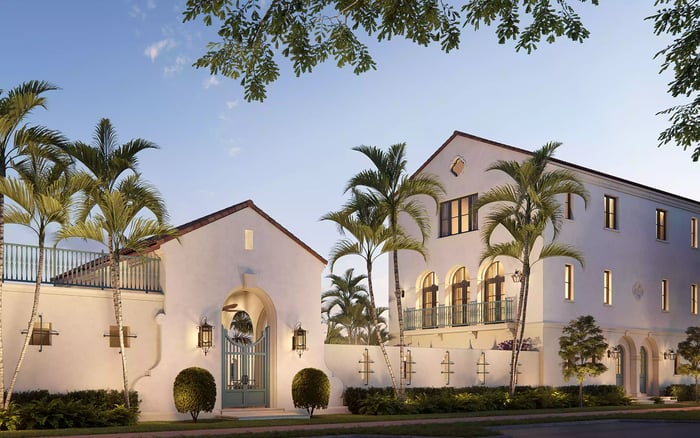
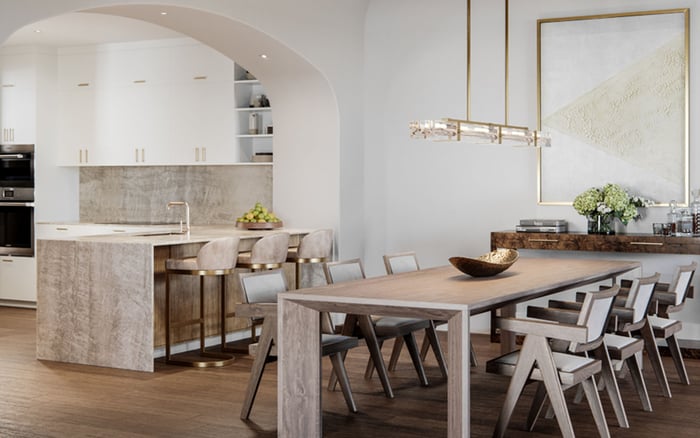
A buyer-oriented, family-first comparison of two Coral Gables condo addresses, focusing on everyday livability, school logistics, and what matters most to households balancing privacy, walkability, and commute realities.
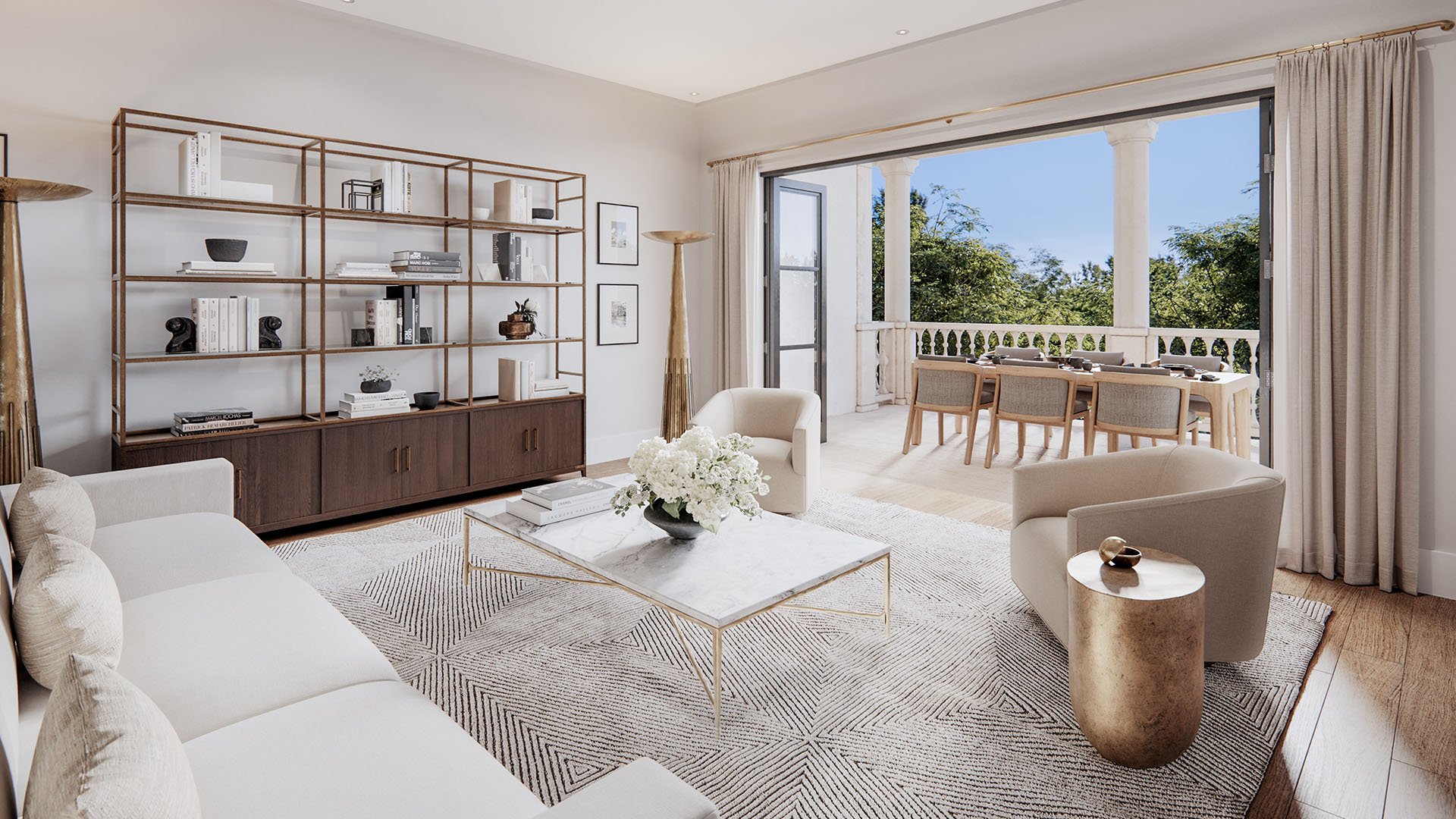
For luxury buyers with children, Coral Gables rarely comes down to a single headline amenity. The decision is typically quieter and more practical: How many turns are in the morning loop? Can a caregiver handle pickups without a second car? Do weekends feel effortless enough that you actually use the neighborhood rather than plan around it?
Against that backdrop, Cora Merrick Park and The Village at Coral Gables represent two distinct interpretations of “easy living” within the same refined zip code. Both appeal to households who want Coral Gables’ aesthetics and access, paired with the simplified ownership profile of a condo residence. Yet their day-to-day cadence can feel materially different once you layer in school schedules, extracurriculars, and the realities of South Florida traffic.
This comparison is designed around family livability and nearby school logistics. Rather than leaning on speculative metrics, the focus stays on what you can verify on any tour: neighborhood rhythm, pedestrian practicality, vehicle flow, and the household routines that either click-or quietly irritate-over time.
Cora Merrick Park’s identity is tied to a polished retail-and-dining gravity. When a building sits close to a concentrated cluster of shops, restaurants, and services, a family’s weekly calendar often compresses in the best way. Think quick errands that don’t require a cross-city drive, last-minute wardrobe needs handled between meetings, and dinner solutions that stay easy to execute when practice runs late.
That “Merrick Park momentum” can be a major advantage for dual-career households. The tradeoff is that peak-hour movement tends to be more pronounced around popular nodes. The practical question isn’t whether the area is lively; it’s whether your unit orientation and daily routes feel buffered enough from drop-off surges, dining rushes, and weekend foot traffic.
The Village at Coral Gables, by contrast, reads as more residential in temperament. “Village” isn’t just branding-it signals a more contained, neighborhood-like atmosphere where the baseline energy can feel calmer even when you’re close to the city’s best conveniences. Many families prefer that psychological exhale: a sense that home is the destination, not part of the circuit.
In luxury family buying, this is often the first real fork in the road. Do you want your days anchored by a prominent lifestyle hub, or do you prefer a quieter, more contained feel that still keeps Coral Gables within easy reach?
Walkability is often marketed as a lifestyle upgrade, but for parents it quickly becomes a logistics tool. True walkability is less about “strolling” and more about friction reduction: grabbing something you forgot, fitting in a quick coffee between school and a call, or letting older children gain measured independence as they mature.
Cora Merrick Park tends to support the “walkable errands” model. Families who value the ability to handle small, frequent tasks without driving often find this meaningful. It also supports visiting grandparents, sitters, or teens who aren’t driving yet. The advantage is subtle, but it compounds.
The Village at Coral Gables can still offer pedestrian ease, but the way you use it may differ. Instead of a retail-centric loop, the walkability can feel more neighborhood-based: pleasant routes, a more contained atmosphere, and a clearer sense of coming home to a calmer pocket of Coral Gables.
A useful tour-day exercise: map your real weekly loop-school drop-off, gym or studio, grocery, pharmacy, tutoring, plus one family dinner out. If more than half of those stops can happen with fewer transitions, the building is serving your life, not the other way around.
In Coral Gables, many families already have a clear school plan-public, private, or a hybrid that shifts by age. What changes after you buy isn’t the school’s quality; it’s the daily time cost of getting there and back.
For both Cora Merrick Park and The Village at Coral Gables, the buyer’s question is simple: how does the location behave at the hours you actually drive? Morning drop-off and late-afternoon pickup are the only school-related data points that reliably translate into lifestyle.
Consider these family-specific realities:
one child at an early start, one at a later start, plus after-school.
sports fields, dance studios, music lessons, enrichment.
if one parent travels, can one person run the routine?
Cora Merrick Park’s edge can be the ease of bundling tasks around a central hub. When you’re already in motion for school, being able to pair errands and a quick meal nearby can reduce the number of separate trips in a day.
The Village at Coral Gables can suit families who prefer a calmer departure and arrival experience. In households where children are sensitive sleepers, or where parents value a quieter ambiance at home, that return-to-home feeling can matter as much as raw distance.
The best approach is to test-drive: run a mock drop-off route at the time you’ll actually drive, then repeat for pickup. You’re not only measuring minutes-you’re measuring stress.
In high-end condo living, “arrival experience” is often discussed in the context of lobby design. For families, arrival experience is more operational: where the car pauses, how strollers and backpacks move, whether a second vehicle can circulate, and how easily guests can enter without turning the evening into a coordination project.
If your household includes young children, look for:
space to pause without anxiety.
practical for strollers and gear.
smooth in and out, especially at peak times.
Cora Merrick Park can feel more active in its immediate vicinity, which some buyers love because it signals convenience and vitality. The flip side is that “busy” requires a plan, especially during peak family hours. If your routine is structured and you thrive on a dynamic neighborhood, this can be a plus.
The Village at Coral Gables can feel more controlled and residential in its immediate rhythm, which can reduce micro-stress. For families juggling multiple pickups, carpools, or frequent visiting relatives, that calm can function as a daily luxury.
Without leaning on unverified specifics, a few principles matter in any family condo purchase:
a true family plan includes a flexible room for a nanny, office, or overnight guests.
children sleep early; adults often work late. Sound separation becomes quality of life.
sports equipment, seasonal items, strollers, and school projects all need a system.
When you tour either property, focus on the “invisible” daily frictions. Where do backpacks land? Where does the stroller go? Is there a realistic spot for a homework station that isn’t the dining table?
In Coral Gables, many luxury buyers treat condos as a primary residence with occasional travel, or as a secondary residence that still needs to function during the school year. If your pattern is lock-and-leave, prioritize ease of ownership and building operations. If it’s full-time family living, prioritize layouts and circulation first, finishes second.
Even families rooted in Coral Gables typically live across a larger South Florida map: weekend beach time, visits with friends in other neighborhoods, and the occasional desire for a different dining scene.
If you want a contrast lifestyle option for extended family-or simply a future down-the-line move-it can help to understand how other prime markets feel operationally.
For example, some buyers who love Coral Gables’ design language also appreciate waterfront weekend access in Bay Harbor Islands; a wellness-forward building like The Well Bay Harbor Islands can represent that alternate rhythm. Others who gravitate toward Coconut Grove’s village energy, but want a distinct residential product, often compare the ambience to something like Four Seasons Residences Coconut Grove.
These comparisons aren’t about “better.” They’re about self-knowledge. If your family relaxes through walkable parks and quiet streets, you may lean toward a calmer pocket. If your family relaxes through dining, shopping, and being in the mix, you may prefer a more activated node.
Cora Merrick Park often fits:
Families who want maximum convenience density and a tight errand radius.
Dual-career households that value quick transitions between tasks.
Buyers who prefer an energetic, polished setting where daily needs are close.
The Village at Coral Gables often fits:
Families who want a more residential cadence and calmer arrival/departure.
Households that prioritize quiet, privacy, and a neighborhood feel.
Buyers who see Coral Gables as a long-term base and want home to feel removed.
Neither profile is absolute. Many families will love either building, especially when the unit itself is exceptional. But when you choose the environment that matches your real weekly routine, you’re far more likely to feel satisfied three years in-not just on closing day.
Bring this checklist and score each item on a simple 1 to 5 scale during your visit:
School run reality: can you visualize the route at the actual time?
Stroller and gear flow: from car to home without awkward steps.
Noise comfort: both inside the unit and in common areas.
Teen independence: safe, simple options for older kids to move around.
Guest handling: grandparents, playdates, and sitters without friction.
Weekend ease: groceries, parks, casual meals, and a family treat nearby.
If one building scores higher on the points you actually live with daily, it’s likely the right answer-even if the other looks slightly more impressive on paper.
Which is better for walkable errands, Cora Merrick Park or The Village at Coral Gables? Cora Merrick Park typically aligns more with an errand-friendly, hub-centric routine.
Which feels quieter for a family home base? The Village at Coral Gables often reads as more residential in day-to-day atmosphere.
Is one more “kid-friendly” than the other? Both can work well; the difference is how the surrounding rhythm matches your routine.
How should parents evaluate nearby schools without over-optimizing? Run the drop-off and pickup routes at real times and judge stress, not distance.
Do these buildings work for a lock-and-leave family that travels? Yes, condo ownership can suit frequent travelers if operations and access feel simple.
What matters most in a condo layout for families? Functional bedroom separation, storage, and a realistic place for homework and gear.
Will a retail-adjacent location feel too busy? It depends on unit orientation and your tolerance for peak-hour movement near lifestyle nodes.
How can I test “livability” before committing? Visit at morning and late-afternoon peaks and simulate your weekly loop in real time.
Is it smarter to choose the calmer setting or the more convenient setting? Choose the option that reduces friction in your household’s most frequent routines.
Can I compare Coral Gables living to other luxury neighborhoods? Yes, contrasting areas can clarify preferences, such as wellness living in Bay Harbor Islands.
For a tailored shortlist and next-step guidance, connect with MILLION Luxury.
If branded residences are on your mind — as a home or as an allocation — we would be glad to share what we are seeing, privately.
Begin a quiet conversation