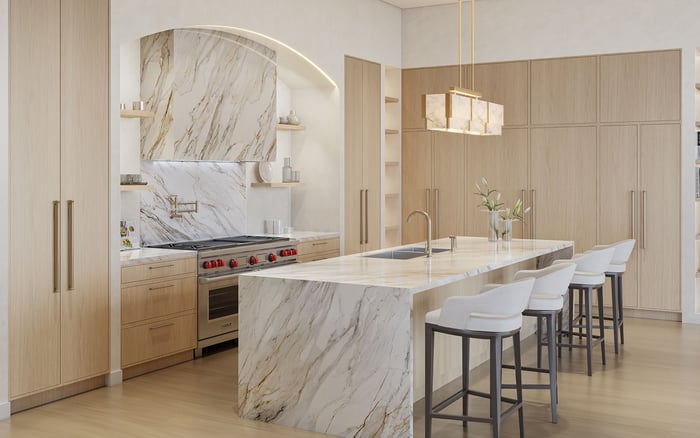
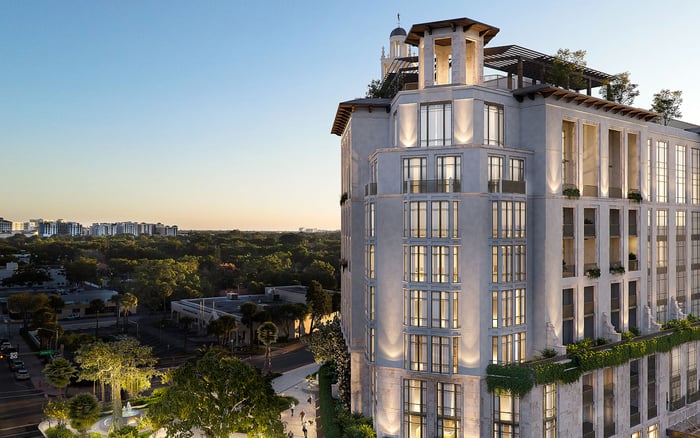
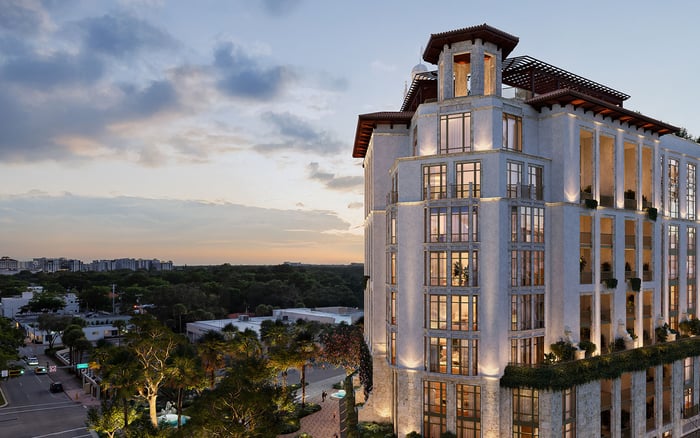
In Coral Gables, the best residential addresses do not compete with the city’s legacy, they converse with it. The Village at Coral Gables speaks in that exact register: a modern, buyer-forward residential concept shaped by the Gables’ long-held preference for elegance, walkability, and architectural restraint. For the luxury buyer, the appeal is less about spectacle and more about alignment. You are close to the rituals that define daily life in Coral Gables: morning espresso before meetings, an unhurried stroll after dinner, a quick drive to the airport without feeling as if you live on a highway. In a market that often prizes height, glass, and velocity, Coral Gables remains intentionally human-scaled, and that perspective is precisely what makes the neighborhood feel evergreen. This editorial considers how The Village at Coral Gables fits into the broader South Florida luxury landscape, what the address implies for lifestyle and resale positioning, and how to evaluate a Gables purchase with the same discipline you would bring to a pied-à-terre in Brickell or an oceanfront tower.
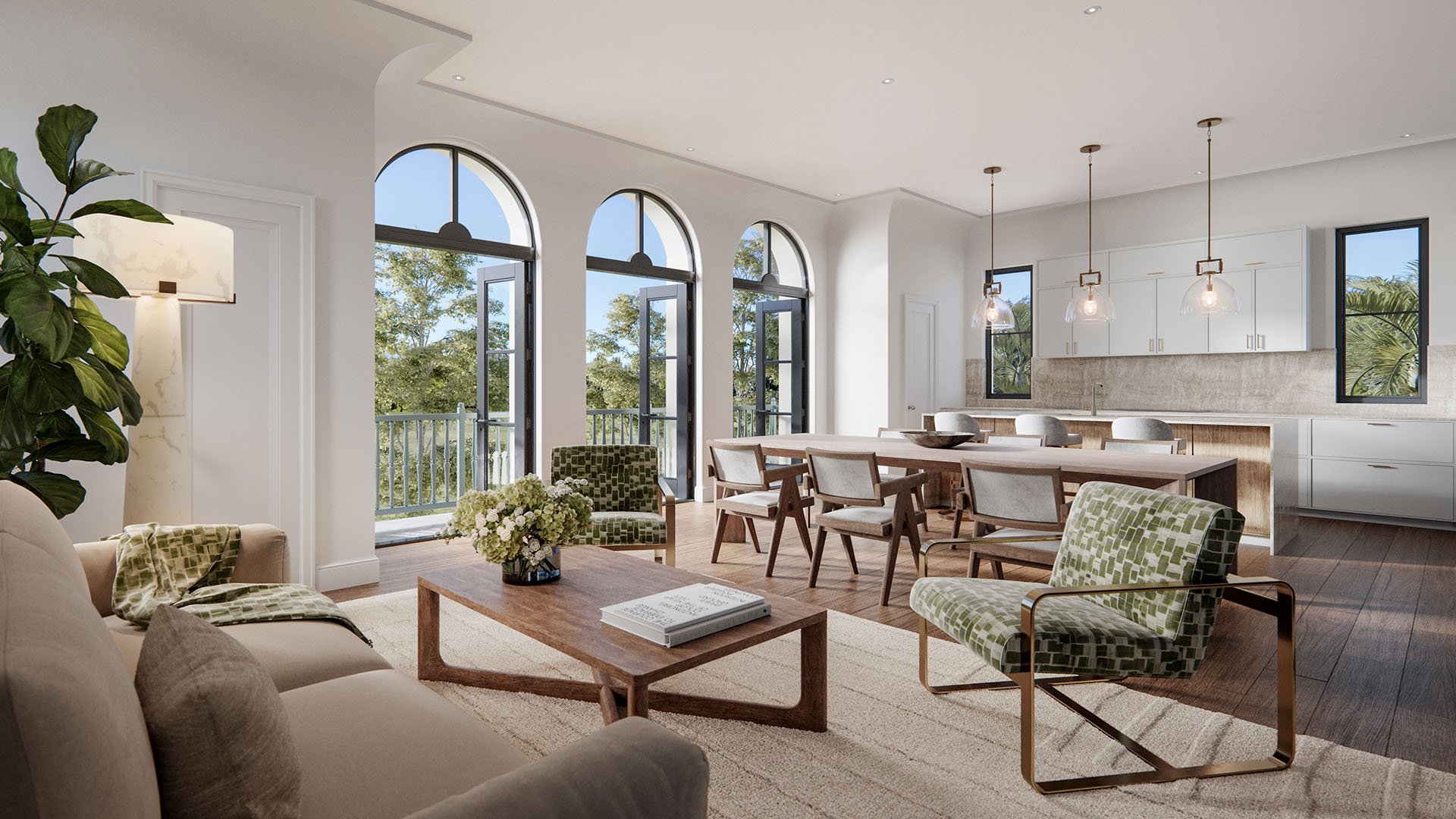
Coral Gables is not a place that needs to announce itself. It’s an enclave where formality is quiet, streets feel curated, and daily life is built around proximity rather than performance. That ingrained discretion is a meaningful luxury attribute in South Florida-especially for buyers who want access to Miami’s cultural and commercial energy without living inside it.
From a real estate standpoint, Coral Gables tends to reward patience and taste. The best outcomes here are rarely the result of chasing trend. They come from selecting the right micro-location, understanding how the neighborhood’s visual language carries into long-term value, and choosing a residence that matches the Gables rhythm: walkable errands, car-optional evenings, and a sense of place that feels composed.
For many households, Coral Gables is also a strategic home base for the region-close enough to move between Downtown, the beaches, and the airport, yet insulated from the most volatile cycles of nightlife-driven demand.
As a concept, The Village at Coral Gables is best understood as modern living calibrated to a historically design-led city. Buyers drawn to this kind of offering typically want turnkey comfort and current interiors, without trading away the Gables’ signature charm. In other words: contemporary ease, with a clear sense of being anchored to Coral Gables rather than hovering above it.
In Coral Gables, “new” works best when it feels intentional, not disruptive. That’s why The Village at Coral Gables is most useful to evaluate through three lenses:
Streetscape fit: Does the building read as naturally placed within its surroundings?
Lifestyle efficiency: Are the daily conveniences genuinely effortless, from dining to errands to commuting?
Privacy and quiet: Does the experience feel sheltered, even if it sits near the action?
If you want to explore the project directly, start with The Village at Coral Gables and then return to the decision framework below.
Luxury in the Gables is rarely a single feature. It’s the cumulative effect of small frictions removed.
Walkability only matters if it doesn’t compromise privacy. Some residences are “walkable” on paper, yet feel like you’re living in a lobby. In Coral Gables, the ideal is to be close to restaurants and retail while regaining separation the moment you step inside. Pay attention to the arrival experience, sightlines, and how public-facing the residence feels at night.
Coral Gables can read as serene while still connected to Miami’s most active corridors. Pay attention to orientation, buffering, and the cadence of the surrounding blocks. The objective is a home that supports early mornings and late dinners equally well-without a constant reminder of traffic.
An ultra-modern look can age quickly when it depends on fashion rather than proportion. If your horizon is five to ten years, prioritize finishes and design choices that read quiet and permanent. You should be able to refresh a home with art, lighting, and textiles-not a wholesale renovation.
In any luxury market, liquidity is a form of safety. In Coral Gables, it ties back to fundamentals: a location people consistently want, a building profile that will still feel relevant, and an ownership experience that stays clean and uncomplicated.
Some buyers arrive in Miami expecting to live in the sky. Others discover they prefer a grounded lifestyle with more neighborhood texture. Coral Gables often wins when the buyer values curated calm and the ability to move through the day without a production.
That said, vertical living can be the right answer when priorities differ: immediate proximity to business centers, a higher-service environment, or a second home that functions like a suite with a view.
For comparison, Brickell’s newer generation of luxury residences leans into a polished, cosmopolitan tempo. If you’re evaluating a second address with a more urban posture, 2200 Brickell can serve as a useful reference point for how lifestyle and building sensibility shift as you move from Coral Gables into Brickell.
The exercise isn’t to crown a winner. It’s to clarify what you want your home to do for you: restore you, impress, simplify, or connect.
In South Florida, “luxury” is often conflated with height and amenities. In practice, many sophisticated buyers increasingly prefer boutique buildings where privacy is inherent and service is not performative. Coral Gables naturally aligns with that preference because the neighborhood’s identity favors restraint.
A boutique mindset also changes how you evaluate amenities. The question becomes: which features actually improve your day?
A well-considered fitness experience you will use.
Outdoor space that feels quiet rather than crowded.
Parking and arrival that don’t feel like an event.
Security that is present, not intrusive.
If you’re comparing boutique living across submarkets, Bay Harbor’s wellness-forward approach can be a counterpoint to the Gables. A project like The Well Bay Harbor Islands illustrates how boutique can be deeply lifestyle-specific, while Coral Gables boutique tends to feel understated and classically comfortable.
For some, Coral Gables is a full-time address defined by routine. For others, it’s an elegant base that makes Miami feel livable without the intensity of the beach corridors. If you travel frequently, consider how you arrive and depart, how much you want to maintain, and whether you prefer a lock-and-leave dynamic.
When buyers prioritize a true second-home experience, Miami Beach often enters the conversation for its resort tone and the ability to move from meeting to ocean in minutes. A project such as 57 Ocean Miami Beach helps frame that alternative: the lifestyle is horizon-driven, the day is oriented around light, and the social energy is more immediate.
Coral Gables, by contrast, is more interior. It’s driven by design, dining, and neighborhood rituals. For many owners, that difference is exactly the point.
In Miami, distance isn’t measured in miles. It’s measured in how easily you can move between worlds. Coral Gables offers a rare balance: close enough to Downtown and Brickell for business, close enough to Coconut Grove for waterfront afternoons, and close enough to the airport for efficient travel.
If your lifestyle frequently pulls you toward Coconut Grove, a boutique option like Arbor Coconut Grove is a helpful benchmark for comparing neighborhood texture. The Grove can feel more bohemian and coastal, while Coral Gables reads more tailored and civic. Both can be right; the difference is your preferred backdrop.
When you view The Village at Coral Gables, treat the tour as an audit of lived experience.
Arrive twice: once during peak daytime activity, and once in the evening. Note how the block feels when restaurants are active and when they’re quiet.
Listen inside the unit: not just for obvious noise, but for the subtle hum that can shape daily comfort.
Test the friction points: parking, elevator flow, package handling, and the path from car to front door.
Look for design decisions that age well: proportion, light, and material choices that don’t depend on trend.
The goal is to determine whether the residence supports the life you actually live-not the one you imagine on a perfect weekend.
Scarcity in Coral Gables is less about a single view corridor and more about neighborhood integrity. You’re paying for cohesion: streets that remain beautiful, a social scene that feels sophisticated rather than loud, and a sense that the area’s desirability isn’t dependent on a single moment in the market.
For the right buyer, this is an intelligent premium. It can also be a protective one. When the broader market cycles, places with a clear identity and a consistent buyer profile often hold their narrative better than places that are still inventing theirs.
Is The Village at Coral Gables better suited for full-time living or a second home? It can work for either, but it tends to favor owners who value routine, walkability, and a quieter daily rhythm.
What makes Coral Gables feel different from other Miami neighborhoods? The area prioritizes design coherence, discretion, and a lifestyle built around proximity rather than spectacle.
How should I compare Coral Gables with Brickell if I want a modern residence? Brickell often delivers a more vertical, service-driven environment; Coral Gables leans neighborhood-first and tailored.
Does walkability in Coral Gables come with trade-offs? Sometimes, so assess privacy, noise, and how public-facing the building feels at different times of day.
What should I focus on when touring a luxury residence in the Gables? Prioritize the arrival experience, interior quiet, natural light, and practical friction points like parking and access.
Are boutique buildings generally a better fit for privacy-minded buyers? Often, yes-fewer residences can mean less foot traffic and a more controlled day-to-day environment.
How important is architectural “fit” in Coral Gables? Extremely, because long-term desirability here is closely tied to the neighborhood’s cohesive visual language.
Can Coral Gables still feel connected to Miami’s business and cultural hubs? Yes. It’s positioned to reach major districts efficiently while maintaining a calmer home base.
What is the biggest lifestyle difference between Coral Gables and Miami Beach? Coral Gables is dining-and-design oriented with a quieter pace; Miami Beach tends to be resort-like and ocean-led.
Should I treat a Gables purchase as a lifestyle decision or an investment decision? Both, but the strongest outcomes usually come from buying what you’ll genuinely enjoy living in.
For a confidential assessment and a building-by-building shortlist, connect with MILLION Luxury.
If branded residences are on your mind — as a home or as an allocation — we would be glad to share what we are seeing, privately.
Begin a quiet conversation