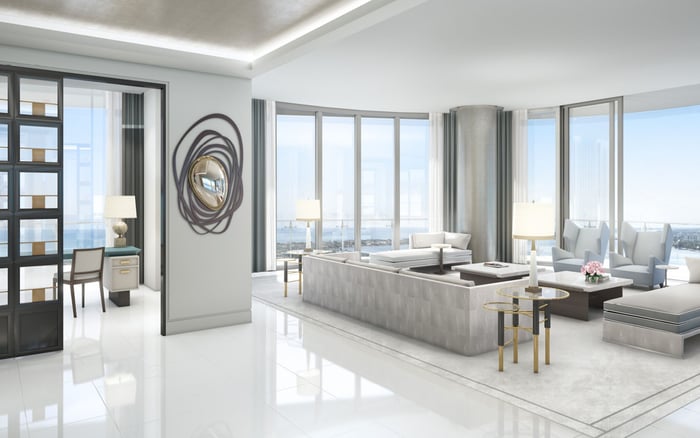
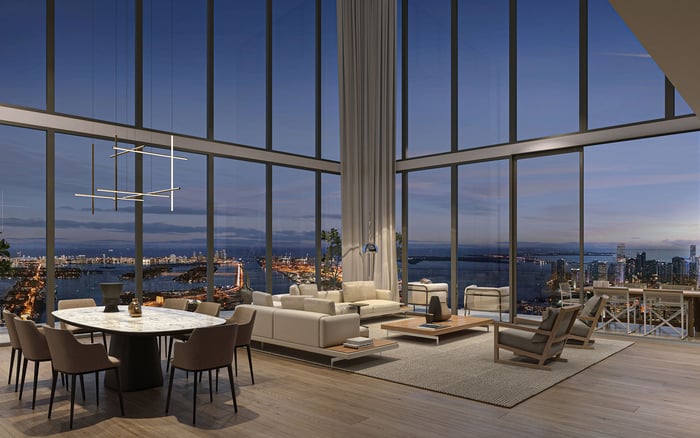
A buyer-focused guide to reading association documents for clues about glare, heat, window rules, shades, terraces, and daily comfort in South Florida luxury residences.
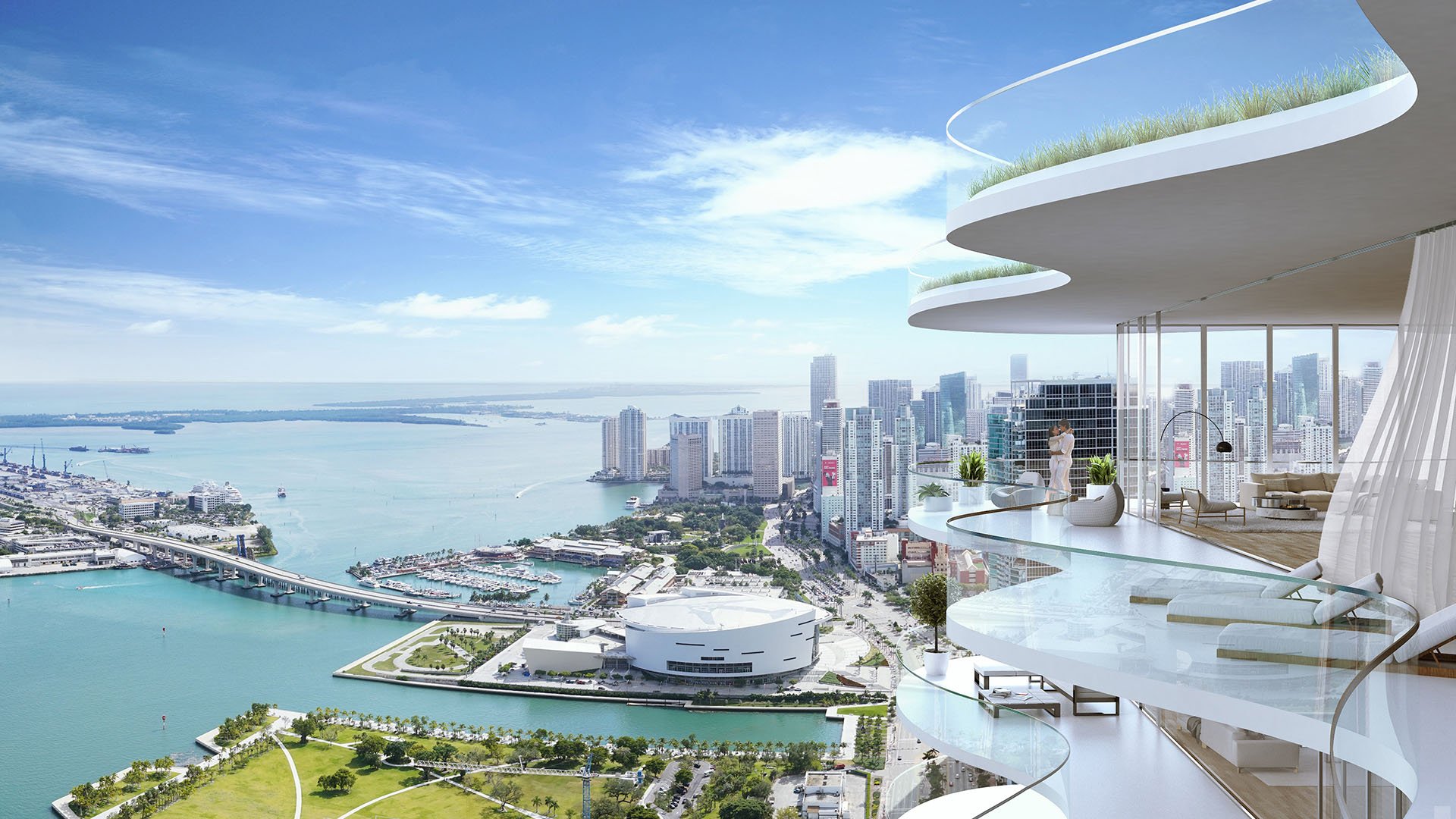
In South Florida, light is part of the promise. It is why glass towers rise toward the Atlantic, why sunset terraces command premiums, and why a morning view over Biscayne Bay can feel almost cinematic. Yet the same light that makes a residence irresistible can become a daily operating condition: glare across stone floors, heat at certain hours, reflection from neighboring façades, or a living room that needs shades drawn precisely when the view is at its most beautiful.
For luxury buyers, sun-glare exposure is rarely just a matter of taste. It can affect comfort, furnishings, art placement, terrace use, energy behavior, and the way a home photographs or lives at different times of year. The clearest clues are not always visible during a single showing. They often sit quietly inside association documents, where rules, complaints, architectural controls, and meeting records reveal how a building manages light over time.
A polished lobby may communicate prestige, but the documents communicate governance. Read closely, they can show whether glare is treated as an occasional nuisance, an anticipated feature of the architecture, or a recurring point of friction among residents.
Association documents are not design brochures. They are operating manuals for shared ownership. Declarations, bylaws, rules, architectural guidelines, maintenance policies, and meeting minutes define what owners may change, what they must preserve, and how the building responds when private comfort intersects with exterior uniformity.
That is especially important in glass-intensive coastal and urban buildings. A buyer may assume glare can be solved with window film, darker shades, exterior screens, or new glass treatments. The association may see it differently. Many luxury buildings protect exterior appearance, façade consistency, balcony aesthetics, and mechanical systems with tight controls. What appears to be a simple interior decision can become an application process, a committee review, or a prohibited alteration.
The documents also help distinguish exposure from control. A west-facing residence may offer dramatic evening light, but if the building permits high-performance interior shades and provides a clear approval path for window treatments, the risk is different from a residence where visible modifications are restricted and prior owners have repeatedly raised comfort concerns.
In a market where buyers compare oceanfront, Miami Beach, high-floor, low-floor, balcony, and terrace living, the most refined decision is not simply which view is brightest. It is which home gives the owner the right tools to manage that brightness elegantly.
Start with architectural guidelines. These policies often describe permitted window coverings, acceptable colors visible from outside, restrictions on reflective film, and rules for balcony or terrace additions. A strict white-liner aesthetic can preserve a building’s façade, but it may limit the owner’s ability to install darker or more technical solutions.
Next, review the rules and regulations. Look for language governing shades, draperies, tinting, exterior screens, awnings, umbrellas, planters, and balcony installations. Sun control sometimes appears under aesthetic rules rather than comfort rules. A buyer focused only on mechanical systems may miss the practical restrictions that matter most at 4 p.m. in August.
Meeting minutes can be particularly revealing. They may show whether residents have asked about heat gain, glare from neighboring buildings, window treatment approvals, or common-area reflections. A single mention should not alarm a buyer. A pattern deserves attention, especially if the same stack, elevation, or exposure is repeatedly discussed.
Maintenance records and capital-planning materials can also be useful. They may address window systems, sealants, glass replacement protocols, façade work, or terrace repairs. These are not necessarily glare documents, but they help frame how seriously the association approaches the building envelope, which is central to light, heat, and long-term performance.
Finally, examine any alteration agreement. If the buyer expects to install automated shades, specialty glass treatment, or integrated lighting controls, the agreement may define insurance requirements, contractor approvals, deposits, hours of work, and whether future removal could be required.
The most useful questions are precise. Ask whether the association has received complaints about glare, heat, or reflection in the relevant line or exposure. Ask whether window film has ever been approved and, if so, under what conditions. Ask whether automated shades require architectural approval. Ask whether balcony umbrellas, screens, or plantings are restricted by size, color, height, or visibility.
If the residence has floor-to-ceiling glass, ask about the approved shade pocket system, wiring allowances, and whether prior installations in the building have used dual shades, solar shades, or blackout shades. If the home has a deep terrace, ask whether the terrace can accommodate shade devices or only movable furniture. If the exposure faces another glass building, ask whether reflected light has been raised in meetings or owner communications.
A buyer should also request practical context from the seller. What hours are brightest? Which rooms require shades most often? Are art walls protected? Does the primary suite receive strong morning sun? Does the kitchen become uncomfortable before dinner? These are lifestyle questions, but they carry financial weight because mitigation may involve design, automation, electrical work, or association approval.
The ideal review pairs documents with lived observation. Visit at more than one hour if possible. Stand where the owner will work, dine, read, and entertain. Look not only toward the view, but also at floors, counters, mirrors, water surfaces, and neighboring glass. Glare is often indirect.
Not all strong light is a negative. Morning sun can make a breakfast room feel alive. Golden-hour west light can give a bayfront terrace its emotional premium. Southern exposure may appeal to buyers who want consistent brightness. The issue is not sunlight itself; it is unmanaged intensity.
Desirable sun is predictable, beautiful, and controllable. It enhances the home without dictating how the owner lives. Difficult glare is the opposite. It forces shades closed during view hours, makes screens hard to use, fades delicate fabrics, complicates art placement, or discourages terrace use when the buyer expected outdoor ease.
Association documents help define whether the building recognizes that distinction. A sophisticated building does not necessarily eliminate glare. Instead, it provides standards that allow owners to address it without compromising the architecture. Consistent shade specifications, clear approval pathways, and reasonable interior treatment rules can signal mature governance.
By contrast, vague or inconsistent rules may create uncertainty. A buyer may close assuming a solution is simple, then discover that the association considers it visible, nonconforming, or subject to board discretion. In ultra-premium property, uncertainty is rarely elegant.
Sun-glare exposure is a quiet value factor. It may not appear in a headline amenity list, but it influences how a residence performs once inhabited. A home that offers luminous views while preserving comfort can feel effortless. A home that demands constant adjustment can feel less composed, even if the view is extraordinary.
This matters for resale because future buyers will experience the residence in real time. If a showing occurs at the wrong hour and glare dominates the room, the emotional response can shift. Conversely, a residence with well-integrated shade systems, thoughtful materials, and association-approved mitigation can present as both dramatic and livable.
Interior design choices also matter. Pale stone may amplify brightness. Glossy surfaces may reflect it. Darker millwork may absorb it. Textiles, rugs, and art all interact with exposure. Association documents do not replace design expertise, but they reveal the boundaries within which that expertise must operate.
For second-home owners, the stakes can be different. If the residence is used seasonally, the buyer should understand whether the brightest months align with planned occupancy. For full-time residents, work-from-home comfort, dining patterns, and bedroom orientation may be more important than the view alone.
Before committing, treat sun as a building condition, not a decorative preference. Review the declaration for exterior and window restrictions. Read the rules for shade, film, balcony, and terrace language. Scan recent minutes for owner concerns involving glare, heat, reflection, or window treatments. Confirm whether architectural approval is required for any planned mitigation. Ask for examples of previously approved installations, while understanding that past approval does not always guarantee future approval.
During the walkthrough, document the residence at different times if access allows. Observe whether glare hits seating areas, television walls, office zones, dining tables, kitchens, or primary bedrooms. Ask whether existing treatments are included in the sale and whether they are fully operational. If motorized systems exist, confirm controls, wiring, maintenance history, and integration with lighting or smart-home platforms.
For buyers in boutique buildings, governance may feel personal and discretionary. For buyers in larger towers, procedures may be more formal but slower. Neither is inherently better. The question is whether the association’s rules match the buyer’s intended lifestyle.
A truly luxurious residence does not ask its owner to choose between view and comfort. It allows both, with restraint.
Can association documents really reveal sun-glare issues? Yes. Rules, minutes, and architectural guidelines can show whether glare, heat, shades, or window treatments have been recurring concerns.
Which document should a buyer review first? Start with architectural guidelines and rules, then read meeting minutes for patterns involving light, reflection, heat, or window modifications.
Are window films usually allowed in luxury condominiums? Policies vary by building. Many associations restrict visible exterior changes, so approval should be confirmed before relying on film as a solution.
Do high floors have more glare than low floors? Not always. Exposure, neighboring glass, water reflection, overhangs, and interior finishes can matter as much as elevation.
Can a terrace help reduce glare? A deep terrace may soften direct sun, but association rules may limit umbrellas, screens, awnings, or other exterior shade devices.
Should buyers visit at a specific time of day? If possible, visit when the relevant exposure is strongest, such as morning for east-facing homes or late afternoon for west-facing homes.
Can glare affect resale value? It can influence buyer perception, especially if the residence feels uncomfortable during showings or requires visible mitigation.
What should sellers disclose about glare? Sellers should answer property-condition questions accurately and provide practical context about when certain rooms are brightest.
Is strong sunlight always a negative? No. Sunlight can be a major luxury attribute when it is predictable, beautiful, and controllable through approved design solutions.
Who should help review these documents? Buyers often benefit from counsel, an experienced advisor, and a design professional who understands association approval constraints.
For a discreet conversation and a curated building-by-building shortlist, connect with MILLION.
If branded residences are on your mind — as a home or as an allocation — we would be glad to share what we are seeing, privately.
Begin a quiet conversation