A buyer-focused editorial on how ultra-prime purchasers can compare Bal Harbour and Palm Beach through wellness credibility, indoor air quality, and meaningful recovery spaces.
For the South Florida buyer, wellness has moved beyond a pleasant amenity deck or a spa room placed beside the fitness center. At the top of the market, the question is whether wellness is credible, measurable, and integrated into daily life. That distinction matters acutely when comparing Bal Harbour and Palm Beach, two addresses that can both satisfy a desire for calm, privacy, ocean air, and architectural restraint, yet do so through very different residential rhythms.
Bal Harbour tends to speak to the buyer who wants a curated coastal life with immediate condominium convenience, resort-level services, and a residence that can be locked and left without emotional friction. Palm Beach often appeals to the buyer who wants a more residential sense of ritual, with private thresholds, gardens, clubby discretion, and rooms composed for long mornings and unhurried evenings. Neither approach is inherently better. The stronger choice is the one whose wellness infrastructure matches the way the owner actually recovers.
A refined brief may include Bal Harbour calm, Palm Beach discretion, oceanfront air, second-home convenience, new-construction systems, and pool recovery. Those words become meaningful only when tested against the building, the residence, and the routines they support.
The most persuasive wellness residences are not the loudest about wellness. They are the ones where systems, staff protocols, circulation, materials, and private spaces quietly support the owner without constant decision-making. A meditation room is useful only if it is acoustically protected. A spa suite is valuable only if it is easy to use after travel, training, or a long day on the water. A terrace is restorative only if exposure, privacy, and airflow make it a place one naturally returns to.
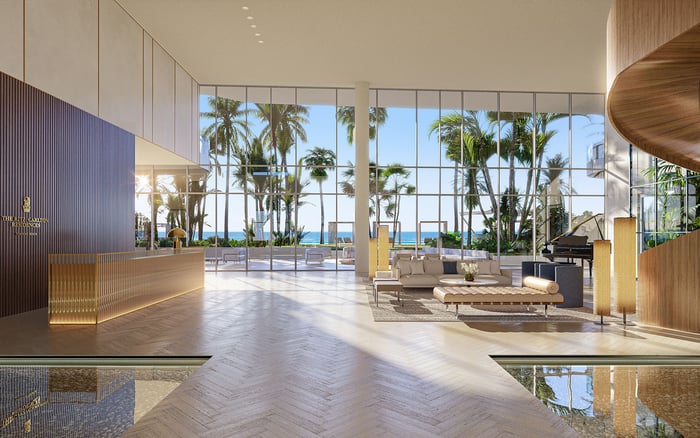
In Bal Harbour, credibility often rests on the condominium experience: controlled arrivals, service coordination, secure vertical living, and amenity spaces that must remain pristine without feeling performative. Buyers should ask how wellness spaces are managed during peak periods, how private they feel in actual use, and whether the building’s programming supports recovery or merely displays it.
In Palm Beach, the diligence may shift toward the private environment of the home. The buyer may care more about bedroom placement, garden transitions, shaded outdoor areas, staff circulation, guest separation, and the ease of moving from water, pool, bath, dressing, and rest without crossing public or overly formal areas. Here, wellness can be less branded and more architectural.
Indoor air quality has become one of the clearest separators between a pretty residence and a deeply considered one. In a humid coastal climate, the buyer should look beyond generalized language and ask practical questions: how filtration is handled, how humidity is moderated, how fresh air is introduced, and how maintenance is documented. A beautifully finished room can still feel tiring if the air is inconsistent, stale, overly perfumed, or poorly balanced.
For condominium buyers, the conversation should include the relationship between private residence systems and common-area systems. Corridors, elevators, garages, amenity floors, and lobbies all shape the arrival experience. The air one breathes before reaching the front door is part of the property’s wellness profile. In Bal Harbour, where many buyers value ease and service, that building-wide performance can be central to the purchase decision.
For Palm Beach buyers, especially those considering homes designed for extended stays, air quality diligence may feel more personal. Bedrooms, gyms, wellness rooms, kitchens, laundry areas, and staff zones each create different demands. A credible home will not treat air as a single mechanical category. It will support sleep, entertaining, exercise, recovery, and quiet retreat without making the owner conscious of the machinery behind it.
A true recovery space changes behavior. It makes a buyer sleep earlier, linger outside longer, stretch after a swim, take a quieter breakfast, or host guests with less strain. It is not defined by a checklist. It is defined by whether the owner returns to it.
In Bal Harbour, the strongest recovery spaces often create an immediate sense of removal from the day. A spa, steam area, treatment room, shaded terrace, or private plunge experience can be powerful when it is close, calm, and frictionless. The appeal is compression: travel, dining, shopping, beach, fitness, and rest can be contained within a highly managed residential orbit.
In Palm Beach, recovery can be more expansive. It may involve a morning garden walk, a pool setting that feels private rather than theatrical, a quiet library, a shaded loggia, or a primary suite set apart from guest activity. The appeal is pacing. The home allows the day to unfold, with recovery embedded in the sequence rather than concentrated in one amenity zone.
The buyer should be honest about temperament. Some owners recover through service, predictability, and proximity. Others recover through silence, space, and the feeling of being slightly removed. The right market is the one that honors that instinct.
A disciplined comparison starts with use case. Is the residence primarily a winter base, a family gathering point, a wellness retreat, a social address, or a highly serviced second home? The answer will determine whether a buyer should prioritize building operations, private land, amenity depth, staff support, or lock-and-leave convenience.
Next comes the daily path. From arrival to bedroom, from bedroom to water, from workout to recovery, from dinner to sleep, every transition should feel graceful. If wellness requires effort, scheduling complexity, or exposure to spaces the owner would rather avoid, the promise weakens.
Finally, the buyer should separate visible luxury from restorative luxury. Marble, millwork, views, and scale are important, but they do not automatically produce calm. Restorative luxury is often found in quieter attributes: steady mechanical performance, protected morning light, sensible storage, intuitive staff routes, shaded exterior rooms, privacy from neighboring sightlines, and a pool environment that feels usable rather than ceremonial.
At this level, wellness credibility is an expression of trust. The buyer is trusting that the building or home will protect sleep, privacy, health, and time. Bal Harbour and Palm Beach both offer compelling ways to frame that trust, but they speak to different ideals of restoration.
Bal Harbour is often the sharper answer for the owner who wants curated ease, a polished coastal setting, and wellness supported by the discipline of a building. Palm Beach may be the richer answer for the owner who wants a more residential relationship with recovery, where landscape, room sequence, and private ritual carry as much weight as formal amenities.
The best purchase is not the one with the longest wellness vocabulary. It is the one where the owner can arrive, exhale, and feel that the home has already anticipated the next need.
How should buyers define wellness credibility? Wellness credibility means the home’s systems, spaces, and operations support real daily recovery, not just marketing language.
Is air quality more important in a condominium or a private home? It matters in both, but the diligence differs. Condominium buyers should consider shared spaces, while home buyers should focus on room-by-room performance.
What makes Bal Harbour appealing for wellness-focused buyers? Bal Harbour can suit buyers who value service, convenience, privacy, and a highly managed coastal lifestyle.
What makes Palm Beach appealing for recovery-oriented buyers? Palm Beach can suit buyers who prefer residential ritual, privacy, gardens, and a slower sense of daily rhythm.
Should a wellness room increase a property’s appeal? Yes, if it is quiet, accessible, comfortable, and likely to be used. A poorly placed room adds little beyond presentation.
How should buyers evaluate a pool area? Look at privacy, shade, wind comfort, access from the home, and whether the setting encourages regular use.
Is new construction always better for wellness systems? New construction may offer modern systems, but buyers should still evaluate design quality, maintenance, and actual performance.
Can a second home still support serious wellness goals? Yes, if it is easy to maintain, simple to arrive into, and designed around the owner’s recovery habits.
What is the biggest mistake buyers make with wellness amenities? They focus on the presence of amenities rather than asking how those spaces function in ordinary daily life.
How should a buyer choose between Bal Harbour and Palm Beach? Choose the place whose pace, privacy, and operational style align with how you rest, host, travel, and recover.
For a confidential assessment and a building-by-building shortlist, connect with MILLION.
If branded residences are on your mind — as a home or as an allocation — we would be glad to share what we are seeing, privately.
Begin a quiet conversation