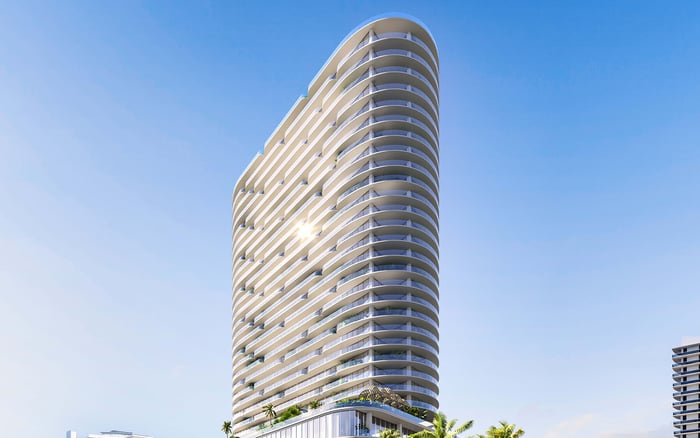
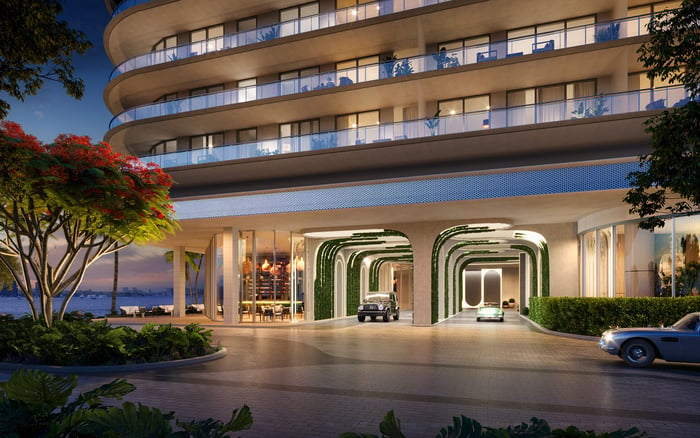
Continuum Club & Residences North Bay Village frames a timely buyer question: can a bayfront luxury residence embrace destination-style dining and social energy while still protecting the private calm that defines quiet luxury?
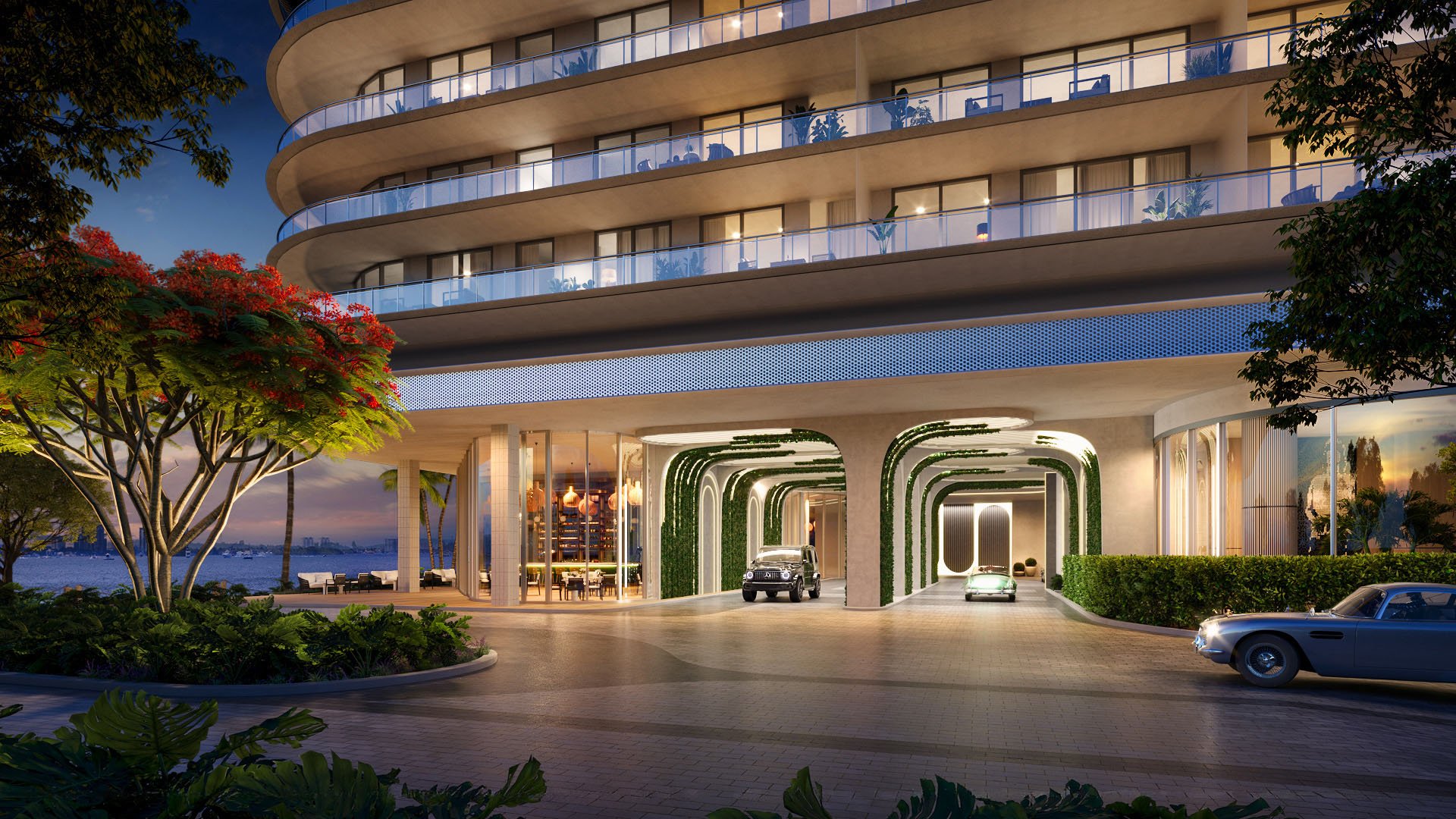
Continuum Club & Residences North Bay Village sits at the center of a more nuanced conversation than the familiar Miami condominium narrative. The question is not whether luxury buyers value dining, social programming and hospitality polish. They do. The sharper issue is whether a residential building can deliver that energy without allowing it to intrude on the private calm high-end buyers expect once they close the door.
That is where restaurant-noise exposure becomes a luxury concern rather than a technical footnote. In a market where glass, water views and amenity decks are often presented as the language of prestige, quiet luxury is ultimately sensory. It is the feeling of a lobby that does not echo with outsiders, a bedroom that remains composed at night and a terrace that frames the bay without importing the soundtrack of a venue below.
For Continuum Club & Residences North Bay Village, the buyer lens should be disciplined: restaurant proximity has real appeal, but so does understanding how sound, circulation, privacy and operating rules are controlled.
North Bay Village is not merely another Miami address. Its geography between mainland Miami and Miami Beach gives it a distinctive bayfront-island character, one that can feel connected and removed at once. That duality is central to its luxury-residential repositioning. Buyers are not only seeking convenience; they are buying the promise of a calmer waterfront life with access to both sides of the bay.
In that setting, quiet becomes part of the value proposition. A building that markets a sophisticated island lifestyle must protect the interior experience from the same hospitality energy that can make the property feel current. The stronger the social component, the more important the acoustic and operational framework becomes.
For the digital buyer, the shorthand may read North Bay Village, new construction, pre-construction, waterview and terrace. In practice, those words matter only if the finished daily experience is serene enough to justify the premium.
A restaurant or club-style amenity can add convenience, social cachet and a sense of arrival. It can allow residents to entertain without leaving the property, meet friends spontaneously and enjoy a more complete lifestyle offering. In the right configuration, that hospitality layer can make a building feel less like a static tower and more like a private address with rhythm.
Yet the same feature can undermine exclusivity if sound travels into residences or amenity areas intended for rest. Airborne restaurant noise, amplified music, crowd conversation, terrace activity, event programming, mechanical systems and service or loading operations all matter. The concern is not only volume. It is timing, repetition and proximity to private spaces.
Late-night voices on an outdoor dining terrace can feel very different from daytime lobby ambiance. Valet activity may be acceptable during dinner service but disruptive if it overlaps with residential arrival patterns. A mechanical hum that is unnoticeable during the day may become conspicuous in a bedroom at night. Luxury buyers should evaluate these conditions before they become lived-in irritations.
The most important design question is placement. Where do restaurant or club areas sit relative to residential stacks? Do outdoor dining zones face units, bedroom lines or private terraces? Are service areas shielded from residences, or do they share acoustic pathways with living spaces?
Glazing is another key consideration. High-performance windows and doors are not simply an energy or storm-resilience topic. They are part of the acoustic envelope. Buyers should ask how the building intends to limit airborne sound from hospitality spaces, outdoor terraces and mechanical equipment.
Circulation may be even more revealing. A true quiet-luxury plan separates residential life from guest flow. That means thinking through elevators, lobbies, valet arrival, back-of-house routes and access controls. If restaurant guests, event attendees and residents move through the same spaces without careful management, the property may feel less private even when the residences themselves are beautifully finished.
Even a well-designed building depends on operating discipline. Restaurant hours, amplified-music limits, terrace closing times, private-event rules and resident access controls are not minor management notes. They define the boundary between hospitality and home.
Buyers should be especially attentive to private events. A dining venue that functions quietly most evenings can become a different acoustic condition during branded dinners, celebrations or late programming. The right questions are practical: how often can events occur, where are they staged, what time do outdoor areas close and who enforces the rules?
Valet and loading management deserve similar scrutiny. Luxury is not only what residents see from the pool deck. It is also how deliveries, service vehicles, staff movement and guest arrival are choreographed. If those systems are not separated and scheduled intelligently, the sense of calm can erode.
For Continuum Club & Residences North Bay Village, restaurant-noise exposure should be treated as a unit-specific question. A residence facing open water may have a different sound profile than one closer to a terrace, amenity edge or arrival court. Higher does not automatically mean quieter, and lower does not automatically mean compromised. Orientation, intervening structure and operational patterns all count.
A serious buyer should request acoustic specifications, glazing information, amenity and event policies, restaurant operating assumptions and any available unit-specific exposure guidance. The goal is not to eliminate all sound. Urban waterfront living is never absolute silence. The goal is to confirm that the building’s promise of calm is supported by architecture, materials and management rather than lifestyle renderings alone.
That is the quiet-luxury case for restaurant-noise exposure: not that noise is desirable, but that its management is a measure of the project’s sophistication. If hospitality energy is contained, curated and well separated, it can enhance residential life. If it is poorly handled, it becomes a private-space problem masquerading as an amenity.
Why does restaurant-noise exposure matter for luxury buyers? Because sound affects daily comfort, sleep quality and the perceived privacy of a residence, especially in buildings with hospitality-style amenities.
Is restaurant proximity always a drawback? No. It can add convenience and social value when design, circulation and operating policies keep the residential experience calm.
What should buyers ask about first? Start with where dining, club, terrace, service and event areas sit in relation to the specific residence being considered.
Does better glazing solve the entire issue? Glazing helps, but quiet also depends on layout, acoustic separation, terrace placement, mechanical systems and management rules.
Are outdoor terraces a special concern? Yes. Outdoor dining and social areas can carry voices and music, particularly at night or when they face residential stacks.
Do restaurant hours matter? Yes. Closing times, amplified-music limits and private-event rules can determine whether an amenity feels refined or intrusive.
Should buyers compare unit exposures individually? Yes. Orientation, height, adjacency and view corridor can all change how much restaurant or amenity sound a residence may receive.
What role does North Bay Village play in the appeal? Its position between mainland Miami and Miami Beach supports a connected bayfront-island lifestyle where calm is a core luxury signal.
Can a hospitality-driven building still feel private? Yes, if guest circulation, resident access, service routes and event programming are clearly separated and professionally controlled.
What is the main takeaway for Continuum Club & Residences North Bay Village? The project’s quiet-luxury credibility rests on whether hospitality energy is curated without compromising residential serenity.
For a discreet conversation and a curated building-by-building shortlist, connect with MILLION.
If branded residences are on your mind — as a home or as an allocation — we would be glad to share what we are seeing, privately.
Begin a quiet conversation