A buyer-oriented look at why delivery-room capacity, back-of-house planning, and seasonal logistics can influence the true cost of owning a South Florida branded residence.
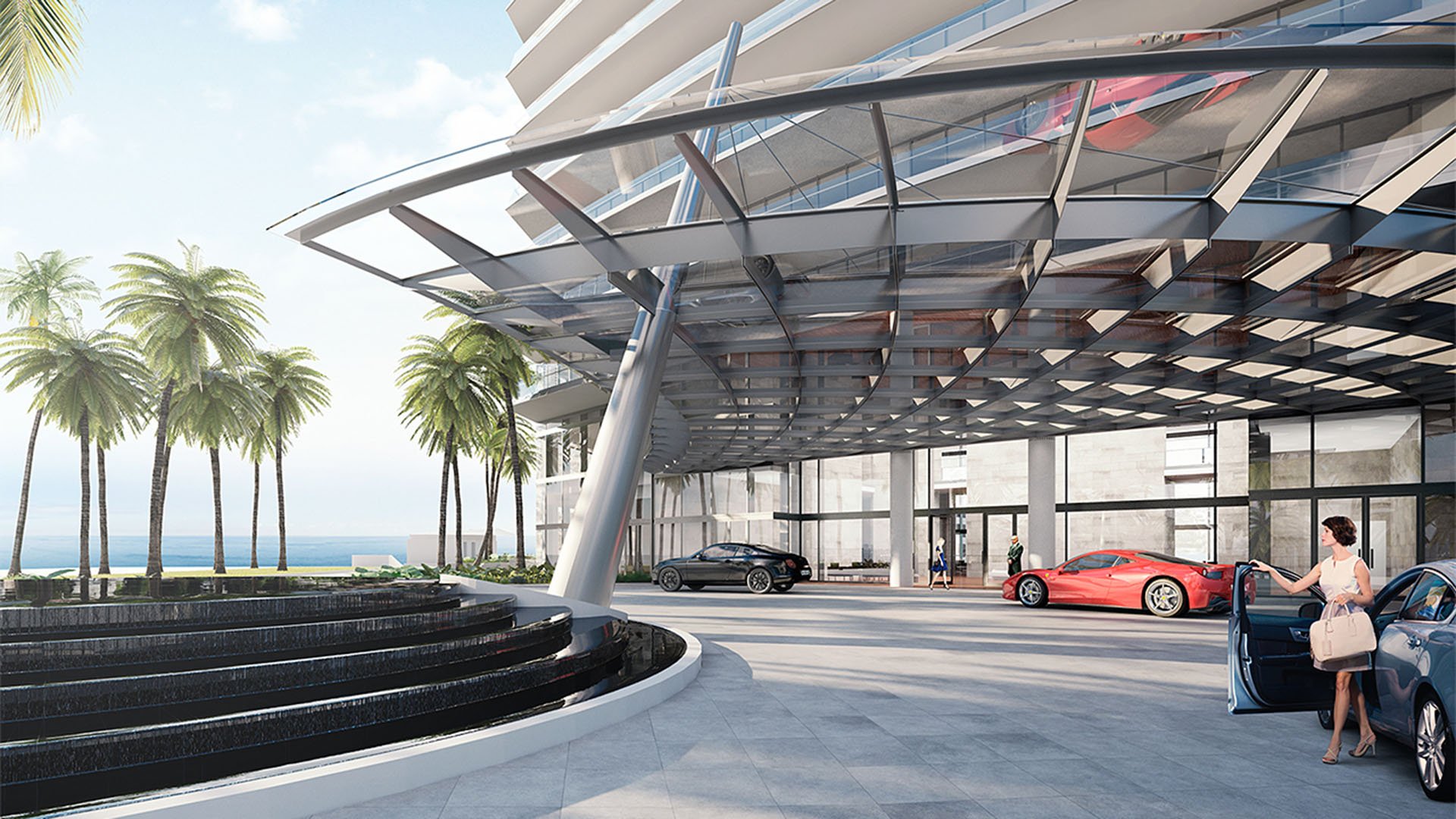
In South Florida luxury real estate, the most persuasive amenities are often the most visible: a cinematic arrival court, a spa corridor wrapped in stone, a private dining room, a pool deck composed for sunset. Yet for Branded Residences, the daily experience can depend on something far less photogenic: the delivery room.
This is not simply a package closet. In a high-service condominium, the delivery room sits at the intersection of privacy, staffing, vendor movement, security, housekeeping, food delivery, maintenance access, and owner convenience. When it is undersized, poorly located, or operationally vague, the issue does not stay behind the scenes. It shows up in elevator waits, concierge workload, association expenses, resident frustration, and ultimately the real cost of ownership.
The point is not that every branded residence requires the same back-of-house solution. A waterfront boutique building, an urban tower, and a resort-style coastal property all live differently. The point is that delivery-room capacity should be treated as part of the financial architecture of the residence, not as a minor operational afterthought.
The purchase price is only the opening number. In a branded condominium, the ongoing cost of ownership includes the systems required to sustain the brand promise. Delivery-room capacity affects several of those systems at once.
A building with adequate receiving space can separate resident arrivals from service movement more gracefully. It can stage packages, chilled deliveries, florals, valet-dropped items, contractor materials, and routine household supplies without turning the lobby or loading area into an improvisation zone. It also gives staff a clearer workflow, which matters in properties where service standards are part of the ownership proposition.
When space is tight, the association may need to compensate with more labor, longer service hours, software, storage protocols, access restrictions, or renovation plans. None of those solutions is inherently wrong, but each carries a cost. Some costs appear directly in association fees. Others appear indirectly, through inconvenience, delays, damaged goods, or a diminished perception of service.
For buyers comparing Brickell towers such as 888 Brickell by Dolce & Gabbana with quieter coastal or bayfront alternatives, the question is not simply which building feels more glamorous. It is whether the service spine behind the glamour is sized for the way residents will actually live.
South Florida intensifies this topic because ownership patterns are not uniform throughout the year. Seasonal occupancy can produce sudden surges in household deliveries, guest arrivals, renovations, catering, wardrobe shipments, and owner services. A building that feels calm in late summer may operate very differently when more residences are occupied at once.
Storm preparation also changes the rhythm of a property. Residents may order supplies, secure outdoor furnishings, coordinate vendors, or rely more heavily on building staff. After severe weather, delivery access and service circulation can become even more important. A delivery room with generous capacity and disciplined procedures can help a property absorb pressure without compromising the residential experience.
Urban districts add another layer. In Brickell, delivery access must coexist with dense traffic, valet patterns, ride-share activity, restaurant demand, and a vertical lifestyle. On Miami Beach, particularly in buildings where privacy and resort-style ease are central to the appeal, the challenge is to separate the guest-facing atmosphere from the practical flow of everyday living. A buyer considering The Perigon Miami Beach should ask how deliveries, staff entries, and service movement are intended to remain discreet during peak-use moments.
In Sunny Isles Beach, the scale and verticality of many luxury towers make elevator strategy and receiving protocols especially relevant. A residence may offer dramatic water views and impressive amenity programming, but the daily experience still depends on whether packages, groceries, household staff, and vendors can move through the property without friction. That is a worthwhile line of inquiry at buildings such as Bentley Residences Sunny Isles, where buyers will naturally focus on design and lifestyle but should also examine operational resilience.
A serious buyer does not need to become a building engineer, but a few practical questions can reveal whether the delivery infrastructure has been considered with sufficient sophistication.
Start with location. Is the delivery room positioned near a true service path, or does it depend on shared lobby movement? Can vendors reach it without crossing the primary residential arrival sequence? Is there a clear relationship among loading, freight elevators, staff areas, and storage?
Then ask about capacity. Does the building have room to handle ordinary daily volume as well as seasonal peaks? Are there separate procedures for oversized items, refrigerated deliveries, food delivery, luggage, and contractor materials? If the residence is likely to be used as a second home, ask how packages are managed when owners are away.
Rules matter as much as rooms. A beautiful receiving area can still fail if responsibilities are vague. Who accepts deliveries? What happens after hours? Are residents notified through staff, software, or both? Are there fees for extended storage, special handling, or large-item coordination? Are household employees, designers, and vendors permitted to access the delivery room directly, or must everything pass through staff?
In pricing and trend terms, these details are increasingly relevant because luxury buyers are comparing buildings not only by finishes and views, but by operational competence. A residence that reduces everyday friction may justify a premium more convincingly than one that relies solely on brand association.
Delivery-room capacity can influence association economics in subtle ways. If the original design anticipates real use, staffing can be more efficient. If it does not, the association may need extra personnel or more restrictive rules to keep service quality intact.
The distinction is especially important in branded properties, where residents often expect hotel-like ease without hotel-like unpredictability. The residence should feel private, controlled, and calm. That requires a back-of-house system that supports service without making the building feel over-managed.
In Fort Lauderdale, where waterfront living, boating culture, and resort-style expectations often converge, the question becomes broader than package storage. Buyers evaluating properties such as St. Regis® Residences Bahia Mar Fort Lauderdale should consider how household deliveries, marine-related items, guest arrivals, and vendor coordination are expected to move through the property. The better the plan, the less likely the association is to solve predictable problems with expensive improvisation.
A strong building does not eliminate rules. It makes rules feel natural. It gives staff enough space to perform well, residents enough clarity to plan, and the association enough flexibility to manage peak demand without constant exceptions.
The most refined branded residences understand that luxury is not only what a resident sees. It is what the resident does not have to manage. A package arrives without drama. A caterer is directed without confusion. A designer brings samples through the correct route. A storm-preparation delivery is handled with order. A returning owner finds the residence ready, not encumbered by accumulated boxes and unresolved instructions.
This is why delivery-room capacity belongs in the same conversation as valet, concierge, wellness, dining, and private amenities. It is part of the building’s operating temperament. A property may photograph beautifully, but the real test begins after closing, when daily life starts to press against the architecture.
For South Florida buyers, the smartest approach is to walk the service path mentally before falling in love with the view. Ask how the building receives, sorts, secures, stores, notifies, and releases. Ask what happens during holidays, storms, renovations, and high-occupancy periods. Ask whether the association has discretion to adjust procedures, and whether those adjustments could affect fees.
The delivery room may never appear in a sales gallery rendering. But in the lived economy of a branded residence, it can be one of the clearest signals of whether the building’s luxury is merely designed, or truly operational.
What does delivery-room capacity mean in a luxury condominium? It refers to the space and procedures used to receive, secure, stage, and distribute resident deliveries, packages, and service-related items.
Why does it matter more in Branded Residences? Branded Residences carry an expectation of seamless service, so weak back-of-house planning can become more visible and more costly.
Can delivery-room issues affect association fees? Yes. If a building needs additional staffing, storage systems, or revised procedures, those solutions may influence operating costs.
Should buyers ask about delivery policies before signing? Absolutely. Policies for after-hours deliveries, large items, food, vendors, and long-term storage can affect daily convenience.
Is this only a concern in large towers? No. Boutique buildings can also face capacity issues, especially during seasonal occupancy or periods of heavy renovation activity.
How does seasonal occupancy affect deliveries? When more owners are in residence, package volume, guest activity, vendor access, and household services can rise at the same time.
What should second-home owners pay attention to? They should ask how the building handles packages when residents are away and whether extended storage creates fees or restrictions.
Does a branded name guarantee strong logistics? Not by itself. Buyers should evaluate the actual service path, staffing model, rules, and association responsibilities.
Can storms make delivery capacity more important? Yes. Storm preparation and recovery can increase demand for supplies, vendors, storage, and coordinated building access.
What is the best way to shortlist comparable options for touring? Start with location fit, delivery status, and daily lifestyle priorities, then compare stacks and elevations to validate views and privacy.
If you'd like a private walkthrough and a curated shortlist, connect with MILLION.
If branded residences are on your mind — as a home or as an allocation — we would be glad to share what we are seeing, privately.
Begin a quiet conversation