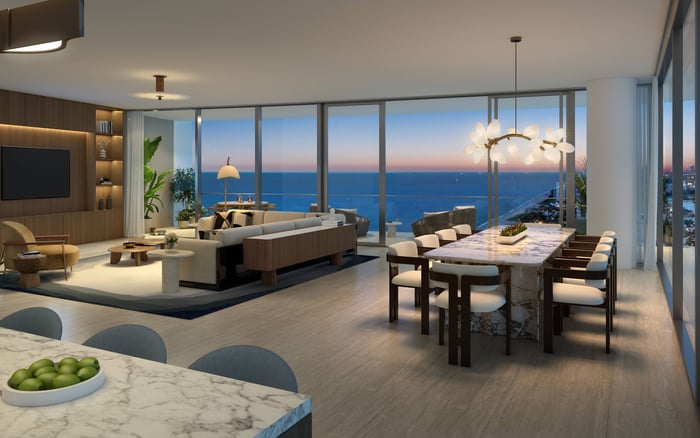
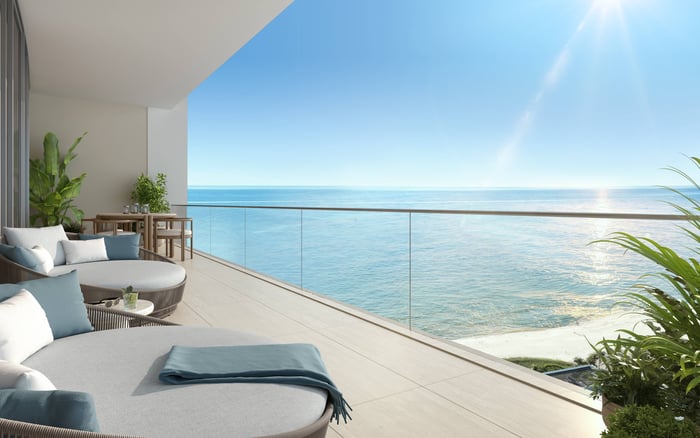
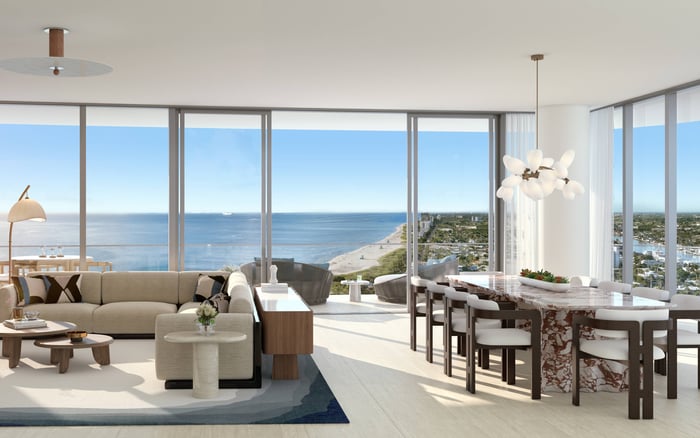
A buyer-focused comparison of Continuum Club & Residences North Bay Village and W Pompano Beach Hotel & Residences through the practical lens of parking rights, EV charging control, valet flow, and private-driver logistics.
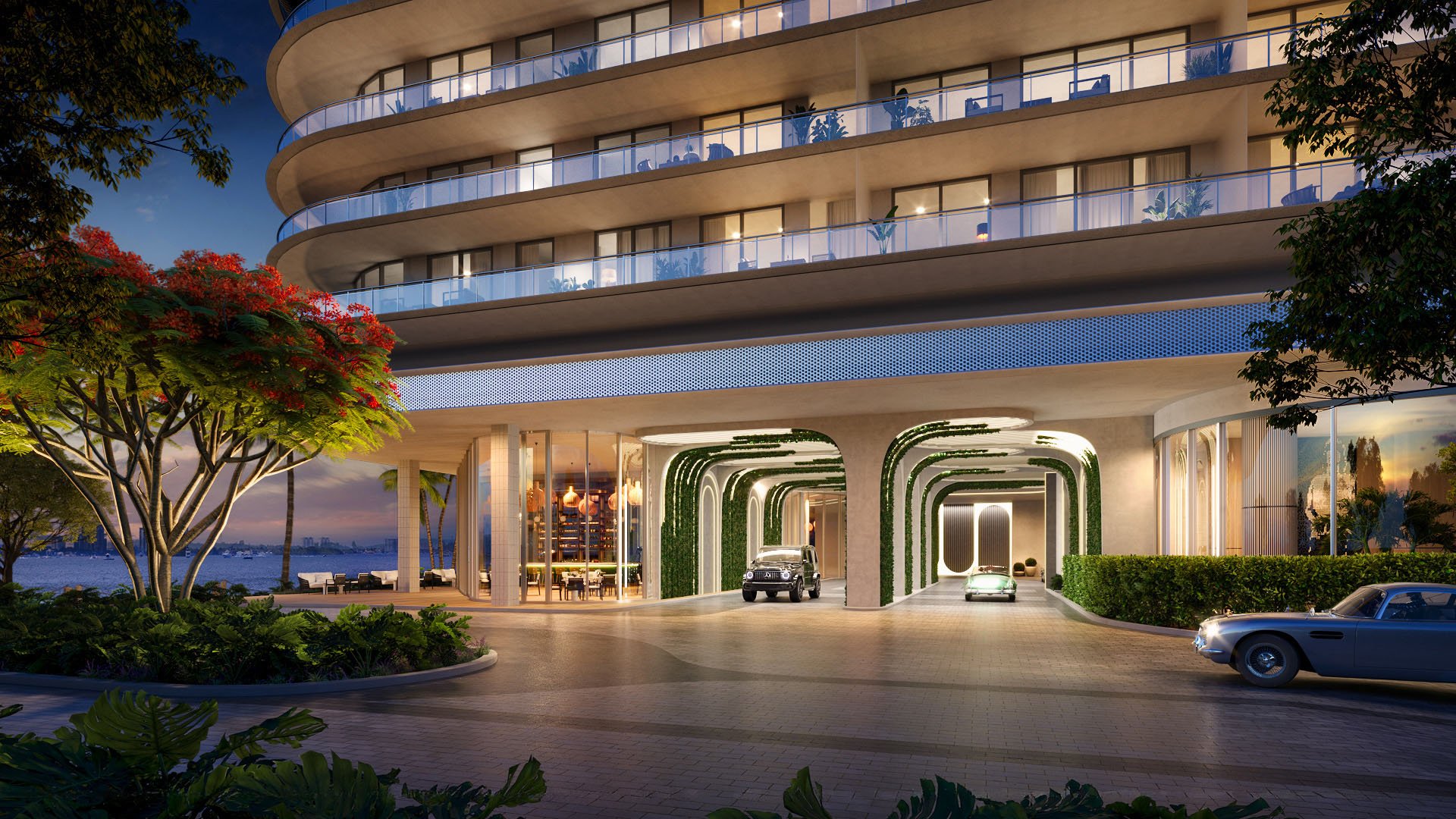
For South Florida buyers, the question is no longer simply where a residence is located, what the view captures, or how polished the amenity deck feels. At the top of the market, ownership is increasingly measured by how gracefully daily movement is handled. Parking rights, EV charging control, valet sequencing, private-driver access, guest arrivals, and long-term vehicle storage can shape the lived experience as much as architecture or service.
That is why Continuum Club & Residences North Bay Village and W Pompano Beach Hotel & Residences make a useful comparison. One is best understood as a residential, club-oriented ownership model. The other is best understood as a branded hotel-residence model shaped by hospitality operations and lifestyle-hotel service standards. Both speak to affluent buyers, but they may organize mobility in different ways.
The distinction matters because responsibility can shift among owners, associations, operators, valet teams, and hospitality staff. A buyer who treats parking as a minor closing detail may miss one of the most important components of everyday privacy and control.
Continuum Club & Residences North Bay Village should be viewed through the lens of residential ownership, club-style amenities, and private residential logistics. For this buyer, the central inquiry is not merely whether parking exists. It is how parking is allocated, whether a space is deeded or licensed, how valet access is managed, how guests enter and exit, and whether long-term vehicle storage is practical under the governing documents.
In a club-oriented residential tower, owners often focus on the balance between personal control and shared building systems. A second-home owner may ask how a car is stored during extended absences. A daily resident may care more about retrieval time, guest flow, and whether a private driver can stage without disrupting the main arrival court.
For buyers comparing Continuum Club & Residences North Bay Village with a branded hotel-residence, the practical question is whether the residential model provides a clearer line between owner, guest, valet, and service activity. The answer should not be assumed. It belongs in the documents, parking instruments, association rules, and operating procedures.
W Pompano Beach Hotel & Residences sits on the other side of the comparison as a branded hotel-residence ownership model. Its appeal is tied to branded hospitality, lifestyle-hotel services, and an operating environment where arrivals, departures, guest handling, and valet procedures may be shaped by a broader service platform.
That can be highly attractive. Hotel-residence buyers often value convenience, a recognized service culture, and the energy of a hospitality environment. Yet the same structure can also mean mobility is managed through protocols rather than purely private owner discretion. Valet procedures, guest arrivals, rideshare flow, luggage handling, and service staffing may be coordinated through the operator’s standards and the property’s operating rules.
For Pompano Beach buyers, the key is to understand how residential use fits alongside hotel-style operations. A private driver waiting for an owner, a guest arriving for dinner, a rideshare pickup, and a hotel guest checking in may all interact with the same approach system unless the property separates these flows. The branded experience may feel seamless, but the legal and operational details still deserve close review.
In buyer shorthand, this is a new-construction mobility question as much as a design question, especially when a condo-hotel format is part of the comparison. Luxury branding can elevate service, but it does not automatically create superior parking rights or unrestricted EV-control rights.
The first mobility question is legal, not aesthetic. Buyers should determine whether parking is deeded, assigned, licensed, appurtenant to the residence, or controlled under operating policies. Those categories can produce very different outcomes when an owner wants certainty over a specific space, storage for an additional vehicle, access for a driver, or flexibility for guests.
At Continuum, the residential model may place greater emphasis on owner allocation, association governance, and private residential use. At W Pompano, the hotel-residence model may introduce more operator-managed movement and branded-service protocols. Neither structure is inherently better. Each requires a different diligence lens.
A buyer should ask whether the right to park is transferable with the residence, whether it can be separately sold or assigned, whether valet is mandatory, and how guest parking is handled. For collectors, families with multiple vehicles, or owners who split time between residences, these details may be decisive.
EV charging is often marketed as an amenity, but sophisticated buyers should treat it as infrastructure and a control issue. The presence of charging capability is only the beginning. The more important questions involve installation rights, access, metering, cost allocation, assignment of spaces, load capacity, association approval, and whether hotel operations affect owner discretion.
In a residential tower, the governing documents and association rules may define whether an owner can install or use a charger in an assigned space. In a hotel-residence, operator policies and shared-garage protocols may add another layer. If spaces are not individually controlled, an owner may have less discretion than expected.
The right diligence question is not simply, “Does the building have EV charging?” It is, “Who controls my charging experience, and what happens if demand increases?” For buyers whose household already relies on electric vehicles, that question should be answered before contract execution, not after move-in.
Private-driver logistics are where the ownership models may feel most different day to day. The relevant details include porte-cochère access, valet queuing, rideshare separation, owner privacy, guest drop-off, luggage handling, and vehicle staging. A beautiful arrival court can still create friction if every vehicle type competes for the same curb position.
At a residential club tower, the ideal is a composed arrival experience that distinguishes residents from guests and service providers. At a branded hotel-residence, the ideal is choreographed hospitality, with staff managing multiple arrival types efficiently. Both can work beautifully, but buyers should evaluate how the system performs at peak times, during events, and when several owners or guests arrive simultaneously.
Private-driver buyers should ask where a driver may wait, how long staging is permitted, whether the driver can remain near the entrance, and how security manages repeat access. The answers influence privacy, convenience, and the tone of daily living.
The choice between Continuum Club & Residences North Bay Village and W Pompano Beach Hotel & Residences is not a simple contest between residential privacy and hospitality branding. It is a question of control preference.
Buyers who prioritize a residential rhythm may be drawn to the club model, particularly if their lifestyle depends on predictable vehicle access, owner-directed storage, and a quieter guest sequence. Buyers who prioritize branded service may prefer the hotel-residence model, particularly if they value operator-managed convenience, hospitality staffing, and a more animated arrival environment.
The most sophisticated approach is to compare documents, not impressions. Review parking instruments, EV provisions, valet rules, loading-zone rules, guest-arrival protocols, and driver-access policies before signing. In South Florida’s ultra-premium market, the best residence is the one that makes both arrival and departure feel effortless.
Why compare these two projects through mobility rather than amenities? Parking rights, EV control, and private-driver flow affect daily life in ways that glossy amenities may not reveal.
Is Continuum Club & Residences North Bay Village the more private model? It should be evaluated as a residential, club-oriented ownership model, but privacy depends on the final documents and rules.
Is W Pompano Beach Hotel & Residences primarily a hospitality-driven model? Yes. It is best understood as a branded hotel-residence model shaped by lifestyle-hotel services and operator-managed procedures.
Does luxury branding guarantee better parking rights? No. Parking rights depend on deeds, licenses, assignments, association rules, and operating policies.
What should EV buyers review first? They should review charging access, installation rights, cost allocation, metering, space assignments, and approval requirements.
Why do private-driver logistics matter? Driver staging, valet queues, and porte-cochère access can determine whether arrivals feel discreet or congested.
Can hotel-residence operations limit owner discretion? They may, depending on valet procedures, guest-arrival protocols, operator standards, and shared-garage rules.
Should buyers ask about long-term vehicle storage? Yes. Seasonal owners and collectors should confirm how vehicles can be stored during extended absences.
Are guest arrivals handled the same way in both models? Not necessarily. Residential and hotel-residence models may separate or combine owner, guest, rideshare, and service flows differently.
What is the best way to shortlist comparable options for touring? Start with location fit, delivery status, and daily lifestyle priorities, then compare stacks and elevations to validate views and privacy.
For a tailored shortlist and next-step guidance, connect with MILLION.
If branded residences are on your mind — as a home or as an allocation — we would be glad to share what we are seeing, privately.
Begin a quiet conversation