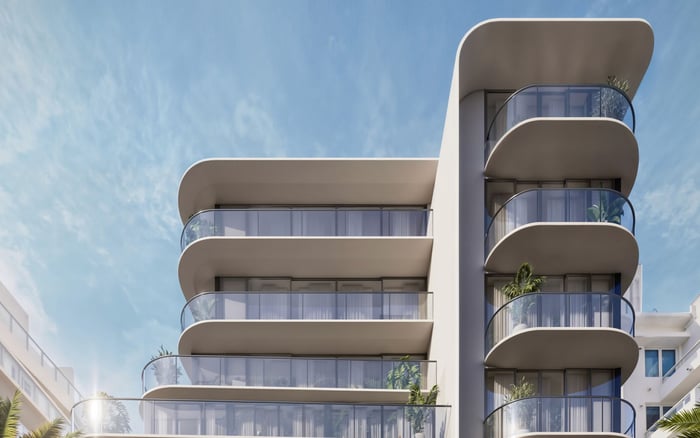
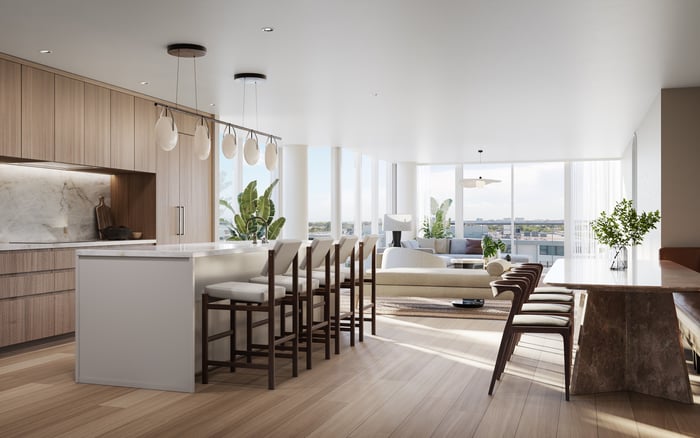
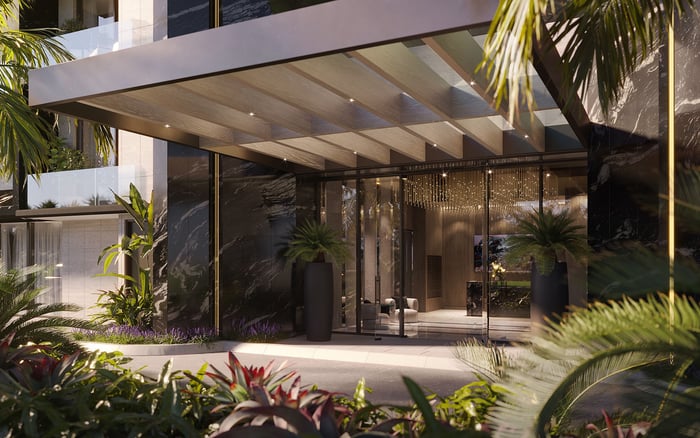
A buyer-oriented comparison of how walkable daily life feels between Onda Bay Harbor and The Well Bay Harbor Islands when Bal Harbour Shops is the reference point, with practical guidance on routes, comfort, and lifestyle fit.
In ultra-prime North Dade, “walkable to Bal Harbour Shops” is less a metric than a lifestyle promise. It suggests the freedom to step out for a morning coffee, a last-minute gift, or a quiet lunch-without coordinating a driver or circling for parking. For buyers choosing between Onda Bay Harbor and The Well Bay Harbor Islands, the real distinction isn’t simply which address is closer. It’s how the walk lives: the route itself, the bridge experience, the ease of crossings, and what it feels like once you arrive.
Bay Harbor Islands sits between the Atlantic-facing communities of Bal Harbour and Surfside and the mainland. That geography creates two recurring patterns: walks that are genuinely enjoyable because the surroundings reward the effort, and walks that are technically possible but feel psychologically “car-first” due to traffic rhythm and exposure.
This editorial uses Bal Harbour Shops as the anchor and compares the on-foot experience from each project through the practical lens MILLION Luxury buyers tend to apply: Will you actually do it regularly-dressed for dinner, after the sun drops, or carrying a small bag?
The defining factor in walking to Bal Harbour Shops from Bay Harbor Islands is the bridge. A bridge walk can feel cinematic when the weather cooperates and traffic is calm. It can also feel like a hard reset when traffic is assertive and the sidewalk experience is narrow, loud, or glaring under midday heat.
From a buyer’s perspective, walkability should be evaluated in layers:
Continuity: Can you stay on a consistent, predictable sidewalk the entire way-without awkward detours.
Crossings: Are intersections intuitive and comfortable at a true pedestrian pace.
Micro-climate: Shade, wind, and heat retention on exposed segments.
Return-trip friction: The walk out is the easy part; the walk back-after a late reservation or with packages-is the real test.
In Bay Harbor Islands, a route that feels effortless at 9:30 a.m. can feel materially different at 6:30 p.m., as the area shifts from beach traffic into dinner plans.
Onda Bay Harbor tends to fit buyers who like a purposeful walk: out the door, along a defined path, and into Bal Harbour’s retail core. The appeal is the sense of arriving somewhere iconic. Done intentionally, the walk can become a small ritual-chosen, not improvised.
The bridge segment is the signature. As with any bridge walk in South Florida, comfort is shaped by sun angle, wind, and traffic cadence. Buyers who enjoy walking for its own sake generally absorb the exposed portions more easily. Those who are walkable “only when it’s perfect out” may find the bridge turns the trip into an occasional outing rather than a reliable daily habit.
Where Onda often wins is in the psychological clarity of the trip: Bal Harbour Shops is the destination, and the route reads as a straight-line intention. For owners already living in a car-light rhythm-and who value arriving on foot-that simplicity carries real weight.
The Well Bay Harbor Islands aligns with a different flavor of walkability. Many buyers define walkable living less by one luxury destination and more by the accumulation of everyday stops: a wellness appointment, a quick bite, a casual meeting, or a short stroll that feels safe and comfortable.
With Bal Harbour Shops as the benchmark, The Well’s walk is often judged by a more realistic filter: Would I do it in real clothes, at real times, with real responsibilities? If your routine is wellness-oriented and you prefer shorter, repeatable walks that connect naturally to daily services, that overall pedestrian mindset can matter as much as the end point.
The Well’s buyer profile also tends to be more sensitive to the return-trip question. Carrying a shopping bag, walking back after dinner, or returning during a warmer part of the day can determine whether the route is truly used. In that framing, the decision becomes less about whether you can walk to Bal Harbour Shops-and more about how often you will choose to.
In South Florida, luxury walkability is often won or lost through friction points that never show up on a map.
Even a short walk stretches when shade is limited. A bridge segment amplifies this because it is typically more exposed. Buyers planning to walk routinely should test the route at the time of day they would realistically use it-not only on a breezy morning.
Pedestrian crossings can be technically legal and still feel stressful. The most walkable experiences minimize the need to negotiate with turning vehicles or inconsistent yielding. If you’re purchasing with children or frequent visiting family, this factor moves from minor to central.
If the route requires “changing shoes first,” it won’t become habit. The most successful walkable households are the ones where the path supports a normal wardrobe-including post-dinner returns.
Bal Harbour Shops is not a corner market. Even modest shopping adds weight and bulk. Many owners who love walking out will still prefer a car or ride back. Practically, that can still qualify as walkability-but it’s a hybrid pattern, not a fully pedestrian lifestyle.
Many buyers touring Bal-harbour and nearby Surfside quickly notice the best walking days often include both: Bal Harbour for luxury retail and dining, Surfside for a more relaxed neighborhood rhythm.
If your goal is to spend entire afternoons on foot, pairing Bal Harbour Shops with adjacent areas can increase the perceived value of walkability. It becomes a loop rather than a single destination.
For those who want an alternative that is unapologetically ocean-adjacent, Ocean House Surfside is a useful reference point for how different daily walking can feel when a beachside environment is the default backdrop. Likewise, Arte Surfside offers a contrasting view of Surfside’s boutique-scale living, where many errands lend themselves to a short, casual stroll.
These comparisons help sharpen the Bay Harbor Islands question: Are you buying for a walk-to-luxury-retail moment, or for a walkable cadence that supports day-to-day life?
The most confident decisions come from matching the project to your actual habits.
You enjoy a purposeful walk and don’t mind a bridge as part of the experience.
You like the idea of arriving at Bal Harbour Shops on foot as a lifestyle statement.
You’re comfortable letting weather dictate the choice-and driving on hotter days.
You prioritize short, consistent walks that fit a wellness-forward routine.
You’re more likely to walk for errands and appointments, then treat Bal Harbour as an occasional highlight.
You place a premium on comfort and predictability over the romance of a single iconic destination.
In both cases, the smartest move is to treat “walkable” as a spectrum, then choose where you want to land: daily, weekly, or occasionally.
Even in the most walkable pockets of Bay Harbor Islands, many owners maintain a refined relationship with the car. The goal isn’t to eliminate driving-it’s to reduce it: fewer short trips, fewer parking decisions, more spontaneous movement.
If Bal Harbour Shops is a frequent destination, you may still prefer a quick drive for evening plans or for return trips with purchases. That doesn’t diminish the value of walkability; it positions it as a luxury convenience rather than a rigid rule.
The best test is simple: picture your week. Count the times you would genuinely choose to walk to Bal Harbour Shops, then count the times you’d drive for timing, heat, attire, or convenience. The right building is the one that makes your preferred answer feel effortless.
Is it realistic to walk to Bal Harbour Shops from Bay Harbor Islands year-round? Yes, but comfort shifts with heat, humidity, and time of day, so many owners blend walking with driving.
Does the bridge make the walk feel longer than it is? Often, yes; exposure and the presence of traffic can add perceived distance even when the route is direct.
Which feels more “walkable” in daily life, Onda or The Well? Onda typically suits destination walks, while The Well can feel more repeatable for routine errands.
Is walking back with shopping bags practical? For small purchases, yes; for larger shopping days, many prefer walking out and driving back.
Are evening walks comfortable for dinner reservations? They can be, but lighting, heat retention, and traffic patterns can influence whether you choose to walk.
Should I test the walk before deciding? Yes; do the route at the time you would actually use it, including the return trip.
Does Surfside change the usefulness of living near Bal Harbour Shops? Yes; combining Bal Harbour and Surfside can create a fuller on-foot day rather than a single stop.
Is walkability mainly about distance in this area? Not entirely; crossings, shade, and exposure often determine whether the walk becomes a habit.
Will I still need a car if I prioritize walkability here? Most owners still keep a car, but walkability can reduce short trips and parking dependence.
What is the simplest way to choose between the two projects? Decide whether you want a destination walk to Bal Harbour or a more routine, wellness-leaning cadence.
For a tailored shortlist and next-step guidance, connect with MILLION Luxury.
If branded residences are on your mind — as a home or as an allocation — we would be glad to share what we are seeing, privately.
Begin a quiet conversation